



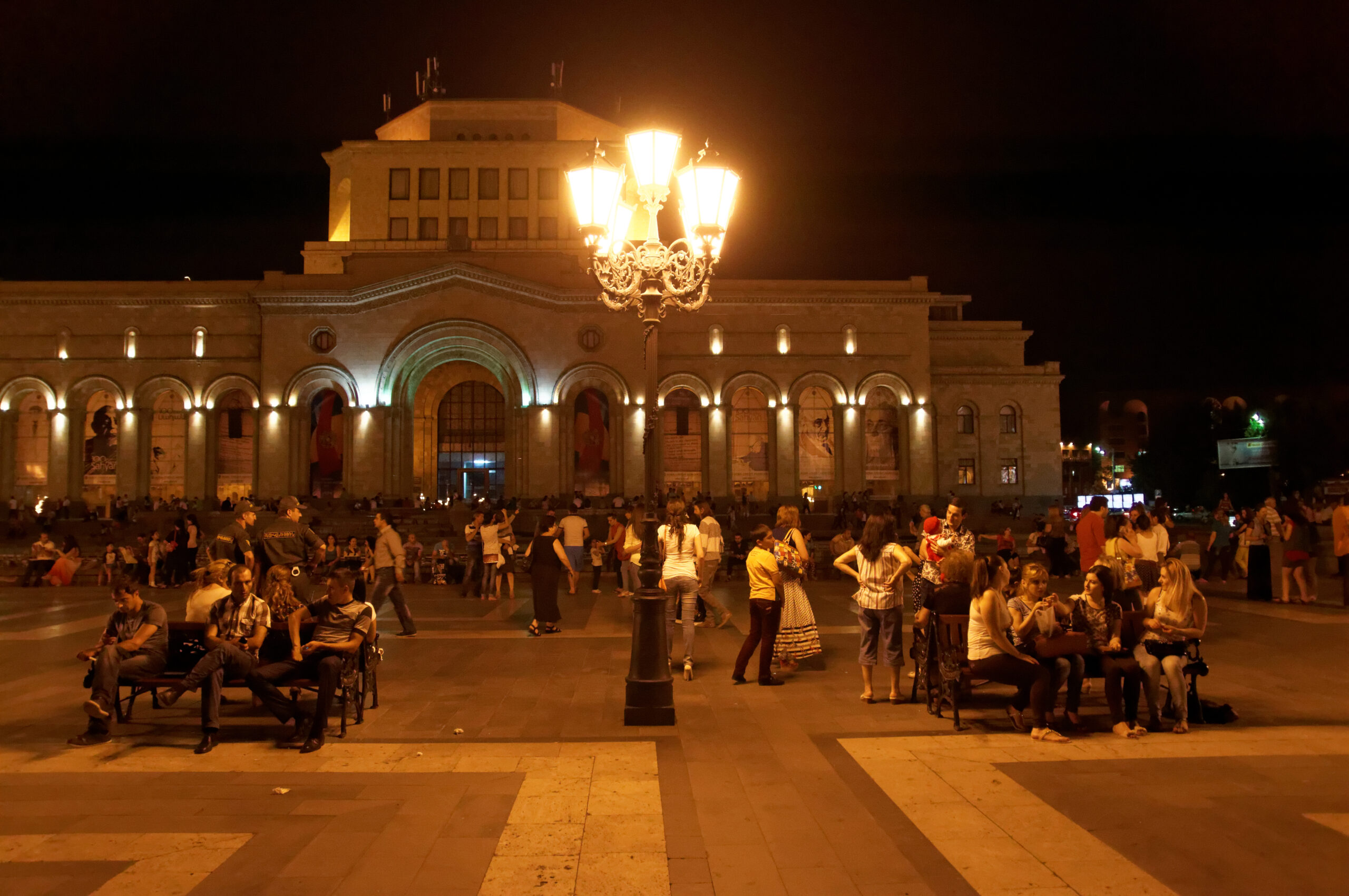
I’ll admit, from what I’ve witnessed over the past few years, the nightlife scene in Yerevan has been a rollercoaster: clubs shut down, bars disappear and the landscape keeps reshuffling. Yet the city has a way of reinventing itself, constantly opening new places with fresh energy and concepts that appeal to different crowds.
I personally haven’t been part of that world as much recently, but I was genuinely thrilled to see Yerevan ranked seventh on Condé Nast Traveler’s global list of top nightlife destinations, based on one of their new studies. As someone who has been living here for more than a decade, I know that Armenia has a limited presence in global media for anything positive. This recognition felt like a small but meaningful win.
Unfortunately, the surprising part wasn’t that the city made the list — it was the reaction to it. And I’m not talking about the predictable negativity from outsiders questioning its place there. What stood out was the shade coming from locals themselves.
As I scrolled through the comments on Zartonk Media’s repost, I was struck by how many locals insisted that Yerevan has no real nightlife and didn’t deserve the recognition. Funny, sad and a little surprising, right? I don’t take social media too seriously, as opinions are often exaggerated or carefully curated to fit a certain persona.
Still, when you look at how other countries talk about themselves, the difference is clear.


I see it all the time: how other nations market themselves, their identity and culture is truly exceptional.
Most of these claims aren’t even backed by lists or proof, like ours was — but they still work, because the people spreading them believe it.
This might not seem like a major issue, especially when weighed against larger concerns. However, I believe such contradictions point to deeper sociological questions, which should push us to reflect on our national self-perception, collective confidence and our tendency to fixate on the negative.
Viewed through a tourist’s lens, the issue becomes clearer. Most people interacting with these lists are not locals but potential visitors, weighing whether the country is worth experiencing. Positive narratives and reviews play a crucial role in that decision. Yet this discussion goes beyond a single post or the city’s nightlife. It reflects a deeper national mindset shaped by habitual criticism and negativity. The same qualities often dismissed as insignificant are precisely what help shape a country’s appeal abroad. Ironically, we practice these skills every day on a personal level: selling our ideas, our work and ourselves to get ahead. Why does that confidence disappear when it comes to representing the whole?
Looking closer, the reality on the ground tells a different story. Most local bars and pubs appear active and successful, consistently promoting their concepts and events online. This is a standard business practice here, yet it prompts a larger question: why doesn’t this effort extend to a shared, collective narrative? We market ourselves individually, but hesitate to do so collectively.
Perhaps for some, this reluctance stems from a sense of disconnection — or dare I say, a desire not to be associated with Armenia at all. And let me be clear: this isn’t about selling a lie or sugarcoating reality. But when recognition comes, we should at least be able to own it, enjoy it and resist the urge to immediately undermine it with complaints.
Just look at our neighboring countries. Much of our regional history is shared, yet they’ve skillfully isolated certain elements and built narratives around them, claiming ownership of specific qualities, stories or traditions, and using them to market themselves. And it works. It doesn’t even require much effort: pick something you already have, make it part of the national personality, weave it into history or align it with the present, and there it is.
But who can fault the locals entirely? The importance of collective unity, promoting national identity and striving forward as a community is rarely emphasized nowadays. This gap in social education is visible to both insiders and outsiders — and it’s not a point of pride. Some see it as an act of rebellion, a refusal to swallow comforting lies. Others dismiss nationalism or concern for the country’s well-being as uncool, performative or simply fake. Those commenting online often feel brave for resisting hype, refusing to accept that their city could be worthy of international recognition.
Even if the nightlife were dead, that single mention on the list could have been a spark: an incentive to try, improve or rebuild. Instead, we default to complaints, rarely taking action to fix what we criticize. Responsibility, it seems, is just not part of our national habit.
From a sociological perspective, many of these reactions are tied to identity and cultural upbringing. In societies where collective confidence has been eroded by history or ongoing struggle, praise often raises suspicion rather than appreciation. When people don’t feel fully secure in their group identity, positive narratives can feel out of touch with reality, sparking pushback instead of pride.
This is really about the small, often overlooked patterns in our thinking and everyday conversations. Our country is not perfect — and we locals know that better than anyone. But constantly fixating on what’s wrong doesn’t move us forward.
This isn’t a call to ignore problems but to recognize how deeply negative approaches to anything national have left us stuck. We’re at a point where we know change is needed, yet no one seems willing — or sure how — to begin. New ideas or initiatives could help, but they’re not what’s holding us back.
At some point, we need to agree on a shared mindset: know where we stand, what we want and keep the country’s well-being in sight as a collective goal. One person’s success isn’t just personal; it reflects on all of us. The same goes for national progress; it belongs to everyone. When Armenia shows up on a list or gains international recognition, it means there were real contributions behind it, and we should let ourselves feel that pride.
After all we’ve endured — burdens many nations never have to carry — we’re allowed to find light in small victories and use it as fuel to keep pushing toward something better.



Very interesting call to examine our behavior. There is indeed so much negativity surrounding narratives about Armenia now, both from within and the diaspora, while most of them don’t appear to be doing anything constructive to address that.