


Section 907: Why its enforcement is essential to regional peace

“I am Anna Yengibaryan. I am eight. I was born in Artsakh. Our house was near “Koltsevoi,” in Stepanakert. There was a small toy house in the corner of the hall; I kept my favorite toys there. I had a huge white teddy bear, but unfortunately, we couldn’t take it with us as there was not enough space in our car. I had left lots of toys there…I miss my dad so much. When I sleep, he comes; when I wake up, he leaves and I don’t see him…” — My Childhood Street: 101 Stories
Anna’s story — shared in the aftermath of the 2023 Artsakh genocide — reflects the collective suffering of an entire people. Her memories — a toy house carefully arranged in her home, a teddy bear left behind and a father seen only in dreams — capture the profound psychological toll of violent displacement.
Anna’s testimony shows that war should be seen as both a geopolitical reality of Armenia and as a disruption of the most basic aspects of childhood: safety, family and routine. What Anna endured is not an isolated tragedy, but a representative example of the broader trauma inflicted on tens of thousands of Artsakh Armenian children who were uprooted from their homes, separated from loved ones and forced to confront loss far beyond their years. This testimony is just one among the 150,000 stories after the Azerbaijani attacks and ethnic cleansing campaigns against the Republic of Artsakh in 2020 and 2023.
Azerbaijan seized control of Artsakh, leaving thousands dead, displacing an entire population and continuing the destruction of churches and ancient religious sites. Families were torn apart, with children like Anna still left waiting for their fathers to return home — grieving an uncertain future.
What happened during the 2020 Artsakh War was not an isolated occurrence, nor was it the beginning of this decades-long conflict. Without action, it will not be the end. The atrocities committed by Azerbaijan, backed by Turkey, are a culmination of years of unchecked aggression, emboldened by international silence.

How did we get here?
In 1992, President George H.W. Bush signed the Freedom Support Act into law to assist the newly independent states of the former Soviet Union in their transitions to democracy and free-market economies. While the Act aimed to stabilize newly independent nations, it also sought to address the ongoing violence being committed by Azerbaijan in the South Caucasus.
In 1988, the Armenians in the Nagorno-Karabakh Autonomous Oblast (NKAO) — forcefully placed in Soviet Azerbaijan in the 1920s — voted to join Armenia, in an effort to end decades of Azerbaijani oppression. Azerbaijan responded with violent attacks against Armenian populations in Sumgait, Kirovabad, Maragha and Artsakh proper, killing civilians and displacing hundreds of thousands during the First Artsakh War (1988-1994)..
To address this, the Freedom Support Act included Section 907, barring U.S. assistance to the government of Azerbaijan until it ceased all blockades and acts of aggression. For over 10 consecutive years, Section 907 upheld that principle. Tension persisted in the South Caucasus, but the provision served as one of the few international mechanisms that held Azerbaijan accountable for its actions during and after the First Artsakh War — preventing further mass violence against Armenia.
Dynamics changed following 9/11 when Section 907 was amended, granting the U.S. president waiver authority if four specific conditions were met. In 2002, President George W. Bush was the first to use the waiver provision on Section 907, resuming military assistance to Azerbaijan. Every president thereafter — Republican and Democrat — waived Section 907, except in one instance in 2024 following the Artsakh genocide.
Let’s analyze the four provisions of the Section 907 presidential waiver, point by point:
Provision #1: The prospective aid “is necessary to support United States efforts to counter international terrorism; is necessary to support the operational readiness of United States Armed Forces or coalition partners to counter international terrorism.”
In reality, Azerbaijan has not been a reliable or transparent partner in the war against terrorism. In fact, during its military offensives in 2020 and 2023, Azerbaijan recruited Syrian mercenaries and extremist militants, including former members of terrorist organizations, through Turkey to fight against Armenians in Artsakh. Supporting a government that outsources its military operations to mercenaries directly contradicts U.S. counterterrorism objectives.
Provision #2: U.S. assistance is “necessary to support the operational readiness of U.S. Armed Forces or coalition partners to counter international terrorism.”
There exists no substantial evidence that Azerbaijan’s military or infrastructure provides meaningful strategic or logistical support to U.S. operations. The idea that Azerbaijan materially contributes to U.S. counterterrorism missions is largely outdated, particularly as U.S. operations in Afghanistan and the surrounding region have receded. Moreover, even if some marginal cooperation exists, it cannot justify overlooking ethnic cleansing, war crimes and repeated violations of international humanitarian law. Operational convenience must never come at the cost of human life.
Provision #3: “[U.S. assistance] is important to Azerbaijan’s border security.”
Azerbaijan’s concept of “border security” has consistently translated into offensive rather than defensive military campaigns. From its initial invasion of Artsakh in the 2020 war to incursions into sovereign Armenian territory in 2021, 2022 and 2023 (including the continued occupation of several villages in Armenia proper to this day) — Azerbaijan has used the pretense of border security to justify its aggression.
Azerbaijan’s so-called “defensive” operations lack any legitimate basis. There exists no threat from Armenia that would necessitate defensive military actions. Yet, exactly under this false pretense, Azerbaijan launches incursions into sovereign Armenian territory. Not only is U.S. assistance being used to fund ethnic cleansing of Armenians, but it is also completely unnecessary to begin with. Azerbaijan has demonstrated that its “border security” is, in practice, a campaign of aggression and territorial conquest of Armenia.
Provision #4: U.S. assistance “will not undermine or hamper ongoing efforts to negotiate a peaceful settlement between Armenia and Azerbaijan.”
U.S. aid has directly emboldened Azerbaijan’s stance. Since 2003, and especially in the post-2020 era, Azerbaijan has consistently refused to engage in any good-faith negotiations, shut down peacekeeping efforts, broken ceasefire agreements and issued daily threats against Armenia’s sovereignty.
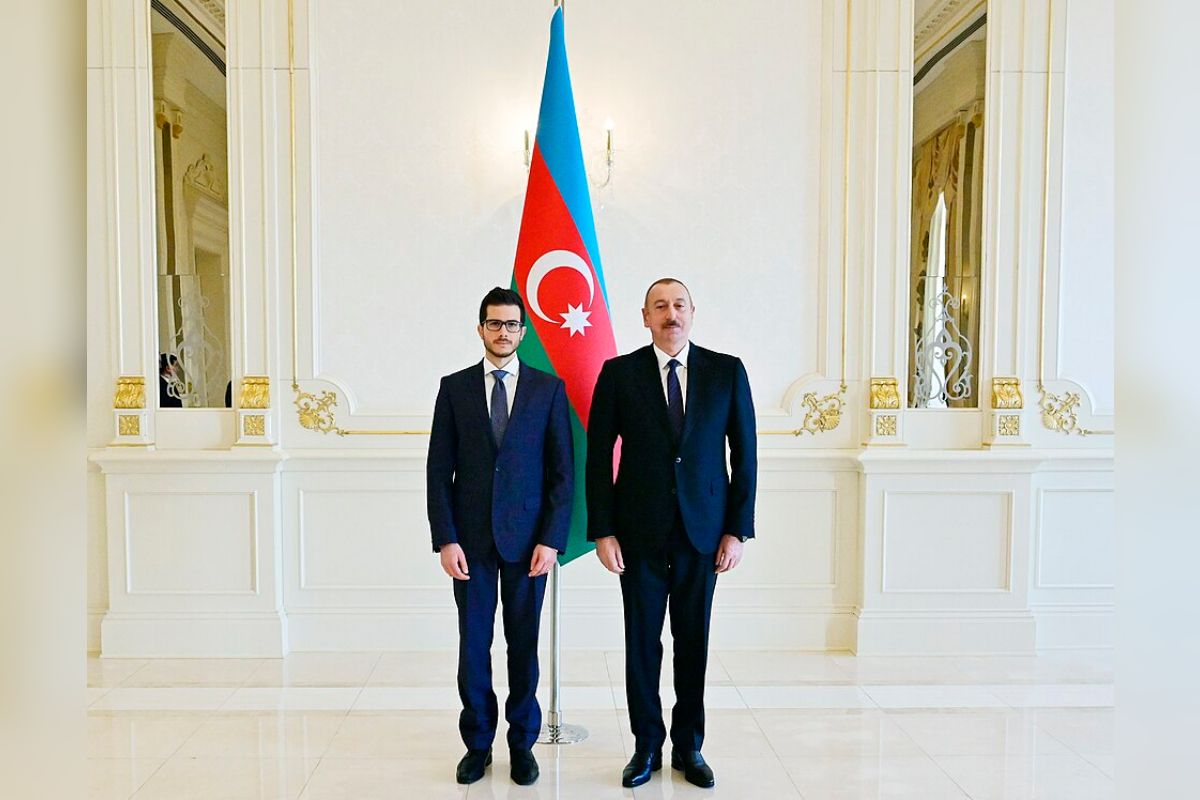
In fact, President Ilham Aliyev openly calls for a “Western Azerbaijan” concept, asserting territorial claims over Armenia proper. In May of 2025, Aliyev addressed Azerbaijan and Turkey during a conference called “Return to Western Azerbaijan as an Important Condition for the Supremacy of Human Rights.” He said, “Armenia must express a clear position on the issue of when and under what conditions Western Azerbaijanis will be able to return to their ancestral homeland.” This rhetoric is not only deeply concerning but is an attempt to push and prepare for an attack against Armenia.
Since 2002, every single U.S. president has waived Section 907, directly signaling that the U.S. will reward Azerbaijani aggression with funding. The U.S. has armed Azerbaijan with tens of millions in military security sector assistance since the waiver provision. A report published by the Security Assistance Monitor found that in the 2018-2019 fiscal year, aid to Azerbaijan reached a record $100 million during the first Trump administration. Further, a Government Accountability Office (GAO) report published in 2022 highlights that approximately 64% percent of all U.S. military assistance to Azerbaijan since 2002 was delivered between 2014 and 2020, peaking in 2018 and 2019. The massive surge in aid coincides with the buildup period preceding Azerbaijan’s assault on Artsakh. U.S. assistance effectively strengthened and emboldened Azerbaijan’s military, enabling the very aggression it was intended to deter.
Additionally, the GAO report found that from 2014 to 2021, the State failed to report key information to Congress (a requirement of the 907 waiver), including how proposed aid would affect the balance between Azerbaijan and Armenia. As a result, Congress has repeatedly been left without critical information needed to evaluate whether U.S. assistance to Azerbaijan aligns with the provisions of the waiver, legal requirements and broader foreign policy objectives.
Some may point to the August 2025 U.S.-brokered “peace deal” between Azerbaijan and Armenia as evidence that issues in the region have been settled. In reality, the agreement does not represent peace or take steps towards accountability; instead, it formalizes its complete absence. The deal includes no meaningful provisions for the return of the 150,000 Artsakh Armenians, Azerbaijan’s release of the Armenian prisoners or accountability for the Artsakh genocide. A “peace” without justice and redress merely institutionalizes Azerbaijani aggression in the future. True peace can only emerge when accountability is enforced, when the rights and dignity of victims are restored.
We must ask: What national interests are served when American tax dollars fund a regime that carries out ethnic cleansing, systematically destroys religious and cultural heritage, engages in religious persecution, imposes blockades on humanitarian aid and bombs civilians?
Every time Section 907 is waived, aggression goes without consequences. It signals that Armenia’s security is negotiable and that the displacement of an entire people can be overlooked in pursuit of geopolitical convenience. Until Section 907 is enforced without exception, children like Anna will continue to lose their homes, their childhoods and their fathers — and the United States will remain complicit in their suffering.