The Region in Brief
Armenia
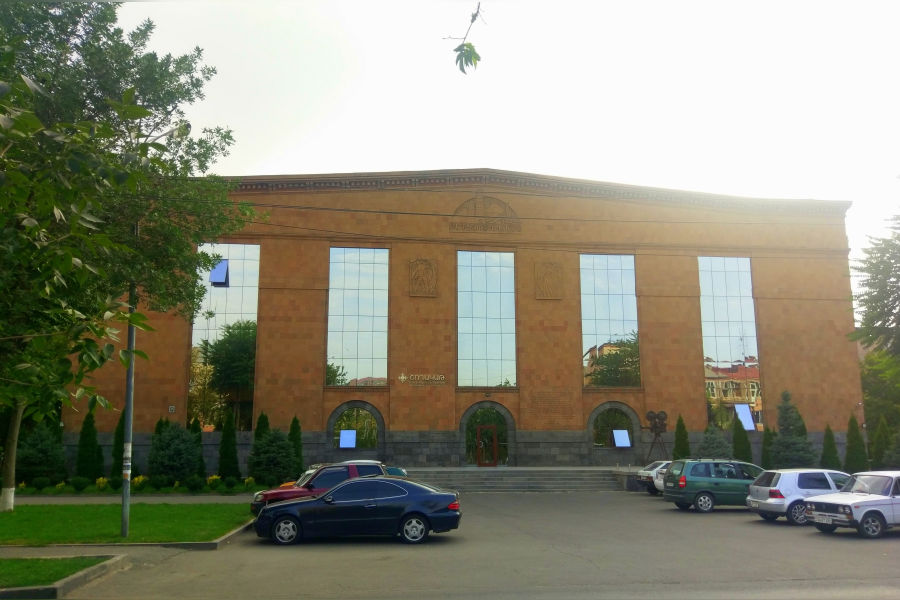
The National Assembly’s decision to advance a bill proposing the closure of Shoghakat TV has sparked strong criticism, with many observers describing it as another step in Prime Minister Nikol Pashinyan’s government’s ongoing attempts to weaken Armenia’s cultural and spiritual foundations.
The draft law, authored by Civil Contract Party MPs Sisak Gabrielyan and Taguhi Ghazaryan, was passed in its first reading earlier this week. If enacted, it would effectively terminate the operations of Shoghakat TV — a channel long regarded as a key platform for promoting Armenia’s rich cultural, educational and spiritual heritage.
Cultural commentators and opposition figures argue that the move reflects a deliberate strategy by the government to erode the sense of Armenian identity rooted in the nation’s traditions, faith and cultural legacy. They contend that the dismantling of a dedicated cultural broadcaster is not merely an administrative adjustment, but a symbolic act aimed at redefining the public narrative of what it means to be Armenian.
The Public Broadcaster’s Council has also expressed concern that the closure would deprive citizens of a dedicated space for cultural and educational programming. It warned that the decision could result in a significant loss of public access to high-quality national content that reinforces Armenia’s historical and spiritual values.

Artsakh
Detained Armenian philanthropist and former Artsakh State Minister Ruben Vardanyan has dismissed his defense lawyer, citing gross violations of legal standards and the absence of conditions for a fair defense in what he called a “judicial farce” taking place in Baku.
According to reports, during the October 21 court session, Vardanyan requested a confidential meeting with his lawyer, Avraham Berman. After a recess, he formally submitted a motion to terminate Berman’s services.
In a written statement released through his family, Vardanyan explained that the decision was made “under duress,” describing the ongoing trial as a process stripped of any genuine legal or procedural legitimacy. “Gross violations of international and Azerbaijani judicial norms have turned the hearings into an outright farce,” Vardanyan stated. “Under these conditions, all procedural defense opportunities have been exhausted over the past months.”
He outlined several key grievances:
- Denial of access to case materials: Vardanyan said he has been prevented from reviewing the 422 volumes of his case file and has not been provided official translations of critical documents.
- Restrictions on legal communication: He reported that his ability to prepare with his lawyer was obstructed, with document exchanges subject to checks and limitations.
- Ignored motions: Both his and his lawyer’s requests to investigative and judicial authorities were reportedly disregarded.
- Rejection of witness testimony: The court allegedly refused to summon witnesses who could provide information essential to his defense, further undermining the trial’s objectivity.
Vardanyan said his refusal of counsel was also a form of protest against the ongoing proceedings, which he described as “a theater of the absurd.”
“In this process, the lawyer’s role — regardless of his professionalism or intentions — is reduced to maintaining the appearance of legality,” he said. “I refuse to participate in this farce. I do not need the illusion of defense — I demand real observance of my procedural rights.”
Azerbaijan
Azerbaijan’s President Ilham Aliyev has once again referred to the so-called “Zangezur Corridor,” even though the August 8 Washington, D.C. agreement designates the project as the Trump Route for International Peace and Prosperity (TRIPP).
Speaking at a joint press conference with Kazakhstan’s President, Aliyev highlighted the project’s strategic value, calling it an essential part of Azerbaijan’s regional infrastructure development. “Alongside all the other projects we are planning and implementing, the ‘Zangezur Corridor’ holds tremendous potential,” he said.
Aliyev noted that all road and railway construction within Azerbaijan is expected to be completed by mid-2026. “We hope that other countries involved will carry out their work with the same speed, in which case, the opening of the ‘Zangezur Corridor’ could take place by the end of 2028,” he added.
Iran
Former Iranian Ambassador to Azerbaijan and current Deputy Chief of Protocol at the Iranian Presidential Office, Seyed Abbas Mousavi, has stated that the Armenia-Azerbaijan agreement must be reconsidered, stressing that “they should not assume everything is settled,” as Iran now has “an alternative route.”
In an interview with Mehr News Agency regarding the so-called “civilian checkpoint” in Armenia, Mousavi emphasized that while Iran does not oppose the unblocking of regional transport routes, it “will not and should not allow regional countries to define their interests in ways that contradict Iran’s own national interests.”
Referring to the 2020 trilateral agreement between Russia, Armenia and Azerbaijan signed after the 44 Day War, Mousavi said the deal initially aimed at reopening regional communication links. However, he noted that Azerbaijan sought to establish an “uncontrolled corridor” through Armenia — one that would bypass Armenia’s sovereignty, something “unacceptable to Yerevan and to regional powers such as Iran and Russia.”
Mousavi added that at one point, Baku had even threatened to seize the proposed route by force. “At that time, we in Tehran believed such threats were largely bluff. Our assessment was that the issue would be resolved through negotiation and mutual understanding, not by military aggression,” he explained.
He underscored that any acceptable agreement must “respect Armenia’s territorial integrity” and ensure that transit routes operate under Armenia’s sovereign authority. He warned that any arrangement undermining this principle would face opposition from both Iran and its regional partners.
Discussing Iran’s use of Armenia’s Syunik Province as a northbound transit route, Mousavi said current agreements would not disrupt this connection. However, he cautioned that Armenia’s reported plans to lease the route to an American company could create complications. “If managed by a local or regional consortium, the arrangement would be more acceptable and would preserve Armenia’s sovereignty,” he noted.
Finally, Mousavi called for a review of the U.S.-brokered Armenia-Azerbaijan agreement signed in Washington, D.C., emphasizing that the situation remains fluid. “They should not think that everything is over,” he said, pointing out that Iran already provides an alternative route connecting Azerbaijan and Nakhchivan. “For 35 years, they have used Iranian territory for transit. This route can be expanded, improved and even include a railway, offering a stronger and more diversified alternative through Iran.”