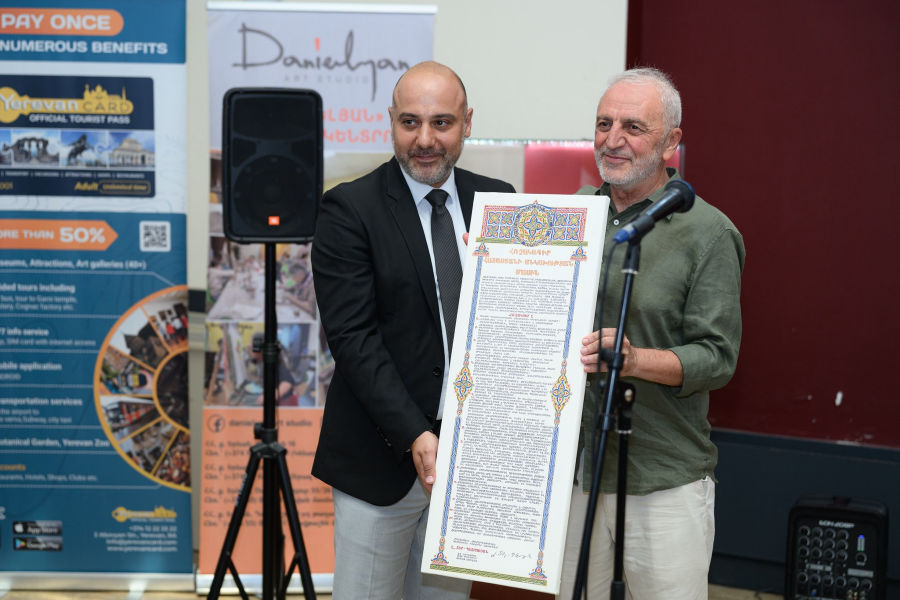
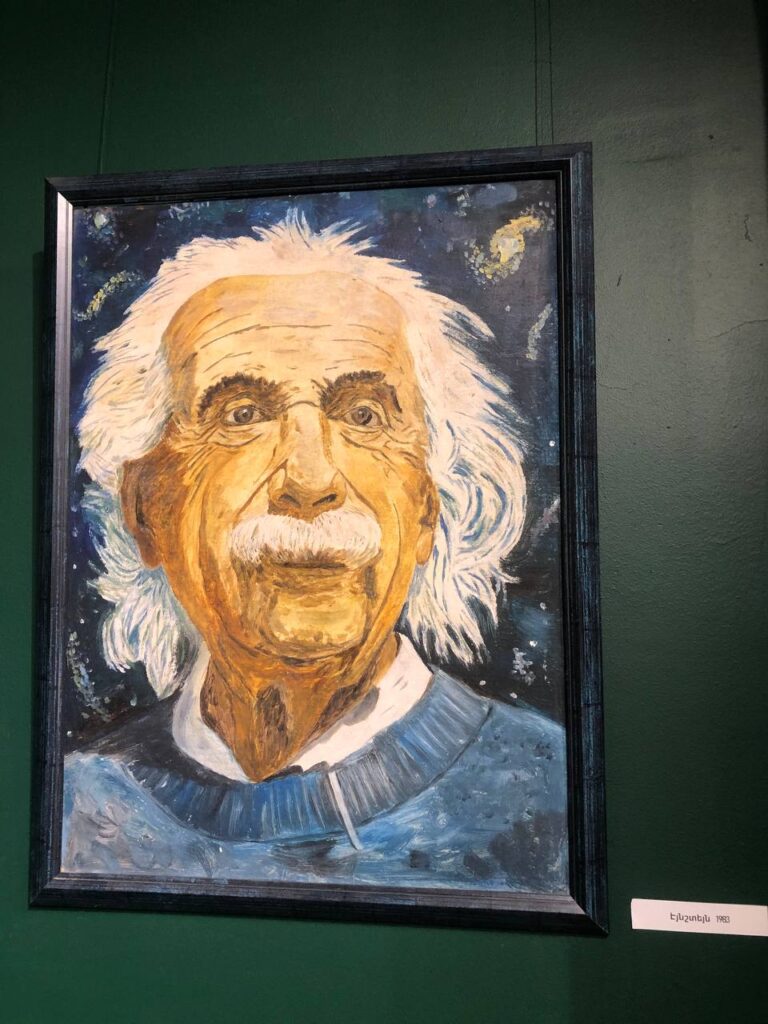
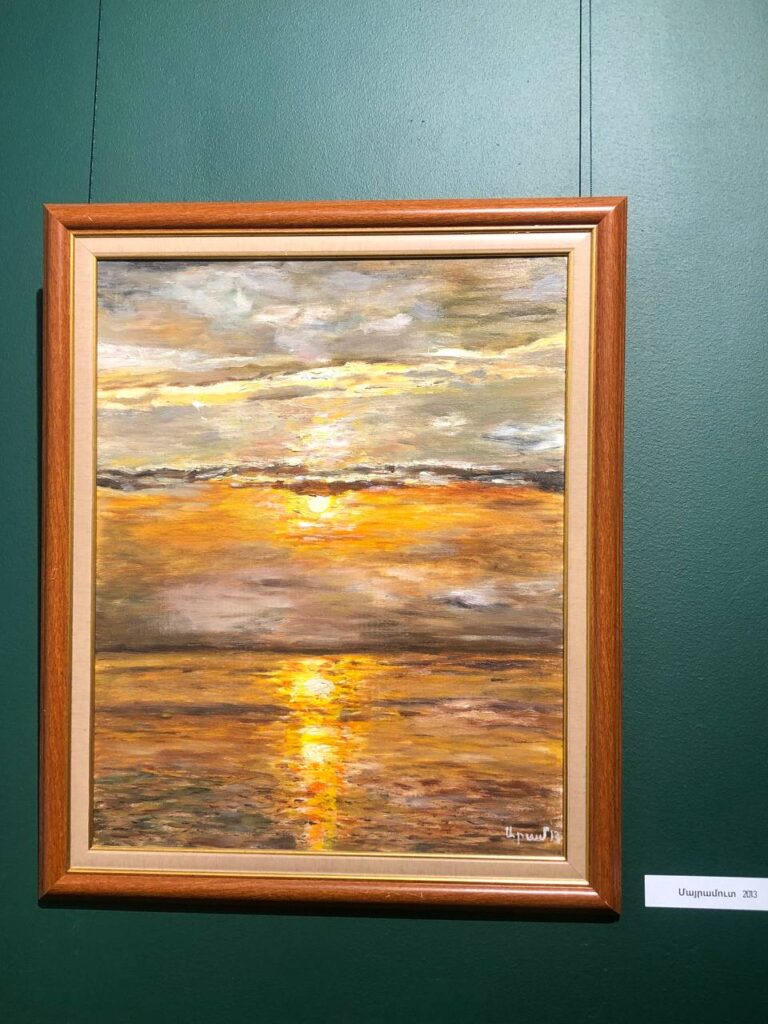
From August 23 to 28, “The Color of Independence” was on view at the Martiros Saryan Exhibition Hall of the Artists’ Union of Armenia. The exhibit marked the 35th anniversary of Armenia’s Declaration of Independence and offered politician and painter Aram Manukyan a chance to reflect on this historic milestone through art.
Manukyan first read the Declaration aloud in Parliament on August 23, 1990. Three decades later, he revisited that historic moment through art.
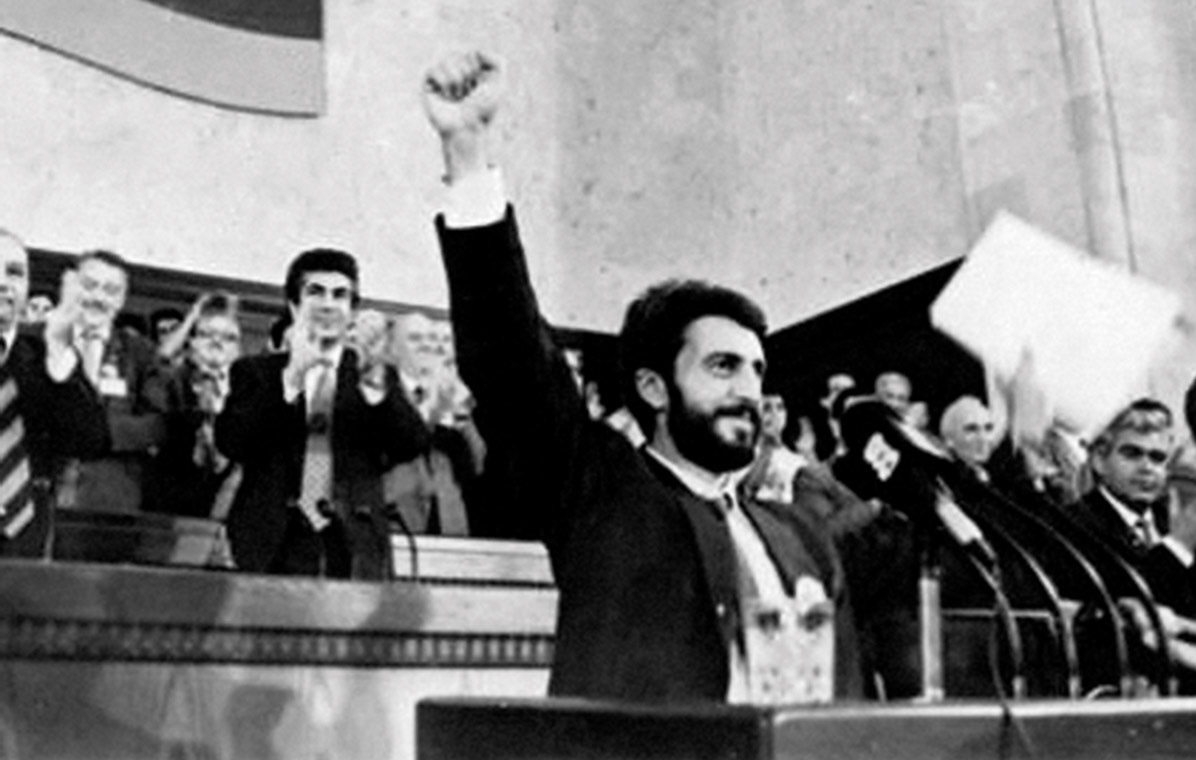
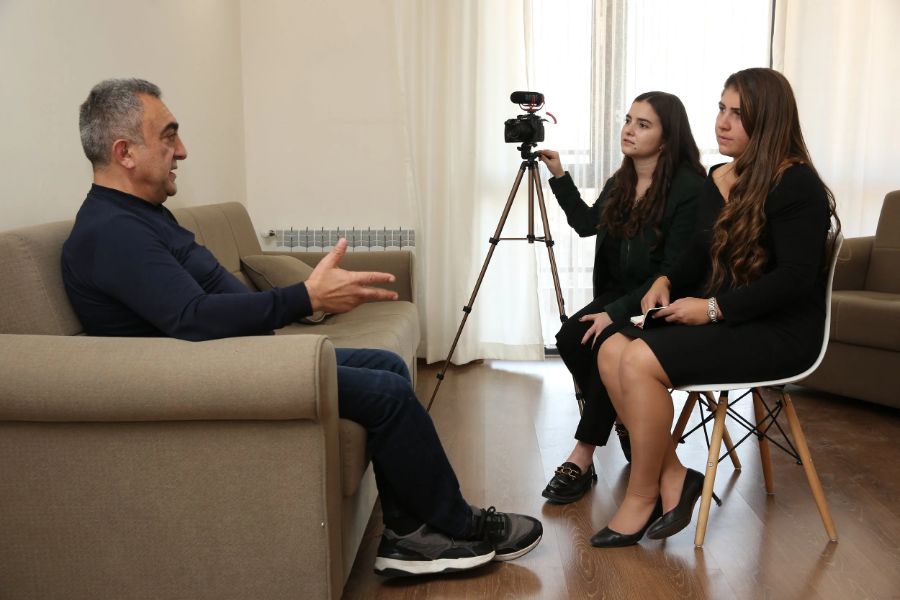
“This exhibition had long been planned,” Manukyan told the Weekly. “I first tried such an initiative back in 2017. More than half of the works on display now are new. The attacks by authorities on our identity, values and history also served as an impetus.”
The exhibition became more than an artistic endeavor when proposals arose to remove the Declaration from the Constitution. “It became a cultural-political event—a way of defending the Declaration,” he explained.
Visitors entering the hall were greeted by the Declaration itself. “There must be public resistance to defend the Declaration,” asserted Manukyan. “It is difficult, but necessary. The Declaration is the document of our collective dignity, both national and historical. And whoever dares to raise a hand against it must be punished.”
The exhibition’s title is symbolic. When asked which color represents independence, Manukyan replied: “The tricolor. Red, blue and apricot together—the complete color of our flag.”
Recalling the early 1990s, Manukyan admitted that he never imagined the Declaration would be questioned decades later. “I believed that if we managed to pass the 2.5-year threshold of the First Republic’s existence, then our independence would be eternal.”
He reflected further: “We crossed it, we strengthened, we won, we became an international subject. And now, it turns out—you have reached the shore, but you are drowning right there, at the shore.”
Manukyan attributed Armenia’s setbacks to leaders who failed to grasp the depth of national values. “They approach them in a very superficial way. After all, how can one touch the most sacred things—dignity, history, identity?”


Manukyan shared his visits to former Supreme Council deputies, now in their 70s and 80s. “They feel the danger that what they created is being thrown away. Together with them, we also visited the first president of Armenia, Levon Ter-Petrosyan. We spoke about the same concerns.”
Despite these challenges, Manukyan remains hopeful. “Of the 260 deputies, half are no longer alive; around 130 remain. Perhaps with their support and a small number of intellectuals, we can create an atmosphere, make it understood that the Declaration cannot be touched. That would be sacrilege. We will not allow it to be put to a referendum for removal from the Constitution.”
Manukyan stated that he sees the Declaration not only as a romantic symbol but also as a programmatic document. “In those 12 points, about 50 reforms are enshrined. They are systemic, realistic and feasible. Most of them were already implemented before the 1995 Constitution—language, religion, freedom of the press, the army, passport, flag, banking and customs systems,” he explained.
“The Declaration was a condensed unity of inspiration and pragmatism.” According to him, the document holds enduring historical significance. He calls that its strength: that the document will never become vulnerable over time.
“But unfortunately, today there is often an attempt to create opposition between historical Armenia and real Armenia,” he stated. “This is absolute nonsense. To contrast history and reality means to create an artificial conflict where none exists. Western Armenia, ‘Real’ Armenia, Ararat or Aragats—this is absurd. People are being fed with shallow ideas and manipulative words.”
When asked how he combines politics and art, Manukyan smiled: “Very easily. They do not contradict but complement each other,” he stated. “Politics gave me the opportunity to interact with intelligent and powerful people—Khachik Safaryan, Rafayel Papoyan, strong figures, there was Tigran Mansuryan, Hakob Hakobyan, Yervand Manaryan—and those friendships enriched me. My entire circle has always been artists. Art has always protected me from evil and hatred.”
He recalled the words of writer Hrant Matevosyan: a person filled with hatred destroys himself, not others. “Sometimes, after heated speeches in parliament, I would start painting right there, or I would go home and listen to classical music for an hour. I think that is an ‘ear cleansing.’ Culture has kept me pure.”
This philosophy informs his art. “All my works, even the dark ones, eventually have light. Though oppressed, the light is always present. That is my message,” he explained.
Manukyan also places great importance on youth, stating that the authorities of today try to instill our youth with the idea that they are weak and have no history. “But real dignity is not built with fairy tales and toasts. Optimism is also necessary. If we entirely fall into gloom, what will the next generation do?”
He stated, “Fortunately, young people today have social networks, through which they can break the information blockade. A healthy elite must be formed. That percentage becomes the driving force.”
The conversation shifted to Manukyan’s creative path, which began with his first painting in 1977. Today, his legacy amounts to roughly 100–110 canvases.
“I have many beloved works, especially those connected with Jerusalem, Venice, St. Lazarus Island. These are not just landscapes but symbols of cultural identity and global significance. My aim has always been to spread those values.”
Mankyan shared that his most successful works were born out of immediacy: “The best paintings are the ones done from nature itself. I spent my whole life in the mountains, traveled to almost all the sights of Armenia. In my paintings, there is the nature of Lori—I was born in Vanadzor. Flowers, seas, trees. There is life there. Sometimes even interesting stories are born—for example, in one of my canvases depicting poppies, hundreds of beetles came out of a bouquet and filled the room. They, too, became part of the painting.”
He also recounted one unusual experiment: “When I had no white paint, I replaced it with toothpaste. The painting has survived to this day. That is already more than 45 years of work.”
Today, his creative heritage extends beyond canvases. Alongside the exhibition, Manukyan also presented a book, “The 35th Anniversary of the Declaration of Independence of the Republic of Armenia.” The 150-page collection documents the process of adopting the Declaration, including records from the Supreme Council and reflections by Armenian intellectuals, such as Hrant Matevosyan, Aghasi Ayvazyan, Gohar Gasparyan, Ohann Duryan, Hamo Sahyan and Viktor Hambardzumyan.
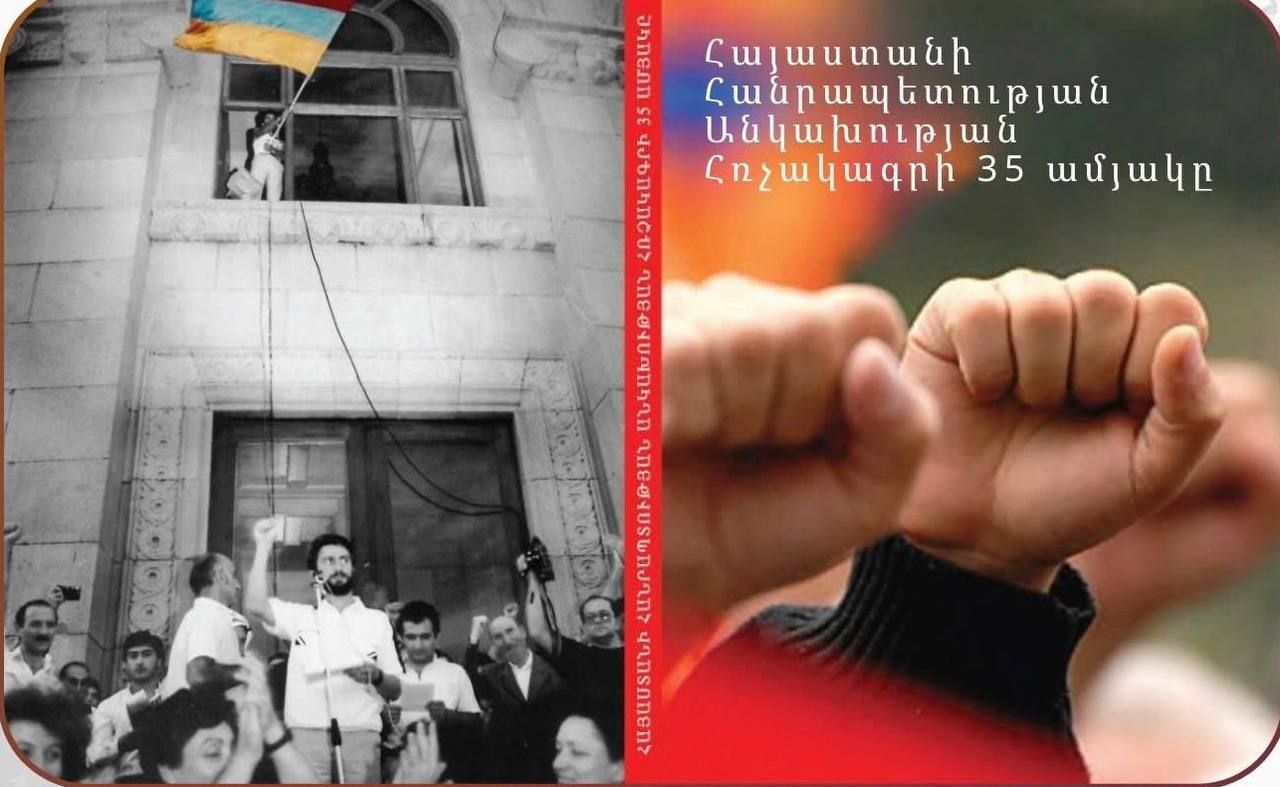
According to Manukyan, these materials are extremely valuable. Some documents are published for the first time: “I took several papers from the Echmiadzin archive; we photocopied them. These are the Catholicos’ encyclicals, decrees and addresses—all related to independence. These documents are an inseparable part of our history.”
Aram Manukyan’s “The Color of Independence” exhibition and book presentation carry a common message: to remember, preserve and defend independence as the foundation of collective dignity. It is a reminder that independence is not only a historical fact but also a continuous responsibility for every generation.
For more on Aram Manukyan and his works, follow him on Facebook.