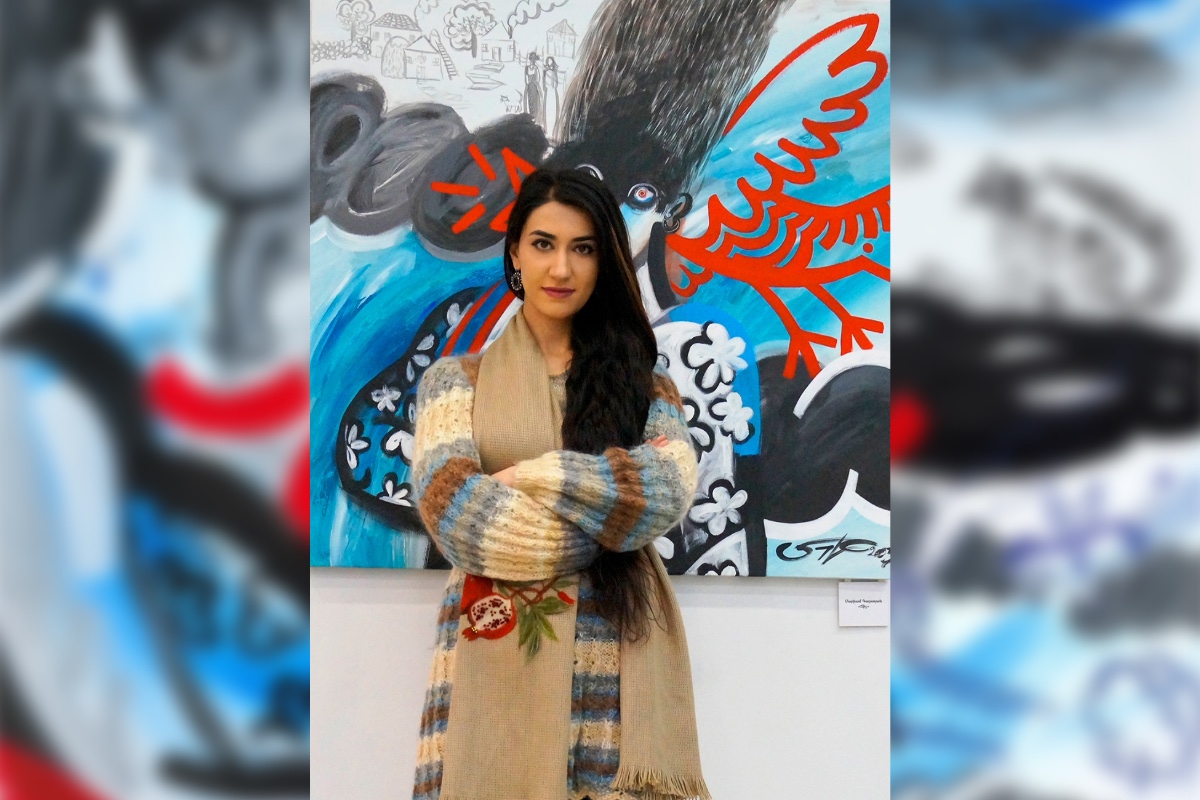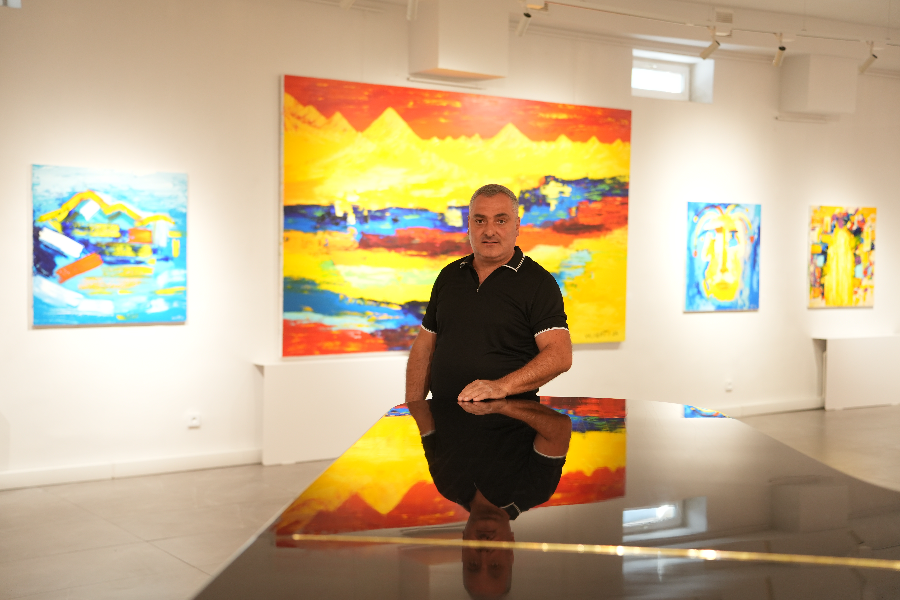
This year, for the second time, the Museum of Contemporary Art of Yerevan (Mashtots 7) hosted a solo exhibition of Vachagan Poghosyan—known as Valbert. From August 9 to 31, 42 canvases created between 2024 and 2025 were on display. According to the artist, they represent only a small part of the vast world of colors and images he carries within himself. He is already preparing next year’s exhibition, which, as always, will feature entirely new works.
If last year’s exhibition was titled Symphony of Colors, this year’s show bears the symbolic name, Parade of Colors. As Valbert told the Weekly, the colors were so diverse and radiant, they resembled a wandering parade. Visitors often note the light and sunny rays that fill the exhibition hall.
This exhibition marks the artist’s 41st solo show. His works have previously been exhibited in Gyumri and Yerevan, as well as in Moscow and Chelyabinsk. When asked if he has a favorite painting, Valbert replied with a smile: “My favorite painting is always the one I have not yet painted. When I finish a new work, the next one becomes the most special. So, my favorite always lies ahead—in the future.”

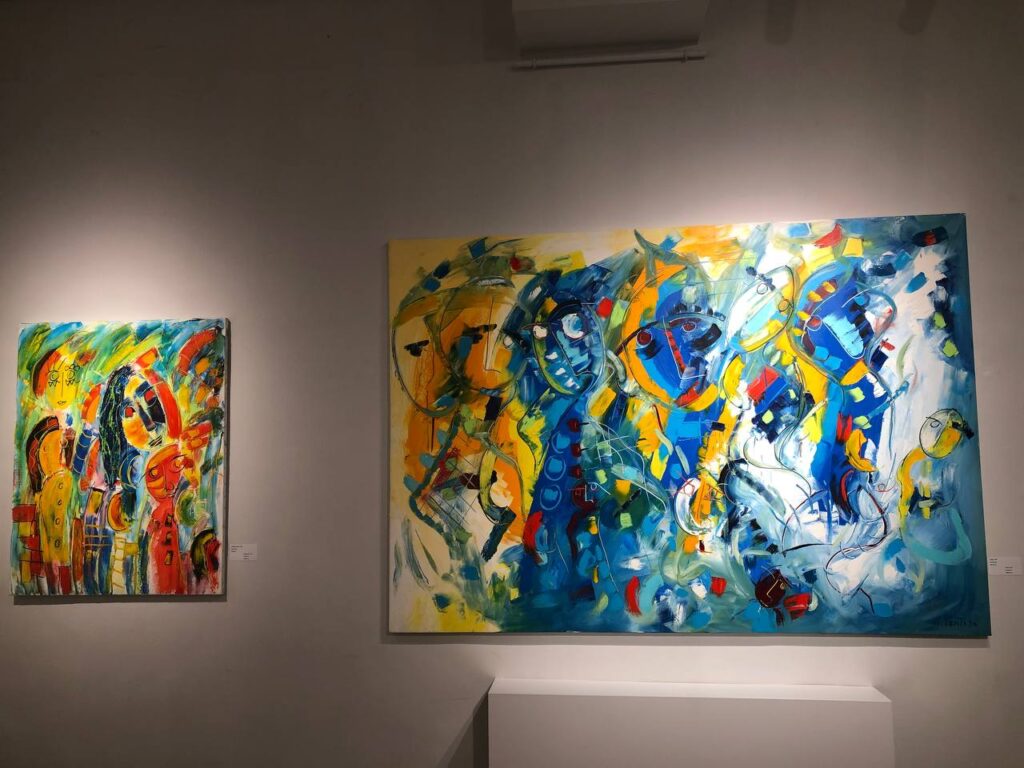
Art critics find it difficult to define Valbert’s creative genre precisely. His works include cosmic visions, portraits and landscapes. Yet, as he himself emphasized: “Today, defining genre is not essential; what matters is the idea and the energy that a painting conveys.”
Born in Gyumri, Valbert maintains his studio there. Physically, he paints in Gyumri, but spiritually, he always dwells in another reality. “The safe place for creation is my inner world,” he explained. “It is a world beyond the world, where the canvases are born.”

Valbert sees colors not as material shades but as living entities. He converses with them as he would with people. From this dialogue, the canvases emerge—and then the canvases themselves begin to speak to viewers.
“I consider myself a painter of colors and energy,” Valbert said. “What I pass on to people is energy—and that is truly priceless. Through paintings, this force reaches each visitor.”
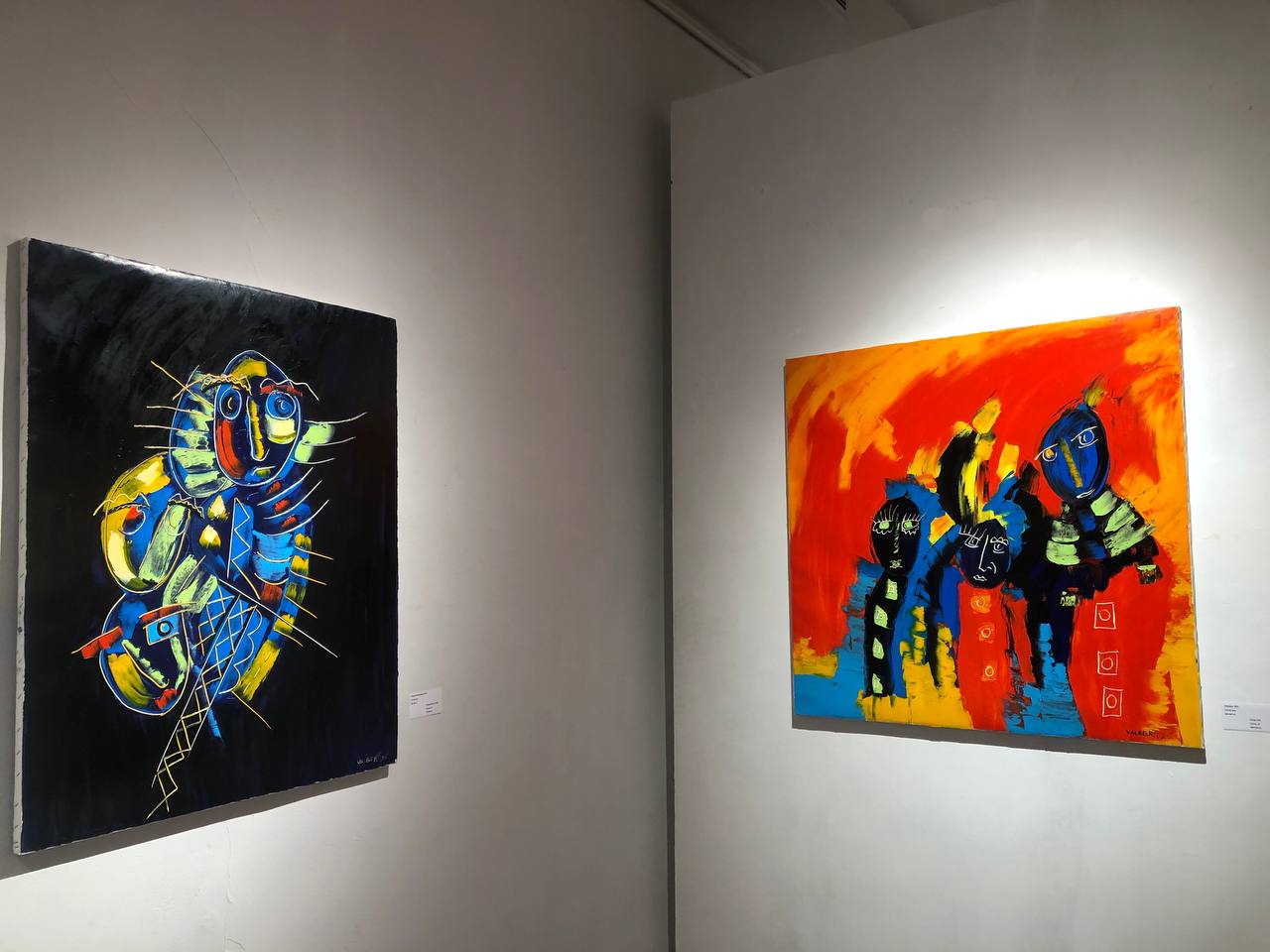
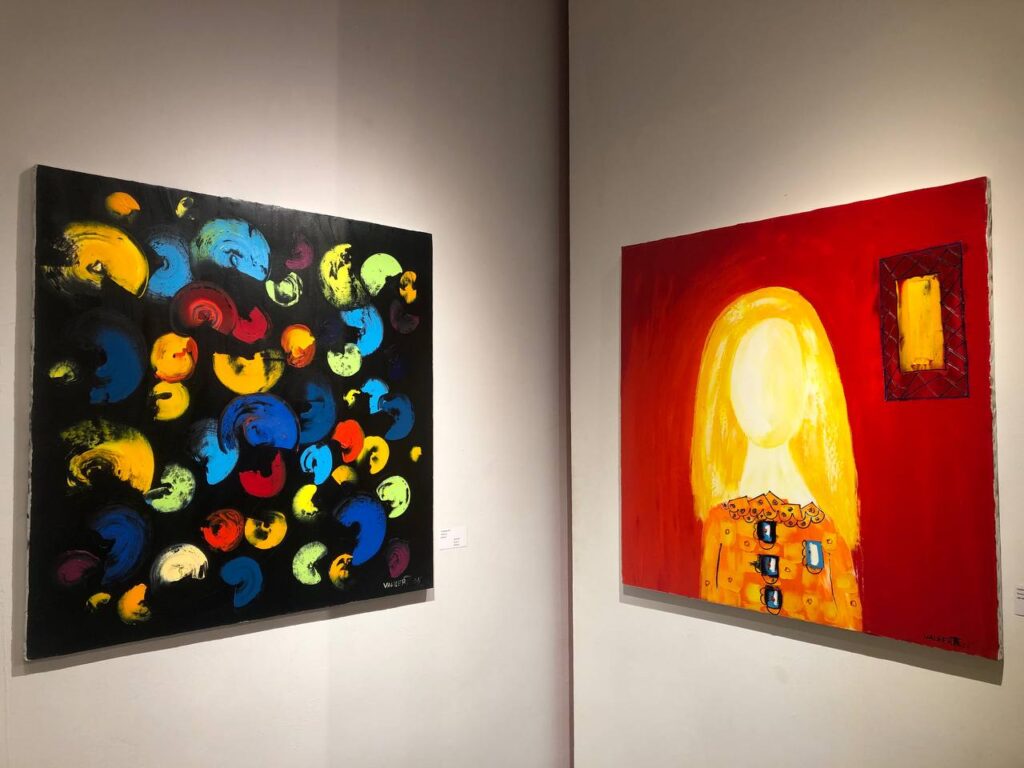
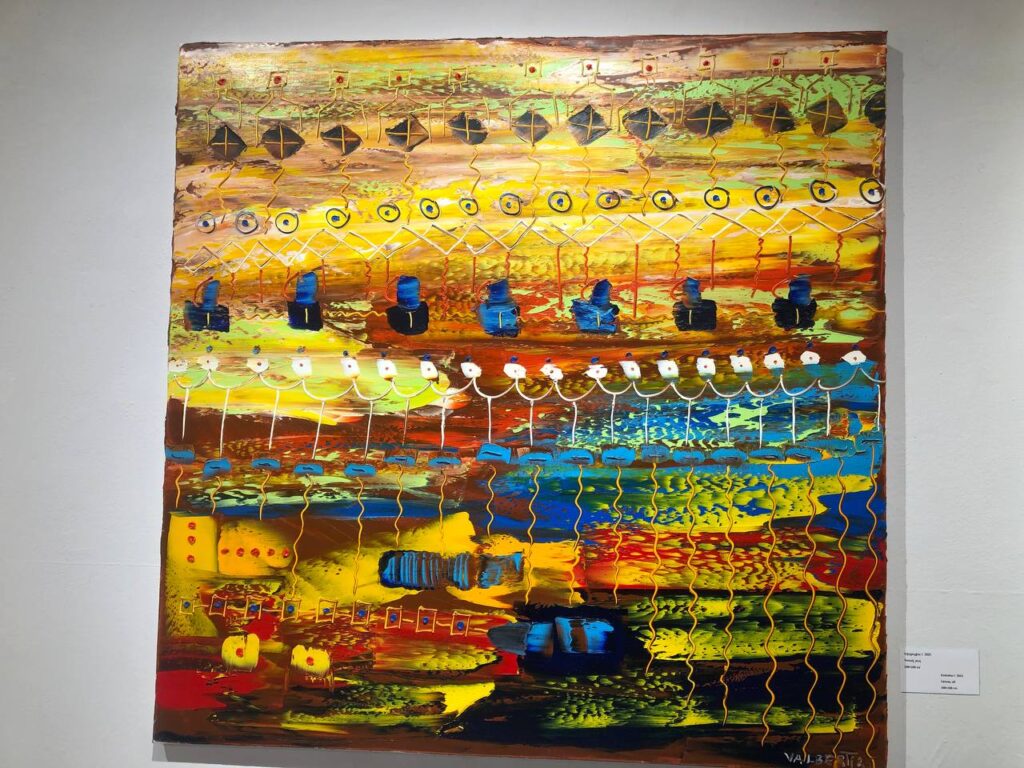
Faith is ever-present in his creations: themes connected with the cosmos, the idea of God and the mystery of life are constantly reflected in his colors. Several of his works illustrate this philosophy. In Golden-Haired, he depicts a pure and innocent child. The child seems faceless, but, as the artist notes, if you gaze long enough, you will see a smile appear. Another striking piece, Living Light, was originally to be titled Devoured. The painting depicts nets and fish, symbolizing the dangers of life, but ultimately, the idea of light prevailed.
Symbolism plays a major role in Valbert’s artistic world. In Devoured, for instance, the nets and hooks represent temptations that people inevitably encounter. “The fish is tempted by the bait; likewise, if a person does not preserve the living light within, he or she is easily lured by worldly things. It is precisely that living light that protects us and keeps us away from dangers,” he noted.
Still, Valbert emphasized that his paintings often require no explanation. Each viewer brings their own perception to the canvas and interprets its meaning individually.
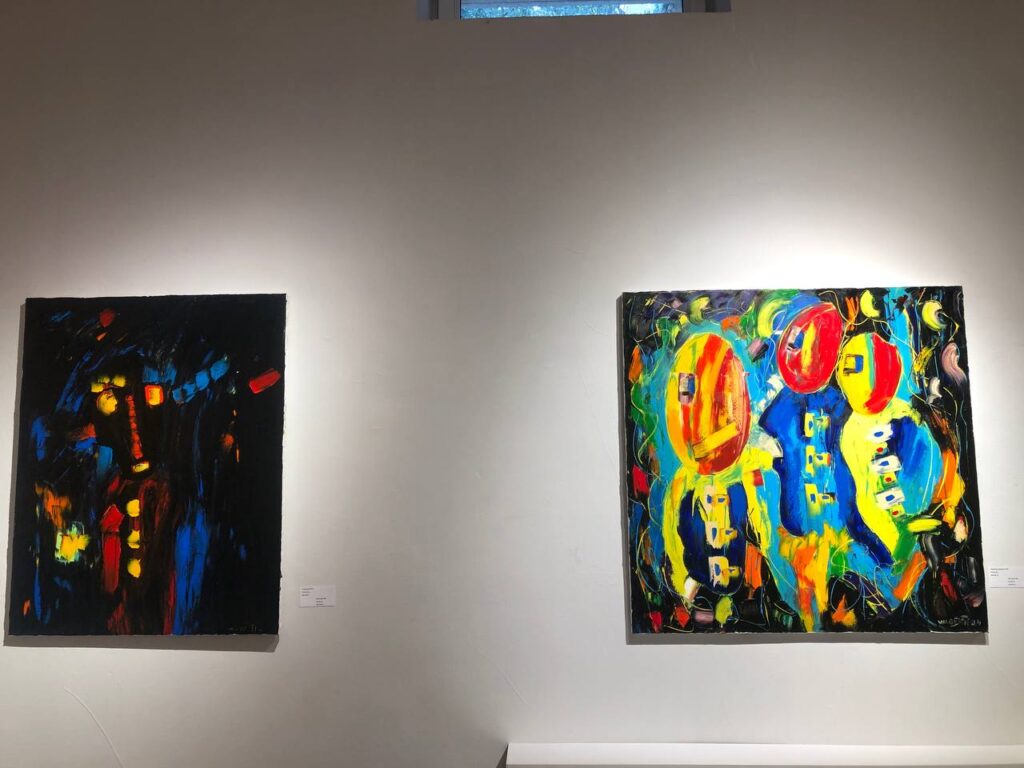
His works often feature mysterious figures and geometric forms. “I am only a transmitter,” Valbert explained. “God gives the image; I merely try to render it as accurately as possible on canvas. Many times, I don’t even understand why I place certain forms, but I am certain their meaning lies beyond me.”
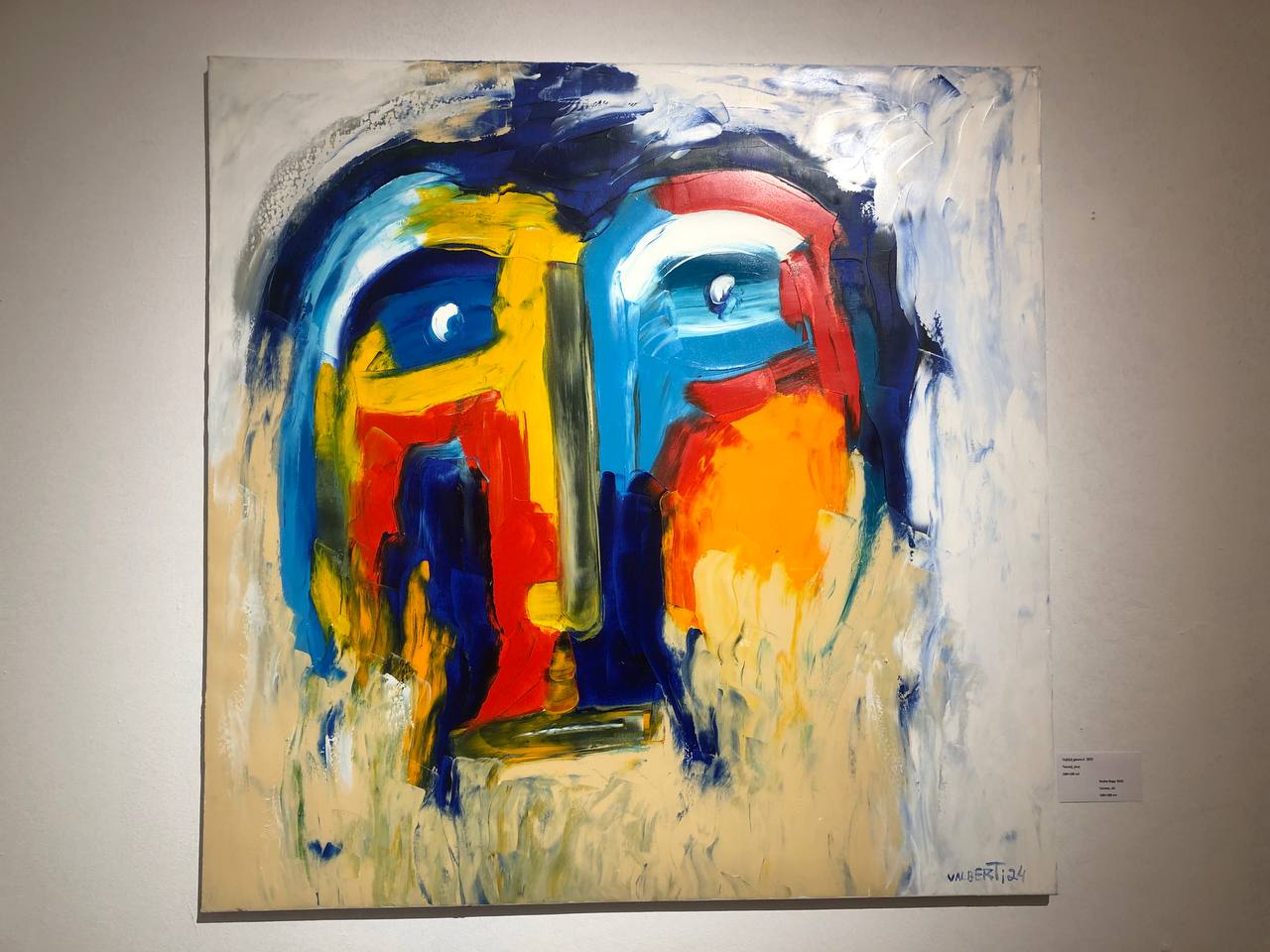
Valbert creates large-scale canvases in two stages. First, the painting is born within him, then it is expressed immediately on canvas. Some of his largest works have been completed in as little as three hours. “It is like a volcano—accumulated energy suddenly erupts and becomes an image. But at that moment, the energy is so immense that I am left completely drained.”
His artistic process extends beyond traditional canvas work. A few years ago, a company in Yerevan produced a collection of scarves featuring his paintings, complete with the artist’s signature. He has also produced colorful books filled with hundreds of painted pages.
For him, it makes no difference whether he works on canvas, paper or other materials. “The fire of creation goes beyond form. What matters is energy. When color ceases to be merely color and becomes alive—when it begins to speak to people—only then is a true painting born,” he said.
Valbert’s family plays a central role in his life and work. “My first viewers and critics are always my family members,” he shared. “My wife is the first to see my works. Very often she says, ‘This canvas is not convincing,’ or suggests changes. Sometimes I agree, sometimes not. But what matters is that she feels everything I do. If I were to describe her, I would say she is my moon—I cannot exist without her. And my mother is my sun; we are all gathered around our sun,” the artist said, with a smile.

This worldview is not limited to national traditions. Valbert stressed that love for one’s parents is universal: “Regardless of nationality, a person must have that love for their parents. On my land, God is my mother.”
At the foundation of his art, there is always light and kindness. Visitors often arrive at the museum in a sad mood and leave smiling. “The most important thing is that people feel the energy. Even if someone enters the hall feeling down, I want them to leave illuminated.”
Before this stage of his creativity, Valbert devoted many years to the theme of genocide, aiming to fight against indifference. In recent years, however, his focus has shifted to light, love and energy. He accepts criticism as calmly as praise. “I know who I am. I know that colors and energy were born with me. My dream has always been to leave a trace in world art. Whether that happens or not is secondary. What matters is that I believe in it.”

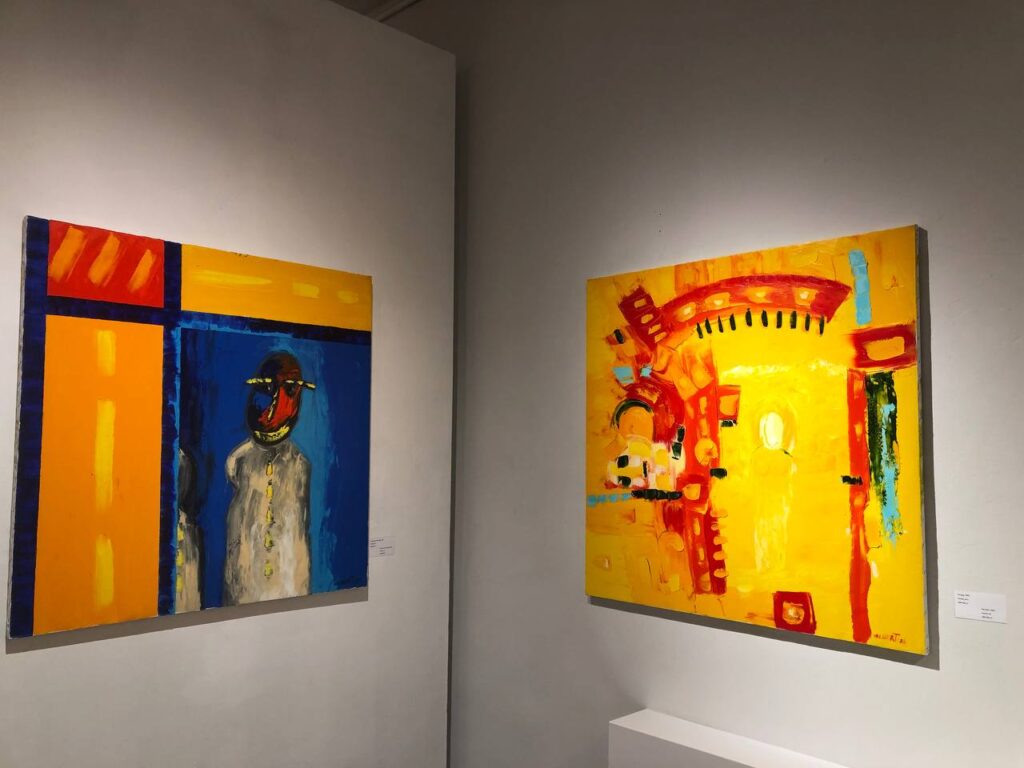
Valbert began painting at the age of six, and his first solo exhibition took place in Gyumri in 2009. Since then, he has held several exhibitions every year and has created more than 500 canvases. Valbert’s works are kept in his home, which also serves as his studio. He plans to open Valbert’s Art Gallery, where visitors will always be able to see his newest works.
Valbert considers himself an artist not by education but by birth. “Education can make someone a good professional, but to truly understand painting, one must have that inner feeling. Color must be alive and carry energy. Only then does a painting truly speak to people,” he concluded.
Valbert’s creative world is a story of light, love and energy. For him, art is not simply an occupation, but a calling bestowed at birth. And most importantly, he believes that his paintings can lift spirits and make the world a little brighter.
For more information on Valbert and his world, you may follow him on Instagram and Facebook.