


U.S. policy in the South Caucasus: Keep Turkey in, Russia down and Iran out

Background
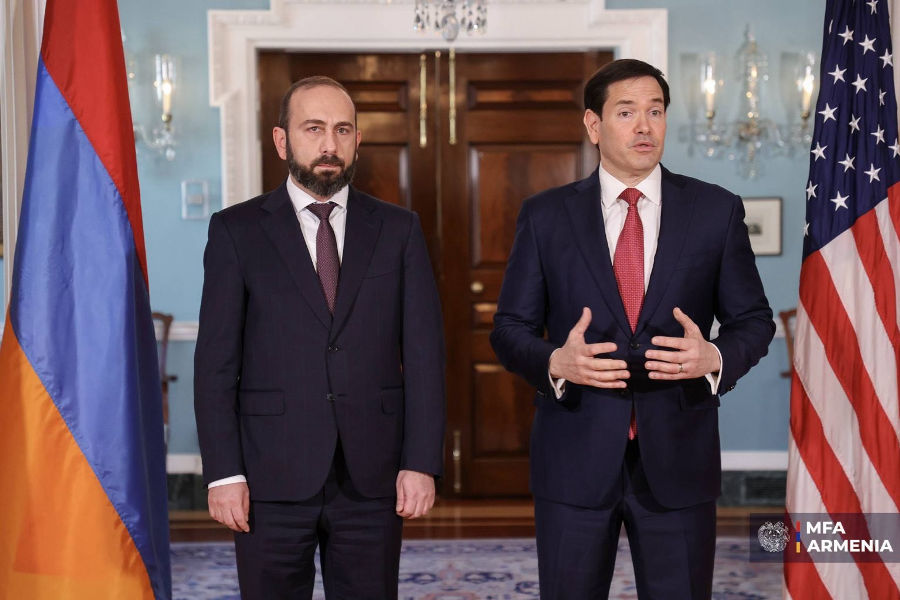
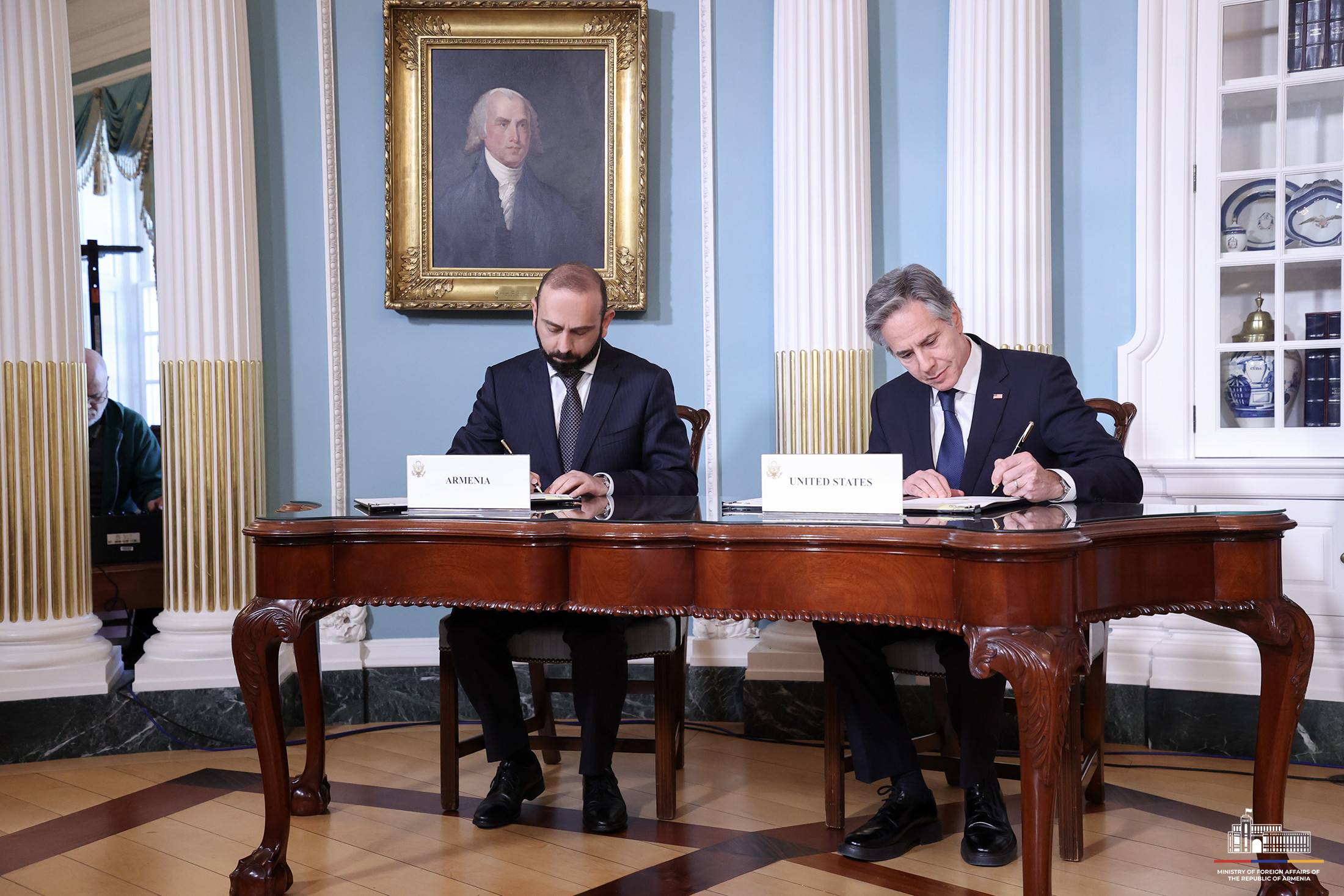
On August 8, Armenia’s Prime Minister Nikol Pashinyan, Azerbaijan’s President Ilham Aliyev and U.S. President Donald Trump endorsed a memorandum of understanding with seven points, affirming their commitment to finalize a peace agreement. At the same time, bilateral agreements were signed between the U.S. and each country separately.
According to Narek Sukiasyan, a research fellow at the Center for Culture and Civilization Studies at Yerevan State University, the clauses in the memorandum carry considerable geopolitical weight. Most directly, they mandate the disbanding of the Organization for Security and Cooperation in Europe (OSCE) Minsk Group, which was co-chaired by the U.S., France and Russia to help resolve the Nagorno-Karabakh conflict peacefully. Baku has marginalized the group since 2020.
The memo’s third point—likely its most crucial—advocates for the opening of borders and transport routes, reinforcing Armenia’s sovereignty, territorial integrity and jurisdiction, with reciprocity mentioned later in the paragraph. In this context, Baku included the word “unimpeded” concerning its sought-after connection to its exclave Nakhichevan, paired with “reciprocal benefits” for Armenia.
The practical implication is that Azerbaijan would obtain access to Nakhichevan via Armenia’s Meghri in the Syunik region, which borders Iran. Yet, the route would remain under Armenian jurisdiction without extraterritoriality or sovereignty. Yerevan would receive reciprocal benefits through Nakhichevan, gaining access to Syunik and possibly to Iran and Russia.
Nonetheless, the setup is not entirely mutual. The Meghri route—dubbed the “Trump Route for Peace & Prosperity” (TRIPP)—would be operated and controlled by the U.S. and other foreign contractors. In contrast, the Armenian railway access via Nakhichevan would fully be operated by Azerbaijan. This arrangement offers Yerevan fewer assurances about the mutual completion and security of TRIPP. The word “unimpeded” is unclear, probably suggesting that the operator interacts directly with Azerbaijani travelers and merely provides reports to Armenia out of sight.
Note that the same word was used in the trilateral statement signed on November 10, 2020, between Russia, Armenia and Azerbaijan. This ambiguity and the necessity to clarify every detail could either postpone the conclusion of the peace agreement or create pressure on Armenia to relinquish additional operational control. Most importantly, the memorandum clearly mentions that the U.S. does not intend to send soldiers on the ground and that its role is primarily commercial and not a security guarantor.
Armenia’s former foreign minister, Vartan Oskanian, wrote on his Facebook page that regardless of how it is packaged, the TRIPP proposal means “Armenia agrees to give up part of its sovereign territory.” He stressed that it makes no difference whether the route is administered by Armenia, the U.S. or an “international manager,” leased for 100, 10 or one year or presented under neutral diplomatic wording. The fact remains, Oskanian said, that Armenia would be agreeing—temporarily or permanently—to relinquish control over a portion of its sovereign land, which is unacceptable.
Moreover, the former diplomat argued that for years, the so-called “Zangezur corridor” has been used by Baku as a political weapon to challenge Armenia’s sovereignty and reshape the post-war settlement. Instead of rejecting the demand outright, Washington’s mediation has legitimized it, turning an artificial Azerbaijani claim into a subject for “creative solutions.”
Past experiences have shown Azerbaijan’s ability to maneuver among regional and great powers, while Armenia in the last five years, has been in a position of weakness, making unilateral compromises. Iran, on its side, has openly warned it will not tolerate any foreign presence in Syunik, while Russia has kept a “diplomatic profile,” assessing the situation and thinking of its share of the pie. Turning Syunik into a geopolitical bargaining chip may endanger both Armenia’s security and regional stability.
Iran: The biggest loser
Iran’s Foreign Ministry has welcomed the finalization of the peace agreement text, calling it a “significant step toward achieving lasting peace in the region.” However, the ministry also expressed concern over the foreign intervention near its border that could undermine regional stability and stressed respect for the territorial integrity of neighboring states, hinting at opposition to any border changes with Armenia.
Iranian President Masoud Pezeshkian also made a similar “soft” remark. It was announced that he will visit Yerevan officially in the coming days.
Nevertheless, it is no more secret that the establishment of TRIPP will enhance U.S. regional influence while diminishing Iran’s access and traditional influence in the South Caucasus.
Three factors should be taken into consideration:
Shaping Armenia’s ‘Western Alignment’
Armenia is increasingly shifting toward Western alliances, deepening ties with the U.S. and the European Union, though without concrete commitments. This alignment or shift not only limits Iran’s diplomatic space but also supports development of alternative trade and energy routes that bypass Russian and Iranian territories.
By doing so, the U.S. aims to bring Yerevan and Baku under its orbit and detach them from future commitments related to the International North-South Transport Corridor (INSTC), which aims to connect Russia to Iran and the Indian Ocean. Thus, isolating the two traditional regional actors in the South Caucasus would ultimately pave the way for Turkey, the sole remaining regional player, to increase its influence.
Turkey: NATO’s instrument in the region
Turkey is seen as a bridge for NATO’s interests in the region, reducing Tehran’s and Moscow’s influence and increasing the alliance’s reach into Central Asia. In the long run, Ankara will shape the geopolitical and geo-economic future of the region—ranging from the Black Sea to the Caspian Sea—to create a buffer zone against China’s rising influence.
For this, it needs NATO backing to operate the Turkey-initiated Middle Corridor connecting the West to the East and increase its influence over the ‘Turkic World’. However, Turkey is calculating its steps and seeking its own strategic autonomy without antagonizing its traditional regional competitors. For this purpose, it is ramping up domestic missile production to strengthen deterrence and assert its role as a regional power.
Consolidating Israeli presence in the region
Alex Raufoglu wrote in the Kyiv Post that this deal has broader implications. Officials have hinted that a potential “Abraham Accords 2.0”—a reference to the 2020 normalization deal between Israel and some Arab countries—would be implemented and expanded to the South Caucasus.
This process could bring Israel closer to the region, as both Baku and Tel Aviv already have security relations, further weakening Iran’s position in the region. Israel has already deepened its military ties with Azerbaijan, supplying weaponry and intelligence tools. This strategic relationship serves both to counter Iran and reinforces the Western bloc in the region.
Through this partnership, Israel effectively projects power toward Iran from the north, thus limiting Tehran’s regional maneuverability, increasing tensions in its northern provinces and contributing to its strategic encirclement.
However, the toughest message from Iran came from Ali Akbar Velayati, senior adviser to Iran’s supreme leader. He said that with or without Russia, Iran will thwart the creation of an “American corridor” in the South Caucasus. When asked about an agreement that will grant the U.S. a “99-year development lease on the corridor,” he called it a “graveyard of the mercenaries of Donald Trump.”
Russia: A sleeping bear with an open eye
Due to Russia’s overstretched military and political focus on Ukraine, it has gradually lost its traditional role in the South Caucasus. The withdrawal of Russian troops from Nagorno-Karabakh in 2023 and the inability of the Russian-led Collective Security Treaty Organization (CSTO) to defend Armenia against continued Azerbaijani aggression in 2021 and 2022 pushed Armenia to question the alliance and look for alternative security partners.
Moreover, recent tensions between Azerbaijan and Russia—including mutual arrests and detentions of journalists of opposite ethnicities in both countries—have further isolated Russia politically, thus reducing Moscow’s influence as the region’s ultimate power broker.
Analysts argue that Trump’s brokered agreement would sideline Russia, stripping it of the role it dominated in the region for two centuries. Russian Duma member Kostantin Zatulin said that the agreement aims to “squeeze Russia out of the Caucasus.” Some went even further, calling it a “geopolitical blow” for Moscow.
Russia’s Foreign Ministry spokeswoman Maria Zakharova took a softer tone, saying that Russia is interested in regional stability and calls for revival of the regional 3+3 platform—as if the South Caucasus were far from “Russia’s abroad.”
In a telephone conversation between Armenia’s prime minister and Russian President Vladimir Putin, the latter welcomed the “importance of steps that contribute to ensuring a stable peace between Yerevan and Baku” and expressed Russia’s willingness to help. Both sides also emphasized further development of trade, investment cooperation and interaction within the Eurasian Economic Union.
However, Russian media took a harsher stance. According to Sputnik International, U.S. control over the route in Syunik would threaten to encircle Russia’s Caucasus flank and derail the ambitious International North-South Transport Corridor. By diverting traffic, TRIPP may undermine the influence of key regional players such as Russia and Iran, in addition to India.
Russian media also warned that this project is a “suicide plan” for Armenia, where Prime Minister Pashinyan aims to dismantle traditional ties with Russia, hoping to integrate in the Euro-Atlantic bloc that may “never open its doors,” leaving Armenia vulnerable “with no real guarantees in return.”
However, beyond the media and official narratives, looking at historical experiences and Russian maneuvering spaces, one should ask: Is Russia losing the South Caucasus?
South Caucasus Railway, a subsidiary of Russian Railways, operates Armenia’s railways. As mentioned in the November 10, 2020, trilateral statement by Russia, Armenia and Azerbaijan—which also aimed to open communication channels—Russian border guards were to be stationed in southern Armenia to guarantee route safety connecting Armenia to Azerbaijan. That is, even if a U.S. company operates the route connecting Azerbaijan to its Nakhichevan exclave via southern Armenia, for the time being, the railway will be operated by a Russian company, and Moscow’s economic interests would be secured.
If the U.S.-brokered agreement is implemented, Armenia would also have access to Iran and Russia through Azerbaijani railways. While the U.S. and Russian leaders are scheduled to meet in Alaska on August 15 to discuss ending the war in Ukraine through a “territorial swap,” it would not be surprising if both leaders addressed the issue of communication in the South Caucasus. Moscow may at least preserve its economic interests in exchange for providing certain political concessions or arrangements with President Donald Trump in the region.
Reflections
This route will have geopolitical consequences that will shape not just the future of the South Caucasus but the entire neighborhood. Armenia may gain temporary peace, at least as long as President Trump remains in office, but the agreement will give Turkey and Azerbaijan a logistical and military advantage. Iran will be exposed to regional isolation, and in order to prevent the establishment of the “pan-Turkic arc,” it will have to deepen ties with Armenia and Russia and bring China and India to its side.
Russia will gain a new logistical artery unless the U.S. prevents it. However, in the long run, if the status quo continues shifting towards Turkey and the West, Russia’s influence will evaporate and turn into a pipedream. Nevertheless, historical experiences have shown that Moscow has found different ways to make a comeback. Turkey, Azerbaijan and Israel will be the main winners.
Ankara will secure a direct link to Central Asia and increase its influence there. Turkey’s Foreign Minister Hakan Fidan recently commented that the route will run “uninterrupted from Europe to the depths of Asia,” if implemented per Turkey’s strategy.
Meanwhile, Baku will also consolidate its important transit role between the East and West and seek to become a regional geopolitical actor. Moreover, this “nostalgia of the victor” will not stop it from demanding additional concessions from Yerevan, whose maneuvering spaces are shrinking.
Extra-regional actor Israel will consolidate its presence in northern Iran and continue its espionage activities against the Iranian government. With China’s continued passive role towards this project, the U.S. will increase its leverage on the East-West route by engaging in bargains with the EU and China, extracting additional concessions from both while controlling key transit routes in Eurasia.
Within this context, Armenia and Azerbaijan publicized the draft peace agreement, composed of 17 points. Besides respect for international laws, the parties pledged to combat “separatism,” “racial hatred” and “intolerance.” They also declared to undertake measures to withdraw or dismiss from all interstate claims and disputes; that is, cases from international legal bodies such as the International Court of Justice.
Of course, challenges lie ahead, particularly in the implementation process and in interpreting specific wording.
It is a kind reminder that power dictates the terms—not values.

Well said Yeghia.
Iran may be the biggest loser here, but sadly she is not alone, Armenia is equally the biggest loser in the long run. Look at the historical experience, about 17 hundreds year ago bulk of Armenian society, back then, turned their back to the Persian empire and joined to Roman empire(so called Westerner), what has happened to them?! Where are their descendants? what has happened to the big chunk of the Armenian land those Armenian used to live there? Is not part of Turkey today?! The country nowadays called Armenia belong to your ancestors who decided to be with Persian. Iran and Armenia have common enemy, and this makes them natural ally, but when you choose to turn your back on Iran and join our common enemy, it is your choice, but we both pay the price of your decision. TRIPP just in name is different from Zangezor corridor, and current government of Armenia is well aware of this fact, but denying it and pretending otherwise is an insult in itself. America puts fox in charge of the hen house! as you alluded towards the end of your essay.
I always enjoy your well reasoned insights. This piece is no exception. In a sea of disinformation and propaganda, I deeply appreciate them.
I continue to see true energy independence as critical for the future of the Republic of Armenia. Metsamor renewal broke the earlier energy blockade.
I see a further upgrade with US technology as having a similar impact and within reach. The EU (selfishly and hypocritically) will be delighted with reduced risk of radiation from the East.