


Do I exist?
Born and raised in Artsakh, I have carried a question with me for as long as I can remember. It was never more real than when, as a young woman, I applied to numerous international programs aimed at empowering youth and women—only to face rejection after rejection. The reason was always the same: Artsakh does not officially exist. The state I called home is unrecognized, and with that invisibility came barriers.
I carried this feeling during the 2020 war, when I stood alongside women from Artsakh organizing protests outside foreign embassies. When I urged diplomats to visit and see the reality in Artsakh, they told me their mandates did not extend beyond certain borders. At the same time, the same embassies and media spoke of wounded children from places like Vardenis or Ganja/Gandzak but rarely mentioned Victoria Grigoryan, the eight-year-old girl from Artsakh who was the first child casualty of that war.

I experienced this feeling again during the blockade of Artsakh that followed—a long and suffocating silence that lasted nearly 10 months. We shouted to bring attention to the siege and its consequences, while the international community remained almost silent. When that silence was shattered on September 13 by Azerbaijani missile attacks that led to the ethnic cleansing of all Artsakh Armenians, The New York Times published that “No One Saw It Coming.”
I felt this same feeling when we reached Armenia after forced displacement, only to be told we had no citizenship. I realized that despite living in Artsakh for 40 years and carrying an Armenian passport, I was not a citizen of any state.
I felt this feeling once more last year while studying at The Fletcher School. Despite what had happened in Artsakh just before I began, discussions about conflicts made almost no mention of the ethnic cleansing and suffering its people endured.
I felt this feeling again a few months ago when I visited Saryan Street in Yerevan, at a gathering of women in a wine shop. There was a map displaying the history of Armenian wine, but it made no mention of Artsakh’s centuries-old winemaking traditions. It completely omitted the unique Khndoghni Sireni grape, which comes from Artsakh, along with the rich vineyards and wines long produced on Artsakh’s lands.

My family and compatriots have cultivated vineyards for generations. It was not just about growing grapes—it was a deep community tradition. No family could manage the vineyards entirely on their own; there was a longstanding custom of relatives and neighbors coming together to help each other. Our lives were built around these shared efforts. Almost every family made their own wine and vodka, which they then shared generously with relatives and guests.
Both the 2020 and 2023 wars came during the harvest season, forcing people to leave their unharvested grapes behind.
We have lost more than just our homes and vineyards—we have lost our community life.

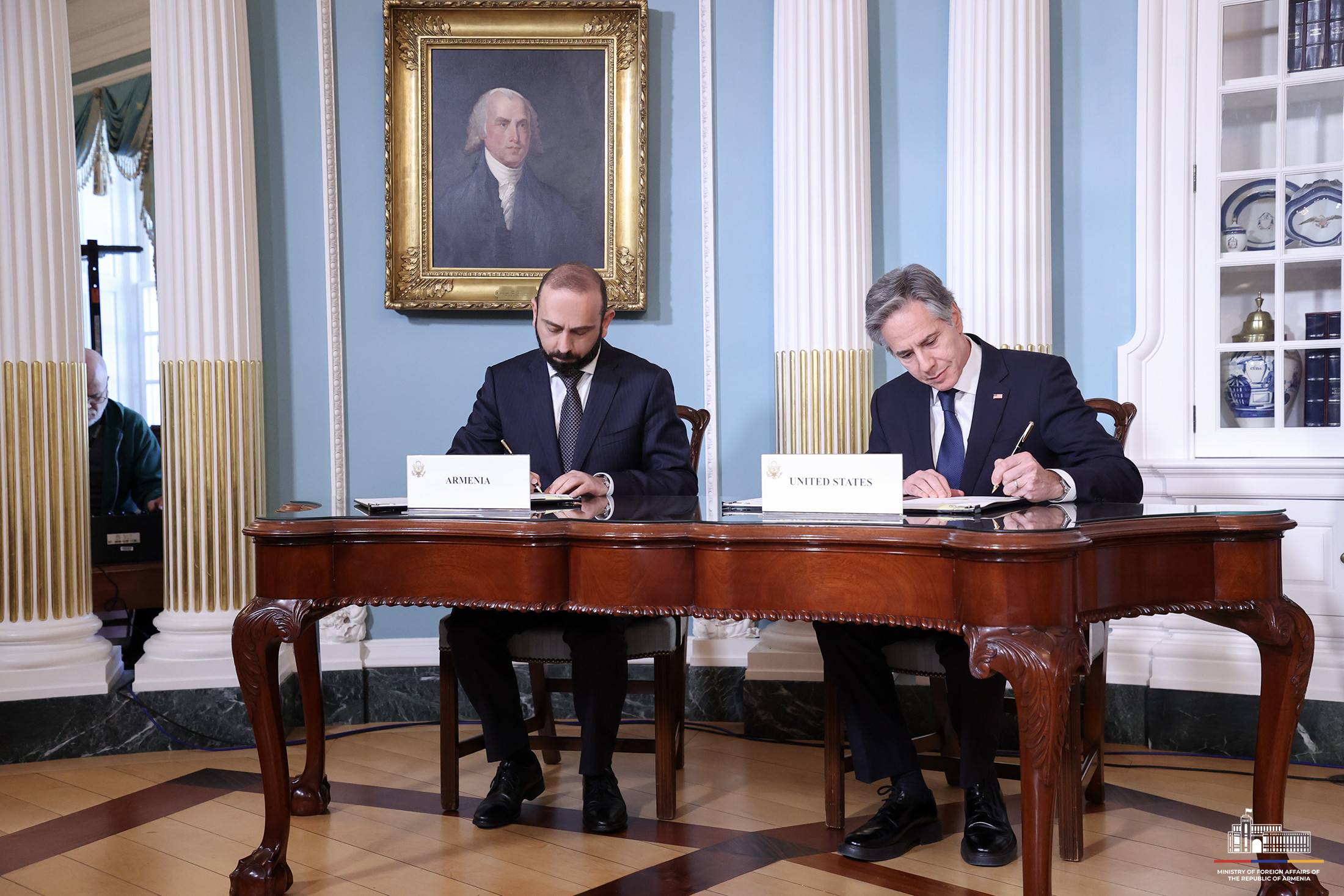
Since Friday’s announcement of the Trump-Pashinyan-Aliyev agreement, this silence has deepened. Even as many international leaders hailed the deal as a pathway to greater prosperity and peace—both during the discussions and in subsequent statements—there has been no mention of Artsakh’s suffering: no acknowledgement of the forced displacement and ethnic cleansing that have reshaped lives; no recognition of the fundamental right of Artsakh Armenians to return collectively to their homeland; no word about the hostages still held unlawfully captive in Baku; and no concern for our rich cultural heritage now teetering on the brink of annihilation.
When a reporter directly confronted the leaders, asking about the future of Nagorno-Karabakh and the fate of its displaced people, the question was simply ignored. It was a silence that rendered us invisible, as if we had been erased from the map of global concern—as if we do not exist.
So, I ask again: do I exist?


Siranoush,
Thank you for bring up a very important subject and discussing what has been going on to Artsakh.
I hope you voice and others on the subject of Artsakh will be heard.
This story touched me so much , can someone please put me in touch with Siranush