



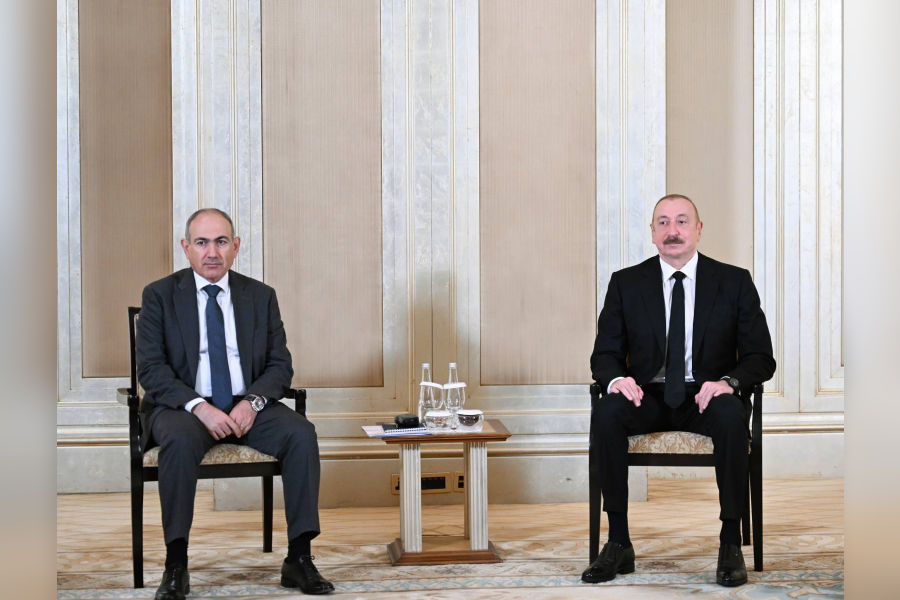
YEREVAN—A high-stakes trilateral meeting between U.S. President Donald Trump, Armenian Prime Minister Nikol Pashinyan and Azerbaijani President Ilham Aliyev is scheduled for this Friday in Washington, D.C., where a memorandum of understanding is expected to be signed as part of ongoing peace efforts.
According to regional sources cited by Middle East Eye, while the memorandum signals a diplomatic milestone, critical issues remain unresolved, casting doubt on the durability of any agreement reached.
The signing ceremony will take place at the White House, with President Trump hosting both leaders in an attempt to broker a lasting peace after a tentative draft peace treaty was agreed upon in March. Yet, Azerbaijan continues to press for several stringent conditions prior to formal ratification—foremost among them, a demand that Armenia amend its constitution, a process requiring a national referendum and widely perceived in Armenia as an infringement upon its sovereignty.
This summit follows a July meeting between Aliyev and Pashinyan in Abu Dhabi, where Aliyev expressed optimism about finalizing the agreement’s text within months. Nevertheless, experts caution that the anticipated document may amount to little more than a formal declaration of intent, sidestepping core disputes and potentially pressuring Armenia into further concessions.
A particularly contentious issue is the so-called “Zangezur corridor,” a proposed transport route traversing Armenia’s southern Syunik province. Armenian officials firmly reject both the term and the concept, arguing that it carries irredentist implications that threaten the country’s territorial integrity.

Last month, the U.S. ambassador to Turkey proposed that an American company lease and operate the corridor for 100 years to address security concerns. While Yerevan initially wavered on allowing third-party oversight within its borders, Azerbaijan ultimately rejected the proposal outright, maintaining its expansionist claims.
Negotiations were further complicated by Turkey’s initial proposal to place corridor management under a private company jointly approved by Armenia and Azerbaijan. Armenia’s insistence that management extend to the Nakhichevan side of the corridor was unacceptable to Azerbaijan, underscoring the deep divisions that persist despite diplomatic overtures.
The strategic implications of the so-called “Zangezur corridor” extend far beyond regional transport and diplomacy, raising serious concerns about broader geopolitical shifts in the South Caucasus.
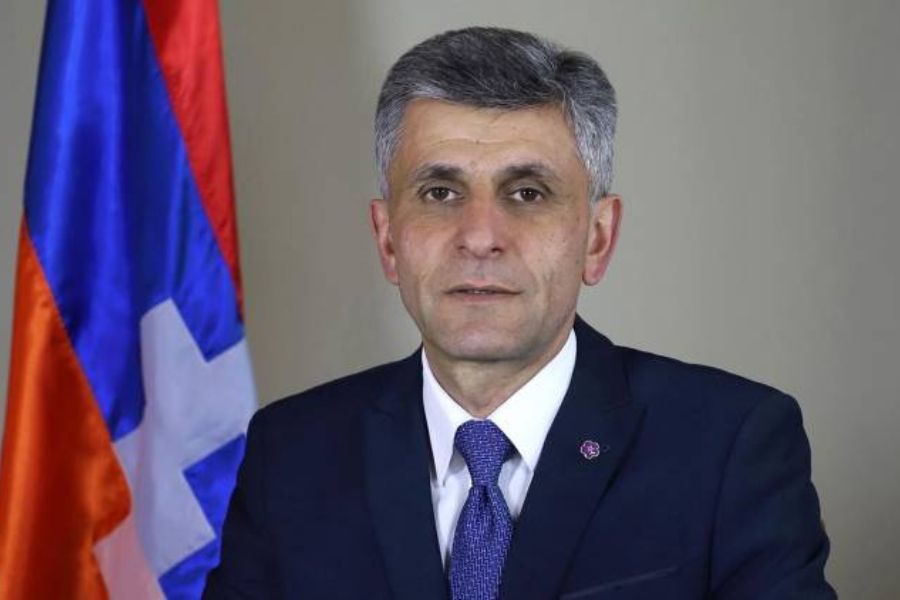
Dr. Vahe Davtyan, a political scientist and energy security expert, recently highlighted these risks, emphasizing the corridor’s role within Washington’s larger geostrategic ambitions. He explained that the formation of the corridor fits within the framework of the U.S.’s “Anaconda Strategy,” designed to economically and geopolitically isolate Iran by disrupting its key transit routes. According to Davtyan, this aligns with similar initiatives like “David’s corridor” and the “Ben Gurion canal,” which aim to block critical regional infrastructure and hinder the North-South corridor linking Russia, Iran and India.
Davtyan also noted that the corridor could help the U.S. counter China’s Belt and Road Initiative by limiting Beijing’s growing presence in Central and Western Asia. This approach would not only limit Chinese geopolitical expansion but also preserve American leverage over vital Europe-Caucasus-Asia communication routes, indirectly restricting the European Union’s economic independence—a particularly sensitive issue as the EU pursues diversification in its energy transport policies. Such diversification could potentially threaten the U.S. position as a key energy supplier in the European market.
The corridor also serves to undermine Russian influence in the region by disrupting strategic ties between Russia and Iran and excluding Russia from critical infrastructure projects. Domestically, this geopolitical maneuvering is reflected in Armenia through crackdowns on Russian-backed businesses, the introduction of experimental American modular nuclear reactors and a broader reevaluation of Armenian-Russian relations.
Following the announcement of the upcoming Washington summit, Ali Akbar Velayati, senior advisor to Iran’s Supreme Leader, issued a stern warning over the proposed “Zangezur corridor.” In a post on X, Velayati criticized what he described as certain governments’ “prioritizing their own interests while disregarding regional concerns,” asserting that they are “closing all doors as they push forward their illegal objectives in the South Caucasus.”
Velayati reiterated Iran’s firm opposition, warning that implementation of the corridor project could result in the “land-based isolation” of both Iran and Russia, posing a threat to regional stability.
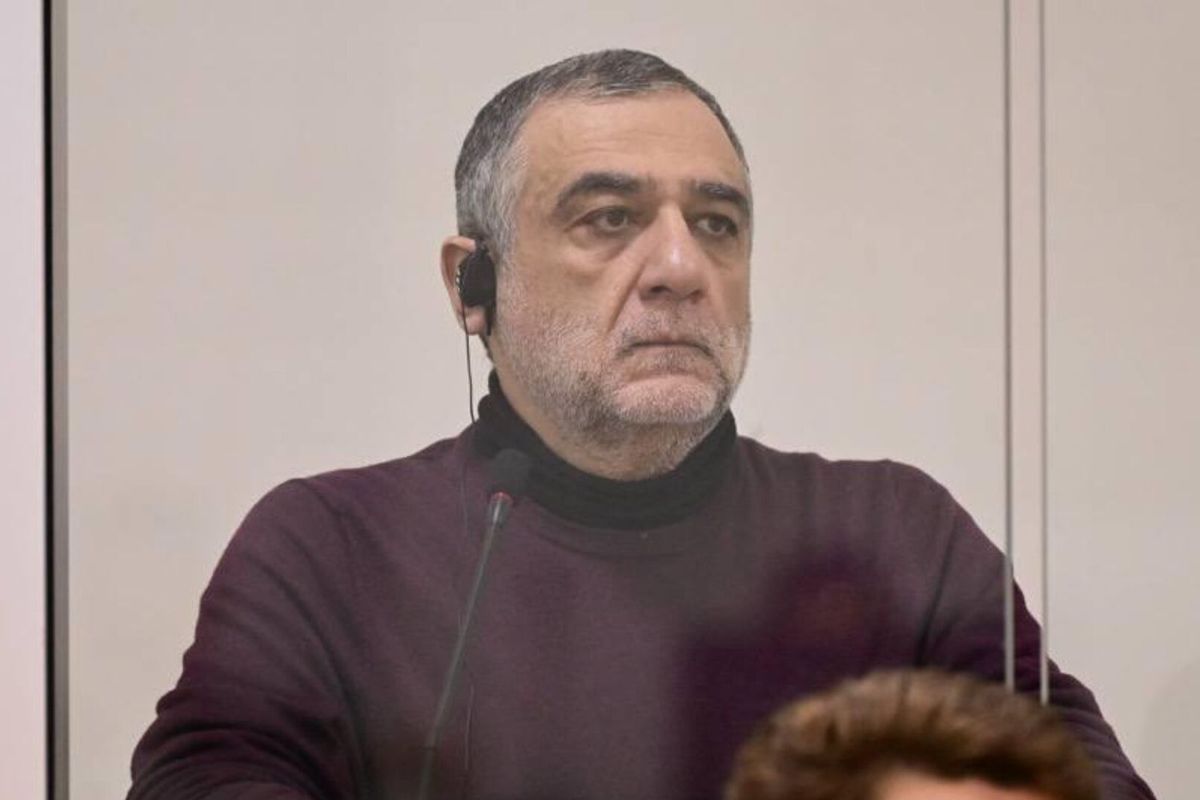
Journalist Davit Sargsyan voiced strong apprehension regarding the forthcoming memorandum, calling it potentially the most devastating document for Armenia in the last five years—surpassing even the fallout from the November 9 ceasefire agreement and the subsequent resignation of former Prime Minister Karen Karapetyan, which gave power to Pashinyan.
“This is the first Armenian-Azerbaijani signed document that directly implicates Armenia’s sovereign territory, effectively opening the door to hostile claims against it,” Sargsyan cautioned.
He further criticized the memorandum for lacking enforceable commitments from Azerbaijan. “It does not impose any real obligations on the opposing side, and it is evident that Azerbaijan will breach it at the earliest opportunity—likely through orchestrated provocations—thereby abrogating its so-called ‘peaceful’ pledges.”
Sargsyan also raised alarms that the agreement could include a written or verbal pledge to open a corridor through Syunik province. While this initiative may be framed domestically as a “crossroads for peace” or “opening the gates of Syunik,” he argued that “the current oversight by a private security firm will inevitably give way to a Turkish military presence along the corridor.”
Perhaps most troubling, according to Sargsyan, is the political exploitation of the memorandum. He warned that the so-called “peace” narrative, along with the signed memorandum, will likely become the cornerstone of Pashinyan’s reelection campaign. “The most cynical element,” he said, “is that very process that ushered in war and defeat will be repackaged to cast him as the ‘peacekeeper,’ while all opposing political forces will be disparaged as ‘revanchists.’”



Where is the outrage?
Yerevan should be engulfed with demonstrators protesting this capitulation.
If Armenians do not care about Armenia, why should anybody else?
what ‘capitulation’? they haven’t even met yet.
Do you see any “victory”, any “good” choices and outcomes for Armenia in all of this? Armenia will face very bad choices, and will try to seek the least bad outcome.
Pashinyan and his diehard supporters may try to spin this and try to sell this to the Armenian public as much as they want, but none of the potential outcomes entail anything positive for Armenia. None whatsoever. 0%. All these scenarios facing Armenia are ghastly and Pashinyan may try to choose the least ghastly outcome, but in the end could be forced to accept the worst outcome, because of his and his government’s incompetence, shortsightedness and cowardice. He doesn’t even use what trump cards Armenia has left. Trump, apart from seeking a geostrategic foothold for the United States in the Caucasus (just like Turkey and Israel already have in Azerbaijan), of course covets the Nobel Peace Prize for any “peace deal”. It would be a miracle if Armenia keeps all its 29,743 km2 territory (200 km2 which is occupied by Azerbaijan since 2021) in a peace treaty, and doesn’t become a satellite state of Turkey, Azerbaijan, or of any other country. There is nothing to “celebrate” or to look forward to for Armenia under these dire circumstances.
The 2020 ceasefire brokered by Russia stipulated commitment to open borders along with Russia supervising Azeri transit across Armenia without any normalisation of relations in other words Armenia would have been expected by it’s ally to surrender control of its border control to its ally and allow an enemy to pass unimpeded. Fourtunately such is unlikely now with the decline of Russia international position. Only in the event of normalisation should transit be allowed and yes Armenia to be able to transit via Azerbaijan aswell.
There is little to gain by signing any document with the Azeris. This was aptly demonstrated by the November 9, 2020 trilateral agreement, the provisions of which were repeatedly broken by Azerbaijan and then ultimately by Russia as well. Of course the Turks are lurking in the background, the most barbaric and duplicitous creatures on the face of the earth.
Pashinyan is going into the lions den. It’s about time for him to make a maximalist proposal. He should tell Trump: “My nation is surrounded by enemies whose ultimate goal for over 130 years has been the total eradication of all Armenians from their ancestral homeland. If you want a foothold in our country (and the Nobel Peace Prize) are you willing to commit the full force of the United States military to protect our tiny remaining nation from any attack eminating from Turkey, Azerbaijan, or Pakistan? If not then I have a plane to catch back to Yerevan.”
I fear what will happen in Washington on Friday.
Pashinyan is so weak, pathetic, cowardly and treasonous that he will cave in to pressure and sign Armenia’s rights away.
I hope the Armenian community will be out in force in their thousands to demonstrate that Pashinyan does not speak for Armenia.
demonstrations do not change regimes.
All these dog and pony shows are intended to hasten the signing of a preliminary fraudulent “peace” document, not even worth the price of the paper it is written on, to portray incompetent Pashinyan as “peacemaker” in attempts to deceive voters once again to try to secure his reelection in 2026 to push through western agenda in the region, which by default will include Turkish schemes for the region as a member of the western alliance and Azerbaijan by association, to further isolate Iran and Russia and potentially turn Armenia into a landlocked island in the process with no control over its sovereign territory and with no secure access to the outside world. This is what can happen when a politically ignorant and gullible population elects an unpatriotic deceptive leader.
As far as constitutional changes are concerned, given the fact that these pseudo-Turkish Azerbaijani occupants love to make references and connections to Aq-Qoyunlu (“White Sheep”) and Qara-Qoyunlu (“Black Sheep”) Turkoman tribes, I suggest they remove the star and the half-moon from their flag and replace them with black and white sheep symbols representing these tribes. The symbol of sheep is quite befitting of them and it goes rather well with their character!
Armenia is no position to ultimate to the USA no delusions please. Azerbaijan is in cahoots with Israel trumps favourite country. Turkey has business interests and a NATO ally. Armenia after betrayal by Russia and it’s preoccupations elsewhere and Armenia disillusionment with it. Expecting the USA to guard Armenia is as unrealistic as the expectations of Russia turned out to be.
I hope the ARF will be organising an Armenian demonstration in Washimgton on Friday.
Pashinyan must be made to understand that the Diaspora is totally against him.
Absolutely. Whenever Pashinyan sets foot in the United States or France, the ARF and the Armenian Diaspora need to protest him and let him know that he is persona non grata. The vast majority of the Armenian Diaspora is totally against Pashinyan. Only a tiny minority in the Armenian Diaspora still supports him. Even Serj Tankian and Arsinée Khanjian, who once championed Pashinyan as a “democrat” and “savior” of Armenia, are conspicuously silent. Maybe they are embarrassed for once supporting him. When Pashinyan came to power, he was never universally popular in Armenia and in the Armenian Diaspora to begin with. That he was overwhelmingly popular, is a lie propagated by his diehard supporters.
Armenia’s already violated territorial integrity, its viability as a state and its future are at stake. That Pashinyan doesn’t even consider consulting the Armenian people about the fate of Armenia, let alone put it to a referendum, is appalling. In other countries, this predicament would have caused huge protests and uprisings, and toppled leaders and governments. That this doesn’t generate huge protests in Armenia, is disturbing. The only ones who vehemently oppose and regularly protest against Armenia’s potential capitulation and territorial mutilation, are the ARF and the Armenian Apostolic Church, which Pashinyan sees as obstacles to his selling-out of Armenia. The situation is already very desperate. How more desperate do things need to become, to cause a spark?
It is a real shame that both Tankian and Khanjian are silent for whatever reason assuming their support for Pashinyan back in 2018 did much for him in the first place. This is the time for them to speak up. There is no shame in admitting and acknowledging their past mistakes for supporting an unpatriotic charlatan who turned out to be the devil in disguise. On the contrary, admitting and owning their mistakes will give their statements and stand more legitimacy.
I also think the reason why Pashinyan’s destructive policies are not met with major protests in Armenia, unlike last year and early on this year, is because those who led such demonstrations are behind bars today under false and manufactured charges and the population opposed to Pashinyan’s dictatorship feels leaderless and it is highly likely that those most outspoken among them are under surveillance by Pashinyan’s militia and they don’t want to risk getting arrested with bogus charges. At some point, the opposition movement must be a united all or nothing type of thing to bring about any desired and positive outcome!
I totally agree with your assessment.
The ARF + The Holy Apostolic Church = The Revolutionary Christian – as the heroic example to be copied by all Armenians!
The fight against Pashinyan will take place on Friday in Washington.
I hope thousands upon thousands of Armenians will be there!
All the comments here prove what was already heavily suspected. The enemy of the Armenians has always been our fellow Armenian. Why the diaspora even feels like they have the right to comment on the fate and living conditions of the Armenians still in Armenia shows a level of obnoxiousness that is hard to describe. Why are you gathering to protest? Why don’t you gather your protest group, go to Armenia, get elected into politics and run our country. None of you do anything but repeat the same statements that have left us stale for 30 years. There is opportunity to make some money for our country that we haven’t seen in a generation and you want to hold us back. Get out of here.
This article is a masterclass in alarmist spin, masquerading as geopolitical analysis. Beneath its polished prose and handpicked expert quotes lies a deeply cynical, biased, and at times conspiratorial take on a situation that demands clarity, not fear-mongering.
First off, let’s be real: the article’s central premise—that the upcoming Washington memorandum is somehow a disaster for Armenia—is built on a house of straw. It cherry-picks speculative “sources,” leans heavily on vague regional “experts,” and presents half-truths as hard conclusions. The suggestion that this document might surpass the devastation of the November 9 ceasefire agreement is so hyperbolic it borders on offensive to the actual trauma Armenians experienced in 2020.
Let’s address the biggest red flag: the portrayal of the “Zangezur corridor” as a secret U.S. imperial plot. The piece goes full geopolitical thriller here, invoking the U.S. “Anaconda Strategy,” tying in Israel’s David’s Corridor and even China’s Belt and Road Initiative, all to suggest that Washington’s real aim is to isolate Iran, weaken Russia, and control the EU’s energy independence. That’s not analysis—that’s narrative-building straight out of a Cold War playbook.
Worse still, this is done without a shred of balance or scrutiny. Where’s the evidence that any corridor through Syunik would actually lead to Turkish military presence? Where’s the proof that Pashinyan has agreed to such a thing? And how on earth does leasing a corridor to a third-party operator, as proposed, amount to ceding sovereignty—especially when Azerbaijan rejected that very proposal outright?
The article treats any attempt at peacebuilding as inherently suspicious. Case in point: the Washington summit is painted not as a diplomatic breakthrough but as a sellout, a trap, a prelude to betrayal. Aliyev is predictably cast as the manipulative aggressor. Trump is dismissed as hosting for show. Pashinyan? A naive puppet, hellbent on sacrificing Armenia for a shot at reelection. It’s all too convenient. Every actor is assigned a role that supports a doomsday narrative, without considering that maybe—just maybe—negotiations are what responsible leaders do after years of conflict.
Then there’s the absurd claim that the memorandum “does not impose any real obligations on the opposing side.” How would the author know? The document hasn’t even been signed yet. And peace agreements, by their nature, require trust-building, sequencing, and enforcement over time. The fact that Azerbaijan has demands doesn’t mean Armenia must cave—it means negotiations are still ongoing. That’s not a failure; that’s how diplomacy works.
The most cynical move of all? The article’s baseless projection that the memorandum is just a “reelection ploy” by Pashinyan. It suggests that peace itself is politically illegitimate, simply because it might benefit the current administration. That’s not critique—it’s obstructionism dressed up as patriotism.
And let’s not overlook the tone throughout. It constantly defaults to fear, using terms like “irredentist,” “hostile claims,” “devastating,” “land-based isolation,” and “Turkish military presence” to whip up outrage. This is not responsible journalism—it’s tailored to sow mistrust, not illuminate.
Armenia deserves a peace process grounded in facts, not fear. The people of Syunik deserve thoughtful protection, not to be used as pawns in nationalist myth-making. And the region needs fewer paranoid screeds and more honest engagement with the complex realities of diplomacy.
This article doesn’t serve Armenia. It serves a factional narrative of perpetual victimhood and zero-sum politics. And that’s not peace—it’s a recipe for endless conflict.
What s brilliant reply. I wonder and am truly amazed how you find such appropriate words to describe this article’s author intentions. I sincerely wish I could write like you.
Hagop, that you finish your disgusting article with a “this article doesn’t serve ARmenia” defines whom you work for and what you are paid for. The article is supposed to serve Armenia? No, the agreement is, and it doesn’t. Unbelievably, you think by that writing a ChatGPT-polished text it will be better. Well, your reply is complete rubbish: You don’t prove anything against the article and your argument is based on one simple thing: “since we do not know the future, the agreement might be good, so why to criticize it?” It could not be more manipulative and awful from your side. An agreement which is not so, but the complete sellout of Armenia IN EXCHANGE OF NOTHING, and you tell us that “hey, maybe it work, the article is so meeannn uuuuh, look how it poses any peace attempt as inherently bad uuuuuuuh”???? Seriously you think that we will not see who is paying you to do this??
And your text “Worse still, this is done without a shred of balance or scrutiny. Where’s the evidence that any corridor through Syunik would actually lead to Turkish military presence? Where’s the proof that Pashinyan has agreed to such a thing? And how on earth does leasing a corridor to a third-party operator, as proposed, amount to ceding sovereignty—especially when Azerbaijan rejected that very proposal outright?” reveals to what extent you are seriously a terribly weak manipulator.
Hagop, you are worthless and honestly your employer should consider cutting your fees. You are simply not worth them.
A strong rebuttal. Personally, if the now signed deal includes a true security guaranty from the US (as opposed to a guaranty without teeth), I am for it. In other words, if we commit to ceding Artsakh and opening a trade route through Armenian territory, do it by protecting the rest of Armenia’s borders. Simply denying that this is possible in favor of maintaining negative ego-gratifying narratives of the other players at the table narrows the range of possible, and yes, mutually beneficial, solutions. Good luck Hagop.
God bless America and Democracy. The billions spent on NGOs to tame third world aboriginals is at least paying off in some countries.
Let’s never forget that Mr. Pashinyan represents the democratic will of the Armenian people. Armenia is now a “Westernized” country with “European” aspirations. Always remember that. Therefore, let’s please show the duly-elected leader of Armenia some respect, as he is the Western-financed and Turkish-led political activist a clear majority of our people, both in the homeland and in the diaspora, wanted to lead Armenia not only in 2018 but also in 2020, 2021 and 2023. In 2024, Bishop Bagratyan finally proved that the Armenian people don’t want change. So be it. Let’s respect the “democratic” wish of the masses.
If you believe in “people power”, “democracy”, “westernization” and “the American way”, stop your constant complaining and start supporting Mr. Pashinyan in his historic mission to turn Armenia into a Turkish/Azeri Vilayet. We are finally breaking free from Russia. After 30 years of trying, American-Armenians finally got their wish. Congratulations. Let’s now all enjoy the consequences…
Gurgen, you are a traitor to the Armenian people. You are a wannabe Russian tool, upset that the masses are turning away from a system that obviously only benefited people like you, who pledged allegiance to Russia. We are Armenian and we will choose our own path, not what you wannabe Putin clones choose for us. You know nothing about being Armenian. And copying and pasting your same lame speech on every article makes you sound like a paid troll.
Those who talk tough from afar are akin to the Slava Ukraine brigade in Europe and elsewhere. Remember Armenia signed over control of the lachin corridor in Azerbaijan to Russia who failed them no Berlin airlift or Sarajevo siege relief for those who put their faith and trust in Russia. Indeed a hard reality check for a people who had been gulled along by Russia. What’s happening now is an epiphany a realisation that whilst Turkey and Azerbaijan are hostile no news here but this didn’t actually mean that because they are bad that Russia is good and an overdue realisation that Russia and it’s predecessor the Soviet Union sought to string Armenia along control it and keeping the issue festering so it could claim to be solving a problem of which it had aggravated and it’s taken 100 years and the clear failures of Russia in recent years and to cap it off Azerbaijan is don’t need you anymore gullible slav to the Kremlin bureaucrats leading to some self pitying drunken burps from it realising it’s Byzantine strategy has alienated both in being too clever by half.
Normalisation doesn’t mean it’s all going to be hullibaloo swinging and dancing utopia all hugs and kisses at all but a chance to move forward like western Europe managed to do post 1945. Interestingly @ Concerned Armenian who was dutifully pro Russia hasn’t posted for a while perhaps he’s realised or not getting enough rubles or been sent to the front ? Also relevant is the principle where Russia taking Armenia for granted and seeking to woo Azerbaijan away from Turkey as part of its desire to restore the Soviet Union found that Azerbaijan was only friendly with Russia so as long as it needed them to get control of Artaskh and with Russia becoming a pariah over it’s invasion of Ukraine, was the perfect opportunity to distance themselves from Russia again just as Turkey did with the Soviet Union over Western Armenia shortly after it signed it away in it’s crazed belief this would woo them into the Bolshevik revolution, to gain favours only to realise that once Turkey had got what they wanted they lost little time in abandoning pretences and distanced from the Soviet Union .
This news item will not age well. The rejoicing we are seeing among our professional Russophobes today will be short lived.
Ultimately, it’s political theater. Trump is desperately looking for a “win” after failing to “win” in Ukraine and Iran. This will definitely not age well. What’s odd however is Moscow’s and Tehran’s slience…
Most of the russophobes here are Israeli and Turkish bots, except Charlie.
Charles, dont wait up ;-)
@Tyrone
Dedicated and humourous trolling by you
The first news about this “peace treaty” are coming in.
According to reports, Armenia (that is Pashinyan) has agreed to award the U.S. exclusive special development rights on the “Zangezur Corridor” for 99 years. The U.S. will sublease the land to a (almost certainly a U.S.) consortium that will develop rail, oil, gas and fiber optic lines and possibly electricity transmission along corridor, which will be renamed as the “Trump Route for International Peace and Prosperity”.
As part of the agreement, the U.S. will lift restrictions on defense cooperation with Azerbaijan and selling weapons to Azerbaijan, which is under a U.S. military embargo since the early 1990s (which was briefly lifted after the 11 September 2001 terrorist attacks, during the so-called “War on Terror”).
Under the agreement, the a
long useless and obsolete OSCE Minsk Group will also be dissolved.
And under the agreement, Armenia’s sovereignty and territorial integrity will be “respected”, which sounds so vague.
No mention whatsoever about occupied Armenian territory by Azerbaijan, about the Armenian hostages (they are not “prisoners” in the legal sense) languishing in Azerbaijani prisons, or about the Artsakhi refugees languishing like Palestinian refugees.
U.S. control of the corridor will mean, that Armenia’s access to Iran could be cut and that it could be used against Iran, potentially dragging Armenia into a conflict with Iran.
The biggest winners will be of course the United States and Trump, Azerbaijan and Turkey.
How will this be a win-win situation for Armenia?
If the reports are confirmed, Armenia will be receiving the crumbs.
Paid for Russophobes with their 30 pieces of silver!
What the heck do these people think is going to happen if Armenia has to pay market prices for gas and oil?
How long will Armenia last if these people succeed in closing down the Russian base in Gyumri?
Russophobes can rant and rave but they cannot change Geography!
The ANCA has been advocating for deeper US-Armenia ties (through tax treaties, USAID funding etc) for decades. They’ve played their “nonpartisan” card to the point of supporting far-right Christian evangelical representatives just because they said the word “Armenia” out loud. At the last presidential election they refused to endorse a candidate, which given the US political context is effectively endorsement of Trump.
Well here it is – that American involvement you’ve been advocating for and shoving down everyone’s throats this whole time. Enjoy.
“Trump Route for International Peace and Prosperity” !!!!!!
And it was Pashinyan who suggested the name !!!!!!
Look at this shameful photo!
https://www.thetimes.com/imageserver/image/%2Fb6e4d41f-a071-43bf-b450-9f02f464580d.jpg?crop=6500%2C4333%2C0%2C0&resize=1180&format=webp
The Turk is happy because they have a great deal – for themselves.
Just as expected. This fake “peace treaty” is nothing more than a humiliating capitulation treaty for Armenia, which is no stranger to capitulation treaties.
The winners are Azerbaijan, Turkey, and the United States and Trump. Armenia is the only loser in this, which was no surprise to begin with.
Economically and politically speaking, Armenia might receive bread crumbs, if at all, because only Azerbaijan, Turkey and the United States look to benefit financially and strategically from this treaty.
Even this treaty could be violated by Azerbaijan, even before the ink is dry, just like it did violate the 2020 Nagorno-Karabakh ceasefire agreement by blockading, starving and occupying the rest of Artsakh with no impunity whatsoever, even though the ceasefire agreement was clearly in its favor, just like this treaty is.
That Pashinyan is all smiles in the photos, and his sycophancy of Trump, is disgusting, and that his diehard supporters defend him and this treaty, and try to put a spin on this, also here in the comment section, is doubly disgusting.
@Steve M
I said it would be a capitulation in the very first post in this thread!
@Robert Whig
Exactly. This so-called “peace treaty” is nothing but capitulation. Pashinyan and his supporters, also here in the comment section, shamelessly spin and defend this as a “win” for Armenia. They are delusional in the extreme. This capitulation treaty is a Pandora’s Box for Armenia.
The cold hard fact is that Armenia lost in 2020 hence can’t set the terms of any settlement . It would be more practical in distance and flatter terrain for Armenia to be able to transit via nachichievan going between Yerevan and Syunik the protocol brokered by the USA doesn’t oblige Azerbaijan to allow Armenia to have any such transit as used to exist in the Soviet era. Perhaps with a formal peace treaty such might happen but no assurance it seems. However it must be borne in mind that the Russian brokered agreement in 2020 was to oblige Armenia to allow Azerbaijan transit without any normalisation of relations nor peace agreement whilst still in a state of confrontation under a ceasefire protocol only with Azerbaijan, Pashinyan avoided being forced into such an egregious arrangement by its official ally and partner Russia but alone Armenia given the betrayal by Russia and it’s subsequent preoccupation was at risk of being invaded by Azerbaijan to force this although Azerbaijan wouldn’t get international support just like Armenia never did over Artaskh cause.
For what it’s worth, Greece expressed support for signing of the protocol.