



Op-Eds
Armenia’s orchestrated collapse: The grand strategy behind the “peace” plan
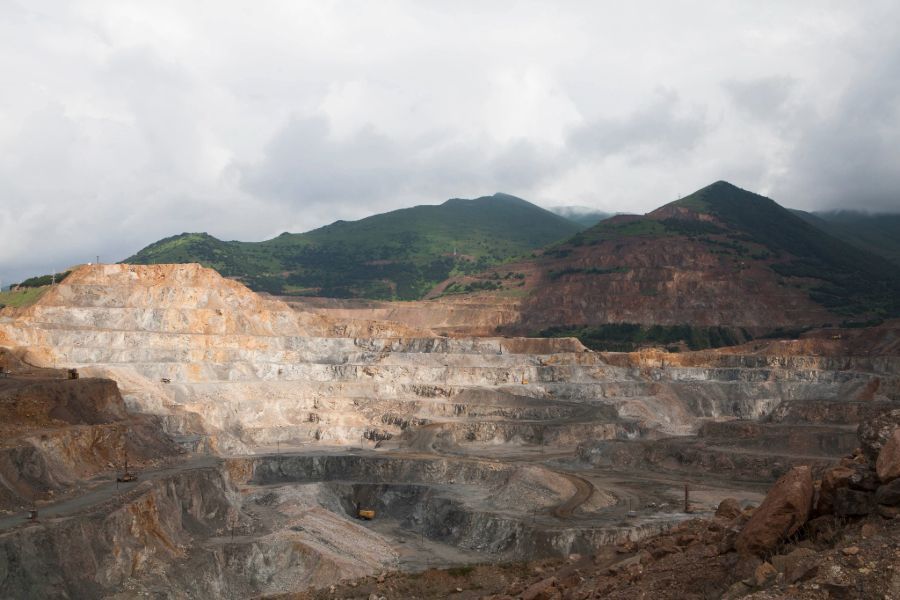
What is unfolding in Armenia today is not a peace process but a coordinated disintegration of Armenian statehood—one that has been set in motion by Turkey and Azerbaijan and facilitated by the Pashinyan regime.
This “peace plan” is the South Caucasus theater of the Great Game once fought between the Russian and British empires, now repackaged on NATO’s southern flank through British-Turkish orchestration. Russia is too busy with its own crises to focus on the Caucasus—much like it


Beautifully written. Unfortunate how things have transpired. Hopefully the people can wake up and revolt over these turkish agents.
Let’s never forget that Mr. Pashinyan represents the democratic will of the Armenian people. Armenia is now a “Westernized” country with “European” aspirations. Always remember that. Therefore, let’s please show the duly-elected leader of Armenia some respect, as he is the Western-financed and Turkish-led political activist a clear majority of our people, both in the homeland and in the diaspora, wanted to lead Armenia not only in 2018 but also in 2020, 2021 and 2023. In 2024, Bishop Bagratyan finally proved that the Armenian people don’t want change. So be it. Let’s respect the “democratic” wish of the “people”. If you believe in “people power”, “democracy”, “westernization” and “the American way”, stop your constant complaining and start supporting Mr. Pashinyan in his historic mission to turn Armenia into a Turkish/Azeri Vilayet.
PS: I would really like to see Russia cut-off all financial, economic and energy ties with Armenia (the only thing keeping the remote, landlocked and impoverished nation afloat) and take its troops stationed on Armenia’s border with Turkey (the only thing keeping NATO-member Turkey out of Armenia) back to Russia. Sometimes you just have to let a terminally ill patient die (a la Kevorkian)…
Those who defend Pashinyan and his policies, including his negotiations (capitulations) with Azerbaijan and Turkey, should be ashamed of themselves, but they won’t, because they have not an ounce of shame – let alone any patriotism. The nightmare scenarios facing Armenia have become true stage by stage: 1.) the disastrous Second Artsakh War, 2.) the destruction of Artsakh and the ethnic cleansing of all Armenians, 3.) the occupation of 200 square kilometers of Armenian territory by Azerbaijan – while Pashinyan handed territory to Azerbaijan without a quid pro quo; next is the possible cession of southern Syunik (the so-called Zangezur Corridor) to Azerbaijan and the dispossesion of Armenians living there, and becoming a neo-colony of Azerbaijan and Turkey, which the author and countless of other people warned for many years. That all these calamities happened under the totally inept, reckless and downright traitorous Pashinyan, is a double calamity. It is not only external factors, which are the biggest threats facing Armenia and which cause the greatest harm, internal factors, like electing and re-electing a traitorous leader like Pashinyan, caused an even greater harm to Armenia – because he enabled this. In other countries, a fraction of the disasters, dangers and humiliations Armenia is going through, would have caused a popular uprising or a coup d’état to save the nation from the brink – because Armenia is a nation on the brink, just like it was between 1915-1921.
According to ChatGPT, you’re claims of Armenia’s mineral wealth are fake news. You clearly have an agenda and your fake article shows how pathetic and biased you are. You do realize BS claims can easily be fact check in a matter of seconds right?
Be better than this tashnak ruski agent.
@Steve
You are trolling and babbling nonsense. Just type in “Armenia” and “mineral” in the search engine. Armenia has significant mineral deposits – while not huge, significant nevertheless. They include significant deposits of copper, molybdenum and gold, as well as smaller deposits of zinc, lead and silver. The mineral industry is one of the biggest sectors of the Armenian economy and makes up 30% of Armenia’s exports. The mineral industry is very important for a small and poor economy like Armenia’s, and the exports prop up the economy. And by using “Tashnak” as a swear word, you are either an Azeri, a Turkish, or a Pashinyan troll. Now shoo off.
Unfortunately, as long as a nation relies on the East (Russia), or the West (US/EU) to save it, the future will not be good. I hope going forward the citizens will stop worshipping either super power and will take pride in their own homeland to be built by themselves.
Brilliantly written and very up to the point. Thank you. Unfortunately Armenian people have a short memory , they forgot where Pashinyan came from were oblivious to the the obvious fact that he was bound to be a poppet in the hands of external forces trying to dismantle Armenian statehood. The consequences will be dire unless Armenian people wake up from a deep slumber and delusion.
This article paints a picture of Armenia not as a sovereign nation navigating extraordinary geopolitical challenges, but as a puppet state being methodically dismantled by shadowy forces. It speaks in the language of alarmism, conspiracy, and fatalism—deliberately designed to provoke fear, outrage, and despair. But this narrative, while emotionally potent, ultimately fails the tests of logic, truth, and responsibility.
Let’s be clear: Armenia is not dying—it is struggling, yes—but it is also learning, adapting, and making its own choices under immense pressure. To reduce this complex national journey to a simplistic betrayal narrative orchestrated by Turkey, NATO, or “deep-state actors” is not only disingenuous—it is dangerous.
Pashinyan’s Rise Was Democratic, Not Engineered.
The claim that Nikol Pashinyan’s 2018 rise was a foreign-backed regime change erases the genuine frustrations of the Armenian people. The Velvet Revolution was led by civil society and ordinary citizens who were fed up with decades of entrenched corruption and elite impunity. To strip them of agency and cast them as dupes of foreign influence is deeply insulting to the Armenian public. Armenia voted for change. That change has not been perfect—but it was theirs.
Conspiracy Over Substance.
The article leans heavily on emotionally charged but unverifiable claims—suggesting the 2020 Artsakh War was “orchestrated to fail,” that patriotic Armenians were “culled,” and that military losses were somehow planned to silence dissent. This is not serious analysis; it’s a dangerous blend of historical revisionism and conspiracy theory. The war was catastrophic—yes. But it was not a staged sacrifice. It was the result of years of strategic stagnation, regional power shifts, and Azerbaijan’s military build-up. To blame it entirely on Pashinyan is to ignore reality and absolve others—including previous administrations—of responsibility.
National Interest ≠ National Surrender.
The accusation that Pashinyan is “selling off” the country’s infrastructure and identity ignores the realpolitik Armenia is forced to navigate. Armenia has few natural allies willing to back it militarily. Russia’s focus is now elsewhere. Iran is isolated. The West offers words but no weapons. In this context, the Armenian government is trying—perhaps clumsily—to find a survivable path. Peace deals, concessions, economic cooperation—these are not acts of treason, they are the difficult compromises of leadership in a hostile neighborhood.
Weaponizing Mineral Wealth.
The article makes an ominous inventory of Armenia’s mineral riches, implying that the country’s true value lies underground and that foreign actors are salivating to steal it. But let’s be real: Armenia has long struggled to fully capitalize on its natural resources due to corruption, poor governance, and lack of investment. If those assets are to benefit the Armenian people, Armenia needs stable governance, open markets, and stronger institutions—not isolationist paranoia.
Dehumanizing Leadership and Institutions.
The personal attacks on the Prime Minister’s family, on respected entrepreneurs like Samvel Karapetyan, and on the Armenian Apostolic Church are revealing. These aren’t thoughtful critiques of policy—they’re attempts to create villains, to delegitimize democratic institutions and leaders by painting them as traitors or puppets. This toxic rhetoric does not serve Armenia; it fractures it further.
Fear-Mongering Is Not a Strategy.
Talk of Armenia becoming a “Turkish vilayet” is more than inflammatory—it’s defeatist. It frames the entire state as already lost, the game already rigged. But Armenia’s story is not over. Its people are not passive. Civil society is active, debates are ongoing, and elections still matter. The country is at a crossroads—but it is not on autopilot toward extinction.
Final Thought.
The way forward for Armenia is not through apocalyptic storytelling and the scapegoating of leaders or foreign powers—it is through national unity, realism, diplomacy, reform, and resilience. The forces surrounding Armenia are real. So are its problems. But so too are its strengths—its diaspora, its educated youth, its cultural heritage, and yes, its democratic institutions.
The game is not over. But it will only be won if Armenians reject fear and cynicism and choose instead to engage critically, rebuild patiently, and believe again in their own agency.
Very well thought out and articulate response. Thank you. The article, while disguised as patriotism actually speaks the language of fear, of capitulation, and of those whose brand of patriotism is vested in keeping Armenia captive to individual interests and subservient to foreign powers. The fear and the fairy tales served their purpose, but those days are over. The formers had thirty years to craft statehood and failed. What Armenia is experiencing now is the natural growing pains of a forward thinking nation.
Pathetic! Armenians are their own worse enemy! Pashinyan is the worst thing to ever happen to the country! Tell me, where will all the citizens of Armenia go once their country collapses?
Oh nice an entire worst case article presented as inevitable fact even though it’s based on a premise (selling the energy grid & everything else to Turkey) that the government has repeatedly refuted, and for which he offers zero indication is a possibility in the works. Sure, not trusting the government he can just say they are lying, but in that case you could write other articles saying absolutely anything else, too. Please explain the point of this, outside of the obvious one that it’s simply a hit piece meant to mislead diasporans who are typically clueless about the latest news from Armenia and (perhaps thanks to a steady stream of articles like this) are always prone to believing the worst?
By all accounts, Nikol Pashinyan’s administration is an abject failure. At the most fundamental level, the primary responsibility of every national leader is (1) to protect the territorial integrity of the nation from encroachment, and (2) the population from harm. Nikol Pashinyan’s government has failed miserably at both. As such, the “legitimacy” of his government, repeatedly invoked by the psycophants, profiteers and western devotees, enraptured by childish visions of a western oriented Armenia magically relocated into Europe, is a myth with no factual foundation. Even in vaunted western societies, Governments that fail to meet these fundamental obligations of leadership change and are forced to step down before the expiration of their term. The most reliable harbinger of what is to come is what came before. Nikol Pashinyan’s failures since 2018 are a matter of record and to expect future success for Armenia from this failure is dellusional. That said, absolutely nothing good can happen to Armenia with the Pashinyan government at the helm.