


FilmLiterary CornerCulture

Interview with the interviewer: Get to know Eric Bogosian
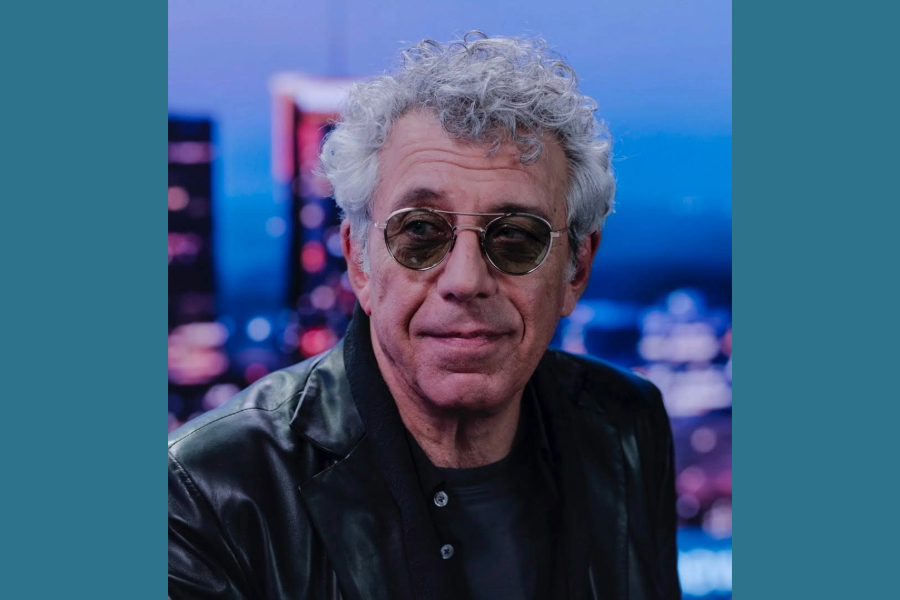
Eric Bogosian is a man who needs no introduction, especially within the Armenian community. Known for his start in the NYC performance art scene and his breakout project, Talk Radio, mainstream audiences grew to love him as a mainstay on shows like Law & Order: Criminal Intent, Billions, Succession and, currently, Interview with the Vampire. In 2015, Little, Brown and Company published Bogosian’s Operation Nemesis: The Assassination Plot that Avenged the Armenian Genocide, detailing the assassination of Talaat Pasha and other leaders of the Armenian Genocide.

His play, Humpty Dumpty, recently had its NYC premiere at the Chain Theatre. It follows four friends on vacation in rural upstate New York who are suddenly faced with a blackout. “What begins as a pleasant break from their urban lives morphs into a trying and ultimately fatal journey down the rabbit hole of survival.”

We caught up with Bogosian to talk about his illustrious career and all things vampires. 

This interview has been edited for length and clarity.

Rosie Nisanyan (R.N.): Many know you from the movie Talk Radio or your one-man shows in New York, but I think I speak for others of my generation when I say Law & Order: Criminal Intent is where I first heard of you. I would always point out to my classmates that you’re Armenian—I was just so proud. It felt like one of us had really made it! 

Related Articles

Eric Bogosian (E.B.): Well, thank you. Being on Law & Order helped my career in a lot of ways that weren’t obvious. I had begun my career, as far as the public beyond downtown New York City, with Talk Radio and I had gotten a lot of attention for that. So, whenever I do a role, I’m thinking, “Is this gonna be visible? Am I gonna do a good job?” 

Law & Order was different, though. It did two really important things. One, it expanded my visibility in a way that I actually don’t think about, but right after I finished, I went on Broadway with a show called Time Stands Still with Alicia Silverstone and Laura Linney and Brian d’Arcy James—and that was a dream. Once you’ve done a television series, it’s more likely you can get booked, even though I’m more secure on stage than I am in front of the camera. 

The other thing was that I learned to relax in front of the camera and not really notice it, so then I can just do my thing. But right after that was a big pop in the streaming television world. I got to do a series of shows that were all places where, frankly, I never thought about the camera anymore. I was just performing the way that I like to. 

By the time I was getting into Billions, it was becoming a more nuanced type of acting because what I do on stage is usually big or comic. Even Uncut Gems is more typical of what I usually do, which is loud and big and yelling. But I was also learning how to get more subtle. Especially on Billions, playing opposite Damian Lewis and Paul Giamatti, I got to learn about that stuff and do stuff in front of the camera I had not done before. 

When I ended up on Interview with the Vampire a couple years ago, this served me well because that was the way that that part had to be played, with much more nuance. I got to live in that role and really, really enjoy myself. We start shooting again in June, and I’m really looking forward to it—although, it won’t be as subtle anymore because after two seasons, I’m not a subtle character anymore.

R.N.: Your play Humpty Dumpty just had its NYC premiere—I loved it! The story, the characters, the impending disaster all felt so incredibly relevant to today, but you wrote it 25 years ago. Did you make any changes to the text for this staging?

E.B.: Overall, it’s the same script. The first thing I had to do was remind the audience that we’re in the year 2000. If we didn’t set it in the year 2000, there would be headaches having to deal with smartphones and other aspects of life in 2025. 

There were just a couple of tiny adjustments, in terms of a line here and there. One that I thought was really important was very late in the play, when Max is explaining to Nat the difference between his life in New York and the life up there in a rural county. The original line was, “The thing you don’t understand is, back in New York, our life is more complicated.”

And I would sit there and rehearse it. And that’s not really it. One day, I went, “No, no, no, that’s not what he thinks or feels.” And I change it to “nuanced,” because, in the city, the idea is that you go to museums and you go to concerts. Max and his wife subscribe to the life of the mind. They’re reading all the time and they believe that that makes their life larger. 

I originally came up with the idea for this play in the ‘90s when my career was really taking off. All these are on your mind; there’s no way you can know just by looking at somebody that they won a Tony or an Oscar. You could only know this because you’re part of that realm. 

But out in that world, out in nowhere—where you have to feed yourself and maybe even deal with people with guns—that’s a whole other game. I wanted to know what happens when you take those people who have real cred—and don’t really provide them with any ability to survive, when push comes to shove.

What’s funny is that when we do the play now, since the pandemic, people understand that when you have a big collapse of the modern network, you don’t necessarily have to be starving and yet you won’t be able to get toilet paper for some unknown reason. You don’t know why this has happened and you don’t understand how everything is locked to everything else, so the play seems to make more sense now than it did 25 years ago, which is strange.

Eric Bogosian (Photo by Monique Carboni)

R.N.: You are very much a multi-hyphenate: an actor, playwright, screenwriter, novelist, historian. Is there one experience that you find more personally or creatively fulfilling than another?

E.B.: For me, it is just writing or acting. I direct the stuff on 100Monologues.com, but I don’t consider myself a good director. I’m married to an amazing director, so I know what a good director is. 

Acting was my first love. When I was 15, I didn’t even know what it was. We did it one day in English class and that was it for me. I really didn’t have an identity before that and suddenly, there was this thing I could do and I could do it well; certainly, loudly.

This acting thing is something I love so much that I’m afraid of it. It’s like, if you have an incredible crush on another person and you’re almost afraid to express your love. So, I kept backing away from it again and again.

In high school, my friends were certain, “Oh, you’re going to be an actor. This is gonna be your profession.” And I’m like, “Are you guys nuts?” So then, I went to be an English major, but I kept doing theater stuff. I went to college for theater and after I graduated again, I came to New York for a while. I was basically a go-fer and I began to understand that it was insanely competitive—and I quit. I decided I just wanted to live in New York because it was pretty interesting. 

Almost by accident, I ended up at this arts center called The Kitchen, where they were doing performance art and dance and music—everything but theater. Performance art had expanded to so many different things by this point. Originally it was this weirdo form, but it had sort of become theatrical, so I started making these pieces in that world, in the little lofts and tiny theaters downtown. 

In 1982, Joe Papp, who had the biggest off-Broadway theater in existence, scouted me and I started performing at The Public Theater, which was my dream all along. So weirdly, I had ended up back in the theater again and pretty much from then on, I continued to make solo work and eventually Talk Radio only five or six years later. All these things brought me back into acting—something I was very green at, something I was very untrained for. 

It took me a while because I hit national attention very quickly and became full of myself, thinking I could just do anything and that I was good at everything. I wasn’t preparing; I wasn’t really honoring the craft of the business. In the 2000s, I began to really focus and fortunately, I was able to reenter the business again and have all these really enjoyable experiences.

And as I said, I love, love, love doing it. When I’m in a scene with an actor of the caliber of Jacob Anderson or Paul Giamatti, and I look into their eyes and they’re giving me everything and I’m giving them everything, it’s like flying. It’s a beautiful experience.

I actually don’t even know what’s going on at the center of the creative impulse. I don’t know what makes me a good actor and how I get into the zone. I do know that there are other good actors and I think it’s just as mysterious for them, but there has to be this initial thing that’s sort of in your gut.

Writing is a whole other thing. I don’t believe I’m particularly good at it, but I give it everything I’ve got. As a high school student, I read a lot of books and I thought, “I want to be a writer, that would be really cool.” But it didn’t mean that I knew how to write and I still don’t—I mean, I’ve learned some things, but my writing is touch and go. Maybe that’s true for all writers; I don’t know. 

Writing for me is like work. It was my profession for a long time—I was basically writing in Hollywood (nobody knew this) and I would write scripts and get paid a lot of money for it and I became solvent.

As an Armenian and grandchild of immigrants, this is important to me. I was brought up in a household where we tried to be financially secure and we weren’t. We were very, very middle class. So this became a priority—how do I make a good living so I can support my family? And I achieved that through writing.

R.N.: Sticking with acting for a little bit, let’s talk about Interview with the Vampire. Most of your work is very grounded, very realistic. As the interviewer, you’re playing a human character, but it’s still a supernatural show. How has the experience been—getting into character, understanding the world, the fan response? 

E.B.: I’ve always been a major fan of vampire stories—going back to the film Dracula with Bela Lugosi, but also seeing Dracula on Broadway with Frank Langella. I love the power of vampires. I love the eroticism of vampires. Of all the supernatural stuff—that’s what works for me. 

The other thing is that, for the first two seasons of this show, I represent the audience. I’m the guy who’s not a vampire, and I get to talk to vampires and be threatened by them and so forth. From my perspective, I was a journalist getting the story—that was all I really had to think about. 

Yes, the fanbase is completely different, and one that I’m always thrilled by. When we show up at Comic-Con or any event that we do, there’s an intensity with which the fans follow us—sort of hanging on every beat of every show. It’s much younger, obviously. My own friends don’t even know I’m on the show. They don’t even know the show exists, which is fascinating to me. 

Not only is my part great, and not only are all the other people great, but the show is great! When you say “vampires” or “gay vampires” and you think, “Well, okay, I know what that is.” You don’t know what that is because these artists—Anne Rice and our showrunner Rolin Jones—are taking it up to another level. 

As you age–I mean, I’m over 70 years old—I think it’s natural to think about death. Your parents pass away, your friends pass away, and you start to ask, “What is death?”

This is what Anne Rice was thinking about when she first started writing this series back in the ‘70s. Her five-year-old daughter had passed away. This pushed her into what is really a long meditation on death, because the way she started thinking about vampirism was very different than the way people have looked at it before—it’s supernatural; vampires are like monsters, right? But that wasn’t the way she ever looked at it. She looked at it like they’re human beings who aren’t going to die and that creates all kinds of issues for them. 

And because we have these spectacularly great actors on this show—they subscribe totally to where this is going to go. And where is this going? This is an Anne Rice/Rolin Jones universe that is amazing. You get the scripts and you have to study them because there’s so much going on between you and the other characters and what’s going on in the plotting. It’s so complicated and so rich.

Rolin Jones and Hannah Moscovitch, who is writing our scripts, are both theater people. They understand subtext. They understand what makes something really watchable, and something really good to act—and that is the underlying vibe that is going on between people. When you’re an actor and you get to do that kind of stuff, you’re not working in cliche, you’re not working in the same-old; it really is thrilling and fun. 

Very often, when I’m in scenes, I’m learning about the scene. Even though I’ve studied it for weeks, I’m learning about what’s happening as we’re doing it, and that’s because I have a partner. It would be like if you’re playing tennis, you have to adjust to what the other person is doing, right? I have to listen, I have to watch. I have to work with whoever it is I’m in a scene with. This is deep, and for an actor, very, very fulfilling. 

Eric Bogosian in “Law & Order: Criminal Intent”

R.N.: You said Rolin Jones and Hannah Moscovitch have theater backgrounds. How have you seen that background manifest itself in this production?

E.B.: Well, certainly scenically. In our first two seasons, Mara [LePere-Schloop] designed gorgeous sets. And the sets, like any theatrical set, speak to you. They tell you a lot about what’s going on with your character and they help you get into it. 

The weird thing was that my set—an apartment set in Dubai—was a real building inside a sound stage in New Orleans. The floors were cement, the walls were real wood. It had different rooms and we’d walk from room to room and so forth. It’s really something to be inside of it—but it’s a set. Same for the spooky houses in the first season. 

When we went to shoot in Prague, they brought the entire set with us. So, you have this weird experience when you’re on the “Dubai” set and you would leave it, thinking you were going to be in New Orleans when you walk out of the sound stage, and instead, you were in Prague. It took a while for us to get used to that because we’re very deeply in the moment when we do these scenes.

Otherwise, I don’t completely understand why this feels different. I think there’s a histrionic aspect to it that maybe is more comfortable for theater writers and for theater actors. Jacob has a music career, so he’s used to that kind of performative space, but the rest of us have all done stage work. 

Going back to Succession, I just saw Sarah Snook on Broadway. She’s just a master of stage work. And yet on Succession, what does that do? Nothing super-big. But she’s grounded. It’s all very subtle. I hope that’s what can happen for me as well when I’m doing fairly non-broad stuff. In the show, I’m not broad. I will be in the third season—I will get a lot broader. 

R.N.: For our last question, I want to ask about Operation Nemesis—your book about the assassination of the orchestrators of the Armenian Genocide. You said that originally you set out to write a screenplay, but after researching, felt compelled to write a historical account. Have you since considered adapting the book into a screenplay?

E.B.: Oh yeah, we’ve been in discussion with a number of very big producers over the years, but it has to be organic. The distribution company has to believe in it. In order to do that, you have to be in cahoots with people who know how to make the finished product and you have to agree with them about it. Those kinds of negotiations have gone on several times with a lot of very notable and wonderful producers and writers. 

My goal was to learn the story that’s fairly well-known—Tehlirian assassinating Talaat. The general version goes: He was a student in Berlin, his whole family had been killed by the Turks, and he saw Talaat Pasha and somehow got his hands on a gun and killed Talaat Pasha. And then he went and he was acquitted in court. This was a known story which had been covered by a few books. 

I just thought that the story was very easy to adapt to a film—the story of the people in the desert and the horrible things that they had to go through, him surviving, him ending up in Berlin as an engineering student, shooting Talaat, and then the courtroom case could be the third act. It fits so neatly into the three-act system of writing the screenplay.

But as I sat down to write it, I thought I really should learn more. All I know about what happened is what my grandfather told me over the years. I began to study and came across this book by Jacques Derogy about Operation Nemesis that had been published in France.

I called up some Armenian scholars I knew and asked, “What is this story?” They went, “Oh yeah, that’s Operation Nemesis…” I was like, “What? This is a thing? This is true?” “Yeah, there were people, assassination squads sent out from Watertown, Massachusetts, to kill all the leaders of the Turkish government that committed the genocide and succeeded.”

Seven years later, the book came out. I had to do a lot of research and found out things that had not actually been covered before. There are people like Tessa Hofmann in Germany, who continued to investigate what was happening around that trial. She published in the ‘80s and the ‘90s about how there was basically a fix on that trial and that the German government didn’t want people talking about what they had done, in aiding and abetting this genocide in Turkey against these Christian Armenians. It became this insanely complicated thing.

My feeling was that I needed to write a research book about this rather than a movie, because movies always kind of screw with the facts. They have to bend it, so it always says “inspired by a true story.” But I needed to get all the facts out there as best as I could. It was very hard because there were people who didn’t want to talk, who didn’t want to tell me the truth. 

And I thought, this will be in a book, people can get this book, they will learn the facts of the matter. Listen, if they want to find more facts, I believe there should be a graduate student somewhere, crossing every T, dotting every I. There are still people alive today who know things. There are gray areas, like to what degree did the British aid and abet the assassination of Talaat, and other questions that are in my book.

Look, I’m not a scholar. You really have to put your life into this, and I put seven years into it, but this is not something I expected to do. I thought I was just going to read up on everything, and then digest it, and put it into a book format that was easy to read. But as I proceeded, it was like you pull on a thread—and wait a minute, who’s this guy Aubrey Herbert, and why is he meeting with Talaat Pasha two weeks before Talaat Pasha was assassinated? Well, then I had to go into the British archives and find out things about spies who were operating in the 1920s out of Britain, which is a fascinating topic, but again, you can spend your life in those archives trying to figure out this stuff. 

There are things that have to do with Armenian activists and organizations that have, in the past, used violence and they don’t really want to talk about that stuff, right? So, it’s hard to get to the facts. 

Beginning this project, I was certain that eventually, everybody tells the truth. Whether they’re spies or whether they’re government people, they’ll eventually tell the truth. But there are people in spy services who want to go to their death and never tell the true story. They pride themselves on not talking and they’re not going to talk ever. And that makes truth something you have to go after.

Rosie (Toumanian) Nisanyan

Rosie (Toumanian) Nisanyan (she/her) is a writer, artist and tea entrepreneur based in Brooklyn, New York. She grew up in the vibrant Armenian communities of Chicago, Illinois and Orange County, California before moving to New York to work in Broadway advertising. Rosie’s writing spans poetry, arts reviews, consumer trend reports and screenplays; she’s now excited to focus her efforts on spotlighting Armenian artists of the Diaspora.

One Comment

  1. Operation Nemesis Must be made into a movie. As a kid growing up in Greater Boston I realized after reading the book I knew some of the planners well after it happened.One person I think took part in the planning was Baron Hamo Paraghamian who sold insurance to Armenians later after Nemesis. If fact my father bought a policy from Baron Hama on me.

    This is just to urge that a movie should made just to tell the world about the Genocide. My maternal grandparents were part of it.

Leave a Reply

Your email address will not be published. Required fields are marked *


Back to top button