Still waiting for my copy
I’ve been sitting with the announcement all morning now, letting it settle.
“A new chapter,” it begins; a title, a phrase I’ve read and used many times, but one that feels different this time.
Not like a beginning, but more like something unresolved closing behind us.
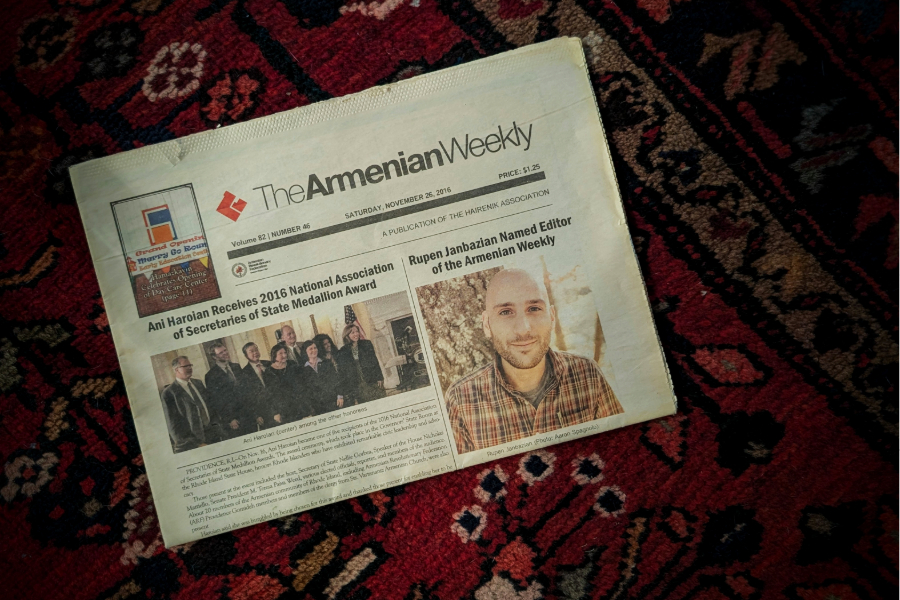
The Hairenik and The Armenian Weekly will no longer be printed.
This wasn’t unexpected. The shift toward digital has been happening for years. Still, seeing it in writing brought something final. No matter how prepared we thought we were, the end of print always feels abrupt.
I started working for the Weekly more than a decade ago. I was there for over four years, during a period that now feels like both yesterday and a lifetime ago. Even then, the conversation about phasing out the print edition was very much alive (and had likely been circling long before my time). Everyone in the room could see where things were headed. The trends were clear. The question wasn’t ‘if,’ but ‘when.’
I became the assistant editor (and then the editor) of the Weekly at a turning point in my life. I had moved from Toronto to Boston, unsure how long I’d stay. I had read the Weekly growing up, but stepping into that role—helping lead a paper with such a storied past and legacy—was something else entirely. I learned what it meant to make decisions that would land in mailboxes across a country that wasn’t mine, but whose Armenian communities had long treated the Weekly as their voice—what it meant to put something in print, knowing it would outlast the week.
The Hairenik building, where both papers were housed, felt lived-in, in the best way. The walls carried the weight of generations. Editors, writers, typesetters, designers and proofreaders had come and gone, leaving behind marks on desks, names on envelopes and notes scribbled in margins. It was impossible to walk through that space without feeling part of something larger than yourself.
Print gave that work a kind of grounding. Once an issue went to press, it was finished. It existed in the world, uneditable, tangible. That demanded care and discipline. There was no room for endless revision or second-guessing after publication. You made your choices and stood by them.
Editing a print newspaper taught me how to be clear. How to focus. How to live with imperfect decisions. That experience shaped everything I do now.
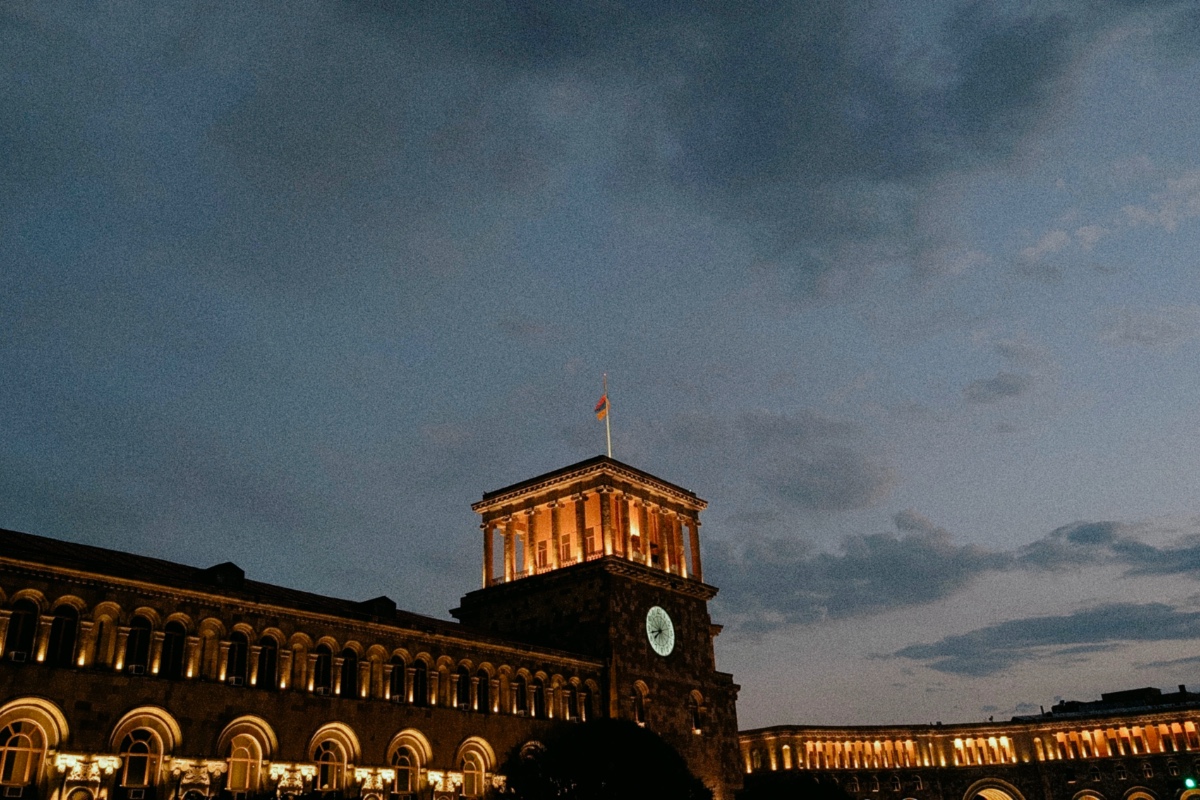
These days, I edit Torontohye, Toronto’s Armenian community newspaper. It’s a monthly print and online publication with thousands of copies distributed across the city and beyond. I do it from Yerevan, where I now live. And just a few months ago, we came uncomfortably close to losing our own print edition. Our longtime printer abruptly shut down (surprise, surprise) with no warning, forcing us into a scramble to find a replacement. It was a stark reminder of how fragile this work can be and how easily it can all unravel when the infrastructure we rely on quietly disappears.
Luckily, we found a solution. The presses rolled again. But for a moment, we stared down the same possibility.
And even now, it doesn’t feel entirely behind us.
So I understand this decision, probably more than most. The cost of staying in print is rising. Options are shrinking. Printers are consolidating. Readers are changing how and where they read. I’ve written editorials about this. I’ve seen how hard it is to keep a physical publication alive.
So yes, I understand the why. But that doesn’t remove the weight of the what.
The end of a printed publication isn’t just a change in format. It’s the loss of a specific kind of encounter. One that happens slowly, page by page. One that invites rereading, clipping, saving. One that marks time differently.
Digital is flexible. It reaches farther, moves faster. But it rarely lingers. It rarely asks you to sit with a story the way a printed paper does.
This shift to digital isn’t a failure. The Hairenik and Weekly are continuing. Their voices, their missions, their archives—all of that endures. But something else has concluded: A way of reading. A way of engaging. A kind of weekly ritual that shaped generations of Armenian communities.
This is not about nostalgia. Institutions don’t deserve to survive just because they’ve been around a long time. But I know the value of what we’re losing. I lived it, I helped shape it, I spent years carrying it forward with others who believed that ink on paper still mattered. And I still believe that.
Print gave us something that digital rarely does: boundaries. It made the story concrete, it told us when something was done, and it gave us a record (not just a post in a feed).
What comes next will have to be built carefully. If we’re to carry forward the values that shaped the Weekly and Hairenik, we can’t rely on format alone. The sense of duty, the editorial standards, the rhythm and rigor of publishing week after week—none of these things automatically carry over just because the platform remains. The digital medium isn’t new for this institution, but it’s now the only one. And that shift—however expected—demands a new kind of discipline: one that doesn’t assume continuity just because the URL stays the same. These habits will have to be relearned and re-earned.
I trust that the people carrying this work forward understand that. I trust that the story will continue, even if the way we tell it changes.
But I do want to mark this moment, however overstated that might sound.
Maybe it’s the last fold.
Maybe it’s the final stack left sitting in a church foyer, half taken, half collecting dust.
Maybe it’s one more issue landing on a kitchen table somewhere across a country (again—not mine), glanced at, skimmed, or saved for later and never read.
Whatever it is, it feels like an ending, and there’s no sugar-coating that.
A few months ago, I tried to restart my print subscription to the Weekly and Hairenik from Armenia. I figured the third-party forwarding service might get the papers to me eventually, weeks late, probably crumpled, but still, here. In the hairenik.
I realize now how naive that was. I’m still waiting. Not a single issue has made it to Armenia. At this point, I guess, they’re probably not coming at all.
I hope I’m wrong. I hope that last issue sneaks through—creased at the edges, tucked inside an unfamiliar folder, stamped by the overpriced third-party service I really shouldn’t still be using, carrying the signs of a journey it was never meant to take.
I’d like to hold it, just once more.
I’d like to say goodbye the old-fashioned way.