



News
Armenian Churches in Danger: Mren on Verge of Collapse
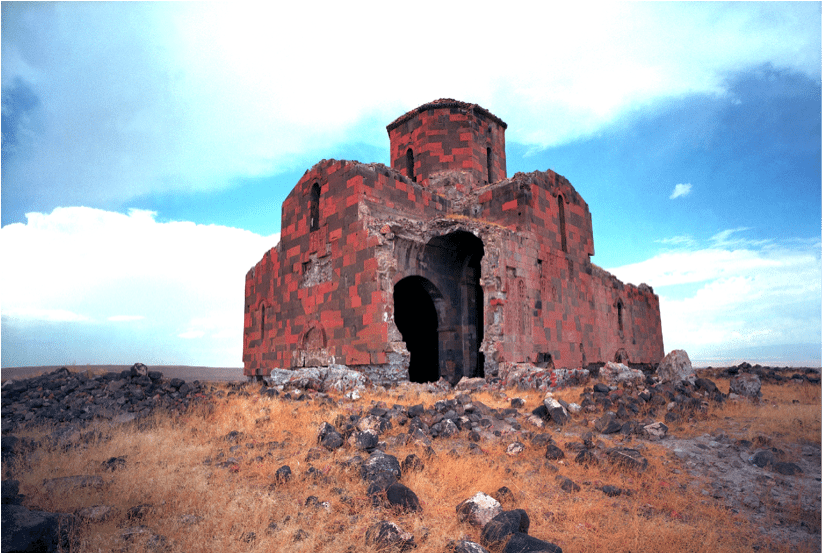
NEW YORK, N.Y.—An awe-inspiring, but gravely worrying lecture on the preservation of historic Armenian churches in danger of collapse, was presented by leading Armenian art historian Dr. Christina Maranci recently. It was sponsored by the Zohrab Information Center in New York. The 7th century religious icons in question, Mren, Zvartnots, and Pighni were explored in the context of their unique designs, their historical time period, their vibrant culture, and their current significance.
[capt




It was only two hours forty minutes of brutality, actually! Though maybe three hours on the hike back. I think it is a distraction to say that Mren is in an “active seismic region”, since the entire territories of Turkey and Armenia are also in it. It also opens the door to Turkish excuses that Armenian monuments have been destroyed due to earthquakes. The current condition of the Mren church has far more to do with human actions than seismic actions. The south façade collapsed because, by the end, almost its entire base was missing and it was supported only at its eastern end. This was probably due to neglect rather than structural sabotage. However, inside the church, as well as the deliberate damage to the piers supporting the dome that Christina mentions, important structural elements such as the pilasters attached to the interior walls have been deliberately weakened by the removal of stone blocks. The building’s exterior cornice, almost intact at the start of the 20th century, has been removed, allowing water penetration into the roof and walls. The various other monuments that were documented as existing at Mren before the site fell under Turkish control – including two chapels, a huge khatchkar monument, and a 13th-century palace – have all been destroyed, most likely at the hands of the Turkish military (since they control access to the site and also, just a little to the south, the famous church at Bagaran was demolished in the 1950s and its stones used to build an army base). NB, your reporter has probably made an error when saying that the north side (north facade) has no support – it is actually the west façade that is almost entirely unsupported at its base and is in a condition similar to the south façade before its collapse.
much moreally needed to be done if the Turkish autorities allow but the international political pressure has to be constant in order to restore all these Cristian churches
I would love to know what sort of stone was used to produce the striking hues of the church, what’s left of it. No wonder it is “blazingly radiant” in the sun.