




Israel’s Cabinet unanimously approved a resolution recognizing the Armenian Genocide on Sunday, July 28, 2026. Foreign Minister Gideon Saar announced it as a moral duty fulfilled, thanked Benjamin Netanyahu and wrote that “it’s never too late to do the right thing.” The decision is being reported across the wire and in parts of the Armenian press as Israel recognizing the genocide. Set against the record, almost every part of that framing strains, and the single fact that determines whether it is even true is the one the announcement omits.
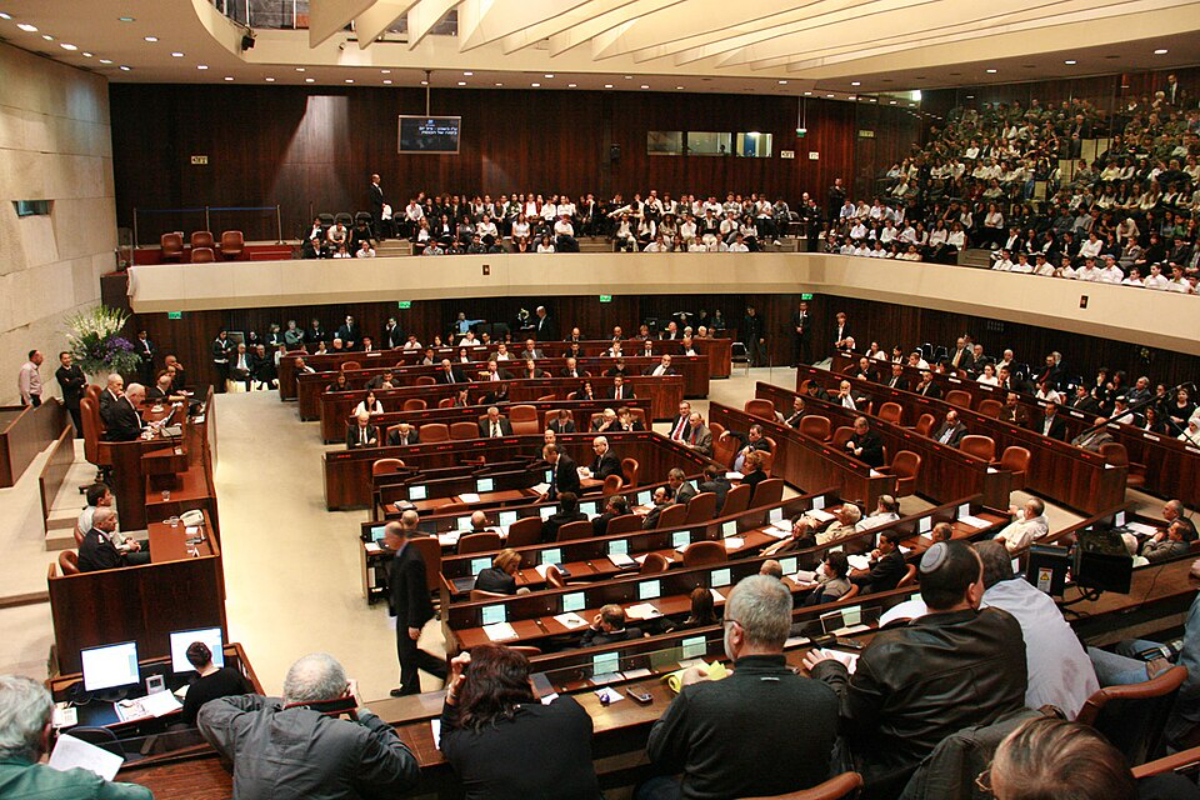
A Cabinet resolution is an executive position. It is not law, it is reversible by any future government, and it is not what constitutes state recognition in a parliamentary system. That step is a binding Knesset vote, which has not happened, carries no date and is the precise threshold every prior Israeli attempt has failed to clear. Saar himself says the resolution goes to the Knesset next, then names no date for it. American and Israeli outlets confirm the gap: The Cabinet approved a proposal, the legislation must still pass the Knesset to become law, and it is not yet known when, or whether, that vote will be scheduled. The Cabinet did the easy, reversible thing. The Knesset, where Israeli recognition has gone to die for 36 years, has done nothing.
The legislative record is not ambiguous. Recognition has been raised in the Knesset nearly every year since 1989, led primarily by the left-wing Meretz party, and blocked each time by the Foreign Ministry on geopolitical grounds. A 2016 Education Committee declaration carried no binding force. Then came decisive precedent: In February 2018, a recognition bill was rejected in a preliminary vote, and the full plenum vote scheduled for that June was canceled outright for lack of coalition support under Netanyahu’s government. That canceled 2018 vote, not Sunday’s Cabinet yes, is the template for what is happening now. A measure advances far enough to generate headlines, then stalls at the one stage that would make it law.
The “moral duty” framing cannot survive the timing, and the clearest evidence comes from Saar’s own mouth. Asked about his position in April 2025, barely a year ago, Saar said the Foreign Ministry’s position had not changed and that Israel had never denied “the tragedy and the suffering of the Armenian people.” A tragedy, not a genocide. The same minister now calls recognition a historical and moral imperative. Nothing about the events of 1915 changed between his 2025 answer and his 2026 resolution. What changed is Turkey, and what changed for Saar personally is an election. With his place on the Likud list uncertain, a public confrontation with Erdogan offers a potential primary contender a popular, low-cost way into the spotlight. The conscience did not arrive. The cost departed.
Israel’s own conduct seals the point. In 2019, a ministerial debate on recognition was delayed at Netanyahu’s request after the Foreign Ministry warned it could help Erdogan win a Turkish election. The man thanked Sunday for backing a moral imperative is on record postponing that same imperative to avoid handing Ankara a campaign asset. And when Netanyahu was asked on a podcast last year why Israel had not recognized the genocide, he claimed the Knesset already had. The host corrected him: No such recognition existed. Netanyahu replied, “I just did. Here you go.” The label keeps getting pinned one rung above the actual act. A committee statement was called a Knesset recognition. A six-word podcast aside was floated as state recognition. Now, a Cabinet resolution is being called Israel’s recognition of the genocide.

The deepest dissonance is one the announcement does not touch. While Israel withheld recognition of a century-old genocide, it served as the principal arms supplier to the state carrying out the next one. Israel accounted for roughly 69% of Azerbaijan’s arms imports between 2016 and 2020. Israeli Harop loitering munitions, LORA ballistic missiles and cluster munitions documented by human rights organizations were used in the 2020 war and the September 2023 offensive that emptied Nagorno-Karabakh of some 120,000 Armenians within days. An Israeli rabbi and arms trade activist, Avidan Freedman, named the contradiction plainly while it was unfolding. A senior Israeli military source, he noted, had admitted that Azerbaijan could not have sustained its 2020 operation at that level without Israeli support. To arm a state that indiscriminately targets civilians, Freedman wrote, is “a heartbreaking violation of our mission.” Israel recognized the genocide of 1915 from a Cabinet table while the weapons it sold helped enable the dispossession of Armenians in 2023.
That same relationship is the constraint Saar leaves unnamed, and the likeliest reason a binding vote stalls. Turkey is no longer the deterrent it was because the relationship is already broken. Azerbaijan is. Israel’s defense ties to Baku are extensive and ongoing, and Azerbaijan supplies roughly 40% of Israel’s oil. Baku aligns with Ankara against recognition and has already condemned Sunday’s vote as a “distortion of historical facts.” Israel’s former ambassador to Azerbaijan said outright in 2015 that recognition was being withheld over the Baku relationship. That relationship is intact, and Saar’s statement mentions neither it nor Turkey.
A six-word podcast aside was floated as state recognition. Now, a Cabinet resolution is being called Israel’s recognition of the genocide.
The timing carries a domestic reading as well. The resolution lands in a pre-election period, with Likud trailing Gadi Eisenkot’s Yashar in recent polling. Recognition is popular with the Israeli public and aimed at a partner already lost, letting the government answer public anger at Erdogan at minimal diplomatic cost. The calculation need not be cynical to be convenient. It plainly is convenient. According to its own text, the resolution joins Israel to 32 countries that have recognized the genocide, though tallies vary by source and some count 34. Uruguay was first, in 1965. The nation built on genocide memory arrives 60th in line, in 2026, only once the strategic cost has vanished.
The test is simple and near, and it is the 2018 test repeated. Watch whether the Knesset vote is scheduled with a date or left to expire as Parliament heads toward recess, the way the June 2018 vote was canceled at precisely this stage. A Cabinet resolution may well hold. A dated, binding Knesset tally is the threshold the record tells you to doubt. Until it is crossed, the accurate sentence is that Israel’s Cabinet has taken a reversible position. Not that Israel has recognized the Armenian Genocide, and not that the state most responsible for arming Armenia’s dispossession has reckoned with any of it.



The reason is obvious: While Israel sent a “message” to Turkey by “recognizing” the Armenian Genocide at the cabinet level, it has avoided making this a binding resolution through a Knesset vote in order not to damage its close and friendly alliance with Azerbaijan. This is purely a Machiavellian move by Israel, and as one commentator put it in an article she pinned in Armenian Weekly three day ago, a “political scoring card”.