



Leslie Ayvazian brings rebellious insight to one-woman show “Mention My Beauty”
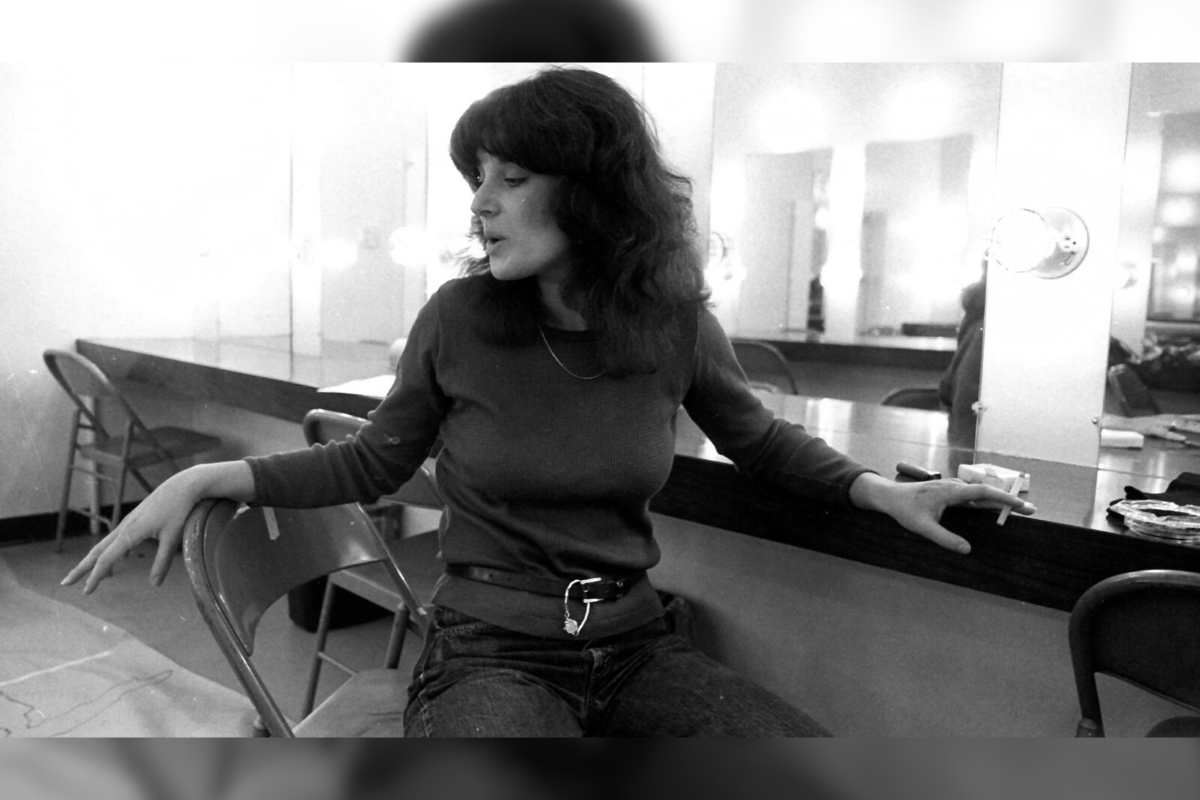
Actor and playwright Leslie Ayvazian recently presented her one-woman performance piece, “Mention My Beauty,” at the Off-Broadway New York Theatre Workshop (NYTW). The production was part of NYTW’s 2026 “In the Bricks” Festival, a curated, six-week program featuring timely plays and performance pieces.
Ayvazian is a mainstay of the New York theater scene, with her plays often analyzing womanhood, sexuality, and Armenian identity. She won the 1994 Roger L. Stevens Award and the 1996 Susan Smith Blackburn Prize for her play “Nine Armenians,” which follows three generations of an Armenian American family. As a professor of dramaturgy at Columbia University, she encourages diverse roles and artistic exploration.
Directed by stage and screen veteran David Warren, Ayvazian performs “Mention My Beauty” in a small theater, with just a three-ring binder on a music stand in front of her.
She has a warm and casual relationship with the audience, checking in from time to time about the noise filtering in from the comedy club next door. If it becomes too loud at any point, she reminds the audience that they just have to focus.
“Mention My Beauty” took Ayvazian 10 years to write. Because it continues to evolve, it feels less like a formal performance and more like listening to an aunt at a family gathering adding new details with each retelling.


“Mention My Beauty” is the story of her life as a rebellious, strong-willed, artistic girl — and then woman — of her time. In much of the story, she compares and contrasts her mother’s lived experiences and resulting instruction with her own.
Ayvazian says that the women in her family were talented, educated and bright, but were taught not to be ambitious. They would shrink themselves, demurring at any compliment about their abilities beyond motherhood, homemaking or beauty.
Without questioning what her mother taught her and what her grandmother taught her mother, Ayvazian might have fallen into the same trap. Without reflecting on what was happening to her or challenging the norm, the cycle of violence, compliance and silence might have continued into another generation.
The story she tells is not chronological, instead linking time periods together through themes and impact. In a post-show discussion, Ayvazian told the audience that, at age 76, she no longer memorizes her lines and prefers to read the material directly, allowing her to focus on how she tells the story.
She reads with fluidity and brings a scene to life with facial expressions and gestures. With intention, she guides the audience back and forth between childhood, college years as an actor, periods of volunteering, married life, and other meaningful moments. She ensures the audience notes the time jump and reminds them of where they last left off in that period. In this way, the audience hangs on to her every word.
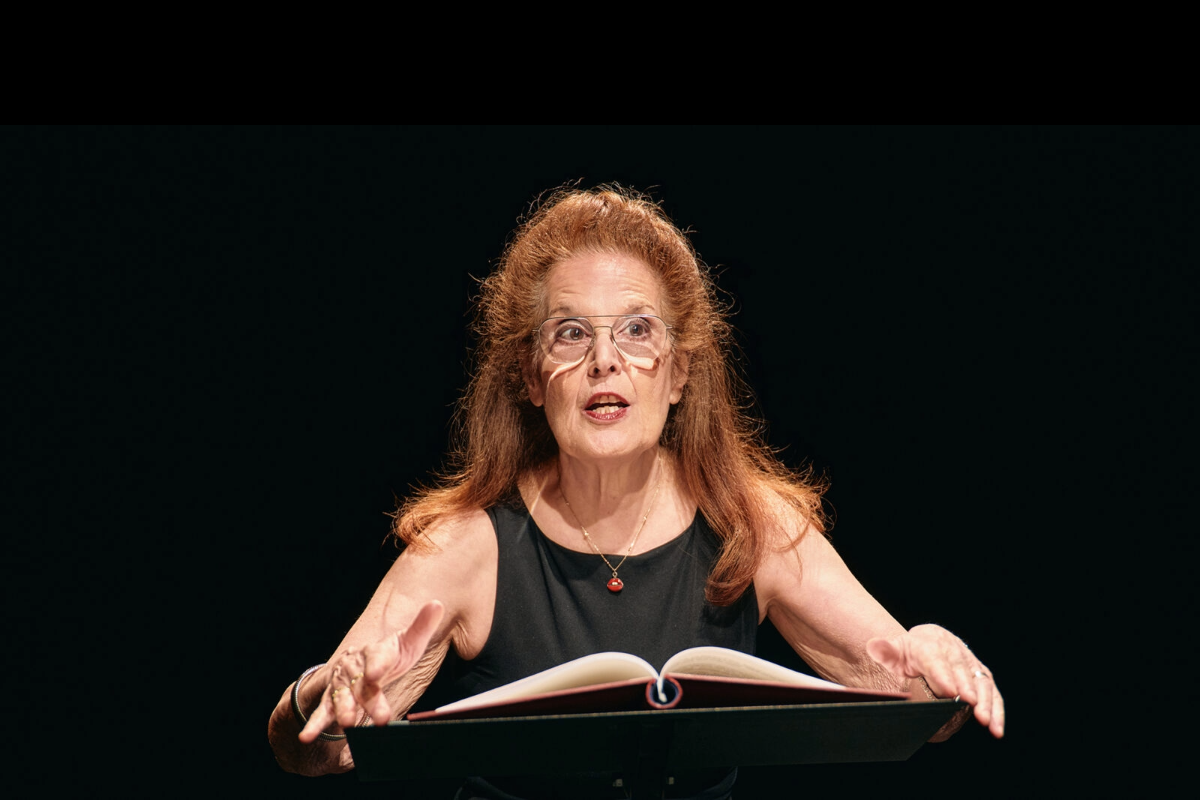
Words can be incredibly powerful — something Ayvazian illustrates by reading a list of 100 words that are used to describe women; words like “aggressive,” “catty,” and “uppity.”
Ayvazian’s own skill with the written word is evident in the vivid descriptions and specific phrases that stay with the audience long after the show is over. She describes a “pool of secretaries, all on diet pills, chewing gum and drinking Diet Dr. Pepper at their desks.” She recalls straightening her hair with an iron and asking, “Why kill a curl?” She questions the behavior of the women around her: “Is politeness a disguise for rage?” She remembers learning to drive with an inappropriate instructor, a situation where “silence was the unspoken contract in order to get [her] hands on the wheel.”
“And then I left” is a phrase repeated throughout the show, like a chorus. From an early age, Ayvazian had the intelligence to know when something, or someone, was no longer good for her, the belief that she deserved more, and the agency to do something about it — the kind of assertiveness that was punished in the women before her. Had Ayvazian not left, she might have been resigned to a life that didn’t suit her, as many women around her were.
Due to the trauma of the Armenian Genocide and the need to rebuild, Ayvazian’s grandmother, father, and other family members were forced into lives they didn’t want to live. They didn’t have the opportunity to pursue their true passions, whether in work or in love. But she did, and she wasn’t going to waste it.
Ayvazian delves further into her experiences as an Armenian American woman balancing the expectations of her traditional Armenian family and the pain of “living with a history that is denied” with the newfound freedoms of the many social movements of the 1960s.
She struggles with the pulls of what she “should” do and what she “wants” to do. It is a tug-of-war familiar to many women, children of immigrants, and anyone who has been oppressed or disenfranchised. Should she settle for a practical life, like her father did, or should she pursue what she’s truly passionate about, taking the riskier but more fulfilling path?
Ayvazian’s insightful observations don’t stop at how others’ actions influenced her; she also investigates her own behavior. She tells the truth, even when it doesn’t paint her in the best light. She admits when she has made mistakes, when she was hypocritical, and when she has wronged others, which not only adds authenticity to her story, but also resonates with the audience. Who among us is perfect? Who among us is actually leading a revolution when faced with injustice? More likely, we join up once it’s a majority, if at all.
In exploring the vast and interconnected themes of love, power, sex, freedom, silence, family, lies, misogyny and trauma, Ayvazian hits on something important: some things haven’t changed. It’s easy to say, “It was a different time back then,” but the same things are still happening to women today. With the recent rise in rejection violence, one anecdote from her life feels especially relevant. As a young woman who dated frequently, Ayvazian was once asked by a friend, “Why do you act like you care for these men?” Ayvazian replied, “Because it’s too dangerous otherwise.”
So yes, Ayvazian is telling her story in “Mention My Beauty,” but she is also tapping into experiences that will feel familiar to many. Where many women may stay silent, as they have often been conditioned to do, Ayvazian uses her voice to illustrate what life is really like as a woman.