Book review: “First Rule of Fire”
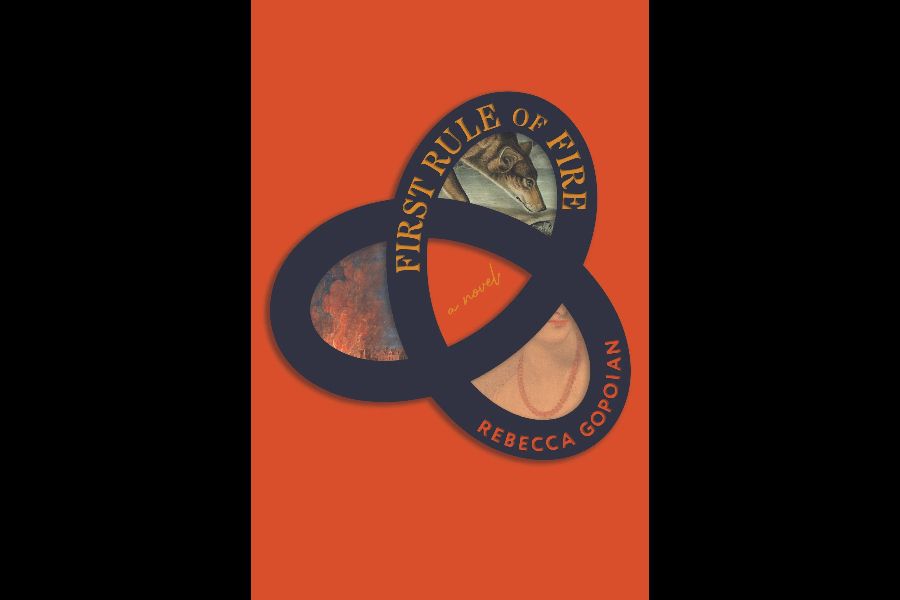
There are certain books that feel less like discoveries and more like encounters waiting to happen — stories that speak to wounds and inheritances already recognized within oneself. Rebecca Gopoian’s debut novel, “First Rule of Fire,” felt like one of those books for me from the very beginning.
The novel follows three generations of the Gazarian family across different periods of history. It begins in the Ottoman Empire in 1914, following 14-year-old Jivan Gazarian as the Armenian Genocide slowly destroys the world around him.
It then shifts to the United States in 1928, where Araxie, a survivor and Jivan’s future wife, struggles to build a new life while carrying the psychological weight of the past.
The final storyline takes place in 1981 and follows their granddaughter, Miriam, a half-Armenian, half-Jewish teenage girl navigating identity, belonging and inherited emotional wounds she does not yet fully understand.
What makes the structure so powerful is how these seemingly unrelated narratives reflect one another emotionally. Even when the stories move from survival to domestic life to teenage awkwardness, the same undercurrent of fear, silence, memory and displacement continues to shape each generation in different ways.

One of the most moving aspects of the novel is the emotional authenticity behind Jivan’s story. While the novel is fictionalized, Gopoian drew inspiration from real family diaries that documented survival during the Armenian Genocide.
Among them were the writings of a relative who recorded his experiences in Turkey and the difficult path that allowed him to survive, as well as an account connected to her grandfather’s experience as a gamavor, or Armenian Legionnaire. These personal histories shape the novel, giving Jivan’s journey a sense of intimacy and lived memory that feels profoundly sincere.
What makes the novel especially powerful is its exploration of shame, erasure and guilt as lasting companions to trauma. Jivan’s storyline shows how terror gradually reshapes identity, while Araxie’s chapters reveal the mental aftermath of survival.
Miriam’s storyline fascinated me for different reasons. Beneath her awkward teenage experiences lies an inherited unease shaped by histories of genocide, displacement, silence and unresolved grief.
Gopoian beautifully captures how trauma becomes instinct, with Miriam’s caution, vigilance and fascination with train tracks reflecting an inherited awareness of danger long before she fully understands its origins.
Another powerful aspect of the novel is the emotional intimacy between Jivan and Araxie. Their relationship feels restrained, deeply human and built more through gestures and shared routines than dramatic declarations of love.
Trauma complicates their closeness. Jivan’s discomfort with Araxie’s participation in a fashion contest reflects a deeper fear of visibility and vulnerability after surviving unimaginable violence. Meanwhile, Araxie’s intense protectiveness toward her son, Sarkis, especially her constant bathing of him, feels like an attempt to protect him from inheriting the trauma she carries herself.
Despite its heavy themes, the story also contains moments of warmth and humor that make the characters feel alive.
Giragos provides much-needed comic relief throughout Jivan’s survival journey, particularly in scenes where he mistakes a donkey for a goat or is hilariously mistaken for a holy man while being sheltered by Kurds during the Genocide. These moments remind us that even in catastrophe, people still laugh, tease and cling to absurdity as a form of survival.
The novel’s symbolism is equally striking. Fire represents memory and trauma itself, spreading scars and reshaping everything it touches. Even the stars lose their innocence through Araxie’s eyes, no longer appearing as sources of light but as explosions and reminders of violence. Gopoian portrays this altered perception of the world with remarkable sensitivity.
At its heart, the novel examines how the past cannot simply be hidden away or forgotten. No matter how much its characters try to move forward, trauma continues shaping their identities, relationships and understanding of themselves.
Without spoiling too much, “First Rule of Fire” is a novel I would strongly recommend to anyone interested in intergenerational trauma, multi-timeline narratives and the lasting psychological impact of violence across generations. It is also meaningful for descendants of survivors and victims of any genocide throughout history.