


OpinionOp-Eds

Armenian startups broaden their market horizons

For years, the narrative of Armenia’s domestic tech scene followed a predictable pattern: Build a product in Armenia, incorporate in the United States. The “global market” was simply a synonym for the U.S. market. It was a one-size-fits-all doctrine that ignored the basic math of customer acquisition and the invisible walls of international regulation. Most founders were hyper-focused on the crowded U.S. scene, missing easier opportunities elsewhere.

Today, this mindset is shifting. Founders are diversifying their market focus to reduce risk and grow faster. The numbers reflect that evolution. According to Armenia’s former high-tech industry minister, Mkhitar Hayrapetyan, who presented the ministry’s 2025 performance report to parliament, the number of active high-tech companies in Armenia grew from 8,072 in 2024 to 10,778 in 2025, with sector turnover rising from roughly 942 billion drams, or $2.5 billion, to 1.207 trillion drams, or $3.2 billion — an increase of nearly 28%. Separately, industry coverage from the Caucasus Business Journal put total startup funding at about 60 billion drams, or $164 million in 2025, alongside 22.8% growth in startup activity for the year.

Ruben Osipyan, CEO of STAN, the Science and Technology Angels Network, has watched this transition closely. In his view, the old model — relying on the Armenian diaspora, including more than 460,000 people with Armenian ancestry in the United States alone, according to the U.S. Census Bureau’s 2020 American Community Survey — as a sentimental safety net has served its purpose. “That mindset kept our startups trapped in a bubble,” he said. “If we want to grow, that needs to be reconsidered.”

“Limiting ourselves to Armenia only decreases our chances of scaling. We excel at the technical part of a product, but we struggle to sell it to the world,” Osipyan said. For him, moving Armenian startups onto global stages by hosting pitch sessions directly moves the diaspora’s role beyond charity, turning it into a training ground for founders to build the skills required to deal with international investors. “If I intend to create a beauty product, I can certainly find someone who knows someone who can reach Kim Kardashian to promote it,” he said. “But while we are safe using those diaspora connections, we still lack the knowledge, flexibility and communication skills needed to deal with non-U.S. investors.”

This gap in infrastructure is beginning to close at an institutional level. In 2024, Plug and Play Tech Center, a global startup accelerator, ran a 26-week pilot acceleration program for Armenian startups, selecting 20 companies from more than 100 applicants and offering tailored mentorship and international networking opportunities, according to the Ministry of High-Tech Industry, via EU4Digital

Advertisement

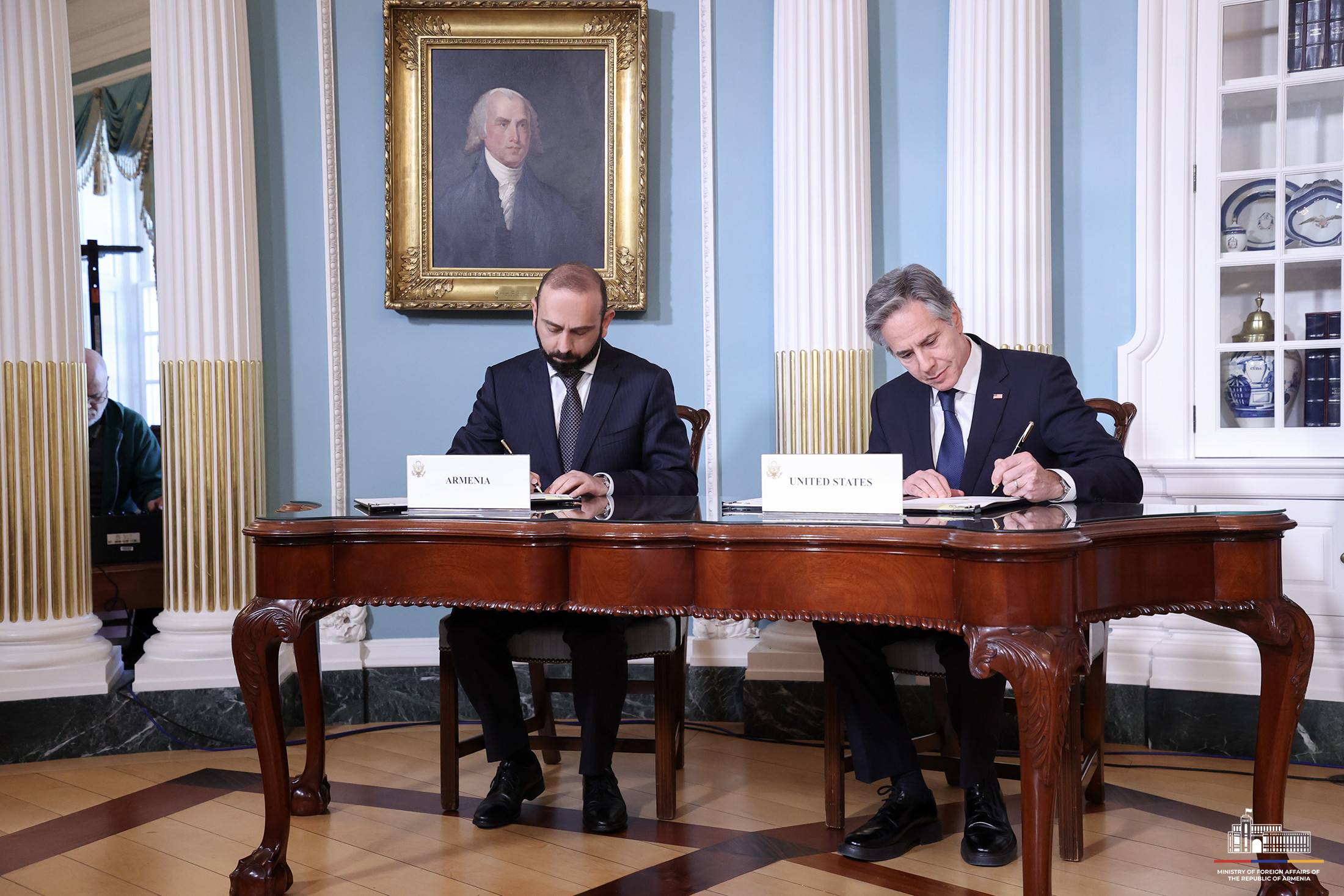
Demand was significant enough that on July 3, 2025, the Armenian government formalized a three-year partnership with Plug and Play, which has since opened an office in Yerevan to run incubation, pre-acceleration and acceleration programs. According to PitchBook data cited in the same report, Plug and Play was the leading U.S.-backed investor in Europe in 2024, surpassing accelerators such as Y Combinator and Techstars and has committed to a development agreement running through 2028. For founders like Osipyan, this is precisely the kind of structural shift that moves ecosystem building beyond diaspora goodwill and into something more durable. 

A third pre-acceleration cohort of 18 Armenian startups completed the program in mid-2026, according to the Ministry of High-Tech Industry, suggesting the model moved beyond the pilot phase and into routine practice.

RCMed, an AI health care technology startup, is a simple example of how motivation has shifted to providing practical solutions with Armenian products in broader markets.”Armenia was a great starting point, but the problem we’re solving, which is revenue leakage at hospitals, doesn’t exist here at a meaningful scale,” RCMed co-founder Lilit Hovian said.

In Hovian’s view, the U.S. system is the only place where RCMed’s product is actually an essential tool. Its strategy is more about functional placement. The company keeps its engineering speed in Yerevan but has shifted its advisory heart to the U.S. to leverage a specific medical diaspora. It aims to become a simple solution to a complex problem present only in massive health care systems.

While most founders reflexively seek U.S. expansion, Manvel Mnatsakanyan, co-founder of Biogen Technologies, a startup that develops biological solutions for soil restoration, found that the European market, with its intense regulations and legal obligations, is better suited for his product than the more laissez-faire regulatory system of the American market. 

The signing of the U.K.-Armenia Strategic Partnership in 2025 created new pathways for fintech collaboration, investment and regulatory alignment — the kind of institutional bridge that facilitates entry into the European market.

Sipan Babertsyan, co-founder and CEO of TopMessage, a platform that helps small businesses automate customer communication through local messaging apps, views Silicon Valley as a highly competitive environment where a startup’s voice is drowned out unless it has millions to spend on marketing.

TopMessage intentionally bypassed the U.S. to target the underserved European small and midsize enterprises (SMEs) sector. By hyperlocalizing its messaging platform for Italian cafe owners and French retailers, adopting their languages and local regulations, TopMessage found an less contested market space that their competitors were too busy to notice.

Babertsyan estimates that the cost of being seen in the U.S. is higher than in Europe, a marketing price many Armenian startups simply cannot afford.

The newest generation of founders, including 27-year-old Ani Hovhannisyan of LitArchive, a digital platform for web novels and serialized fiction, is guided strictly by digital traffic reports. Her user data points to EU countries, Southeast Asia, Australia and Canada. “We target markets where there is demand for the product, as the tool has an entertainment component and is fully business-to-customer, effectively determining its own trajectory,” she said. “My 180,000 TikTok followers and 15,000 Instagram followers are effective tools to promote it and target audiences aligned with their interests.”

Hovhannisyan, who has experience working with investors in Europe, the Middle East and Armenia, describes local investors as highly skeptical and often unable to understand the entertainment sector. That skepticism pushes her toward European venture capital firms. She represents a founder building a business based on data and mentorship rather than the hope that defined the previous generation. “At the end of the day, I’m not building this for a specific geography. I’m building it for a specific reader,” Hovhannisyan said. “If the local capital doesn’t see the value in entertainment, I don’t wait for them to change their minds. I shift my focus to markets that are already waiting for the next chapter.”

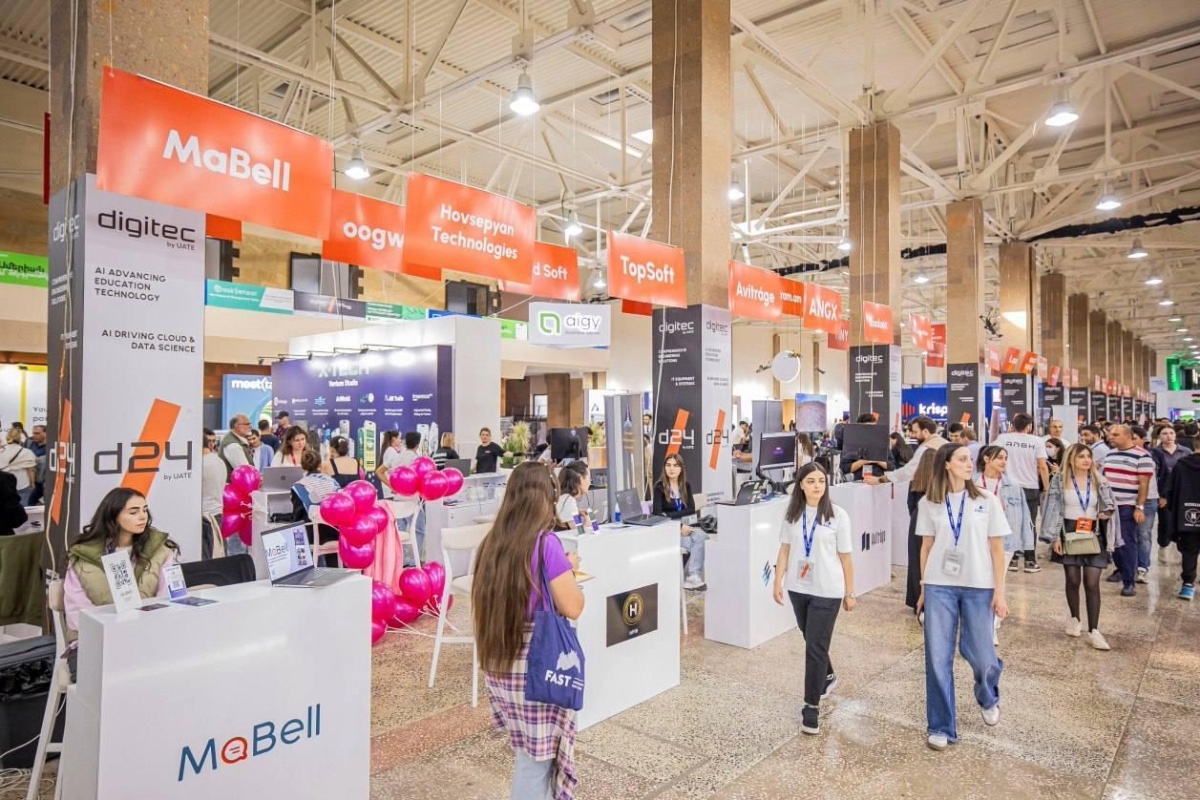
That generational shift is now finding institutional expression. In 2025, the Sevan Startup Summit was held for the first time with government support, attracting more than 200 startup teams from 40 countries. This year’s edition, held July 26-Aug. 1, 2026, marked the summit’s 10th anniversary and its largest turnout yet, with more than 2,000 founders, investors and mentors from roughly 50 countries. 

A year earlier, Armenian startup nomiq became the first Armenian company to win at the Entrepreneurship World Cup global finals, taking the Idea Stage category championship and a $50,000 prize in Riyadh, positioning Armenia firmly on the global entrepreneurship map. The story of Armenian tech is no longer just about founders leaving to find the world; the world itself is showing up here, too.

Leave a Reply

Your email address will not be published. Required fields are marked *


Back to top button