Lonely together: Belonging, isolation and the aftermath of the Armenian Genocide
April arrives with heaviness. It springs up in the tone of conversations, in the way Armenian names begin to circulate more frequently online, in historical black-and-white photographs and in candlelit vigils across cities I have never been to but somehow feel connected to.
Every year, we gather in churches, community halls and public squares to remember the Armenian Genocide. We march and listen to speeches that attempt to hold the weight of a horror that once knew no mercy.
There is visible and tangible unity in this. Yet beneath it, it’s still possible for us to feel a sense of loneliness.
While we remember the Armenian Genocide collectively, we experience its aftermath individually. Its psychological consequences do not belong to history books or annual commemorations but also to the private spaces of our lives: the way we process emotion, the silences we inherit and the isolation we do not always know how to name.
This essay is an attempt to sit with that truth, to explore what remains unspoken even as we remember the events that began in 1915 together.


The paradox of presence
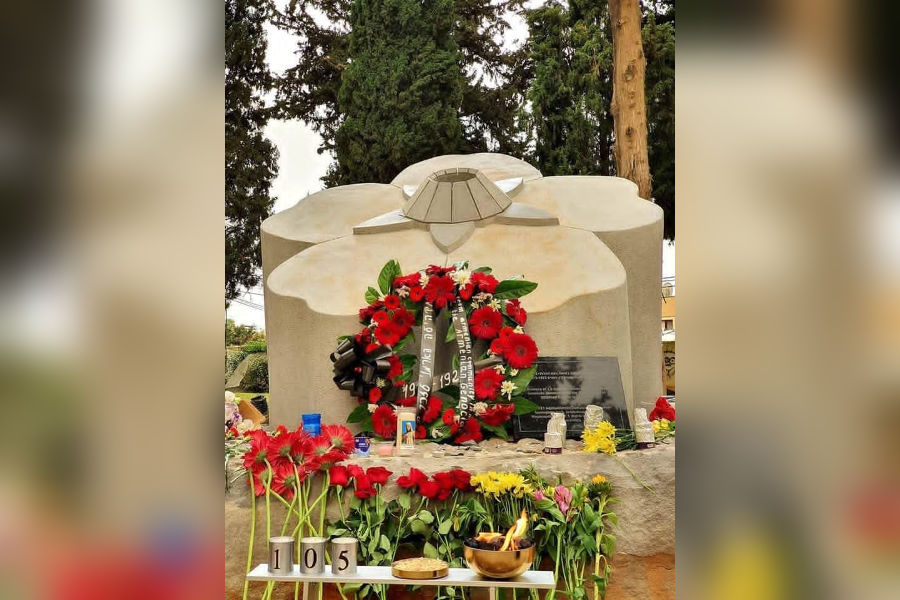
I think of the April commemorations I have attended over the years, consisting of rooms filled with Armenians, sometimes hundreds at a time. The air is dense with incense and memory. Candles flicker in long rows and names are spoken aloud, each one representing a life interrupted and a story unfinished.
These spaces are undeniably powerful, existing because of what was lost, because of who survived and who did not. Yet standing there, surrounded by people who share a history so profound, it is still possible to feel alone.
This is the paradox I struggle to reconcile: How can a space built on shared loss not always translate into shared closeness?
I have felt more connected at times in unexpected moments. Such moments include meeting another Armenian by coincidence in a foreign place, hearing a familiar surname or exchanging fragments of family history. In those moments, an unspoken relatedness passes between us. There is a certain recognition and depth that does not require performance.
It is different, too, when someone actively and truly speaks about what happened; when they carry the responsibility of remembrance not as ritual, but as urgency, especially now, when the world seems to be forgetting or choosing not to remember the events that took place at all.
Those scenarios are not the same as attending a gathering simply because it is expected, because it is April and because we are meant to be there. Presence, I have learned, is not the same as connection.
The loneliness of carrying inherited trauma
As descendants of survivors and victims, we do not only inherit stories but the emotional realities that are shaped by them.
The Armenian Genocide was not just an event of mass violence and displacement. It was a rupture so profound that it altered the emotional architecture of the generations that followed.
To survive, many Armenians had to suppress. To continue living, they had to endure without processing. There was no space for grief as we understand it today, no language for trauma and no framework for healing. As such, what was not expressed was passed down.
In my own family, there are fragments of stories told in pieces, often without detail: names without full histories, moments that feel heavy even when not fully explained. You learn to sense what is not being said as much as what is.
This creates a kind of emotional inheritance that is difficult to articulate: a baseline of grief, anxiety and distance that exists without always having a clear origin in our own lived experience. Because it is not often spoken about openly, it can feel isolating, as though we are carrying something others may not fully understand, even within our own community.
Ironically, it is in digital spaces now that I have sometimes felt that recognition most clearly: In shared posts, comments and acknowledgments between strangers who understand the burden of what we carry without needing it to be explained in full.
The space between gatherings
The Armenian diaspora today exists because of displacement. People were forced to leave out of necessity and that reality continues to shape how we, as their descendants, live.
For many of us, Armenian identity is something we step into and out of, depending on where we are. It intensifies in community spaces such as cultural events, churches and gatherings, then recedes into the background of our daily lives.
This creates a rhythm of connection and disconnection.
Armenian spaces today are, in many ways, reconstructed fragments of what once existed organically. They are intentional, curated and often temporary. Outside of them, there is a different reality, one where Armenian identity may not be visible or understood or reflected back to us.
The loneliness that exists in those in-between spaces is the direct result of historical rupture. As much as we may want to move on from the past and focus on our present, one fact remains clear: We are not living where our ancestors lived. We are not surrounded daily by people who share our history. And so, belonging becomes a feeling we visit rather than inhabit.
The silence between us
There is also a silence within the Armenian diaspora community itself.
We do not always talk about our inner lives, including loneliness and identity struggles. We do not always find it necessary to speak out about our experiences of discrimination or about not feeling fully seen in the societies we were born in or live in.
Part of this, I believe, is inherited. When a people have endured existential threat, survival becomes the priority and expression becomes secondary. We move forward because we have to. We build, adapt and endure.
That endurance becomes a point of pride, but it can also become a limitation because if our strength is what is expected, our vulnerability can feel like a deviation from that expectation. It becomes something to be managed privately rather than shared.
Even when our experiences of discrimination echo in smaller ways the historical persecution our ancestors faced, they are often processed individually and, like them, we carry them quietly.
The absence of place
There is a particular kind of disconnection that comes from not having access to the physical spaces our history belongs to. For many in the diaspora, the lands our ancestors came from, namely within the former Ottoman Empire, are not places we can easily visit, reclaim or even fully trace.
The Genocide did not only take innocent lives. It erased homes, communities and records. What remains are stories that are passed down verbally. These stories can change slightly with each retelling, held together by memory rather than documentation.
In my own family, I know pieces. I know that there were lives lived fully before everything changed. I know that there were names, relationships and places that existed in detail but now exist only in fragments.
There is emotional significance in inheriting a history you cannot fully access: to know it is yours but not be able to touch it, see it or walk through it. It creates a sense of distance not just from the past but from identity itself.
From survival to being seen
Public narratives of Armenian identity center on our resilience, survival and remembrance. These are necessary, but they don’t tell the full story. There are feelings that aren’t overtly expressed, such as the in-betweenness and the unfulfilled longing for connection. I may not have walked the desert, but I carry the same bones that did. The majority of diaspora Armenians have inner lives that are part of the long aftermath of the Armenian Genocide. What was disrupted was not only our physical existence, but our identity, belonging and emotional continuity.
Remembrance alone is not enough. We need space to explore how this history still lives within us through vulnerability, honesty and conversation beyond strength. From this, another kind of community is possible, one that exists not only in April but in everyday moments of reflection and being seen.
The Genocide scattered us, but it doesn’t have to define the distance between us. Perhaps naming this loneliness is not disconnection but the beginning of belonging.