“Armed With Love”: Lucy Khanyan’s journey through chaos and solitude
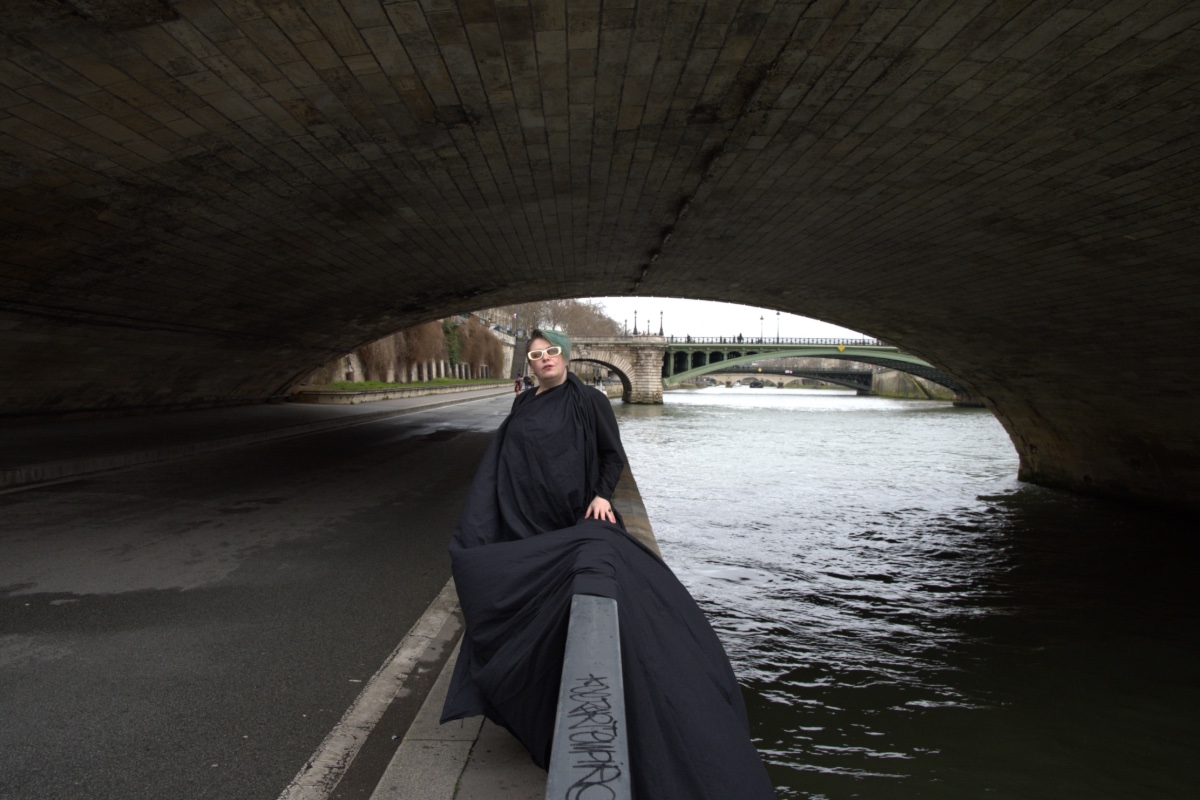
In the contemporary jazz landscape, few artists navigate the intersection of ancestral heritage and avant-garde exploration as fluidly as pianist and composer Lucy Khanyan. Splitting her life between the sprawling, multicultural energy of Los Angeles and the stoic, silent peaks of Armenia’s Lori Province, Khanyan creates music that breathes with the weight of history and the spontaneity of the present.
Her latest project, featuring a classic trio format with Gabriel Pierre on double bass and Isaias Alves on drums, is a profound architectural study in sound. It is an album that refuses to shy away from the duality of existence, opening with the friction of “Order In Kaos” and resolving into the transformative power of “Armed With Love.” In this interview, Khanyan delves into the necessity of solitude, the spiritual kinship she feels with Komitas Vardapet and how the “Teacher” that is the Armenian mountain shapes her creative identity.
Milena Baghdasaryan: As a female composer and pianist in a genre often dominated by male voices, how does your personal identity shape the “deeply personal narratives” you mention in your biography?
Lucy Khanyan: That’s true; art and music historically have been shaped by more dominant male perspectives. But my experience as a female artist hasn’t been defined by those kinds of impressions, emotional themes or storytelling. I see everything as part of a natural process, and I believe you always have the power to choose whether to be influenced by certain things and ideas. My main sources of inspiration are nature and inner work.
Baghdasaryan: Looking at your tracklist, the album opens with “Order In Kaos” and concludes with the title track, “Armed With Love.” Usually, artists seek order as a resolution, but you begin there. Is this album a journey of deconstructing a false sense of order to find a more authentic truth in love?
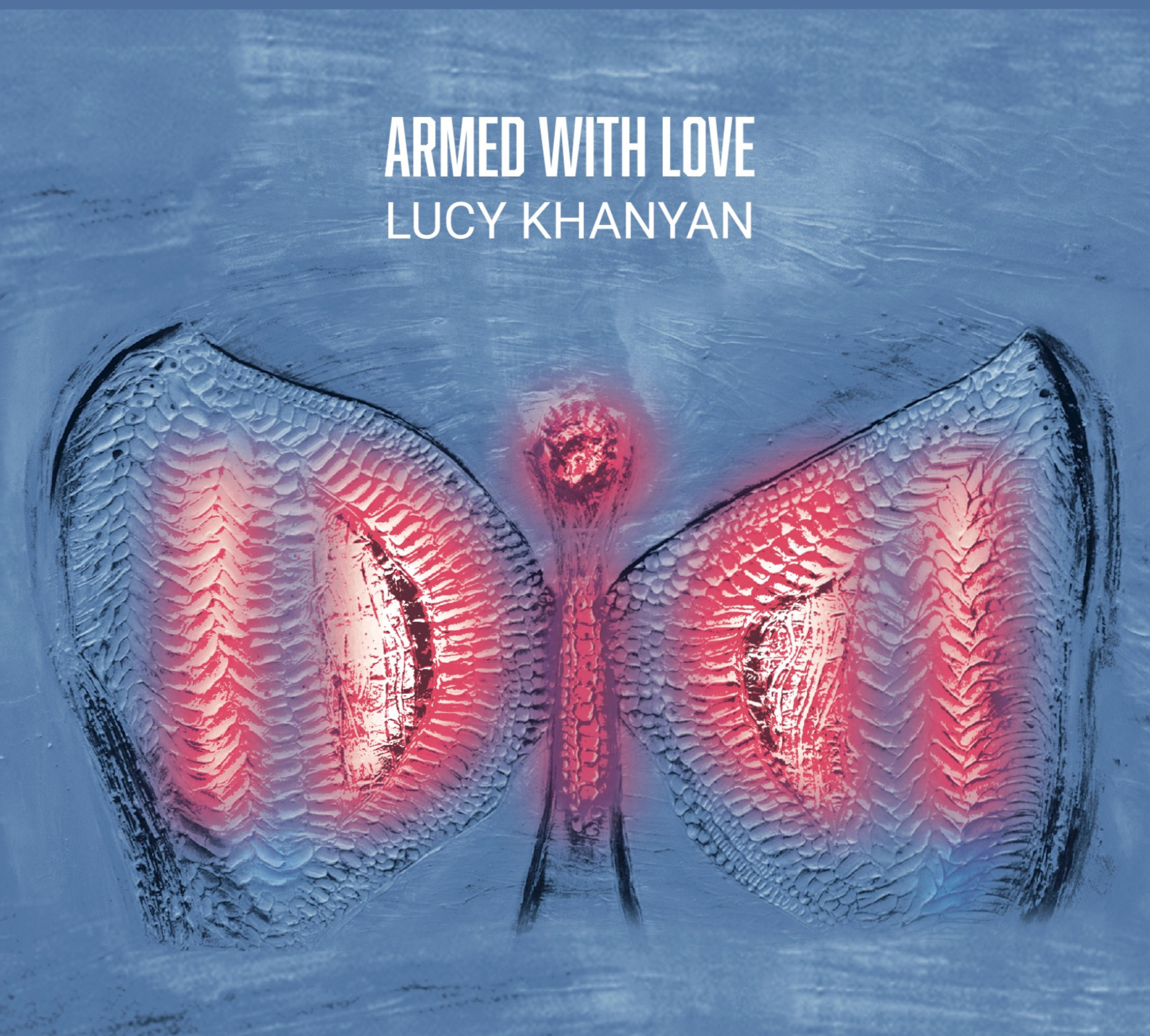
Khanyan: Let me start by saying that there is no truth or love that is more or less authentic; either it is there, or it is not. “Order in Kaos,” for me, means that these two always reside together. To go beyond the duality of the conceptual world, we have to recognize these two powers within us working in harmony, which is the foundation of recognizing the Self.
And “Armed with Love,” it might sound smooth and loving, but true love is not necessarily nice; it represents Truth. The Self will always push toward evolution, involution and innovation, which every creator goes through. Because of these experiences, you have to shed old selves, or, as you put it, deconstruct a false sense of order. It is not so much false as it is transitional.
We need to go through a kind of filtration, so on the evolutionary ladder, when you look back at what you have been going through as a person and a being, previous ideas, selves or decisions might feel false, but they served their purpose in bringing you to where you are and where you are headed.
Resolution only resides in the Self, so we have to know the Self.
Baghdasaryan: Does that opening “Kaos” also reflect the chaotic beauty of the diaspora, where we are constantly trying to find a rhythm amid displacement in a global city like Los Angeles?
Khanyan: Yes, it can, but not in a literal way. The idea of “Kaos” resonates with the diaspora experience because, in a place like Los Angeles, where so many identities and stories fuse, you’re always finding and redefining yourself. Armenia has a different, deeper impact, and it’s hard to put into words what I experience there.
I’ve lived almost like two lives, one in Los Angeles and one in Armenia. Recently, I’ve been spending more time in Lori Province, where I have had a residency since 2019 and have created a working environment with instruments — a kind of studio. Naturally, the geographical location I’m in influences my artistic life and expression: the energy, the nature, the sounds, the pace, the surroundings. The main Teacher is the Mountain. Just by looking at the Mountain, it shapes your day, perspective and Self.
It’s still part of my life’s flow: different environments, different lifestyles and different rhythms, but all existing within that same inner world, where everything coexists in harmony.
Baghdasaryan: You’ve chosen the classic piano-bass-drums format for this exploration. How do these two other voices complement your piano to build the “fortress” of sound you envisioned for this album?
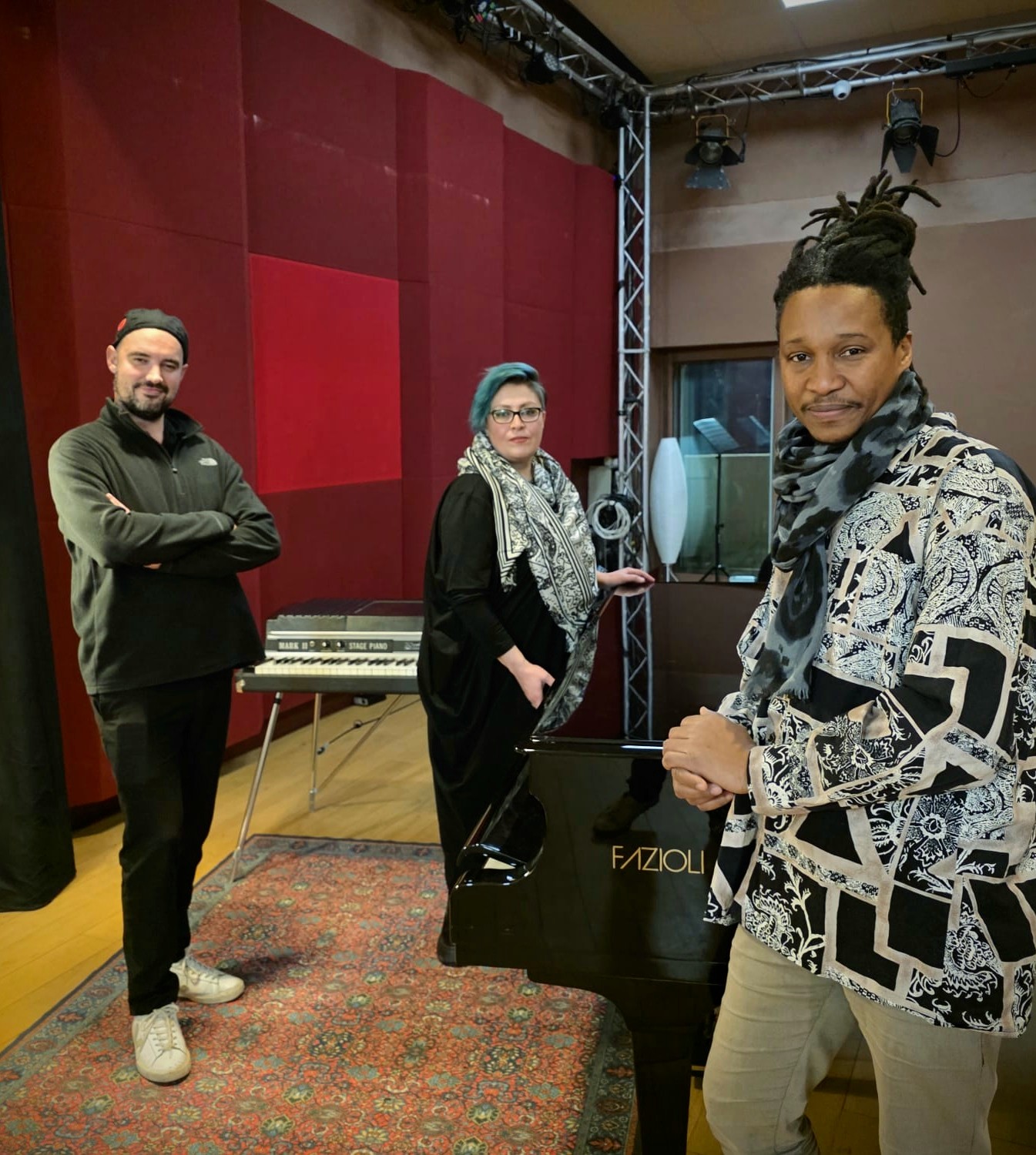
Khanyan: I chose the classic “piano-double bass-drums” format because of its simplicity and uniqueness, and because it provides limitless freedom of expression. For me, this trio is like an architectural space, a set of colors and a living organism of sound, where each voice is individual but part of the whole at the same time. Gabriel Pierre, with his deep musical sensitivity on double bass and extensive experience and dedication to music, brings grounding, deep resonance, melodic depth and an experimental soundscape, while Isaias Alves, through drums and percussion, adds rhythmic color, mystical tribal presence, fluid movement and a powerful sense of life and spontaneity.
Together, they do far more than accompany my piano; they become equal creative voices, part of my soul’s journey. Each brings their own cultural identity, compositional mind and artistic spirit. That dialogue between us feels both intimate and spontaneous, rooted in folk elements, yet constantly evolving and expanding.
Baghdasaryan: “It Happened Anyway” carries a tone of profound resignation or, perhaps, radical acceptance. What “happened” in the story of this album that the music had to eventually reconcile with?
Khanyan: It simply means that our Soul has its own course, and what is meant to happen will happen anyway, regardless of what we preconceived. The Universe has a bigger and more truthful plan. The more honest we are with ourselves, the more we understand ourselves, the more aligned we will be with the universe.
Baghdasaryan: Your work often feels like a bridge between the medieval sharakans or ashugh traditions and the experimental future. How do you balance the sanctity of folk roots with the “disruption” of avant-garde structures?
Khanyan: I don’t really see it as a balance between preserving something sacred and disrupting it. For me, traditions like sharakans or ashugh music are living beings, forms — not stagnant, concrete, unchangeable objects. Their essence isn’t in staying unchanged, rigid or stuck, but in their ability to move and continue through time through souls.
My approach is about recognizing the folk spirit, the tradition, its structures and identity, and its good and bad sides. But then, through my own life experience, struggles, discoveries, pain, knowledge and individuation, I find my own voice and way, regardless of that background.
Each artist, in a way, plays their Self through their art, whatever the form may be. The artist is both the art source and the instrument, as well as the artwork itself. So authenticity has to come first on an individual Soul level.
So it’s not a conflict between past and future, but a continuity of the Self, becoming.
Baghdasaryan: When, in your creative process, does a traditional Armenian melody transform into a jazz improvisation? Does it happen more as a conscious choice or a spiritual drift?
Khanyan: It’s both — awareness and surrender at the same time.
I wouldn’t describe it as a fully conscious choice, nor as something accidental. Improvisation, in general, is both a spontaneous and conscious act — almost like instant composing.
When I work with a traditional Armenian melody, I first recognize its spirit, structure, weight, flow and story, and try to relate with it on a very instinctual, personal and physio-psychological level.
The identity within me has developed through both recognizing and surrendering to something greater than myself — a connection to the infinite, to nature or to God’s grace, if you will. At the same time, the environments I’ve been in — the culture, the people and, most importantly, the language — all shape how I hear and resonate.
Living in Los Angeles has especially influenced my improvisational approach, because language itself shapes the phonetic and rhythmic structure of the human being. And living close to the mountains in Lori Province has transformed and healed something deeper within me.
At the same time, it is a form of storytelling. You are telling a story about yourself, your experiences, your inner struggles and joys, your memories.
Baghdasaryan: There is a certain solitude often found in Armenian piano compositions. Do you feel a spiritual kinship with the “silences” and “spaces” that Komitas Vardapet used, even when you are playing in a modern trio format?
Khanyan: For me, solitude is something I value more than almost anything because it shapes the artist’s individuality. It is necessary to face yourself, to go inward, to go deeper and to meet parts of yourself that you otherwise won’t see. You need to spend extended periods of time alone to form your voice and artistic language.
Since 2019, I have had a place in the mountains of Armenia, in Lori, where I created a workspace and where I spend long periods of time in solitude. I would say one of my closest companions is my solitude, sweet and bitter at the same time — a space where spiritual and artistic growth become possible. You need that space alone; it is essential.
As for “silences” and “spaces,” they are not only present in Komitas’ work, but in the work of almost every great composer. Silence is essential, just as essential as sound, expression and movement. In many ways, silence is the foundation upon which the entire musical world is built; it is because of silence that music can exist.
Whether in a modern trio, solo piano or orchestral writing, the balance of pause, space and silence remains fundamental. It gives breath, depth and meaning to sound. That is something I carry deeply within my music. For me, this is at the core of musical expression.
Baghdasaryan: In the “ethno-jazz” world, there is a fine line between traditional melody and jazz freedom. How much of the music was meticulously scripted, and how much was a leap of faith taken in the studio?
Khanyan: There is always both a written form and space for improvisation. Certain elements are composed, like the theme and the melodic line, which create a map, structure and direction.
At the same time, the improvisation is built on the patterns and harmony of the composition, so it’s not random; it has a foundation. It’s really a coexistence: a written structure that holds the piece together and an open space where the music can unfold freely.”
Baghdasaryan: Given the avant-garde tag, do you treat the piano more as a melodic storyteller or as a percussive instrument to mirror the “kaos” of the modern world?
Khanyan: First, I look at the piano as my friend, an extension of myself, a part of me. So I don’t really see it as melodic or percussive. Sometimes it becomes a storyteller, melodic and narrative, and other times it becomes more chaotic, physical, more arhythmic, almost percussive. It depends on what the moment wants. I don’t approach it with the intention of mirroring chaos. “Kaos” is simply part of it.
Baghdasaryan: Speaking of that “kaos” and the fusion of different worlds, I understand there is a specific track on the album that pushes your artistic boundaries even further through a surprising collaboration. Can you tell us about the track “Mind” and working with Emcee Agora?
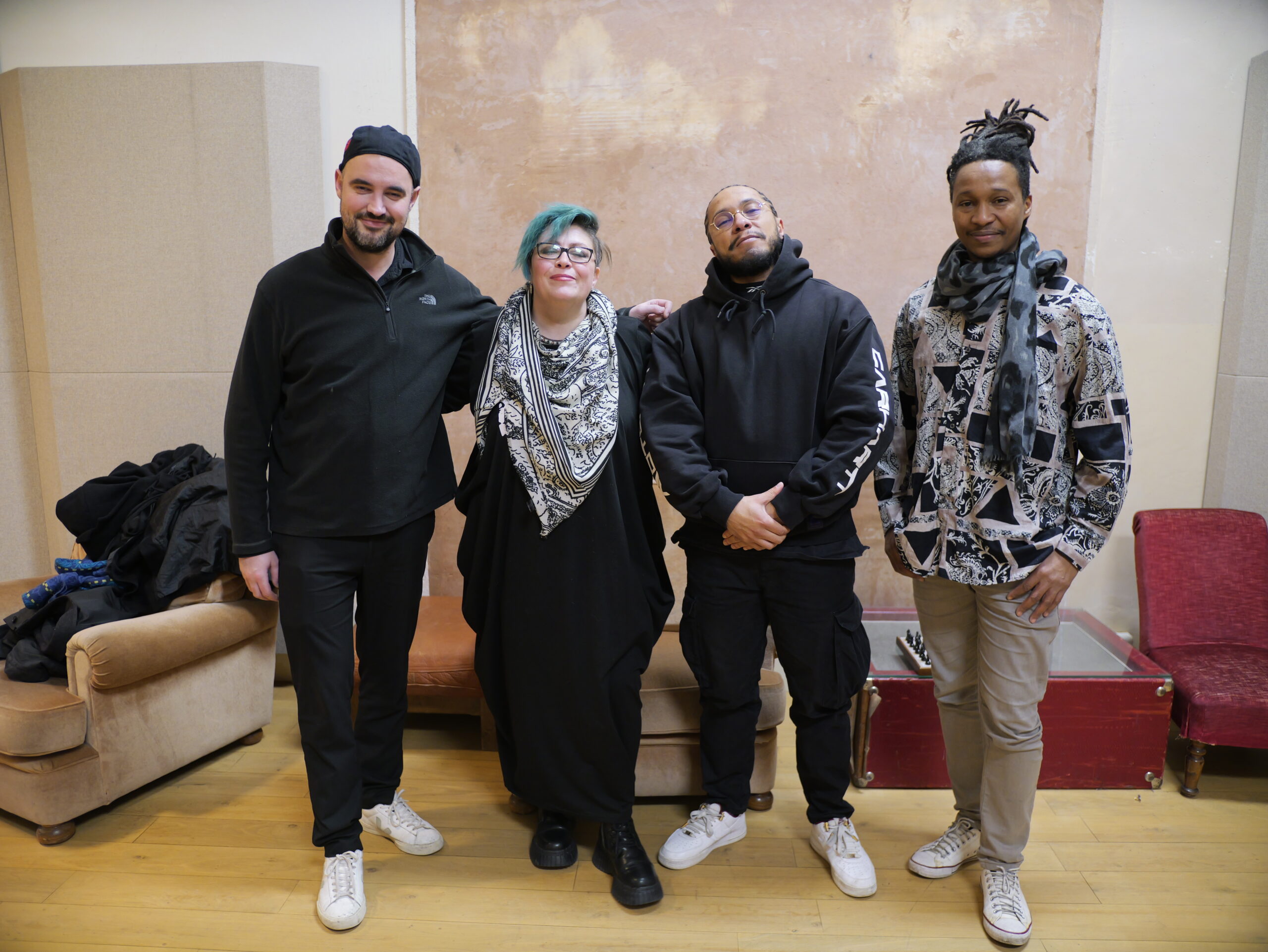
Khanyan: One of the most unexpected and exciting moments on “Armed With Love” is the track “Mind,” featuring rapper, lyricist, composer and creator Emcee Agora, who wrote the lyrics. This collaboration marked the first time in my life that I incorporated rap into my music, opening a completely new artistic direction through a multicultural and multidimensional fusion of avant-garde folk-jazz, spoken word, rhythmic experimentation and contemporary expression.
“Mind” was revisited and transformed through this collaboration, with Emcee Agora bringing a powerful lyrical presence, philosophical depth and unique rhythmic energy. The single “Mind” will be released on June 5, ahead of the full album, “Armed With Love,” which will be released on June 19 in collaboration with Jazz Family, a label based in France.
The CD release will be in Paris in early September, so stay tuned!
Baghdasaryan: As we approach the release, what does it mean to you to share this specific narrative with the Armenian community in Los Angeles? Is this an invitation to heal, or a call to remain “armed”?
Khanyan: As we approach the release, it’s important to reiterate that the album will first be presented in Paris, where it was initially recorded, mixed and mastered at Sextan Studios by Arthur Gouret. Then, it will be presented in different parts of the world. It brings together three different worlds — three cultural identities through sound: Gabriel Pierre on contrabass, Isaias Alves on drums — both masters of their sound — and myself, coming from an Armenian background.
This collaboration has been very inspiring, unique and unforgettable for me. Each of us carries a different cultural language, background and individuality, and through that, we found a unique sound. I wanted this project to exist through these different perspectives — French, Brazilian and Armenian — each with its own history, rhythm and sensitivity.
I don’t see it as only an invitation to heal or a call to remain ‘armed’ — it can be both. The music holds different energies, and each listener will meet it in their own way. For me, it’s about connection — between cultures, between individuals and between inner and outer worlds.
Baghdasaryan: When the final notes of the title track, “Armed With Love,” fade out, what is the silence that follows intended to say to the listener?
Khanyan: When the final notes of “Armed With Love” fade out, I hope the silence that follows becomes a space of reflection, a living silence, not just emptiness or the end. Silence speaks in ways sound cannot; it is where the listener is left alone with themselves to unfold beyond the last note.
The final track, “Armed With Love,” which also gives the album its title, symbolizes for me the search for balance and equilibrium between “Kaos” and love, peace and movement, noise and stillness. All life emerges from the same Source, carrying within it both turbulence and harmony, darkness and light, tension and release. Music reflects this human condition. I want the listener to feel both deep stillness and an inner movement and chaos at the same time.
Baghdasaryan: For young Armenians in the diaspora looking to find their voice, how do you encourage them to blend their heritage with contemporary genres without losing the “soul” of the music?
Khanyan: Focus on inner growth before you worry about blending genres. Authenticity isn’t forced; it develops naturally when you are honest with yourself. If you find your soul first, the heritage and the contemporary sounds will find their own harmony.
Baghdasaryan: Where do you hope this musical journey takes you next? Is there a particular stage or a specific collaboration that feels like the natural next step?
Khanyan: I never truly know where the musical journey will take me; it is always full of surprises, and that is part of its beauty, creation and improvisation. The natural next step, in terms of collaboration, has already taken place. I feel beyond blessed to be creating and collaborating with these great masters of sound, Gabriel and Isaias, whose artistry, depth and unique voices have brought so much life to this music and enriched my musical journey.
My hope is that this journey continues to grow beyond the recording itself — hopefully into a world tour that will bring this music to audiences across different countries, and, very importantly, to Armenia, a place deeply rooted in my spirit and artistic identity.