



Artsakh housing crisis: 25,000 families still without permanent homes as government program falls short, says Beglaryan
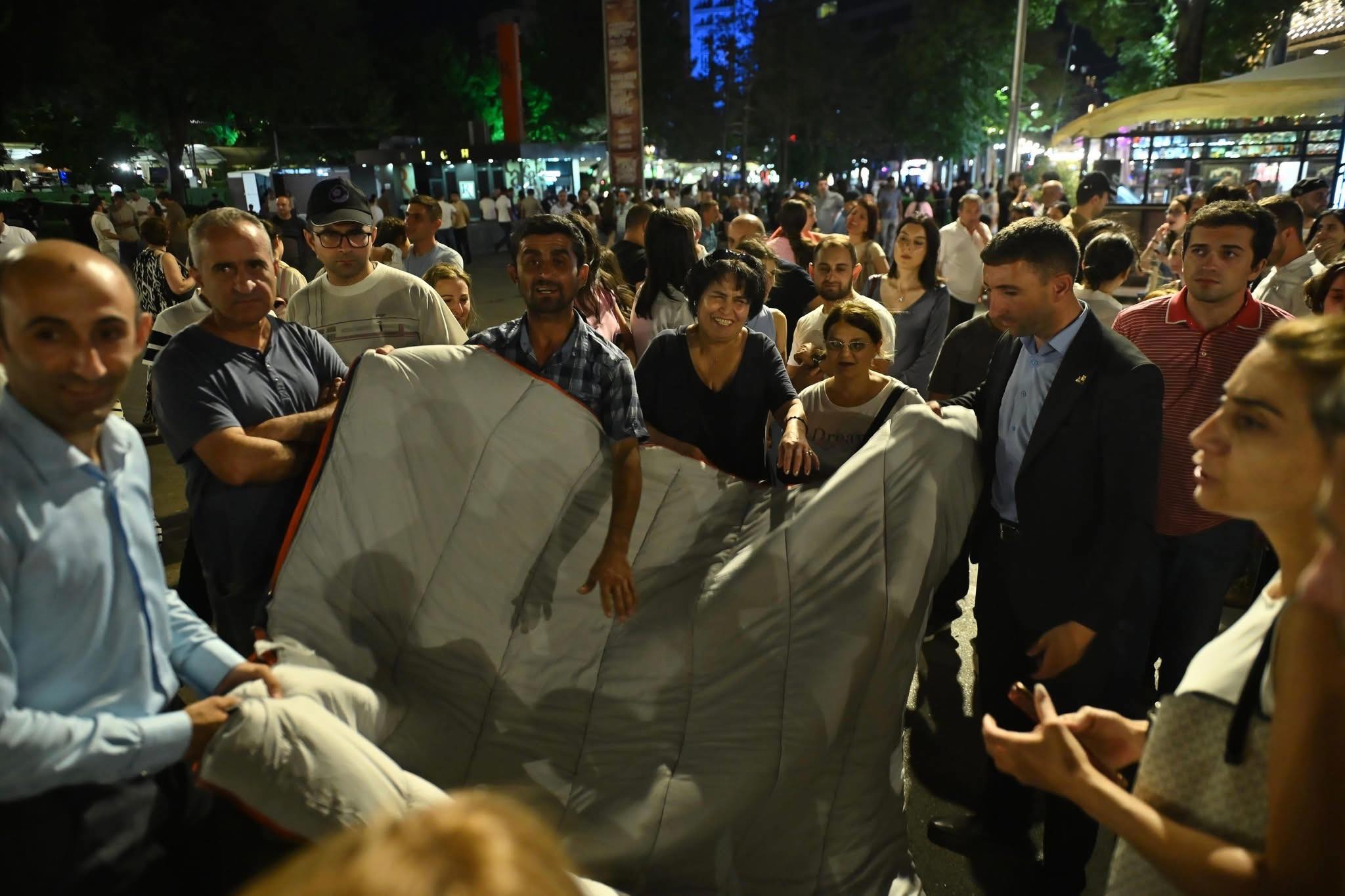
Former Artsakh official reveals gaps in Armenia’s housing assistance, with most refugees forced into the expensive secondhand market while economic and employment issues remain unaddressed.
Nearly two years after the fall of Artsakh, approximately 25,000 displaced families remain without permanent housing in Armenia, despite government claims of progress on assistance programs, according to Artak Beglaryan, former Artsakh State Minister and current Founding Chairman of the Artsakh Union NGO.
In our interview, Beglaryan provided a detailed breakdown of the housing situation facing Artsakh refugees, revealing significant gaps between official narratives and the reality on the ground. His assessment paints a picture of a program that, while helping some families, fails to address the broader economic and demographic challenges facing the displaced population.
The numbers behind the crisis
According to Beglaryan, out of roughly 30,000 Artsakh families now living in Armenia, between 20,000 and 25,000 still require housing. This figure stands in stark contrast to government statements suggesting a much smaller problem.

As of mid-December 2024, the Armenian government reported that 3,902 families have received housing certificates, with 1,643 families having secured housing. According to Beglaryan, while roughly 13% of those families — about 213 — acquired housing through the primary market, the vast majority of them did not build new homes themselves. In fact, more than 90% of that 13% purchased newly constructed properties, and only about 15 families actually built their own homes. The remaining 87% — approximately 1,430 families — purchased existing houses or apartments on the secondhand market.
“Most of those families paid with a government certificate plus their own loans from the bank,” Beglaryan explained. “The government certificate alone is not enough.”
The housing program allocates between 3 and 5 million drams per family. According to Beglaryan, these funds are insufficient to both purchase land and build a home, particularly near Yerevan, where most refugees have settled. This has forced families to look either to Armenia’s distant regions or to the existing housing market, where prices have been artificially inflated by increased demand.
Employment and economic challenges
Beyond housing, Beglaryan highlighted severe employment problems that compound the crisis. Of approximately 65,000 displaced Artsakhtsis, only 21,000 have work — meaning just one-third are employed, while unemployment exceeds two-thirds of the population.
“Among the Artsakh refugees who are working, their average salary last year was 40% less than the average salary in Armenia,” Beglaryan said. “Now, maybe it is 30%, I’m not sure. But you should also take into account this problem: the needs of Artsakh refugees are much higher than those of local Armenians.”
The cost of living is significantly higher for Artsakh refugees, as the overwhelming majority pay rent. Combined with lower wages and an unemployment rate nearly three times Armenia’s average, this creates what Beglaryan described as an impossible financial situation for many families.
When officials suggest that refugees move to Armenia’s provinces, where land is cheaper, Beglaryan said the response is consistent: “We want to go, but can you solve the problem of our employment? They say no.”
A $2 billion question
The full scope of the housing program raises questions about its long-term sustainability and effectiveness. According to Beglaryan, the program is valued at approximately 400 billion drams — about $1.5 billion. Over the next 10 years, banks will receive more than 300 billion drams, or about $800 million, in interest payments, bringing the total cost to roughly $2 billion.
“With 2 billion dollars, they will increase the state debt of the Republic of Armenia,” Beglaryan stated. “Now, the state budget of Armenia is 12 billion dollars.”
The Asian Development Bank has provided a $200 to $250 million loan — not a donation — with a relatively low interest rate to finance the program. The Armenian government is also negotiating with the World Bank for additional financing. Loans are taken from both international and local banks, with repayment terms of up to 10 years from the state budget. “That’s why I’m saying they are increasing the public debt by 2 billion dollars,” Beglaryan said.
Market distortions and missed opportunities
Beglaryan argued that the current approach is not only failing to solve the housing crisis but is also creating economic distortions and missed opportunities.
“When they give us this money and say, ‘Go and buy something in the secondhand market,’ they are artificially generating demand,” he explained. “They are artificially generating demand in the secondhand market, especially in the areas where there are 4-5-million dram properties.”
This artificial demand drives up prices, making housing even less affordable and, in some cases, pushing families to emigrate — meaning the funds do not remain in Armenia or generate positive economic effects.
Beglaryan proposed an alternative approach: the government could allocate land in specific areas —100 or 400 hectares, for example — where Artsakh families could build new villages and towns.
“The people of Artsakh would either have community living, or they would create workplaces through construction, and the economy would create a positive effect,” Beglaryan said. “Instead of relying on the secondhand market, Armenia’s housing stock would improve, especially since much of it is still very old.”
Government response and information gap
Beglaryan noted that government officials characterize their approach as market-oriented and liberal, claiming that providing funds and allowing the market to self-regulate is sufficient. However, he argued this fails to account for the unique challenges facing displaced families.
“They are ultra-liberal people, they are market-oriented and they do not want to be held accountable,” he said. “They say there are free-market relations: ‘We will give you the money and the market will regulate itself, so go and buy your house.’”
The most common complaints from Artsakh families, Beglaryan said, include the lack of community housing options, the state’s unwillingness to support new construction, high prices in the secondhand market and insufficient infrastructure support — including access to electricity, water and other utilities needed for building.
Perhaps most significantly, Beglaryan emphasized that housing and employment issues are treated as separate problems.
“None of these programs are connected to employment programs,” he said. “This is also one of the major issues — that they do not solve the problem of employment and housing with a single integrated solution.”
Looking ahead
Beglaryan said his data comes from a mix of official government announcements and independent expert analysis conducted by his organization. He noted that while some figures are official — such as the number of housing certificates issued and the 21,000 employed Artsakhtsis as of September 2025 — others, including poverty and unemployment rates, are approximate estimates based on surveys and research.
“Especially in English, there is no content explaining this,” Beglaryan said of the information gap surrounding the housing crisis. “And it’s only the propaganda of the government authorities that says they’re solving all the problems of the people of Artsakh.”
With roughly 25,000 families still without permanent housing and no integrated solution addressing both housing and employment, the displaced population from Artsakh continues to face an uncertain future in Armenia. While the government points to the 1,643 families who have secured housing as evidence of progress, critics like Beglaryan argue that the current approach addresses neither the scale of the problem nor its underlying causes.
“This is the true picture,” Beglaryan concluded. “That’s what’s important.”

Thank you for statistical data. Numbers tell the story better than words about living conditions and everyday struggle of displaced people. The process is moving slow, but there is always hope.
This article powerfully highlights how far we still have to go in addressing the housing crisis in Artsakh, with 25,000 families still without permanent homes as government programs fall short. Thank you for bringing attention to this urgent issue. Long term housing solutions must be more than numbers on a scoreboard, they must restore dignity, stability, and opportunity for displaced families. 
I’d love to see: 1 Clear timelines and measurable housing deliverables from authorities and partners. 2. Community driven planning, so displaced families have a voice in what “home” looks like for them. 3.Greater engagement from diaspora organizations and NGOs to help scale innovative housing models
Housing isn’t just structures, four walls and a roof, it’s people, identity, community, and the foundation for rebuilding lives after displacement. Artsakh’s people deserve solutions that are durable, inclusive, and humane
Our efforts at Lorik Fund help, Armenians Reliefe Society’s Hearths of Hope help, Tufenkian’s Svarants project help, but diaspoara engagement is low, too low, and government is nonexistent….They say and do nothing for the refugees
YOU ARE WELCOME. THANK YOU FOLLOWING TO HELP
THEIR IS ARTSAKH HOUSING CRISIS: 25000 FAMILIES
STILL WITHOUT PERMENENT HOUSING.
IWILL TRY TO SEND YOU THE REPORT FROM ARMENIA.
MAKE SURE THEY ARENOT LYING. THEY HAVE PHOTOGRAPHS.
The mass exodus of the Artsakh Armenians began on September 23, 2023, and within a span of few days, some 120,000 Artsakh Armenians came to Armenia. It means Armenia, accommodated the addition of 4% of its population, assuming the population of Armenia is 3 million. If we were to draw a comparison, it would mean that the U.S. had to accommodate 12 million refugees within that same time frame.
However imperfect or lacking the assistance may have been, undeniably the government did all it could by providing medical services, placing the children in the schools of Armenia, providing working, employment, housing opportunities. I am left with the impression tha the impression thադ the institutional Armenian Diaspora is failing in providing necessary humanitarian aid.