


Not too “LATE”: How one Armenian NGO is turning textile waste into art and action
YEREVAN — In the modern environmental agenda, the problem of textile waste — though often overshadowed by plastic — is a systemic and dangerous challenge. International analysts note that the textile industry is considered the second-largest polluter after the oil industry, yet its management in Armenia still lacks an organized state approach.
Armenia’s LATE NGO (named after the Armenian word for “rag”) stands against this silent crisis. Its ideological roots were laid during the difficult days of the 44-Day War in 2020. Within the flow of humanitarian aid, a troubling trend emerged: large quantities of unusable clothing that did not meet standards were being sent to landfills. “At that time, I realized I had to do everything to reduce the amount of clothes and rags being thrown away,” founder Susanna Amirkhanyan told the Weekly.
The organization’s name, “LATE,” holds deeper meaning. It refers not only to the Armenian word lat (rag) but also aims to change the negative perception of the word, often associated with useless, cheap or discarded material.
Their philosophy is simple: “The rag must become a symbol of positive raw material and value.” The organization strives to show that even the smallest, most worn-out piece of fabric can have a second, more beautiful life.
Despite the lack of official statistics, LATE NGO’s practical work reveals a clear picture: over five years, approximately 50 tons of textiles have been collected. This volume includes both old clothing, industrial remnants, “even the tiniest little piece of fabric, even threads.”
The problem is further aggravated by the dominance of fast fashion, which promotes overconsumption and quick disposal, creating a steady flow to landfills. Synthetic threads in modern textiles make them as dangerous as plastic. Armenia’s Nubarashen dumpsite has experienced major fires in recent years, including one in October, worsening air quality in Yerevan and surrounding areas. Whether burned or slowly decomposing, these materials pollute our air, water and soil, posing a threat to public health.
LATE NGO places great importance on educational work and outreach. As textile waste issues grow in Armenia with no significant government response, many concerned citizens are seeking solutions online. “It is very interesting that they say, ‘We searched on Google and found your organization,'” Amirkhanyan said.
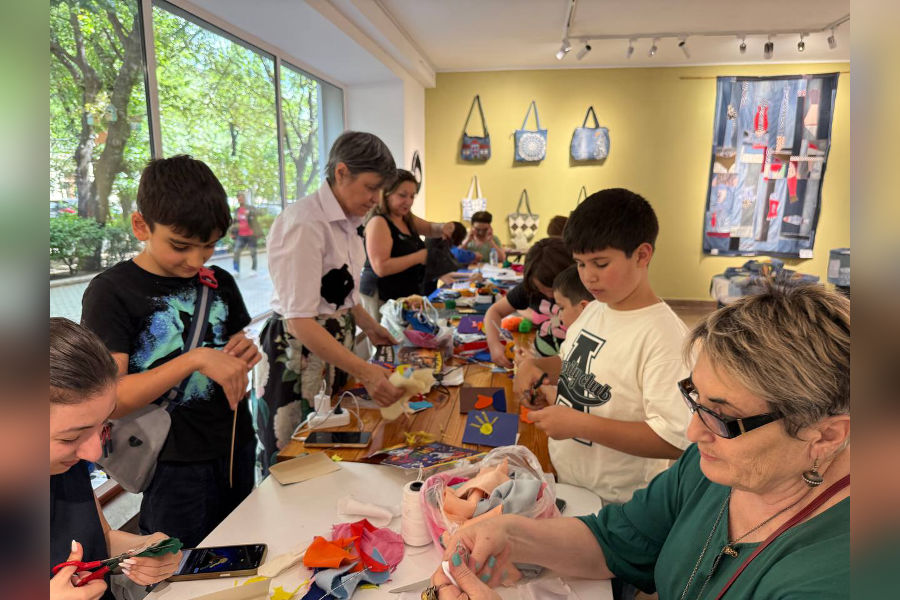
The organization regularly conducts awareness campaigns and masterclasses in schools, camps and other platforms.
They aim to demonstrate that “something useful can be created from the same small rags,” reaffirming the old generation’s belief that nothing should be wasted.
The foundation of LATE NGO’s activity is a three-tier upcycling system, coupled with human warmth and a love for beauty. First, members focus on collecting and sorting raw materials. All types of clean textiles are accepted. With the help of volunteers, the textiles are sorted: usable items go to those in need, while non-usable items are prepared for upcycling.
Next, the creative team of 25 volunteer women, mainly over the age of 50, uses its unique crafting skills to give the materials new life. Using patchwork (latakar) techniques that echo the traditions of mindar (cushion/mattress) in Armenian culture, these women create unique products. Amirkhanyan described their work as a “fusion of art and craft.”
The team produces an assortment of handcrafted items, including quilts, pillows, rugs, toys and interior accessories. Old clothing that cannot be reused for sewing is shredded with special equipment provided by benefactors and used as filling, ensuring the principle of “nothing is lost.”
LATE actively participates in various eco-events and fairs across Armenia, showcasing its unique products and spreading its environmental message. These events allow direct interaction with the public and support product sales, with revenue directed to the creative women.
Despite these successes, the organization — which operates exclusively through donations and volunteer effort — faces serious challenges: funding and, most urgently, space. All work, including sorting and storage of raw materials, is carried out in the founders’ private homes and garages. “We need to find sponsors who will help elevate the sector to a higher level and create sustainable production,” Amirkhanyan explained.

LATE’s five-year vision is clear: to establish a network of textile art centers across Armenia. These centers will have a permanent shop space, a drop-off point and dedicated rooms for school courses aimed at raising generational awareness.
The LATE initiative transforms the perception of a simple “rag” from useless material into philosophical value and positive raw material. This volunteer movement issues a clear call to citizens and state structures alike: “We will be able to do everything to make people believe that our nature is in our hands. And if we don’t do it, then who will?”
With this mission, LATE NGO continues its work — protecting Armenia’s environment, creating beauty and raising social and environmental consciousness in the country.
To learn more about LATE NGO or how to support its initiatives, please visit its Facebook page.
All photos are courtesy of Susanna Amirkhanyan unless otherwise noted.