



“This is my way of fighting and surviving”: A refugee family rebuilds life after Artsakh
YEREVAN — Two years after being forcibly displaced from Artsakh, tens of thousands of Armenians remain in limbo, struggling to rebuild their lives in a country ill-prepared to receive them. In September 2023, Azerbaijan’s military offensive and nearly 10-month blockade emptied Artsakh of its historic Armenian population, forcing more than 120,000 people to abandon their homes, communities and livelihoods in a matter of days.
Most arrived in Armenia with little more than what they could carry. While many families initially found shelter through state rent support and local solidarity, that fragile safety net has eroded. As of October 2025, over 15,800 displaced Armenians have already left Armenia, driven out once again by dwindling resources and cuts to housing subsidies.
For tens of thousands who remain, daily life is a constant struggle of endurance and the slow, painstaking process of rebuilding shattered lives.
Against this backdrop, Elina Balasanyan, a 23-year-old refugee, has turned exile into an opportunity. In rural Armenia, Elina has rebuilt her life through food production, youth engagement and the empowerment of women — transforming hardship into resilience.
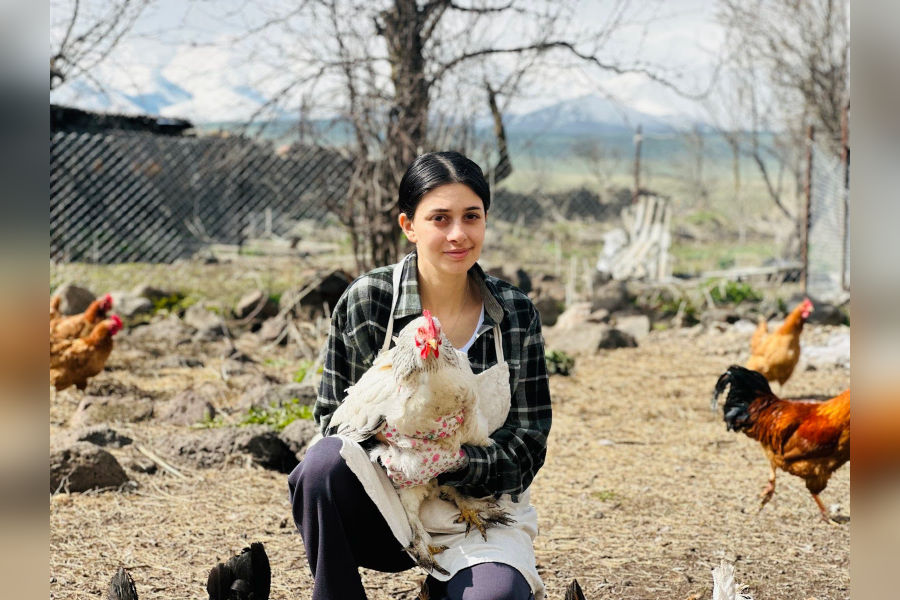
In Saratovska, a small village in Armenia’s Lori Province near the Armenian-Georgian border, Elina’s mornings still begin at dawn. She tends over a 100 chickens, but three hold her gaze the longest — the ones she brought with her from Artsakh during the three-day exodus of 2023. “They’re displaced, too,” she joked bitterly.
Saratovka, with a population of 424, was founded by Russian Molokans exiled centuries ago for religious freedom. Elina was drawn to its isolation. “Cities felt like surrender,” she told the Weekly. Here, she raises chickens not just to feed her family, but to rebuild the rural life that war stole.

Elina’s family was among the first to settle after fleeing Artsakh. Inside their new home, a photo of Elina and her four-year-old daughter against the skyline of Artsakh’s capital Stepanakert — now mostly reduced to rubble — hangs as a reminder of all they’ve lost. Unlike most forcibly displaced families who sought refuge in Yerevan, Elina chose Saratovka, a village where the mountains, nature, dirt roads and the Tashir River reminded her of Berdashen, her childhood village, which means “village of fortress” in Armenian.
After the displacement, finding clean food became her mission. “Market eggs taste like chemicals,” she said, scrubbing mud from a freshly laid one. For her, raising chickens and growing vegetables is a way to give her daughter a safe, healthy life. Each morning, she tends to her chickens and garden, then sells fresh eggs and vegetables to neighbors — and even sends some to Yerevan. “This is my way of fighting and surviving.”
During the blockade, in Stepanakert, Elina queued for hours with her one-year-old, waiting for bread and fearing what winter would bring. “Even though I didn’t have my own land, I borrowed a small plot from an acquaintance,” she explained. “Every day, I walked there with my child in my arms. I never imagined I would have to leave Artsakh.”
Elina’s ambitions go beyond her own family. She worries about the dwindling number of young people in the village, many of whom leave for the city or emigrate. Determined to change this, she mentors local teenagers. “There is a future here,” she said.
To support them, Elina founded a youth center called ArTA, combining Artsakh and Tashir under the slogan, “We are the colors of Tashir.” She organizes hikes to ancient chapels, where around 40 teenagers help clean and restore these sites, connecting them to their heritage.
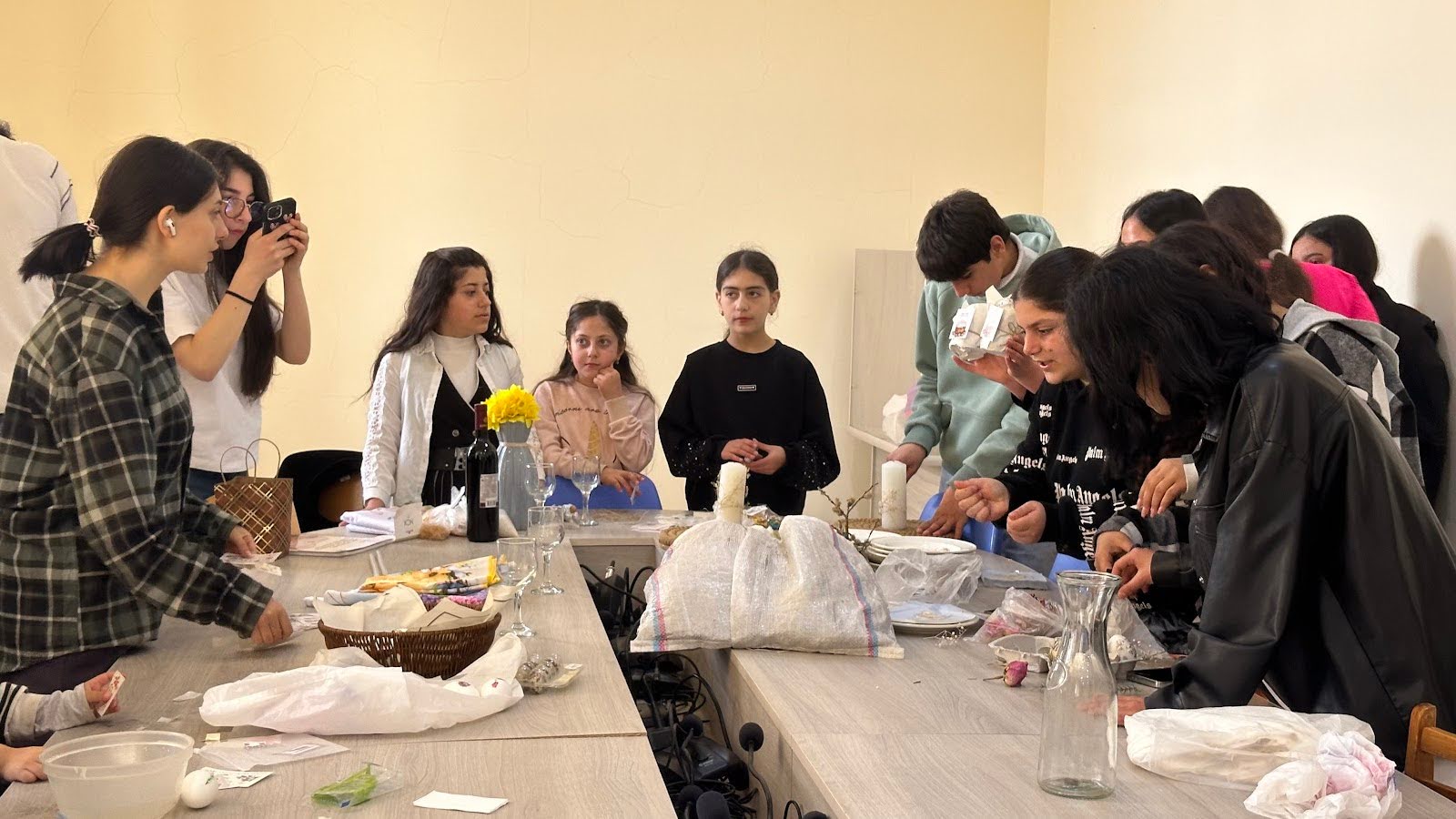
Most of all, Elina wants young people to believe in working alongside the older generation. “Adults know how to collect wild berries, but not how to sell them. Teenagers are skilled with social media. They can help each other,” she asserted. “Young people have more innovative ideas, and my goal is to give them space to realize them.”
“They’re like dough,” she added. “You decide whether you want to make sweet pastries or sourdough.” The most significant change Elina hopes to inspire is in attitudes toward young women.
Domestic violence cases in Armenia have surged sharply, according to the Prosecutor General’s 2024 report. Physical abuse incidents rose from 372 to 934, a 151% increase, while psychological abuse jumped 261%, from 46 to 166 cases.
Elina’s understanding of these issues is personal. She was married at 19 and endured abuse from her husband, who, she says, once tried to harm their newborn daughter. “The most painful part was that even my relatives tried to convince me violence was normal, that I should tolerate it for the sake of my family and child,” she recalled. “But I resisted violence precisely for my child, because I realized that a healthy child cannot grow up in such an unhealthy environment. A woman is the strongest being, and I understood that only after becoming a mother.”
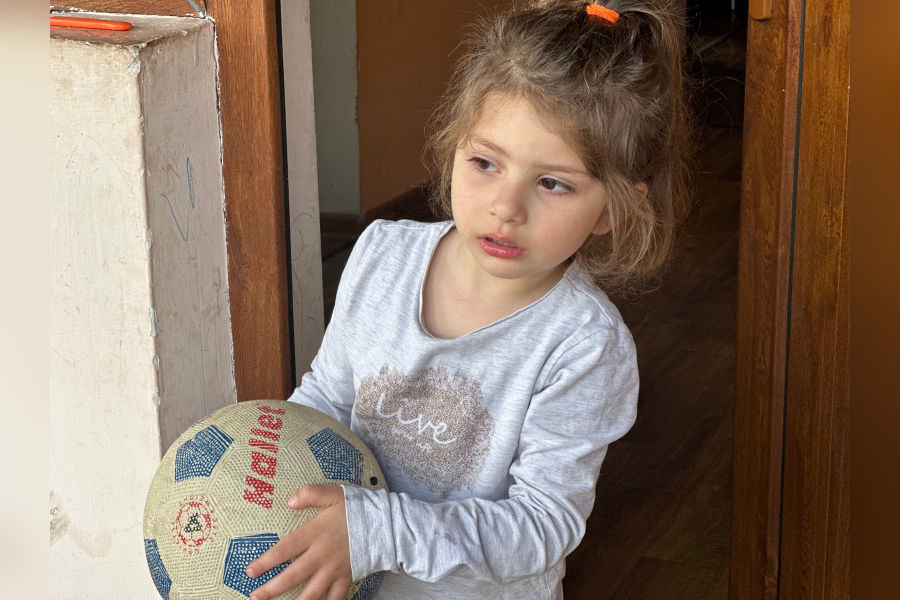
Now, Elina speaks openly with young girls and mothers in the community, which has become her new home, hoping to shift traditional attitudes. “Maybe one day, they’ll burn me at the stake for this,” she joked. Her views on women’s empowerment and youth are not always welcomed, but she is determined. “Every new idea, every young person, is always met with difficulty in a conservative environment,” she said.
Elina is also unafraid to raise broader community issues, from water shortages to broken roads. While complaints are common in private, few speak up publicly. Yet, she has seen the impact when women unite: after local women raised concerns to the mayor about a damaged bridge, the issue was resolved. “Community development comes from small steps,” she said.
Elina envisions a rural guesthouse where visitors can harvest vegetables from her garden and cook meals over wood-fired stoves — “a taste of the life we’re rebuilding,” she stated. Now remarried and expecting her second1 child, she juggles her poultry business, honey production with her mother, vegetable garden, community initiatives and university studies in Vanadzor, determined to set an example for her children.
Her efforts have galvanized her family. Elina’s parents, Narine Musayelyan and Tigran Balasanyan, recently became the second displaced household to settle in the village. Narine, 43, once renowned in Berdashen for honey so sought after that buyers traveled hours to secure it, recalls distributing her last jars to pregnant women during the blockade. “We refused to sell. Those jars kept mothers alive,” she said. When forced to flee, they prioritized rescuing elderly neighbors over belongings. “We packed our car with people, not things.”
After their forced displacement, the family first settled in Vagharshapat, a city near Armenia’s capital, Yerevan. A year and a half later, they moved again — this time, to join Elina in Saratovka. “We wander from place to place, trying to make each a home,” Narine said, recalling in vivid detail the house they left behind in Artsakh. Now, starting over once again, she hopes this will be the last move. Her dream is to rebuild her beekeeping life. “Maybe here, at least, we won’t have to flee again.”
The family’s losses run deep. Two of Narine’s cousins were killed in the one-day war on September 19, 2023, in front of her husband, Tigran’s eyes, before the ethnic cleansing. Tigran, a soldier who narrowly survived, still wears his military uniform every day. “I wash it, dry it and he wears it again,” Narine explained.
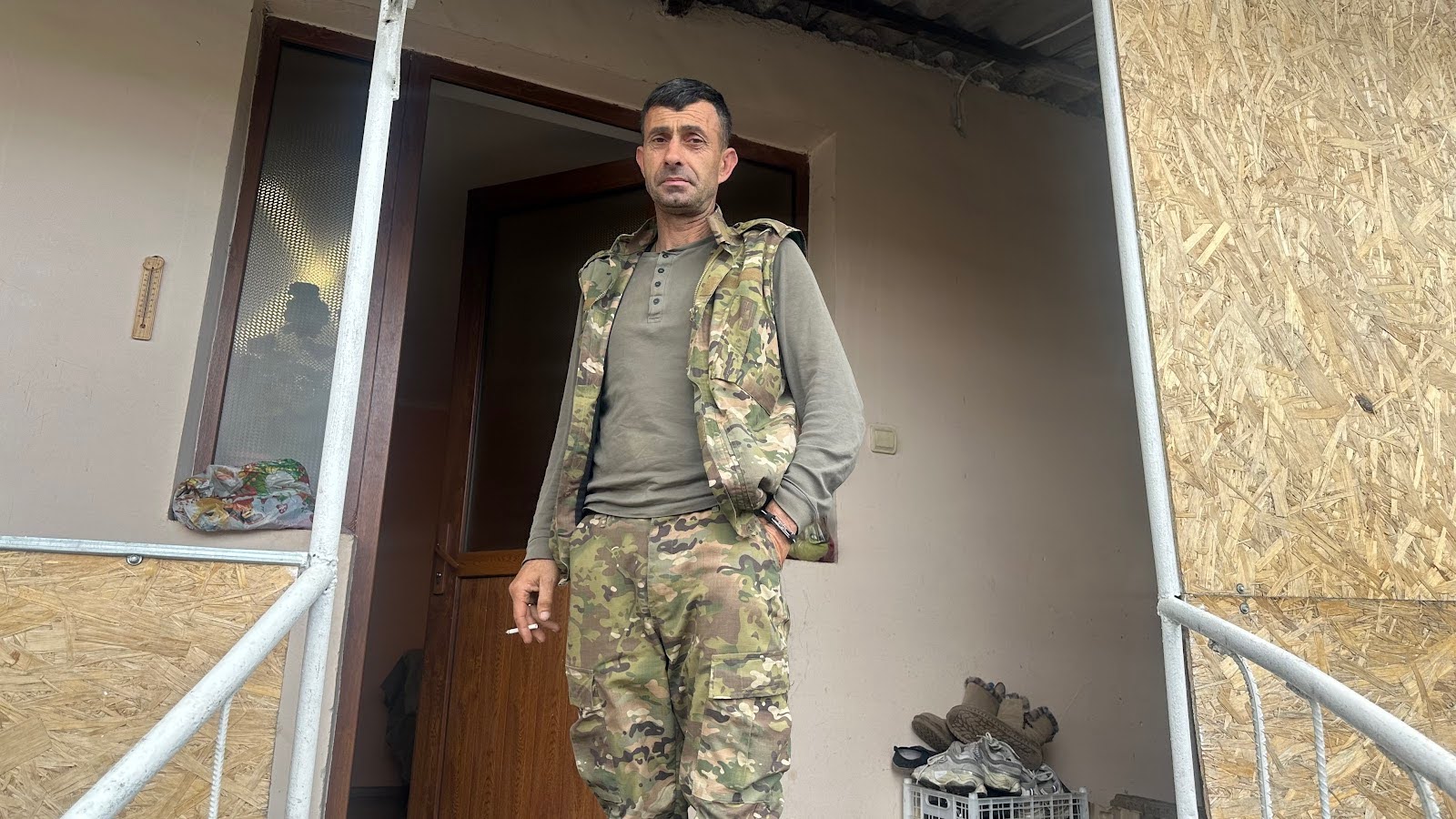
Tigran recalls how his comrades held their positions so civilians could escape. He speaks with reverence about Aznavour Saghyan, the young mayor of Martuni, who took up arms to defend his community and was also killed in the September 19 war. “Heroes aren’t born — they’re made,” Tigran said,

Before moving to Saratovka, Tigran drove a taxi in Vagharshapat, never charging passengers traveling to the Yerablur military cemetery. Though no longer in active duty, he says he is ready to defend Armenia’s borders if war returns. “If there’s another war, I’ll be among the first to go to the front,” he said. “Artsakh was Armenia’s door. Now, Syunik is its backbone — and the enemy will surely target it next.”

His son, 10-year-old Tigran Jr., lived through the blockade in their native village while his sisters studied in Stepanakert. Staying with his grandparents, he listened as his parents spoke in hushed tones about his young cousin’s failing health — hospitalized with malnutrition and vitamin deficiencies. Determined to help, Tigran and his friends foraged wild berries and fruit from the fields. That night, he queued for bread; by morning, he was cycling toward the city, hitchhiking when he could, to deliver food to his cousin and sisters.
Now that the family is rebuilding in Saratovka, Tigran is focused on new beginnings. He left behind his childhood, friends and home in Artsakh — and his 20 rabbits, once his pride and responsibility. Today, he tends to four rabbits he bought from locals, kept in a makeshift enclosure inside the half-ruined barn of their temporary home. He points to a small plot of land, outlining plans to grow vegetables like his sister. His voice falters as he remembers the graves of the loved ones he left behind.
For Galina, Elina’s 20-year-old sister, village life offers little comfort. She was a student at Stepanakert Medical College when Azerbaijan attacked and forced displacement followed. Amid the chaos, a catastrophic fuel depot explosion outside Stepanakert killed at least 218 people and left more than 300 injured, with dozens still missing. Galina rushed to the hospital after seeing a doctor’s desperate plea on social media. “The stench of charred flesh was everywhere. People died in my arms, whispering their last words — I still can’t forget,” she said.
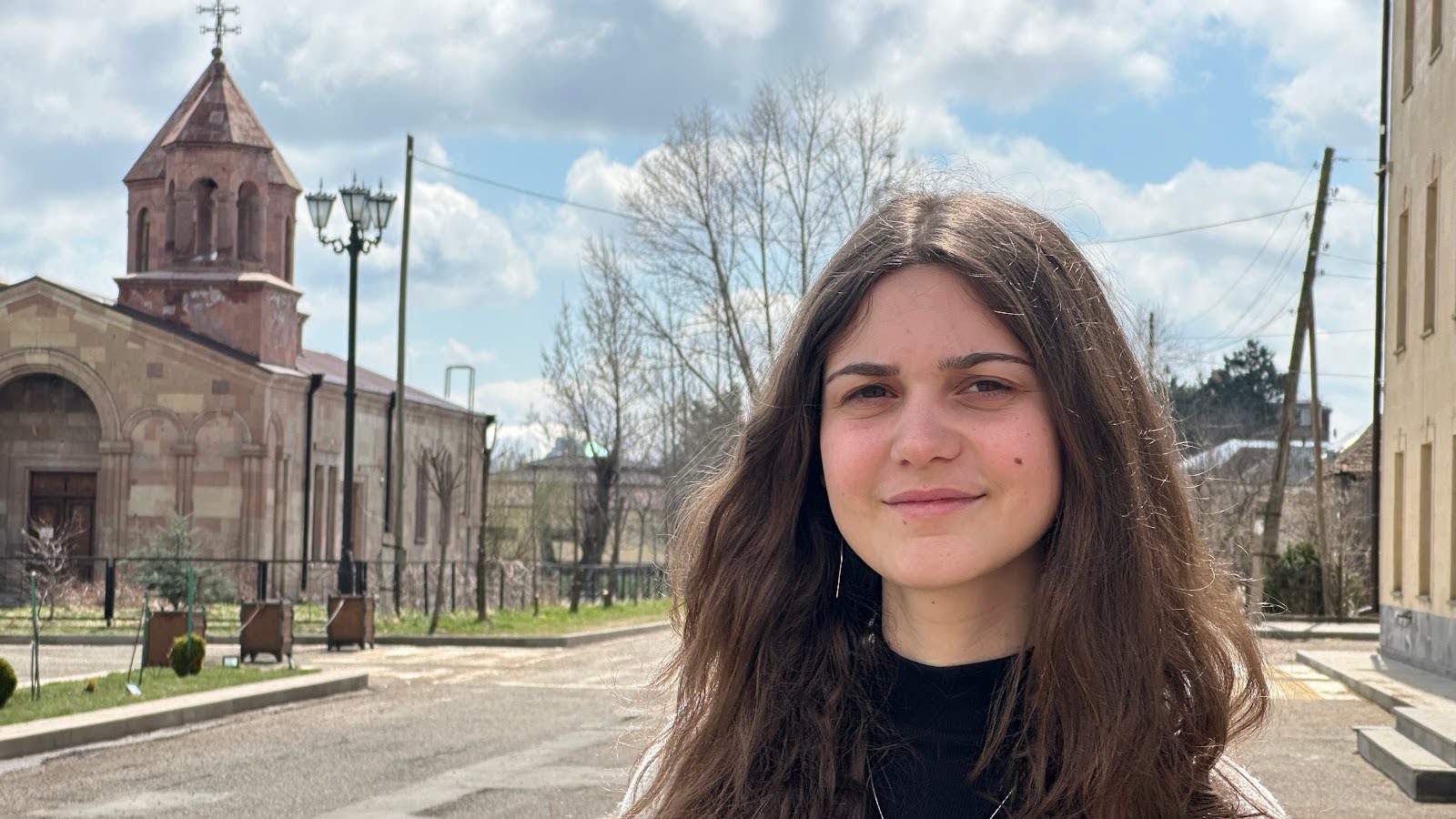
The psychological scars led Galina to abandon her medical studies. She retrained as a manicurist but struggles to move forward. Now, she faces pressure to marry young but refuses, determined to continue her education and support her family.
The Armenian government’s housing subsidy program for refugees has provided a monthly stipend of 50,000 drams (about $125). However, since April, the assistance has been reduced, and now only her underage brother qualifies for support.
Despite her own challenges, Elina, who runs a business and leads community projects, has enrolled in a remote agriculture program at Vanadzor State University. She mentors Galina, encouraging her to continue her studies.
The Balasanyans rarely speak of return. But when they do, it is with quiet resolve. Their resilience is measured by the routines they repeat, in the stubborn belief that one day, against all odds, they may return home.
Night falls in Saratovka. Elina counts her chickens, her father folds his old uniform, her brother checks his rabbits and her mother tends to the bees, eagerly awaiting the harvest. They have lost their home, their ancestors’ graves and the certainty of their future. Yet in this borrowed village, they plant seeds, work the land and refuse to disappear.
1. second: While this article was being completed, Elina gave birth to a baby boy — a new chapter for a family determined to build a future in their new home. ↩︎


Beautiful and courageous woman!
Now is the time for all those Armenian American billionaires and millionaires to step up and start donating to fearless Armenians.
One thing’s for sure, Pashunyan’s state apparatus won’t lift a finger to help.
Thank you Siranoush for sharing with us Elina’s and her family’s story. God has blessed her with courage and perseverance to face the future with hope and promise. I wonder is there any way we can help her and her family?
Thank you for your kind comment and for your willingness to support Elina and her family. Please feel free to contact me through the Armenian Weekly, and we can discuss how you may be able to help