


Rights experts detail torture of Armenian prisoners, call for accountability at Yerevan panel
YEREVAN — Armenian prisoners held in Azerbaijan continue to face torture, inhumane treatment and deprivation of basic needs, legal experts warned during a public discussion hosted by CivilNet on November 18, 2025. The event, titled “After the Displacement from Artsakh: Challenges and Solutions,” brought together Siranush Sahakyan, director of the Center for International and Comparative Law and legal representative of Armenian captives at the European Court of Human Rights (ECtHR); international law expert Ara Ghazaryan; and former Artsakh Minister of Culture, Youth Affairs and Tourism Lernik Hovhannisyan. The discussion was moderated by Arshaluis Mgdesyan.
Sahakyan said that her team continues to receive “alarming reports” from the families of Armenian captives. “During phone conversations, we hear repeatedly that our compatriots in Baku prisons are being subjected to torture,” she explained. Prolonged deprivation of liberty, she added, has caused “serious psychological and physical consequences.”
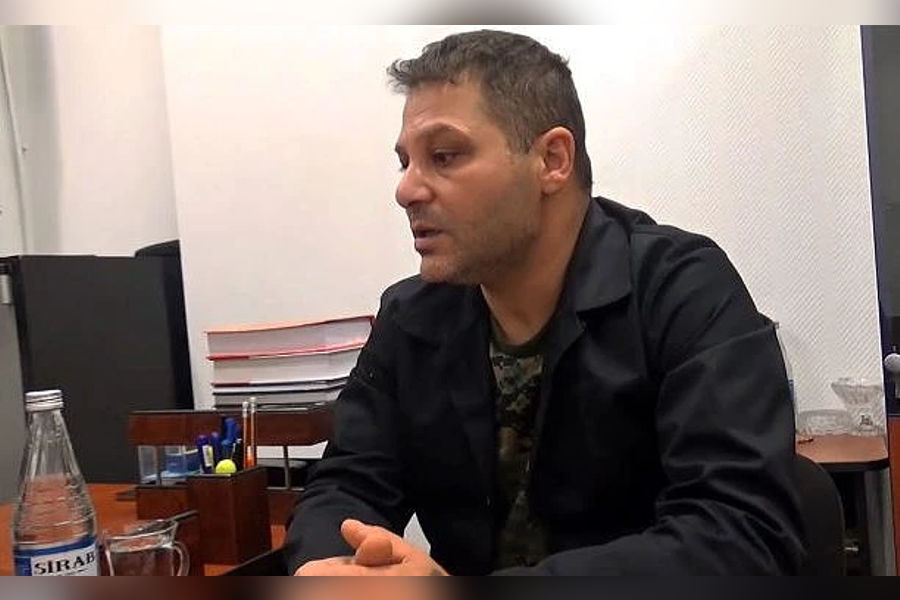
She pointed to the case of Vigen Euljekjian, whose November 16, 2025 message has circulated widely in the press, noting that “ongoing violence against him has resulted in disability.”
Beyond torture, Sahakyan noted that Armenian captives are deprived of adequate food — often receiving only bread and tea — and are denied medication and medical care. She also highlighted Azerbaijan’s refusal to investigate cases of the forcibly disappeared or provide information to families. “We emphasize the importance of international mechanisms that impose political or legal obligations on the state to investigate these incidents and inform families,” she said.
Sahakyan further stressed the continued violation of Artsakh Armenians’ internationally guaranteed right to return to their homeland.


“As long as the right of return is not ensured, we are dealing with a continuous crime against humanity,” she said.
International law expert Ara Ghazaryan urged the people of Artsakh to assert their rights through legal channels, particularly for property restitution. Those who possess documents confirming ownership, he said, should apply to international bodies. Legal processes are lengthy, but legal standards remain firm, even when political narratives shift, he noted.
Azerbaijan has not officially declared whether it has nationalized abandoned Armenian property, Ghazaryan added. “From the moment such a law is published, it will be illegitimate,” he said, “because they cannot nationalize property that belongs to private individuals.” Yet, the state’s transfer of Armenian-owned property to private Azerbaijani citizens indicates that de facto nationalization has taken place, he explained.
Drawing a historical comparison, Ghazaryan noted that in Northern Cyprus in 1974, 230 Greek Cypriots left behind their property within a few days, but Turkey agreed to pay compensation 41 years later.
“Azerbaijan knows that, sooner or later, it will either have to fully compensate — including moral damages — or allow some people to return,” he explained. Property, Ghazaryan emphasized, includes immovable and movable asserts, the holdings of private organizations and individuals, as well as public and religious property.
Lernik Hovhannisyan, former Artsakh minister and now chairman of the Diocesan Council of Artsakh, warned of the imminent destruction facing Artsakh’s material and intangible cultural heritage. Azerbaijan, he argued, has crossed all red lines, ignoring international cultural protection norms.
“There are 5,658 monuments left in Artsakh,” he said, listing 385 churches, 60 monastery complexes, 2,835 khachkars and 400 cemeteries predating the 19th century. “A large part of the cultural heritage of the Armenian people is occupied by the enemy today.”
He cited reports of vandalization or desecration at significant religious sites, including St. John the Baptist Church in Shushi, St. Hambardzum Church in Berdzor, St. Sargis Church in Mokhrones and St. Minas Church in Mariamadzor and the Holy Mother of God Cathedral in Stepanakert, where stray animals were reportedly kept.
During the event, the Center for International and Comparative Law also presented its fact-finding report, “The Blockade of Artsakh and the Forced Displacement of the Population,” prepared with support from the Armenian Legal Center for Justice and Human Rights.