


The challenge of remaining focused in the diaspora

Life in the Western Armenian diaspora has become increasingly complex, which represents a significant challenge for our communities. In the first 40 years of the post-genocide diaspora in the United States, an argument could be made that our communities were reasonably homogenous. Granted, there was competitive pride over origins, but the vast majority of Armenians either originated from or were descendants of Western Armenia.
Distractions from family life and heritage were limited, as the seeds of assimilation were in their infancy and, frankly, life in America was more grounded in community and family. Armenians rode the trail of the American Dream, and increased material wealth resulted in social and familial challenges. While most retained a connection to their faith and heritage, suburban sprawl led to the decline of the “community” churches that the survivor generation built.
In many communities, new churches were built to reflect geographic shifts, while others maintained the urban settings of our beginning. By the 1970s, regardless of where our communities were located, migration from Eastern Europe, the Middle East and Iran altered demographics. As the survivor generation passed on, so did the compatriotic unions that reflected their origins in places such as Sepastia, Kharpert, Malatya and Van. They were replaced by groups that reflected either their former communities before immigration or organizations that had been part of their lives.
The growth of the Homenetmen Scouts and sports groups reflects the impact of this migration and its strong position in the community. Mainstream organizations, such as the ARS, AGBU, the ARF and the Knights and Daughters of Vartan, continued their prominent presence while adjusting to the influx of immigrants. These immigration patterns brought rich resources to the American diaspora, but also created communal challenges due to increased diversity. The treasure of new talent and participants could only be fully realized with community integration.
While some divisions remain, our communities have admirably integrated Armenians who came from different experiences in Baku, Armenia, Iran and the Middle East. The last 50 years have seen an increase in the diaspora’s capability, particularly here in America. They have also seen increased challenges of intermarriage, assimilation and secularization. As new organizational and demographic shifts have occurred, the diaspora has become far more complex to define and manage.

While the organizational model matured, the church has evolved. The diocese in America was established in 1899. It functioned as a diocese before the genocide and remained whole until the tragic division in 1933. While the church administration has grown significantly from one diocese across North America to three — Western, Eastern and Canada — the division followed suit, with six administrative units across the three regions.
In recent decades, the church experienced significant physical growth, with new parishes established in communities such as Texas, Florida, Minnesota and North Carolina. It is fair to assume that some of the growth in legacy communities was artificial, as the division caused significant redundancy in most areas. Armenians probably would not have built two churches in small and medium-sized communities if the church had remained whole. As those communities have aged, we currently often have two struggling parishes facing a dilemma caused by divisive redundancy. In the absence of a single administration, there is no mechanism to address these issues.
The face of the church division has changed significantly. When the schism occurred, not only were communities split, but families, too. Unfortunately, it was quite common for members of the same extended family to be estranged simply because of their perspectives on the church division. It remains a stark reminder that politics and church do not mix.
The ideological divide of the ‘30s, ‘40s and ‘50s eventually gave way to a focus on growth, as the combination of American-born baby boomers and early immigration brought on unprecedented expansion. As intermarriage between Armenians from each “side” increased and succeeding generations became less dogmatic, the adversarial lines blurred. Despite the hierarchy’s stubbornness in resolving jurisdictional issues, relations among the clergy thawed, giving way to friendships and eventually shared sacramental offerings.
Perhaps the church in America has begun to internalize that the enemy is not the Armenian going to the “other” church, but rather, the erosion of faith, secularism and material distractions.
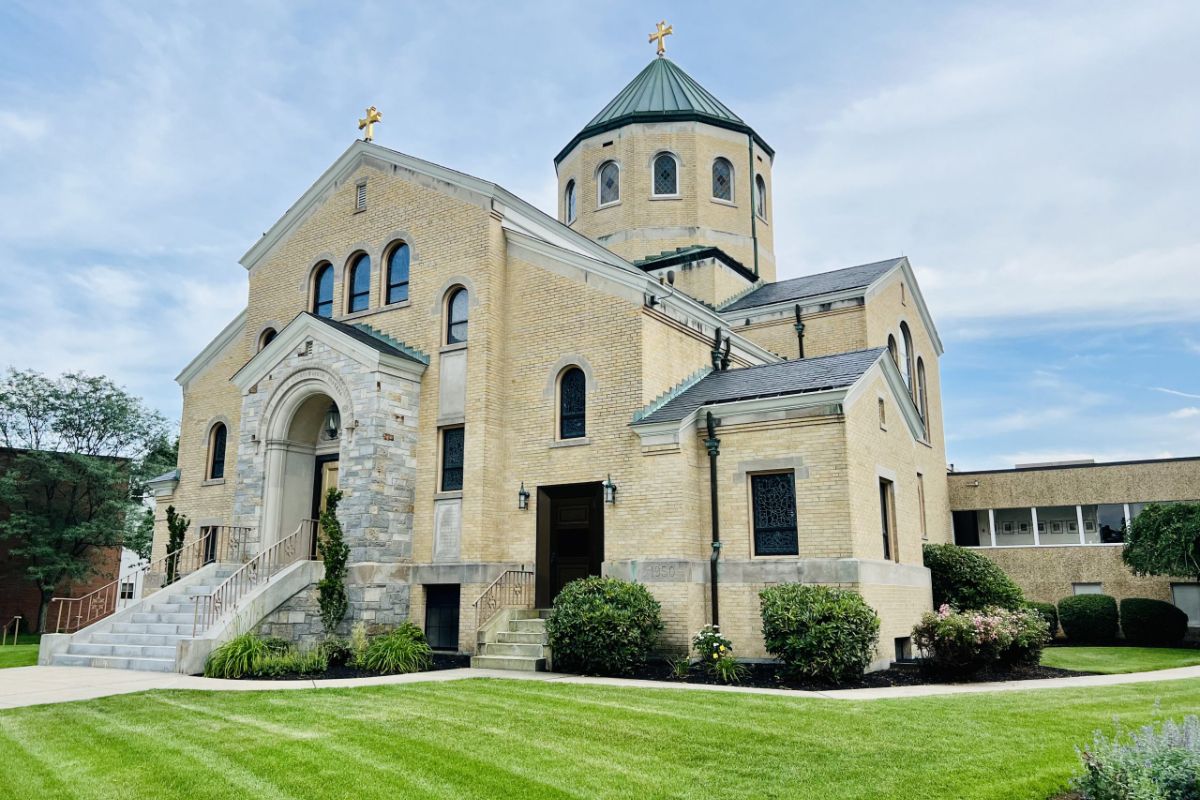
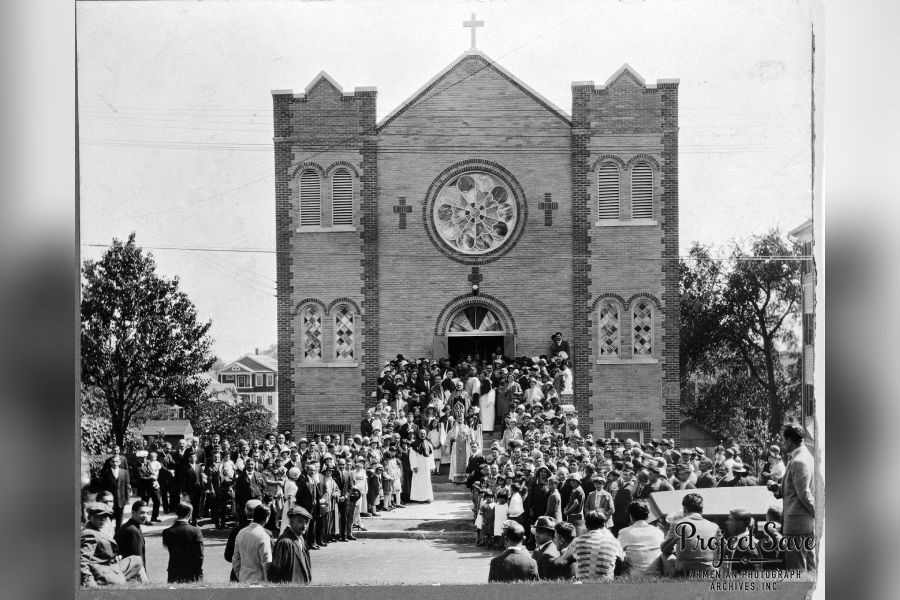
In the diaspora, the church has always functioned as the hub of the community. Just as the village church in Western Armenia stood at the center of community life, the church continues to perform that role metaphorically today. The definition of an Armenian community in America starts with the establishment of a parish. Every community has remarkable stories of how those structures were built despite incredible obstacles. These stories are vital to our history and must be documented and taught to inspire succeeding generations.
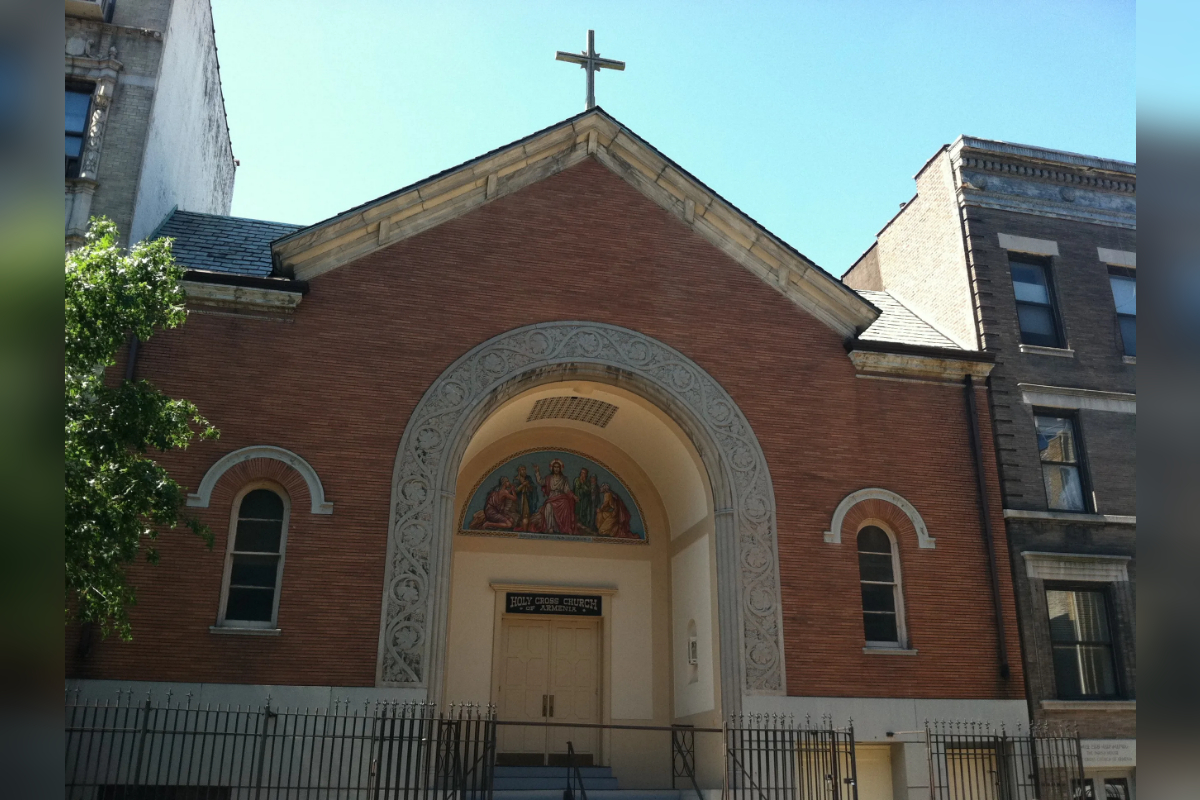
The role of St. Illuminator’s Cathedral in New York City as a shepherd to generations of immigrants is an example of how the church functions as a literal sanctuary for those in need.
St. Illuminator’s was once at the heart of a post-genocide Armenian community. My great-uncle lived with his family for several years on 28th Street. How comforting for these survivors of genocide to know that their church home was just one block away. It was a similar experience for succeeding generations of immigrants, including Armenians from Baku and other parts of Azerbaijan, who were victims of pogroms and forced deportations.
We have now come full circle, with a vibrant young professional population in Manhattan bringing hope, energy and innovation to the next chapter. Some of our history is rooted in America’s urban centers, and some in small industrial towns where our grandparents found employment. This is how Indian Orchards, Granite City, Racine and Whitinsville became vital parts of our Armenian American story.
It is important for us to connect our family experience with communal development to inspire the emerging generation. This is part of their identity.
The church in the United States is no stranger to reaching beyond its own parishes to help Armenians in need. This type of “mission multiplexing” has existed for decades. I remember as a boy when our small parish raised money to support the construction of schools in Beirut and Aleppo. I didn’t understand the nuances then, but it taught me early on that we were part of something ancient and much bigger than our community.
A few years later, “global” became a word in speeches at our church, used to describe the diaspora. Armenia was a closed mystery to many of us then, but the lack of a free nation was somewhat tempered by our “global” nature. The multiplexing dynamics changed in 1988 and permanently in 1991. After the devastating earthquake, the walls surrounding Soviet Armenia came down. Every church community became a center for clothing distribution and fundraising. It was a massive relief effort by all Armenians that created the best kind of unity: a common cause.
When Armenia gained independence in 1991, a permanent change occurred across the American diaspora. Parishes that were estranged for decades were now both displaying the flag of independent Armenia and were brought together to assist in the nation-building effort. Literally every organization and institution has found a way to connect with the homeland and add value — some, like the ARS and AGBU, through continuing education and philanthropy.
In other cases, new ideas emerged. The Armenia Tree Project (ATP) was founded on a simple observation: while Armenia was energy-blockaded by its enemies, people needed to burn trees for heat and survival. Carolyn Mugar witnessed this and declared that we needed to plant trees and sustain the environment. ATP was born. It is one example that has been repeated scores of times. The diaspora learned that by helping our brethren in Armenia, we strengthen the diaspora itself.
It is a challenging time for our communities. The needs of our local diasporan communities have never been greater as we strive to remain vibrant. That requires human capital and financial resources. In parallel, our work with Armenia continues and grows. Balancing both sacred missions is an ongoing challenge. The solution to most challenges starts with a look in the mirror. Are we contributing in some way to these missions? If so, how have we defined the balance?
The complexity of our diaspora, with its nearly endless number of organizations and churches, creates ample opportunities to participate but also demands conscious decisions about where to focus. Almost every area in which we are collectively engaged is resource-limited, including both local and homeland-related projects. Participation in our historic “dual” mission is critical. Given the finite nature of our resources, it is vital to go where your heart tells you — and to be at peace knowing that you are part of the solution.