


On September 26, Latitude Art Space in Yerevan opened the documentary installation, They Say We Have to Leave, by Swiss-Armenian director Varsy Buchmann. The work tells the story of the 2023 forced displacement and ethnic cleansing of Armenians from Artsakh, not merely documenting the tragedy but transforming it into a piece of collective memory.
On opening night, the gallery was filled with artists, public figures and families displaced from Artsakh. The protagonists of the installation themselves were present, making the encounter deeply emotional for both participants and the audience.
“When people share the same feelings and emotions, they become part of it and will never forget. This project tries to do exactly that — to transmit a universal emotion that crosses borders and becomes a memory for everyone,” said Buchmann, the director, writer and producer.
The installation is structured in three interconnected parts:
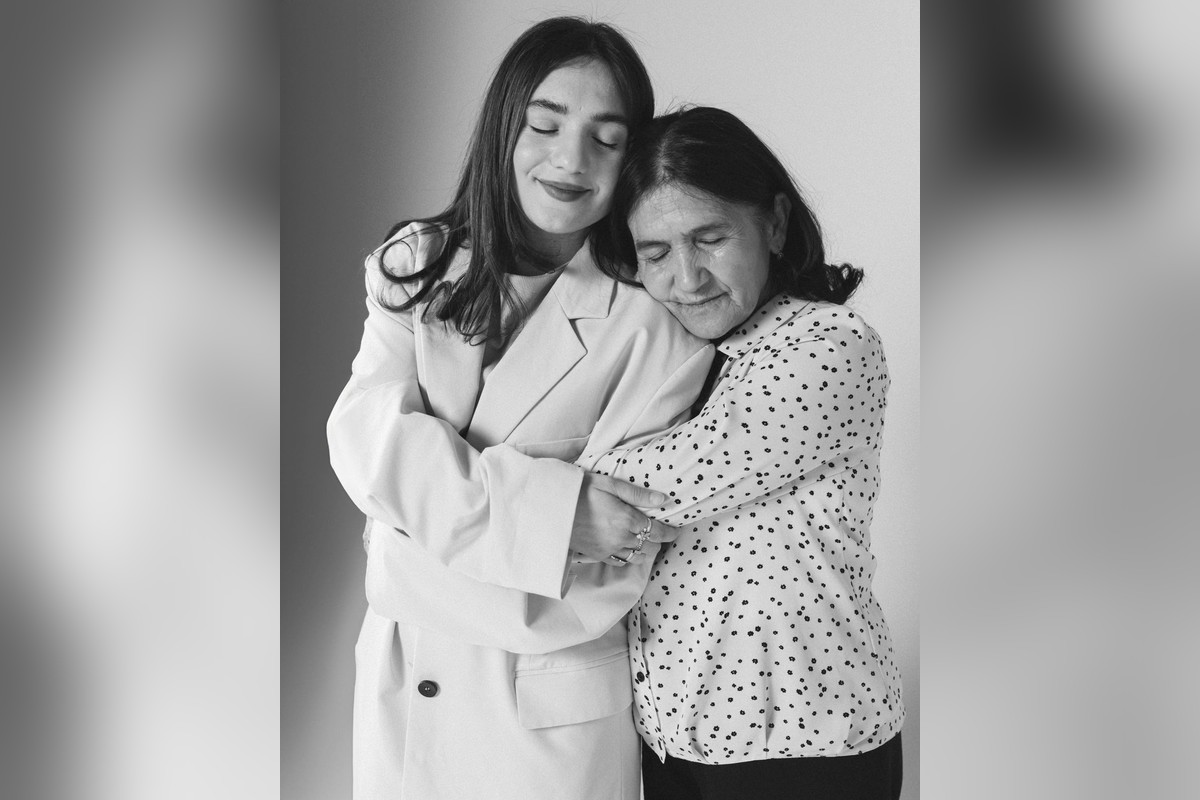
The first part presents the stories of 120 women from Artsakh. Their silent presence is both painful and powerful — a reminder that these experiences are not only personal but also collective. The visual narrative is accompanied by excerpts from interviews, conveying the women’s emotions, fears and hopes.
The musical score, composed by Arsen Babajanyan, captures both the sense of loss and the spirit of resilience. The space is built as a long corridor, symbolizing the Lachin Corridor — the route through which the people of Artsakh were forced to leave their homes.
The second part focuses on oil as a metaphor for global indifference — a substance that “shuts the mouth of justice.” The imagery of oil is juxtaposed with the rich cultural heritage left behind in Artsakh — monasteries, churches, khachkars — underscoring how economic interests often outweigh human rights.
The third part presents authentic archival footage from personal collections — family photographs and pre-war videos — that immerse viewers in the everyday life of Artsakh before the tragedy: full of love, traditions and vitality.
The idea for the project was born on September 25, 2023, following the explosion of a fuel depot in Berkadzor near Stepanakert.
“Something exploded inside me that day, as well. I realized it wasn’t enough just to watch — my people were living through this, too. I called Andreas Weber, suggested we meet, and that was the beginning of our collaboration,” Buchmann recalled.
Work on the installation lasted exactly two years. The creative team sought out 120 women, deliberately seeking diversity in age, profession and life experience — from doctors and teachers to soldiers who had served in the Defense Army.

Finding these women scattered across Armenia was not easy.
“We had a very strong casting director, herself a displaced Artsakh native who knew many of the families. Thanks to her work, we were able to gather this wide range of voices now represented in the installation,” Buchmann explained.
This process was not just organizational; it was emotionally demanding for both creators and participants.
“That wound hasn’t healed for any of us,” said Buchmann. “Every day, I had to start from zero and find the strength to listen.
The interviews were marked by both tears and laughter, becoming a form of mutual healing for participants and filmmakers alike.
The project aims to do more than document; it seeks to serve as a tool for collective remembrance.
“We must not let our story fade into oblivion. It was important that this format be understandable to international audiences so that they, too, feel this pain and make it part of their own story,” Buchmann stressed.
The installation will travel internationally. Its next stop is Basel, premiering on October 31, followed by showings in Zurich, Geneva and beyond. The mission, as Buchmann put it, is “to travel the world and make the voice of Artsakh heard.”
The project was made possible with support from Swiss cultural foundations and organizations, as well as donations from the local Armenian community.
“This is deeply symbolic for me. Our pain is shared by them, as well,” Buchmann noted. “And let’s not forget that Switzerland was the country whose parliament adopted a resolution in defense of the rights of the people of Artsakh — the only one in Europe to do so.”
Despite being generally well-informed, Swiss media underrepresents the Artsakh issue. The director sees this project as another opportunity to make Armenian voices heard internationally, even in the face of Azerbaijani lobbying and pressure on film festivals.
The installation is designed so that visitors are not just passive observers. They physically walk through the stories, hearing the women’s voices, meet their gaze and symbolically pass through the Lachin Corridor.
Participants have described the experience as “a story told with honesty and compassion — a story that belongs to all of us.” For many, it is also a tribute to the strength and resilience of their people.
“The loss of Artsakh is a loss for the entire Christian world, because we left behind an immense cultural heritage,” Buchmann concluded.
They Say We Have to Leave is not just an artwork but a bridge between past, present and future — a reminder that untold stories are forgotten stories, and that told stories become a force for resistance and a cornerstone of identity.