

On the making of queer Armenian art
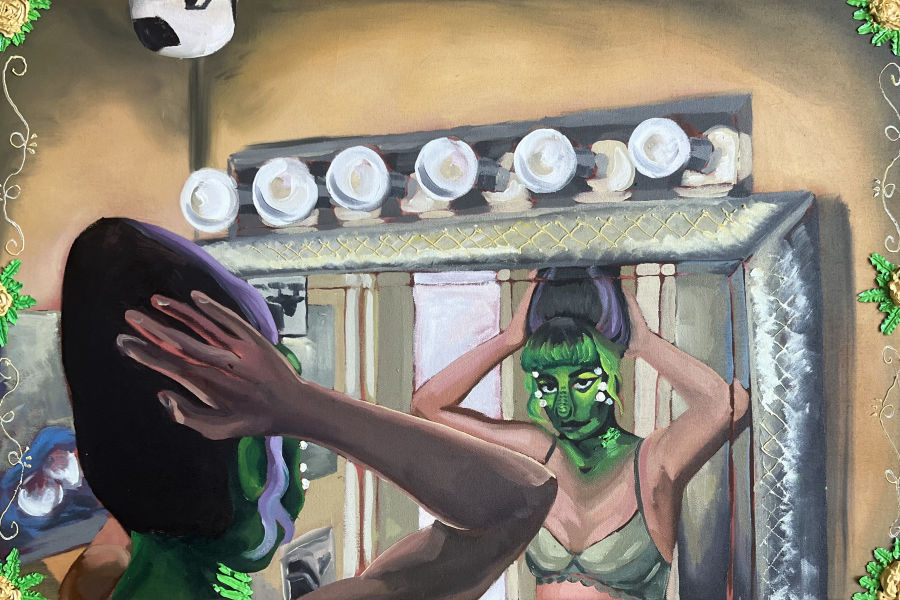
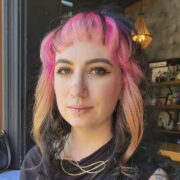
I can count on one hand the number of times I have felt my work was appreciated within Armenian circles. My art has no connection to Armenian politics or the church, yet it is often symbolically tied to the diaspora. I make queer art, first and foremost. I am queer and I always have been. Over the course of my life, I’ve found that this is often a hard pill to swallow within Armenian circles — particularly for my grandparents’ generation, who may struggle to see me as more than the story assigned to me. My gender is more, my orientation is more, but one part of my identity has always been grounded in an ever-expansive world: my heritage. It is the part of my identity I have always loved and cherished, the part of the story that has broken my heart and strengthened my resolve.
I am named after my great-great-grandmother, who survived the genocide through sheer action and resolve — while losing almost everything in the process. This did not break her, a story we all know. I often return to her story. Whenever the world feels too harsh or I feel out of step, I remember all the nerve it took for her to survive. I breathe: I will be okay.
In that same breath, I am aware she likely would not have liked most of my identity. Queer, non-binary, artist and burlesque dancer — a tough pill for a woman with deep traditional faith, who believed that if it took too long for her children or grandchildren to find a match, then an arranged marriage would do.

I also think about my eccentric, widowed 94-year-old great-aunt Anush, who loves me more than most things in this life. She was the first Sooltan’s favorite grandchild and cared for her in the last year of her life. So, perhaps, we would’ve gotten along…
Being queer and Armenian means there is a constant butterfly in my stomach. Whenever I perform in a heavily Armenian part of the country, I send show cards to community centers and galleries. I have yet to hear back — or see even one fellow Armenian at a show. I can only assume it is because a quick Google search of me shows my unwavering, loud “queer” energy: eccentric, eclectic, unapologetic. But can’t that also define being Armenian? So, why do I often feel such a deep divide within myself?
There is hope, though. Things are changing fast in our harsh world. Perhaps in finding joy within both of my communities, they can find room for each other. I do not see either part of myself as separate; they are intrinsically woven together — the two halves of the coin that make up me. I am not being truthful if I hide either half.
I am not alone in feeling isolated from the diaspora because of my queer identity. Many Armenians of my generation, whom I consider friends, also grapple with this split self and lack of acceptance. Yet, in that, we have found each other. The blood of the covenant is sometimes thicker than the water of the womb. Our covenant is one of found family — seeking joy, creating and making the art that was not there for us as we grappled with our identities — so that the next generation will have it.
Ours is a story of love and joy, of remembrance and community and, hopefully, of reuniting with the broader diaspora. I find myself asking the question I’ve long wondered about the silence I face from diasporans regarding my identity: If it were your child, wouldn’t you want them to see the story above, rather than live in shame or fear?
I propose that we lift up those in the diaspora who often find themselves with the least support and connection to the Armenian community: our queer siblings, who have loved and lost, who find happiness despite it all and who remember deeply that our struggle can be a source of strength.