Oshagan on photographing diaspora, crafting Artsakh portraits circa 2125
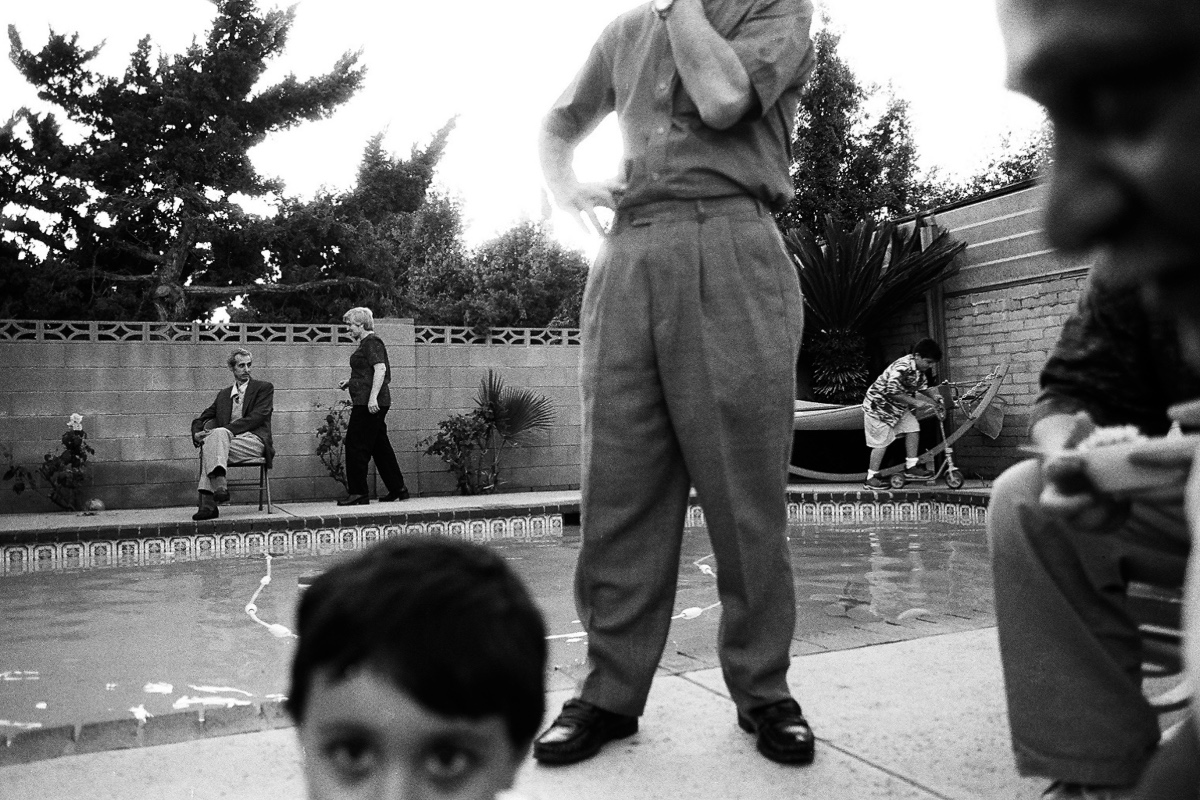
When photographer Ara Oshagan began documenting greater Los Angeles’ Armenian neighborhoods nearly 30 years ago, he was embarking on an exploration of multigenerational displacement and the making of Armenian diasporan life.
Since then, Oshagan’s journeys have taken him to another diasporan center, his birthplace Beirut; to Artsakh after the First and Second Artsakh wars. In November 2023, he traveled toArmenia to photograph and interview Artsakh Armenians who survived Azerbaijan’s September 2023 ethnic cleansing. Most recently, he has begun to photographically document Fresno, home to one of the oldest Armenian diasporan communities in the United States.
Oshagan’s photos from those places come together for the first time at Fresno State University’s Peters Ellipse Gallery in an exhibit entitled “Ara Oshagan: Armenian Diasporic Trajectories; Los Angeles, Beirut, Artsakh, Fresno,” on display through Sept. 30 in celebration of the 50th anniversary of the university’s Armenian Studies Program.
It’s the second exhibit to unite Oshagan’s distinct photo projects as he deepens his understanding of his works’ common themes against the backdrop of continuing displacement, dislocation and movement of Armenians to and from Armenia, Lebanon and Artsakh.
The first exhibit, which closed earlier this year at the flagship Los Angeles Central Library, was Oshagan’s initial effort to tell a story of Armenian diasporic “entanglement” by bringing together his distinct Los Angeles, Beirut and Artsakh photo projects to form a larger, layered story of “past, present and future while imagining a tomorrow where return to indigenous lands is a dream and a possibility,” according to the installation description for “Ara Oshagan: How the Future May Hold.”
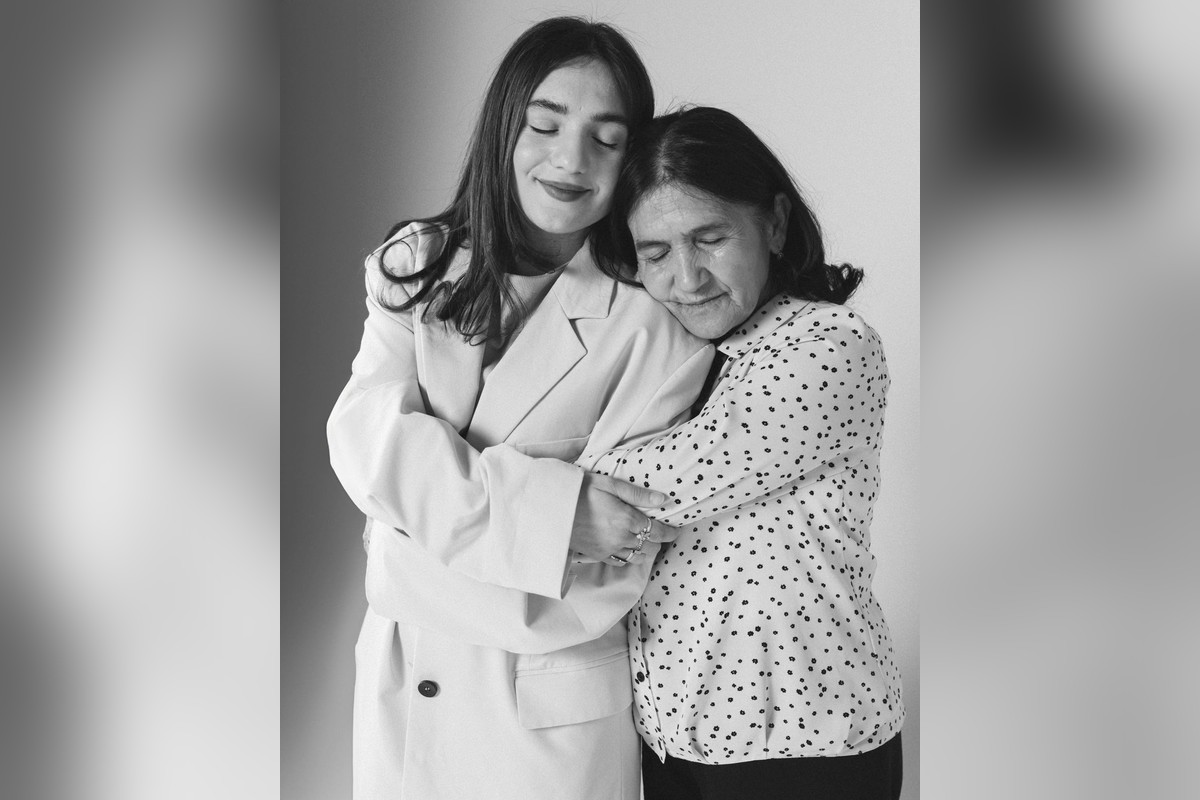
To share stories of past and present, Oshagan uses photo display, collage, hanging prayer scrolls embedded with older family photos and newer ones from Beirut, and Artsakh survivor photos accompanied by their own words of pain, disillusion and hope. As for the idea of incorporating photos from the future, Oshagan has turned to artificial intelligence to generate portraits of imagined Artsakh Armenians situated on their indigenous lands in 2125, combining a selection of his Artsakh photos and inputting prompts.

In sharp contrast to using a still-emerging AI tool for his future-person photos, Oshagan’s unfolding Fresno project uses old-school bellows camera technology, which requires Oshagan to follow a 10-minute, several-step process to take one photograph and repeat that same process to take the next one.
Between the closing of his first Los Angeles exhibit earlier this year and the upcoming second exhibit in Fresno, Oshagan has been thinking about “entanglement,” the meaning of land for Armenian diasporan communities, and the drive to home-make and survive against a backdrop of economic or forced migration, displacement, genocide and movement. Oshagan’s emerging Fresno project has revealed to him even more ties that bind Armenians to land, whether indigenous or place-made in the Armenian diaspora.
This interview with Oshagan centers on his two latest exhibits, what he wants to communicate through his work, and what comes next. It has been edited for length and clarity. (Disclosure: It’s a small world. Oshagan is my brother-in-law.)
Georgi Bargamian: How do you intend for a viewer to walk through the exhibit and absorb its photos?
Ara Oshagan: I always consider the audience experience. Some of the connections are not obvious. You have to do a little work in terms of reading the text and absorbing it and thinking about how there may be connections among the photos. There is always ambiguity in art. Even photography and documentary photography have that ambiguity. It leaves out much more than it captures. The future is even more ambiguous. A lot of ambiguity!
G.B.: Talk about what you describe as “entanglements” you’re uncovering in your work. Your own “entanglements” center on your ancestors’ removal from their colonized indigenous lands due to the 1915 Armenian Genocide, as well as your own displacement from Beirut to the U.S. in 1975 due to Lebanon’s Civil War. Are there other entanglements? Has your understanding or inclusion of personal entanglement in your work changed or evolved?
A.O.: Entanglements are the overlapping connectivity. Today the Artsakh diaspora is connected to the LA diaspora. There are geographic, physical trajectories that are entanglements and there is emotional connectivity. I carry Beirut and carry that diaspora with me and it becomes part of me. Sometimes I think of those Russian nesting dolls in thinking about my identities embedded in me. [Regarding new entanglements], the work I make in different places impacts my relationship to the place and is defined by the photograph or installation I create. I no longer see Los Angeles without seeing it through the photos I’ve done. Beirut too. The photograph becomes the lens and being entangled by the place will change how I experience it — forever in a way. I am changing through the process of making the work.
G.B.: In designing the LA and Fresno exhibits, did you begin to have a different understanding of your earlier separate projects when they were brought together?
A.O.: That’s the thing that was really exciting and when things began to connect for me. There was a different energy. Now when I see the current-day portraits of Artsakh Armenians and next to them imaginatively, portraits of their grandchildren on the land they have been displaced from, that creates a different kind of relationship and thinking about the series. I see a little more hope in a way because that [Artsakh] project was very difficult and it’s still so raw. But when you see something in the future, you imagine hope and you feel hope. And when you put in the medieval [prayer scrolls embedded with Beirut family photos], there’s this arc of history that works together with current portraits. You feel this long connectivity, and it gives you new insights into that trajectory.
Sometimes I think of those Russian nesting dolls in thinking about my identities embedded in me.
G.B.: The exhibits’ non-AI generated photos seem to integrate images to help the viewer see past and present experiences of diasporan displacement and placement, colonization, unpunished genocide and ethnic cleansing, among others. Was that an intention? Were there others?
A.O.: The idea of place is really important. Diaspora is also the making of place whatever triggered the displacement. The Armenian Diaspora is a place of creativity. It’s a place of mixing and learning and has overlapping cultures itself that create something new. It’s violent, but it creates something new and a new way of being. The exhibition is successful if someone sees that there’s this long past and long presence of Armenians, and that there is a current-day trajectory. In displacement there’s diasporic placemaking, but there’s possibility of return always.
G.B.: The exhibit challenges the viewer to imagine decolonization that could occur over time in Western Armenia, occupied Palestine and elsewhere. Is the exhibit trying to remind Armenian diasporans — and those of other diasporas — that the state of displacement is unfinished or that the state of displacement creates identity as a displaced person?
A.O.: There is very much so the idea of documenting and drawing attention to displacement. A lot of times displaced people may try to recreate their lives or try to forget what happened to them, where they come from in terms of their heritage. It’s important to connect through the Armenian Case, through our own community, with others. It’s happening to us in a very particular way and it’s important to share that with the rest of the world, but a lot of Mexicans have really connected to the work because of their own similar narratives.
In displacement there’s diasporic placemaking, but there’s possibility of return always.
G.B.: You turned to AI to imagine portraits of Armenians who would be living in a future free Artsakh. To do this, you used photos you shot of displaced Artsakh Armenians and created four generations to reach the year 2125. As a photographer, do you have a different relationship with AI-generated images you created borne from your own photography?
A.O.: It’s a very different relationship. An actual photograph in the world is a product of a relationship you’ve created with that subject. It may be long or it may be brief, but the image is made in this friction between you and the people you meet, and place is very important. With AI, I first used prompts to create people I imagined from billions of images, but they had biases toward the West and beautiful people. They had no history and you don’t know where they’re coming from. I learned a lot from that and those were just experiments. Because the idea was to imagine the future, I took the portraits I shot of Artsakh Armenians and used AI to create the future generations from those portraits. AI combined facial features to form offspring: a daughter and son. Each generation had a set of new people and new combinations to make a new family tree of generations of these Artsakh Armenians. Portraits are not just the face. It’s background, hair, clothes, so I had to actively imagine a future for these Armenians in Artsakh. What’s the world going to look like in a hundred years? Is the background urban, rural? I tried to create a diversity of context in the portraits. And what is the political context? I don’t know. That’s also another part of return. How do you return? Under what context?
G.B.: What role do the Fresno photos play alongside the LA, Beirut, and Artsakh photos?
A.O.: The Fresno photos expand the examination of diasporan spaces as part of my work. Each space has its own history, character and presence, and I approach each one in a particular way. Fresno is more looking at the deep roots that Fresno Armenians have because they’ve been there for a long time, some since the 1880s and some still on the same land through agricultural work. LA is a hodge podge of different places and diasporic mixing. Fresno is a diasporan community that’s been in place and connected to land for a long time. I’m hoping through the new Fresno work I can say something about that.
I took the portraits I shot of Artsakh Armenians and used AI to create the future generations from those portraits.
G.B.: Do the Fresno photos form a distinct exhibit just as the LA, Beirut and Artsakh photos do as standalone projects?
A.O.: Fresno is also a separate project called “Valley of Origins.” It’s an examination of a place and a community, as are the other projects, and it expands my exploration of diasporic places. In the Fresno exhibition, six photographs are blown up very large. The audience has to make connections to connectivity, displacement and movement. When I was taking these photos, the Fresno Armenians always talked about the racism the community experienced. It’s part of their story and I’m trying to figure out how to tell it in talking about their relationship to land. I’ve walked into some houses and in the backyard it’s rows and rows of grapevines. They have a whole different relationship to land. I’ve taken people out of their houses and put them in their backyard fields to photograph them on their land.
G.B.: Have you discovered anything new through the Fresno photos that you didn’t encounter in the LA or Beirut or Artsakh photos?
A.O.: It’s still very early in the project to articulate that fully, but there have been some very surprising things. Our diasporic experience is constant movement, and in Fresno there are sometimes six generations of families still working the same land. That’s been quite a revelation for me. The other thing is that their connection to the Fresno Armenian community is not through language, it’s through culture and other connectivity. It’s a strong community, a connected community. It’s really distinctive compared to LA, Beirut or Artsakh.
G.B.: You shot the exhibit’s Fresno photos with a bellows camera using technology from the late 1800s in an exhibit that includes AI-created photos of imagined future Artsakh Armenians. Why use a bellows camera? Did using it impact the Fresno work?
A.O.: I wanted to connect in a different way to Fresno’s past and to the origin of these families representing multigenerational presence. Using technology from that earlier time enforces that generational trajectory of presence. It has completely changed the way I work in terms of the process. It slows things down, just as the life of agriculture moves at a much slower pace. It allowed me to connect to the people and place in these indirect ways that impact the work and inform it.
Our diasporic experience is constant movement, and in Fresno there are sometimes six generations of families still working the same land. That’s been quite a revelation for me.
G.B.: Do you plan to add other communities into this larger exhibit of diasporan “entanglement” and connectivity?
A.O.: Western Armenia and Istanbul are the next projects of mine, where Armenians still live and communities still exist. That will be a multi-year project. Those were our communities on our lands for millennia and those photos will show a different relationship to lands that we are connected to, but where we no longer live. Each project informs the next one and the Fresno project has been helping me think about how to approach Western Armenia.
G.B.: What’s next for you and the exhibit?
A.O.: In addition to going to Western Armenia, there’s the current-day Artsakh project I’m working on that will be completed hopefully next year. It has portraits, oral histories, film, objects, creative writing and more. Displaced Armenians from Artsakh show you on their phone videos and photos of their towns and villages and where they were living taken before they left. Some of these project components may change, but I’m thinking about other AI future imaginings. I started out 30 years ago with black and white documentary photography but over the years, I’ve expanded in different ways, into portraiture, film and archives. Using AI is another way of expanding my work. It’s not about the form. It’s about what you’re saying through it. I want to think of something for the future.
“Ara Oshagan: Armenian Diasporic Trajectories; Los Angeles, Beirut, Artsakh, Fresno” is on display until Sept. 30 at Leon S. Peters Ellipse Gallery, University Library, 2nd floor, Fresno State University, 5200 Barton Ave., Fresno, CA. The opening reception is Sept. 13 from 4 to 6 p.m. at the Peters Ellipse Gallery.