



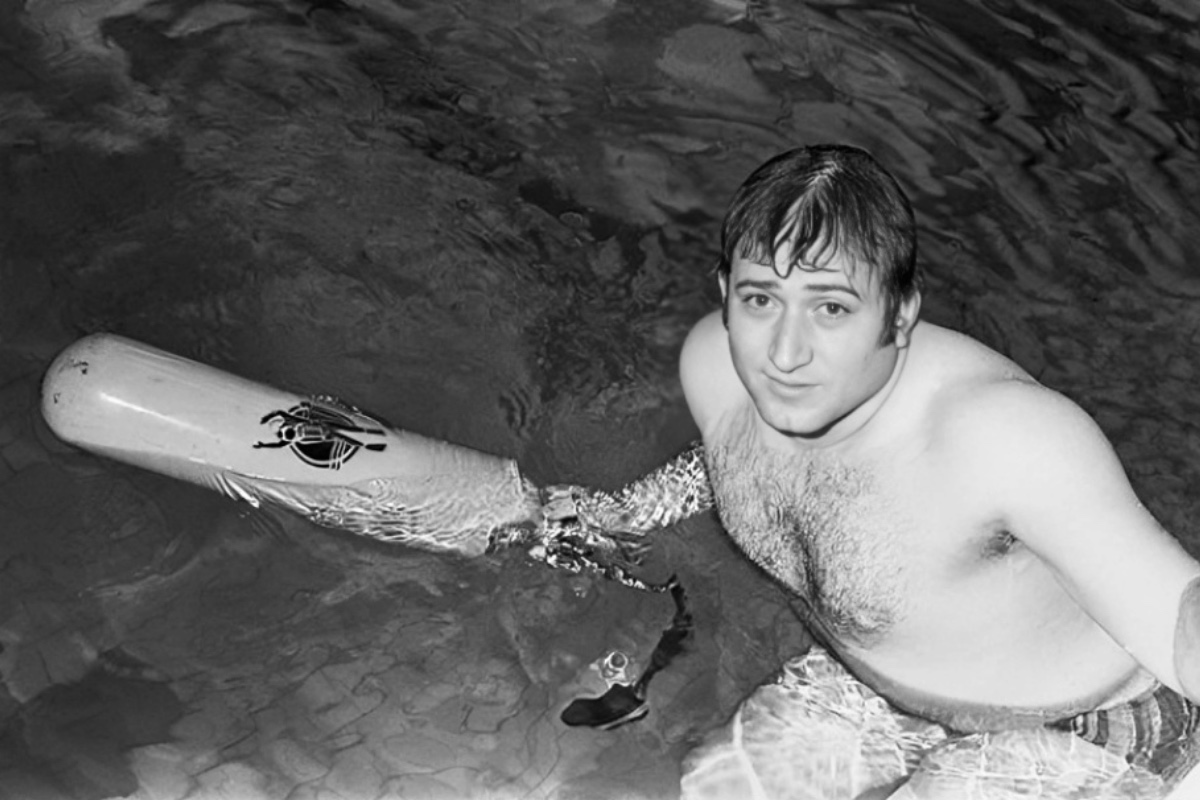
Fifty years ago, on Sept. 16, 1976, the surface of Yerevan Lake was calm and still when a sudden impact shattered the silence. A trolleybus carrying more than 90 passengers lost control near the dam and plunged into the reservoir below, vanishing almost instantly beneath the surface. Within moments, the vehicle settled at the bottom of the lake, at a depth of about 33 feet, its metal frame trapping passengers inside a dark, suffocating space. On the shore nearby, a young Armenian athlete heard the crash while finishing a training run with his brother. Without hesitation or calculation, he ran toward the water and dived in, disappearing into the darkness and into a moment that would define his life.
The Armenian athlete was Shavarsh Karapetyan, a 23-year-old swimmer from Soviet Armenia whose life had been shaped by discipline, endurance and collective responsibility. Born in 1953, he was drawn to water from a very early age, developing a natural affinity for swimming. He then devoted his energy to training before eventually becoming an exceptionally talented finswimmer, a demanding discipline requiring extraordinary control, breath capacity and precision underwater.
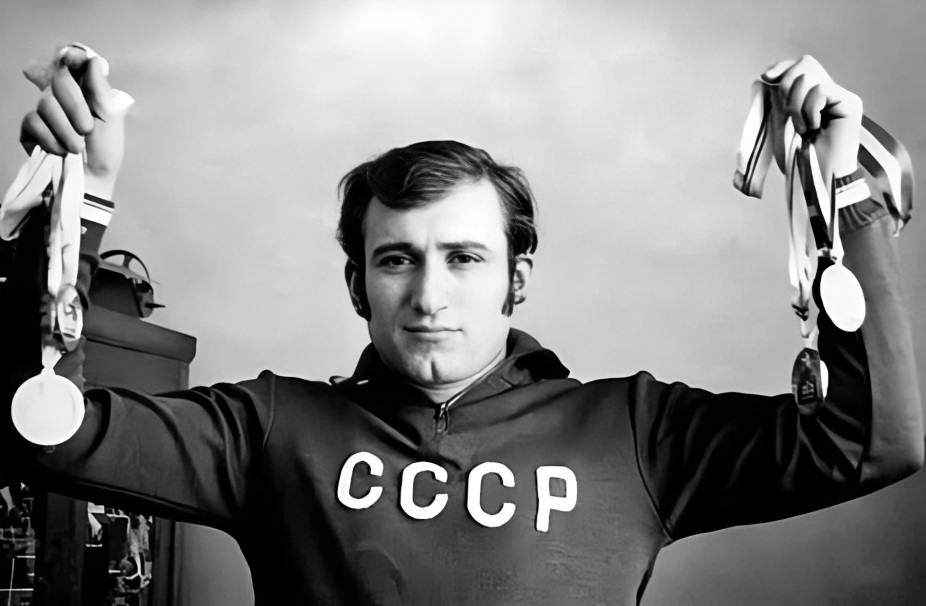
During his career, Karapetyan became a Merited Master of Sports of the USSR and an 11-time world record holder in finswimming. He won seven Soviet championships, 13 European championships and 17 world championships, for a total of 37 gold medals. Those who knew him described a man shaped less by ambition than by duty — someone for whom effort and courage were inseparable, and for whom the idea of turning away from someone in danger would have been unthinkable.
What followed at Yerevan Lake goes beyond anything ordinary. Karapetyan reached the submerged trolleybus and immediately descended into the freezing water, where visibility was almost nonexistent. He located the vehicle and used his legs to break a window, creating a fragile point of escape. From there, he began pulling passengers out, returning again and again into the wreck despite exhaustion, cold and injury. In total, he would make dozens of dives, each descent lasting roughly 25 seconds, repeatedly bringing survivors toward the surface in near darkness. Around 37 people were brought out in this way, while nine others managed to escape through the opening he had created. Of the 46 ultimately rescued from the bus, only about 20 survived despite medical attention at the scene. Karapetyan continued until his body could no longer respond, collapsing after what would be remembered as one of the most extraordinary acts of rescue ever recorded.
The aftermath ended his athletic career at elite level. He was hospitalized in critical condition and remained unconscious for about 45 days, with severe injuries, sepsis, double pneumonia and lung damage leaving him permanently affected. Yet this was not the only time his name was associated with acts of heroism. In 1974, he helped prevent a bus carrying 30 passengers from plunging into a mountain gorge after it began rolling out of control, managing to reach the driver’s area and steer it away from danger. In 1985, he was again involved in rescue efforts during a building fire near Yerevan’s Sports and Concert Complex, where he assisted firefighters and suffered burns in the process. Each incident, whether large or small, reinforced a pattern that those around him would later recognize: an instinctive response to danger and a constant willingness to help those in need, without hesitation or self-interest.


Recognition for the 1976 rescue did not come immediately. In the Soviet Union, information about major accidents was often delayed or simply never made public, and the story of the trolleybus initially remained a local story before later spreading nationally when Komsomolskaya Pravda published an article without mentioning the death toll. The story triggered an extraordinary response, with thousands of letters of gratitude arriving from across the country, many addressed simply to “The Armenian Republic, Yerevan, Shavarsh Karapetyan.”

Over time, official honors followed, alongside broader public recognition that extended far beyond sport. He was awarded distinctions including the Order of the Badge of Honor and other state medals, and his heroic act was later commemorated internationally, including with an asteroid named after him, 3027 Shavarsh. Years later, during the 2014 Olympic torch relay in Russia, he was also invited to carry the Olympic flame as an exceptional athlete and a true hero. Reflecting on that moment, he simply said: “I was carrying the torch for Russia and for Armenia.” Karapetyan himself has often resisted the framing of heroism, preferring to speak instead about duty and human responsibility, summed up in his words: “Anyone can find himself in a place where somebody needs help, and more than once, too. The main thing is to remember what makes you human.”
Fifty years later, the surface of Yerevan Lake has returned to stillness. Life continues along its shores, and the place no longer carries any visible trace of what unfolded beneath the water that day in 1976. Yet the memory endures in a different form — passed through stories, testimonies and the names of those who survived. It is remembered as a tragedy of both loss and survival, but also as a moment that revealed something far more enduring about human instinct and responsibility.
For Shavarsh Karapetyan, the man who dived into the freezing water without hesitation, it remains a story of humanity and kindness — values that mean a great deal to him, expressed in his words: “Kindness is nurtured by love. We have to teach our children to love each other from the very beginning.” On this 50th anniversary, the lake stands quiet again, holding within its depths the echo of a true Armenian hero who went into the unknown, when everything could have been lost.





A beautiful tribute to a remarkable man.