


Healing through music: An interview with Dr. Raffi Tachdjian
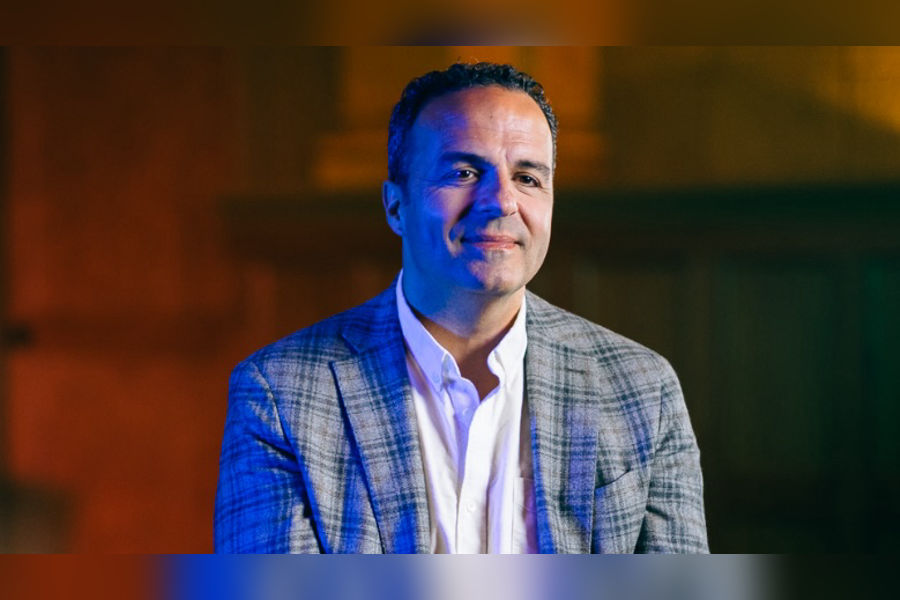
Dr. Raffi Tachdjian, a leading allergist and immunologist, was recently named the first-ever recipient of the Aram V. Chobanian Medicine and Humanities Award by the Armenian American Medical Association. But beyond the lab coat is a deeper mission—one that fuses medicine with music. As founder of the Children’s Music Fund (CMF), Dr. Tachdjian has delivered over 10,000 personalized music therapy sessions to children battling cancer, autism, chronic pain and rare diseases. Inspired by a teenage patient during his residency, he launched CMF in 2002 with the belief that music could be medicine. Now, with a fully funded music therapy internship at UCLA Health, his vision is reaching the next generation.
We sat down with Dr. Tachdjian to discuss healing, care and the power of music.
This interview has been edited for length and clarity.
Milena Baghdasaryan (M.B.): What drew you to this field?
Dr. Raffi Tachdjian (R.T.): When I was an intern in pediatrics at Massachusetts General Hospital, I encountered a 15-year-old boy dying from an incurable bone cancer. As I approached his room, I thought, instead of simply doctoring, how can we heal this child? I introduced myself as Raffi and he said, “I’m Justin. You probably want to know why I’m here.” I replied, “Forget why you’re here. What do you want to do while you’re here?” He smiled and said he’d like to play music—his guitar. I mentioned that I play guitar too and we connected.

It was still noon, and I’d just acquired 40 patients on my new shift. I couldn’t find a single instrument in the hospital—not even a piano in the lobby. Being an amateur musician, I thought that if I just had a piano or guitar, we could play music and have fun. Justin was a prolific guitarist himself, he said. So, the next day, before going home, I biked to a music store with $100 in my pocket. I asked the owner what he had for that amount. He handed me a guitar and a keyboard and said, “Keep your $100; get out of here before you make me cry.” I left with the guitar.
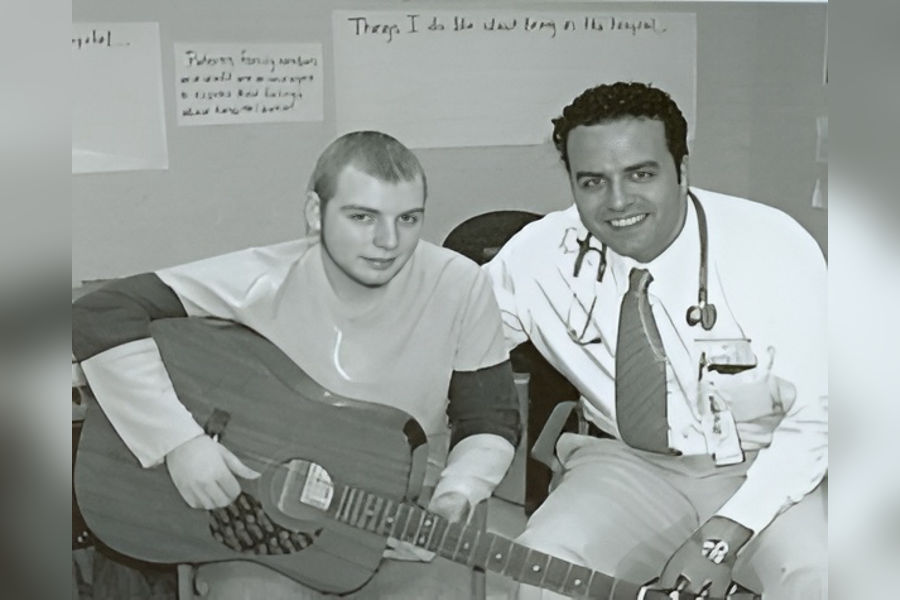
That night, I told Justin we’d perform in the playroom. I invited all the kids—about 100—to join us, if their parents agreed. As we played songs, one patient with cerebral palsy joined in by tapping his chair, but at a slower tempo. The whole group, including Justin, adjusted to that pace inadvertently. Even this tempo adjustment felt like a profound, almost spiritual moment—something greater than music.
A month later, I met two Berklee College of Music therapy students in the Emergency Department. As I spoke with them, I learned music therapy mainly served adults and veterans. I encouraged them to begin working with kids, too. We soon integrated music therapy practicum with hospital care—a combination that still exists 24 years later.
Through the charity I launched—originally focused on providing instruments, now on funding music therapy hours—we aim to scientifically measure the effects of these interactions. We investigate which diseases respond best and strive to provide evidence to Western medicine about when and how music therapy is most effective, with the same rigor as traditional medications.
M.B.: Do some types of music work more effectively than others?
R.T.: The musical piece or genre is always the patient’s choice. For years, “Amazing Grace” was the most popular track because most recipients were elderly. Now, it could be anything—hip-hop, dance, hard rock, even spoken word. It doesn’t always have to involve an instrument—voice and lyrics count, too. The key is using music or sound to achieve clinical goals. It isn’t as simple as just listening to background music or having a famous artist perform while you sit passively. There’s a relaxing, healing effect in that, but when you’re involved—like, say, Sheryl Crow gets you on stage to play the shaker, matching it to your heart rate and guiding you to bring it down from 120 to 80—that participatory aspect makes the experience therapeutic and unique.
M.B.: How did your approach to patient care change after discovering music therapy?
R.T.: That’s a great question! Actually, I’ve never been asked that before. When I came to UCLA for my fellowship in allergy and immunology, I really wanted to keep pursuing music therapy. I found Dr. Lonnie Zeltzer, the guru of pediatric pain management, and told her, “I need you—I’m starting a board for this organization.” Despite her busy schedule, she said, “If you help me one day a week with my chronic pain clinic patients, I’ll introduce you to our whole complementary and alternative medicine team.” That’s how music therapy entered the mix, alongside art therapy, group therapy, psychiatry, reiki and acupuncture.
By bringing music therapy into that environment, we incorporated it into an academic medical system. The nonprofit has grown and, now, we fund two music therapists at UCLA Mattel Children’s Hospital.
M.B.: What challenges did you face with traditional therapy, and how does music therapy address them?
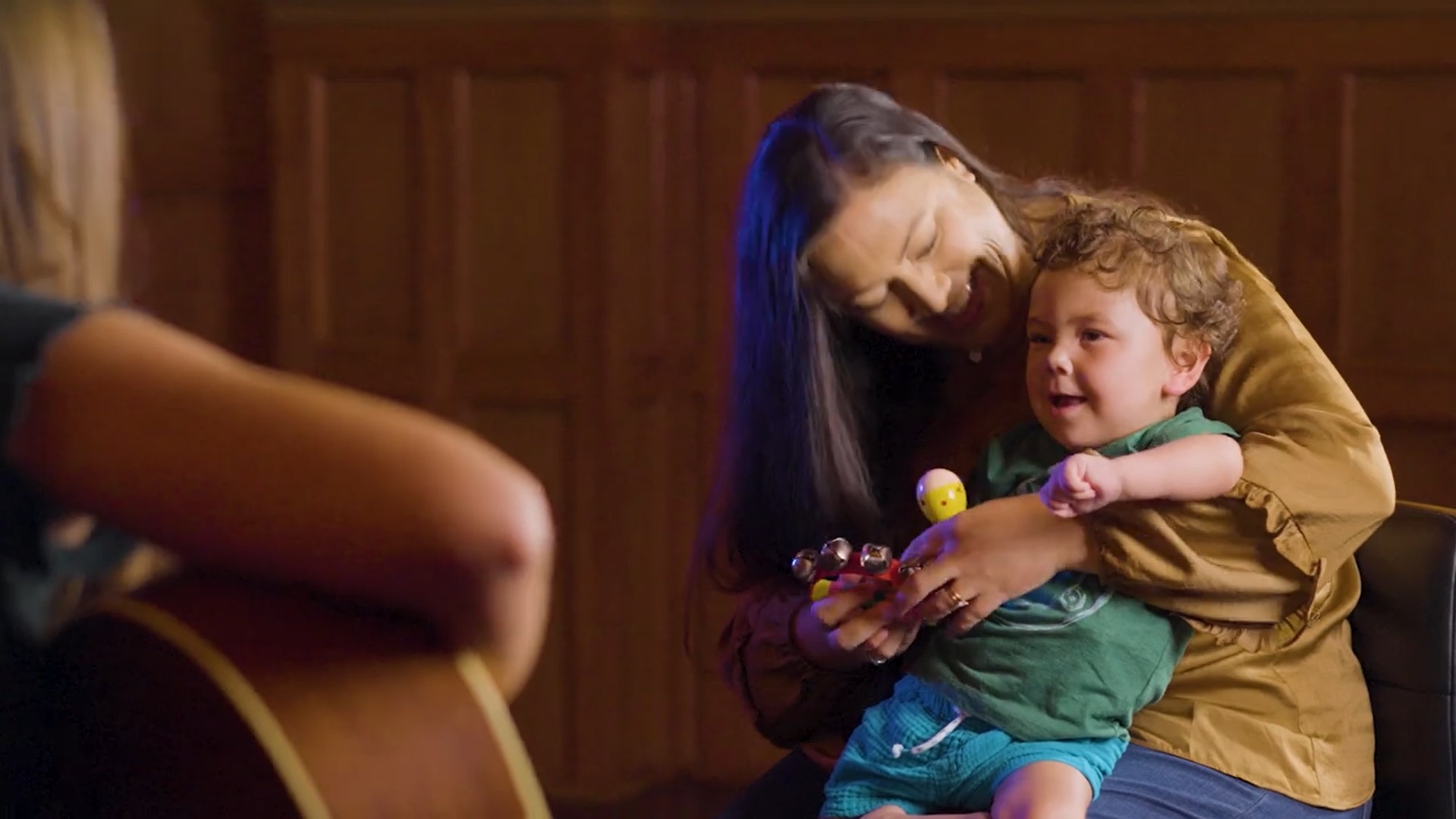
R.T.: Imagine trauma—psychological or physical—when a child hears screaming in another room, a beeping IV or, worse, is left in complete mental isolation. Instead of simply saying, “I’m now going to poke you; your turn has come,” you approach that same child—or young adult, after trauma (biopsychosocial trauma)—with a drum. You give them a big stick and say, “Show me the pain. Show me the anxiety. Show me the fear.” Maybe their pain is so intense that they just smash the drum as hard as they can—like a 10 out of 10.
Then, you move on: “All right, now let’s switch to guitar, for instance, and play some nice chords. You like this? Change it around. Let’s talk about dissonant chords. Do you like that? No? Okay, let’s focus on what feels good.”
Next, you start discussing what else to adjust: heart rate, breathing, maybe things at home, even if they don’t like their nurse, who’s actually helping them a lot. At the end, you bring in a smaller drumhead and say, “Now, show me your pain.” Psychologically, because it’s smaller, they usually hit it more gently and say, “Well, that’s a two or three.” And maybe for them, anything under five is okay.
This approach really helps open up rapport, not just between patient and caregiver, but between patient and prescriber. Prescription is easy if you aren’t seeing your patient, but when you actually do this, it becomes real shared decision-making. This kind of process builds compliance and adherence to the treatment plan. The plan doesn’t always have to be a pill or IV. There is a therapeutic plan; music therapy fits in beautifully and can actually support many traditional or Western therapies.
M.B.: Does silence count as music in some way?
R.T.: It sure does. In ninth grade, I had never touched drums before, but my dad tried to get me to play guitar or other instruments. I was always fascinated by the drummer. At the school band drummers tryouts, there were two other guys who had drum sets at home, and I got the part—even though I’d never played before—because I had imagined playing the drums over and over. You don’t always have to have the instrument in front of you to play.
When I got the role, my teacher said something I carry to this day: “Don’t play a note unless you mean it.” That means the silent part—the space between notes—is just as important, maybe even more so. There’s an organization to what can feel like chaos, just as on a canvas, you can’t just throw all kinds of paint and color; there needs to be structure.
In between notes, that’s what we’re doing—resting in the silence. Some people even describe hearing notes as colors or words. Silence is part of that experience just as much as sound is.
M.B.: What other types of therapy do you find useful to combine with music therapy?
R.T.: The sky’s the limit, as long as it’s actually working. That’s why you have a music therapist there—not just YouTube. If therapy is helping achieve goals, more of that will be incorporated. If they think it’s counterproductive or even detrimental, they’ll stop and say so. To be frank, for a small percentage of people, music therapy might not be productive; in those cases, another approach like art therapy, sculpting, ceramics or clay might work better. The important point is flexibility—finding the therapy that fits each person’s needs and adjusting as necessary.
M.B.: How do you determine which type of therapy works best, e.g., medical, psychological or creative?
R.T.: When we have the luxury, like we did with that team at UCLA, you can offer therapies à la carte. The team looks at each case and might decide, “This child could benefit more from music than art,” or vice versa or even try both.
In severe traumatic events, some children develop selective mutism. Instead of asking them to speak about what happened, you might give them an instrument, like a piano, and they might start stomping from anger or fear. As a music therapist, you can help turn that thump into a chord—suddenly, life doesn’t seem so bad. Small openings like this can be the starting point for healing.
Music therapy can be a bridge when words fail; it’s all in the tone and expression, just like how we learn our ABCs through song or communicate emotion beyond language.
M.B.: Any particular experiences from your music therapy work that have stayed with you?
R.T.: At the start of COVID, we had a young girl going through chemotherapy for leukemia. We were getting weekly updates from her mom, who would say, “Oh my God, just when our hopes were lost, the music therapist you set her up with talked about butterflies and really opened her up when she was completely shutting down—to us, not just the world.”
Another was a blind girl who was very fearful, distrusting and passive. During the second session, the therapist just kept her patience and, finally, the girl put her hands on the therapist’s hands and followed with her in playing soothing, melodic chords that brought smiles to their faces—and ours. I get chills when I say that.
A third story is about a young lady so dear to our hearts, who’s been with us since she was 17. She had the same cancer that took the life of Justin, for whom I carry this torch. We got a call saying she was going to undergo surgery and they were going to amputate her hip and leg. She wanted to play the guitar. She came a year later to our fundraiser and said, “Just as I was losing my leg, you guys gave me the pink electric guitar that I wanted, and that became my other leg. That gave me support.” I always get choked up. Stories like these make it more than worthwhile to spend extra hours to get funding, teamwork and access out there.
M.B.: What are some misconceptions about music therapy and how do you address them?
R.T.: People often think that just handing out iPods, listening devices or a track is music therapy. That’s music, or “musical therapy,” but true music therapy means you’re working toward specific clinical goals. Someone who’s worked with a music therapist could eventually do some of it themselves, like learning yoga or marathon training exercises on your own. That’s perfectly legitimate.
But simply saying, “We put some music in that child’s room,” or “There’s a quartet playing in the hospital corner”—that’s nice, and music is wonderful, but genuine music therapy requires interaction. You need to interview the patient or their family if they can’t speak, figure out what they need and then tailor the music to those unmet needs. Music becomes a tool to help achieve targeted results and improve quality of life.
The patient also has to be engaged. Even if they’re unconscious but show some reaction, you can still find ways to engage them. Sometimes, it takes a warmup, but if there’s no engagement, it might not be effective, which is rare—just a small percentage of cases. Generally, most people want music, especially when they can choose the genre, artist or even create their own lyrics and put them to music.
M.B.: CMF has delivered over 10,000 sessions over the past few years. What have been the key lessons from these sessions?
R.T.: We’ve published several papers—one on autism, specifically mild to moderate cases, looking at how these children lateralize sound and what sound frequencies they respond to compared to control subjects. We’ve also worked in the pediatric ward to observe how music therapy improves pain response.
The two most exciting findings for me are these: First, in the NICU with non-intubated premature babies who receive music therapy (which requires special certification for the neonatal intensive care unit). We found that blood oxygenation improves significantly with up to 20 minutes of music therapy. Even more striking, the girls had a 6 percent greater blood oxygenation response than the boys. Nurses will tell you, “Of course, little girls at that age are more resilient, tend to leave the ICU earlier than boys and are built for that intense, stressful environment.”
So, when you add music, their lungs oxygenate their blood more and we can now explain that aspect of their resilience and adaptation to stressful environments, like the intensive care unit and prematurity. The next step is to see if this leads to shorter ICU stays, since everyone wants their baby home sooner with fewer infections and complications.
The other standout result was in hereditary angioedema, a genetic condition where those patients randomly swell—similar to an allergy but with no itching and no histamine release and where allergy treatments don’t help. Partnering with their patient organization, we ran a pilot study and found that during a music therapy session, patients experienced an average 77 percent decrease in reported pain. That’s huge. People went from rating their pain in the high fives to the low ones on a pain scale. So, if you have pain on a random day while just sitting there, being able to drop from a five to a low one is a 77 percent reduction—that’s a significant impact.
M.B.: Can music therapy help prevent such conditions?
R.T.: It’s something that needs to be studied, but you can see how those could be exciting areas to look into, especially in the context of modern isolation. So many diseases erupt from isolation. We think we’re all connected by a network, but we’re actually getting more isolated because, for example, we could have had this chat face-to-face, but we’re having it via the web. There’s a lack of oxytocin due to not being in the same room. If we were to drum on the internet, you on your screen, me on mine, versus drumming on the beach or in a room, the level of bonding is significantly different. I don’t want to get science mixed with dreams and aspirations, but it’s something that could be explored and I think there’s tremendous potential there.
M.B.: What role do board-certified music therapists play in your organization and how do you ensure the quality of care provided?
R.T.: The American Music Therapy Association is the governing body overseeing board certification. From what I’ve learned, the board requires a music therapy student—a graduate from an accredited music school—after their four-plus years of study, to do another six months, 180 hours of practicum. That made me think, “Gosh, we could use that time in the hospital to get these kids board-eligible.” They’re board eligible once they complete that, then they sit for their board exam and after passing, they’re certified. They undergo background checks, along with screening and interviews. Right now, we’re actually working to fund hospitals so they can directly hire the music therapists to deliver the therapy in the wards, in outpatient clinics or for home visits.

M.B.: How and when did the UCLA Music Therapy internship start and what is its significance?
R.T.: We’re in the first year of the music therapy internship program at UCLA. This was born out of an idea from one of our music therapy consultants and advisory board members, Jenna. She said, “I’m heading up the music therapy department, but I don’t have enough time. I can’t replicate myself. We want to host two interns from Berklee College of Music and no one can afford to live in Los Angeles.” So, as a board, we decided to fund the next wave of music therapists.
They’ve been here for approximately a year. Living in Los Angeles is expensive, so funding their living costs and a little more really helps. I think it’s the first program of its kind to be funded at such a high level, where they can comfortably live and do their work. I had told Jenna 10 years ago, we should form a music therapy academy—not a school, but a real-world training environment. That’s what we’re doing and we’re measuring outcomes at an even higher level. We should reach 20–30,000 hours in the next couple of years.
M.B.: How do you measure outcomes?
R.T.: In the literature, music therapy traditionally has weak data, like “blood pressure went down, pulse went down, breathing normalized.” We’re looking at psychological questionnaires and pain scales, comparing results before and after therapy and trying to figure out the optimal session time, environments, interactions and conditions in which they help, along with their impact. For a NICU baby, 20 minutes is plenty; after that, it becomes noxious. For a teenager, it might be 60 minutes—up to two hours if they have psychosocial issues to work through.
We can’t just look at everybody and play the same music. Literature might say, “Oh, Mozart’s symphony was played,” or “Beethoven was played,” but which piece? When did the patient become engaged and interactive—at minute one or later? Maybe the therapeutic piece is a specific 41 seconds. That hasn’t been studied yet and since music therapy is also art, you can’t just hone in on a word or a single track: “We’re only going to play this.” It could start with Coldplay and then become a poem. Or, as you said, go from the Beatles to silence, with the therapist watching and letting the patient drive.
The science we try to bring is about identifying conditions: how does music therapy help the NICU baby versus the young adult with hereditary angioedema? If it doesn’t work, we report that. The next thing we hope to study is diabetes control—not with music therapy alone, but using music therapy to coordinate diet, exercise and medication. It’s a big undertaking.
M.B.: Does it matter how long the music sessions are or can any second make a difference?
R.T.: It matters, but it’s a feedback thing. If I did music therapy with you today, we might need 90 minutes in the first meeting. Next week, you might have bills to pay or an exam coming up, and we might do only 20 minutes. It’s much like a therapy session or even a doctor’s visit. If you’re empathic—and our therapists are—you read the patient and there’s shared decision-making.
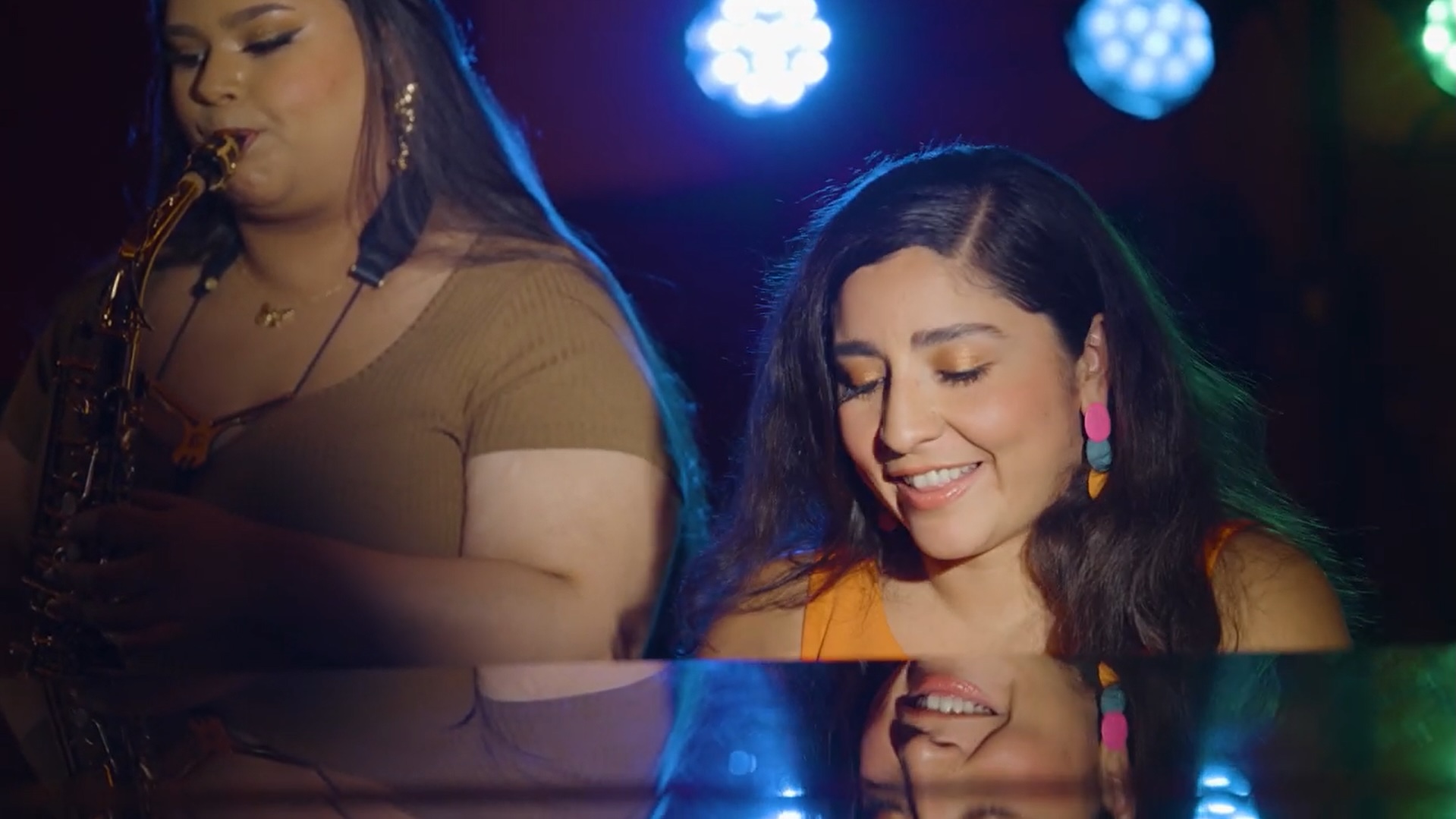
M.B.: How do musical instrument donations work and have you seen an impact already?
R.T.: In certain studies, we’ve given out instruments for kids who can’t afford them. Many kids have now moved to online platforms or MIDI instruments that are cheaper or free. Unfortunately, with the pandemic, we stopped doing instrument donations for infection control and focused on funding music therapy hours instead. A few years ago, Mr. Holland’s Opus Foundation gave us $10,000 worth of instruments that therapists can take out with them. Sometimes, a parent wants their child to play violin or piano, but the first session might just be exploring different instruments. If the child hones in on something like the accordion, we stick with the accordion as long as they like it, because ultimately, it’s about meeting therapeutic goals and seeing them blossom.
M.B.: You received the Aram V. Chobanian Medicine and Humanities Award. What does this mean to you personally and to CMF?
R.T.: That was one of the most humbling experiences of my life. I met Dr. Chobanian about 25 years ago, when I was working at the Centers for Disease Control on a pertussis epidemic that was rampant in Massachusetts. We talked about the difference between medicine and public health, and then collaborated on Armenian medical congresses. He was a major figure in cholesterol research, including the Framingham study. Later in life, he learned formal music and composed opera and orchestral pieces to complement poems he wrote for his late wife.
So, when I got the call from the Boston Armenian Medical Association about this inaugural award for medicine and humanity, they said it was most fitting for me to receive it. I don’t take credit—it’s a whole team effort: volunteers, our board, especially our chairwoman, Rhonda Grech, secretary and treasurer, Jean Grasso, every music therapist, every patient.
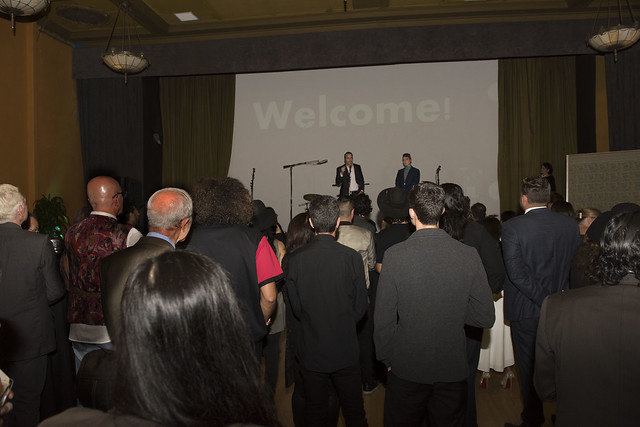
The truly humbling part is the recognition. It’s not about the crystal award; it’s really about people listening, taking note and spreading the word. The most special part for me was having representatives from Berklee College of Music, Mass General Brigham staff and mentors, along with friends and colleagues present—truly a special moment!
M.B.: What is the best advice you have received personally or professionally? And what advice would you give people to live a healthy, happy life?
R.T.: There are two answers to that. First is finding your contentment—your true satisfaction. In English, “discontent” doesn’t have quite the same weight as it does in Armenian or French. To be truly content, we must surrender to the process and commit to turning negatives into positives.
Second, my advice from playing football: after catching a pass as a tight end, it always took two guys to bring me down and the coach would say, “Keep your feet moving.” If you keep your feet moving, maybe that wall you’re up against slides by you and—boom—you realize there’s an opening and you were in front of a door and didn’t know it. The motto is to keep moving—tell your story, build and strengthen the community. That’s what brings contentment and helps others, too. And you may even help bring contentment to someone else!
M.B.: That’s really beautiful and inspiring. Is there anything else you’d like to add?
R.T.: All I would ask is for engagement—sign up on our website, come to our events. We host a music event at the Village Recording Studios in Los Angeles, a legendary studio known for its rich musical history. We also have a comedy show in the city, with proceeds directly funding music therapy hours for children with chronic and life-altering conditions. As you enjoy these events, a child receives support and a smile, thanks to your participation and the generosity of the artists. If more people get involved, the benefits would multiply for everyone—what we give, we get back many times over.