




Walking on the edge of Armenia: A journey through Syunik’s beauty, burden and resolve
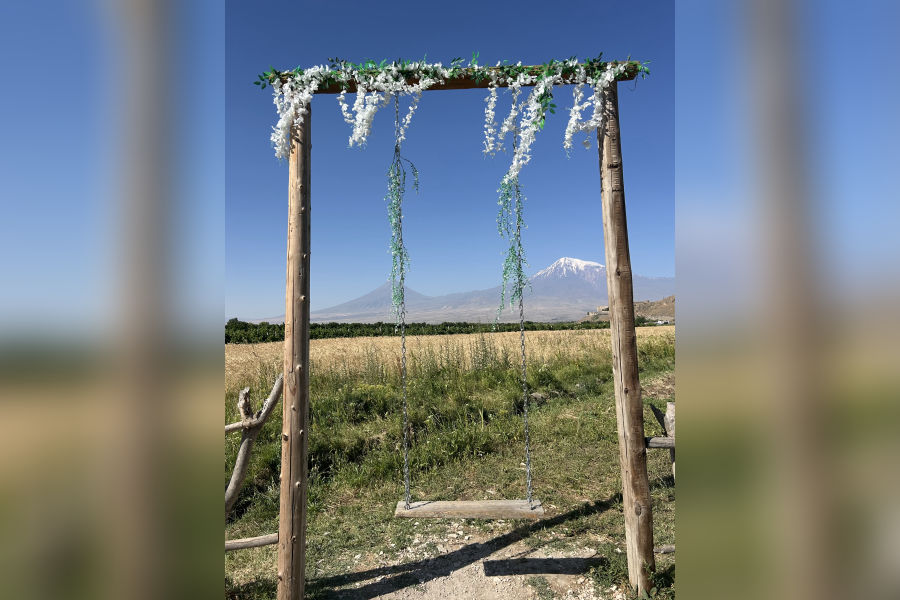
As an AYF intern living and working in Yerevan, one of the most rewarding aspects of my summer has been the opportunity to explore Armenia beyond the capital. Nearly every weekend, we set off on excursions to experience the country’s diverse landscapes and communities. Among the most memorable was a two-day journey to Syunik, Armenia’s southernmost region, which borders Iran, Azerbaijan and Turkey. Known for its strategic importance and breathtaking terrain, Syunik offered us a deeper connection to Armenia’s geographic, cultural and historical fabric.
Our road to Syunik was filled with meaningful stops. The first was a small roadside fruit stand on the way to Khor Virap Monastery, where we met a woman from Artsakh selling homemade zhingalov hatz, who insisted we try it for free. This act of generosity not only set the tone for the trip, but reminded us of the hospitality and kindness that is embedded in the 120,000 displaced people from Artsakh. It encouraged us to be grateful that these portions of Artsakh will always remain—no matter how hard the opposition fights to erase them.
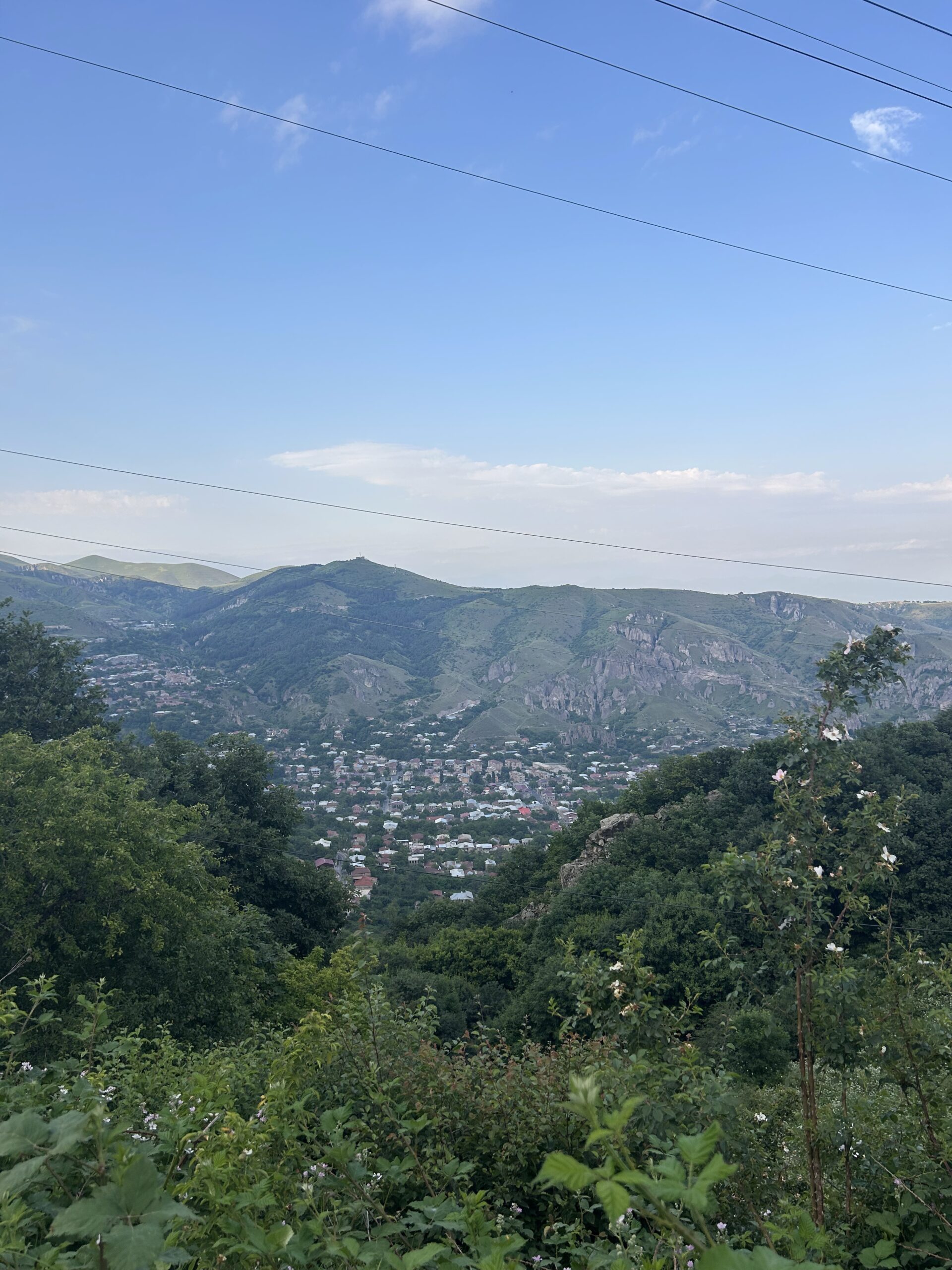
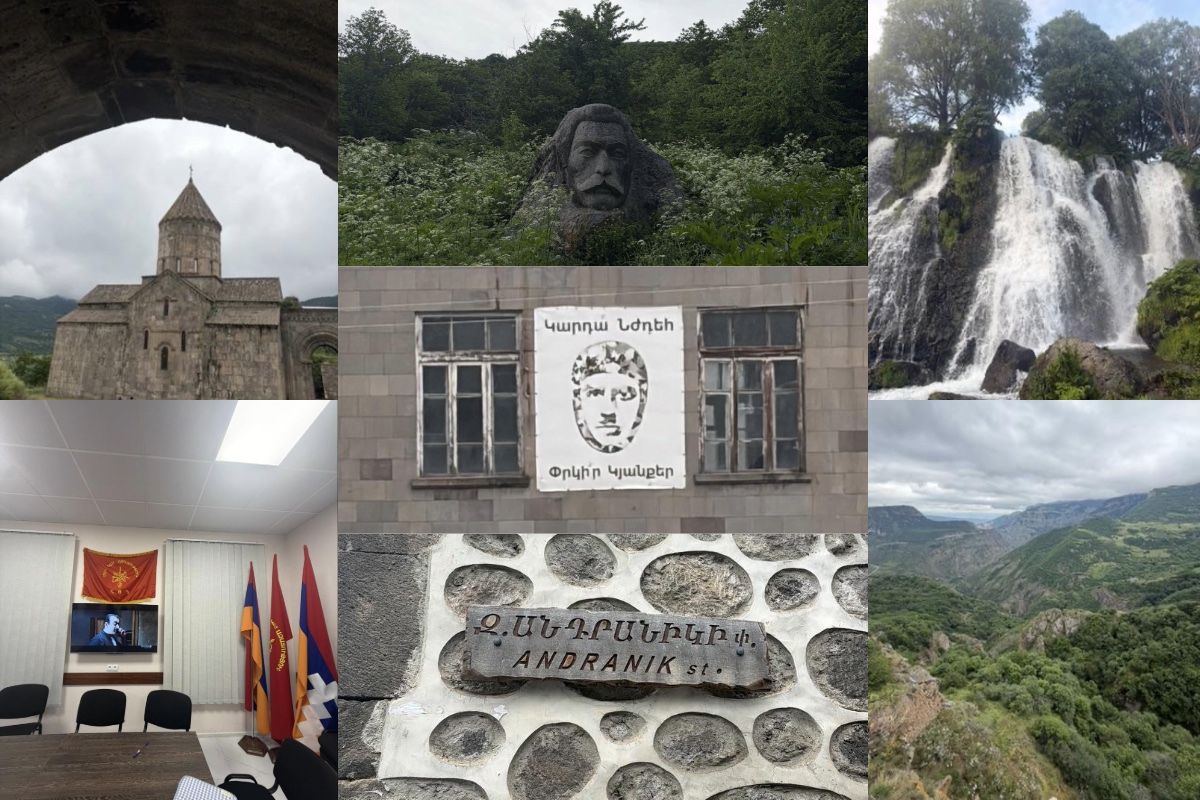
We continued on to Khor Virap, explored the ancient Areni caves, admired the red cliffs surrounding Noravank Monastery, drank mineral water straight from the source in Jermuk and paused at the banks of the Arpa River. By evening, we reached the town of Goris, being sure to greet every friendly dog and cat along the way.
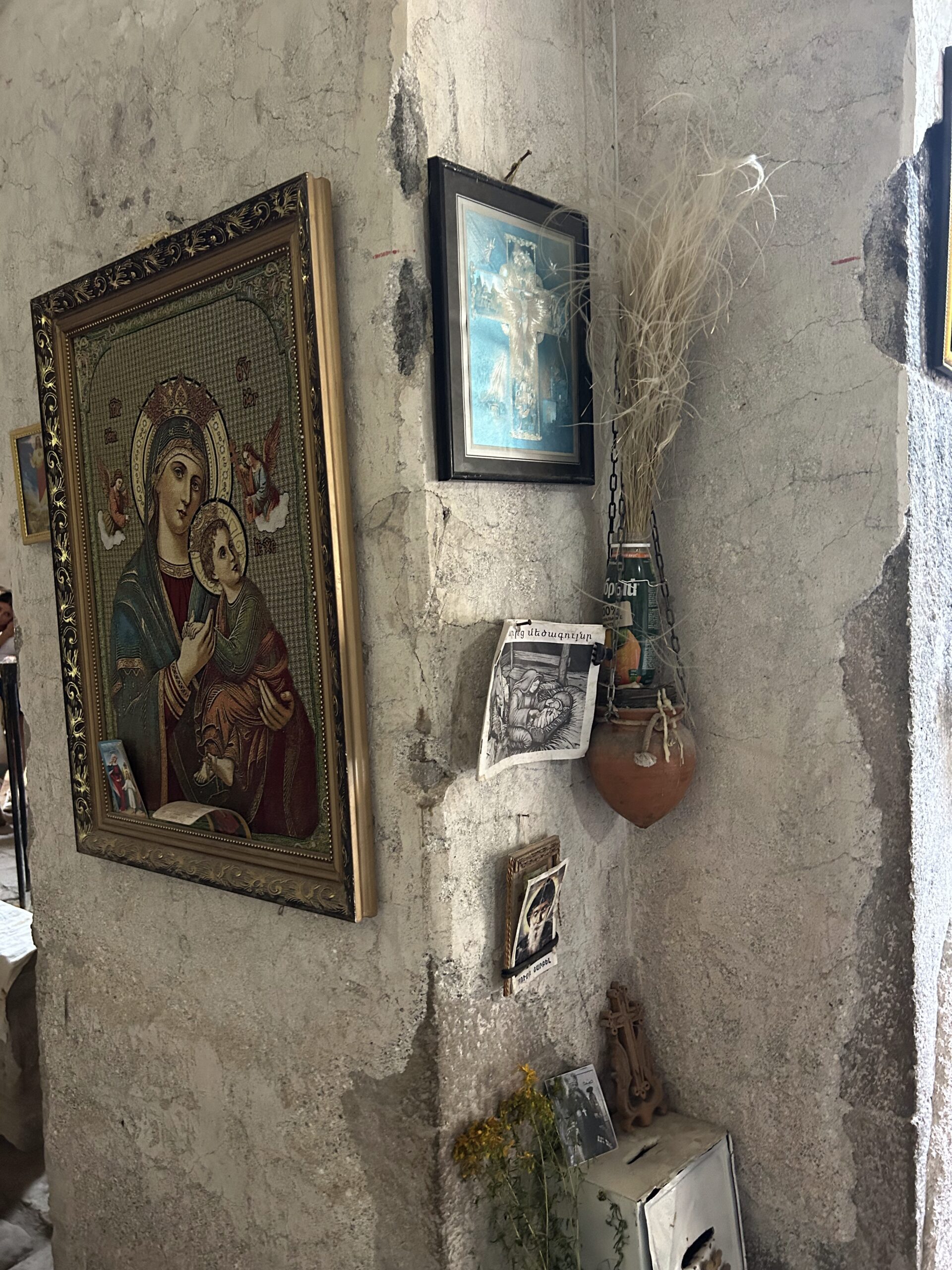
The next day, we continued our journey with a visit to Khndzoresk, where we explored the Old Khndzoresk Church—an ancient, sacred space that still holds offerings left by both locals and travelers. Not far from there, we made our way to the grave of Mkhitar Sparapet, a revered commander of the Armenian army and one of the leading figures of the national liberation movement in the 1720s and 1730s.
After Khndzoresk, we took the cable car to Tatev Monastery. There, we learned more about Garegin Nzhdeh and his deep ties to the region. We then had time to freely explore the monastery, discovering hidden corners, breathtaking viewpoints and moments of stillness overlooking vast cliffs and valleys.
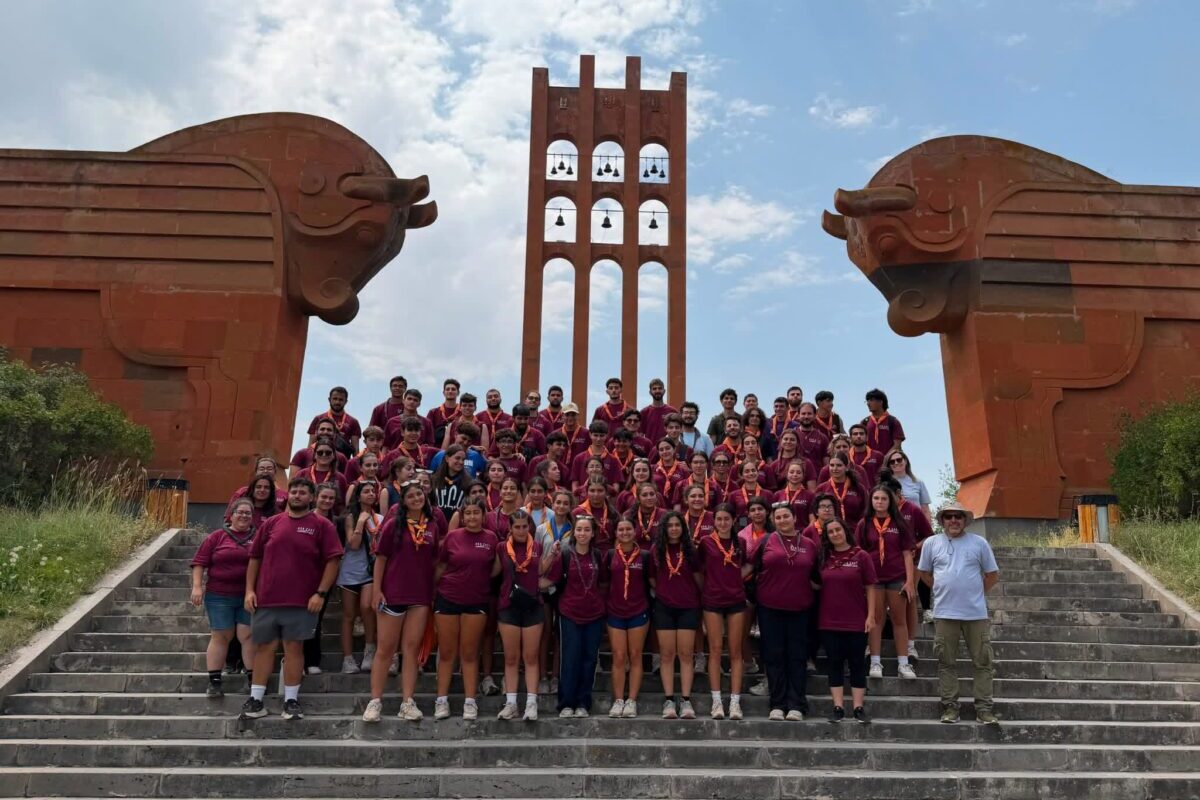

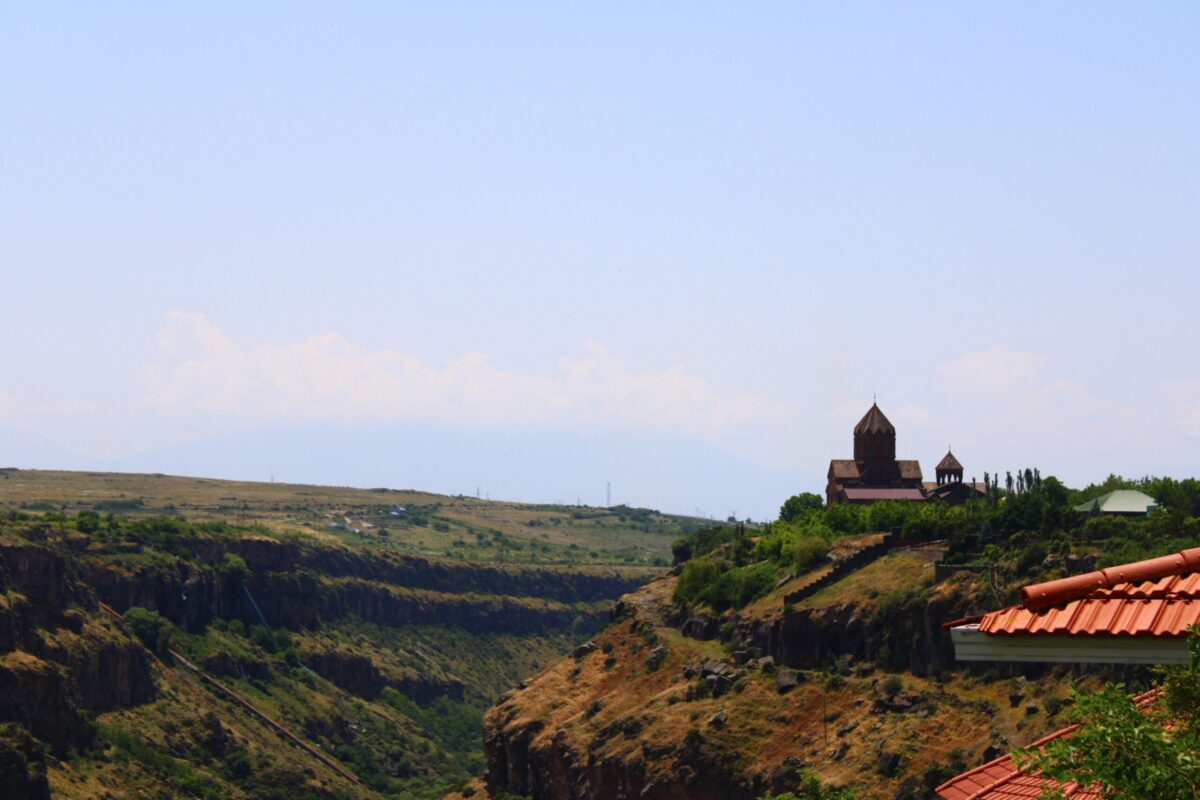
What struck me most while traveling through Syunik was just how much history is woven into every square meter of this land. Driving through the region and seeing the distant mountains of Artsakh and Nakhichevan pass by filled me with both pride and grief. Pride because of the deep, historic connection we have to these ancestral lands, and grief because we can no longer freely return to them.
Syunik’s preservation feels more urgent now than ever. As the only Armenian province that borders Iran, Syunik is our last geographic and strategic link to the outside world. Without it, Armenia would be surrounded by hostile neighbors, slowly tightening their grip and threatening the very existence of our sovereignty.
We visited Syunik at a particularly tense moment, both in Armenia’s history and the world’s. Just seven days earlier, Iran had been attacked by Israel, and only four days before our trip, Syunik itself came under attack at the Azerbaijani border. There was fear and uncertainty in the air, and for a moment, it felt like maybe this trip should not happen.
But despite the unease that lingered throughout the group, we moved forward. We reminded ourselves that we never truly know how much time we have to visit these places—or how long we will have with Armenia as we know it.
In the end, the uncertainty surrounding our safety felt minuscule compared to the far greater uncertainty surrounding Syunik’s existence. The slight risks we took to visit the region paled in comparison to the risks faced every day by those living there, and to the very real threat facing the land itself.
The one feeling that Armenians around the world have come to know too well in recent years is uncertainty. With a prime minister who seems to prioritize illusions of peace and promises of economic progress over the protection of our ancestral lands, it is hard to believe we will ever experience the kind of peace that comes with a truly sovereign and secure Armenia. No matter how many so-called “peace talks” are held, it is impossible to ignore who is sitting on the other side of the table: people who have never viewed us as equals, but rather as obstacles blocking them from their dream of a pan-Turkic state.
It is easy for us in the Armenian diaspora living in the United States to get distracted by our privileges. Our homes, our lives, our futures are not shaped by the threat of war or shifting borders. But in Syunik, that is not the case; the people who live there do not have a U.S. passport as their safety blanket. Spending just two days in the region gave us only a small glimpse into the fears and uncertainties they live with every day.
At the same time, we have to be careful not to let our reactions of guilt, pity or sadness become the focus. Feeling sorry for those who are constantly under threat is, in itself, a privileged position. Most locals have learned to live with this uncertainty, and what they might need from us is not sympathy, but a deeper appreciation for the land they hold and protect, and a recognition of their resilience and culture—not just their suffering.
All photos courtesy of the author


God help Armenia! No one else seems to care.
Syunik borders Iran, Azerbaijan, and Turkey, making it Armenia’s last strategic link to the outside world.