



A leadership in crisis: The political psychology of Nikol Pashinyan’s downward spiral

As Armenia faces one of the most perilous moments in its modern history, Prime Minister Nikol Pashinyan has increasingly displayed rhetoric and behavior that raise urgent questions about his psychological and moral fitness for leadership.
What began as a premiership born of civic hope and mass mobilization has now devolved into an alarming pattern of paranoia, emotional detachment and open hostility toward the remaining pillars of Armenian statehood. While it is not the place of outside observers to issue clinical diagnoses, Pashinyan’s behavior is best understood through the lens of political psychology, where authoritarian stress responses, cognitive dissonance and the erosion of empathy often accompany leadership in decline.
In recent weeks, Pashinyan has launched sustained attacks on the Armenian Apostolic Church, branding it as outdated and going so far as to suggest, in crude and disparaging terms, that clergy are unfit for moral leadership. This is not policy critique—it is calculated desecration. Political psychologists have long noted that leaders under siege often lash out at symbolic institutions as a way to redirect public anger and eliminate competing sources of moral authority. In this case, Pashinyan has turned his wrath toward the last major institution not yet subdued by his administration: the Church.
This deterioration was on stark display following Pashinyan’s recent meeting with Ilham Aliyev in Dubai, where Aliyev reportedly presented a humiliating demand: that Azeri citizens should never see the face of an Armenian border guard when transiting the proposed Zangezur corridor. For any national leader, such a request would be an affront to sovereignty, demanding an unflinching defense of national dignity. Yet, Pashinyan’s reaction leaving the meeting betrayed none of this resolve. Observers noted his erratic demeanor and visibly distraught body language—not the composure of a leader standing firm against external aggression, but the bearing of a subordinate chastised by a superior, unsure of his next move. This posture underscores a disturbing pattern of psychological subservience, where Armenia’s head of state appears less as a defender of national interests and more as a client to regional powers.
This psychological unraveling is not without precedent. In the final years of Nicolae Ceaușescu’s rule in Romania, a similar descent was witnessed. Ceaușescu, once a populist reformer, grew increasingly isolated and erratic, turning against the very institutions that had once legitimized his rule—intellectuals, the Church, even the Communist Party itself. He replaced strategic judgment with paranoid decrees, branding all dissent as treason and surrounding himself with an echo chamber of loyalists. His psychological detachment from the suffering of the Romanian people, combined with a grandiose belief in his own indispensability, culminated in national catastrophe. Armenia, too, now finds itself under a leadership that mistakes absolute control for statecraft and perceives disagreement as subversion. History reminds us that such trajectories do not end in resilience but in ruin.
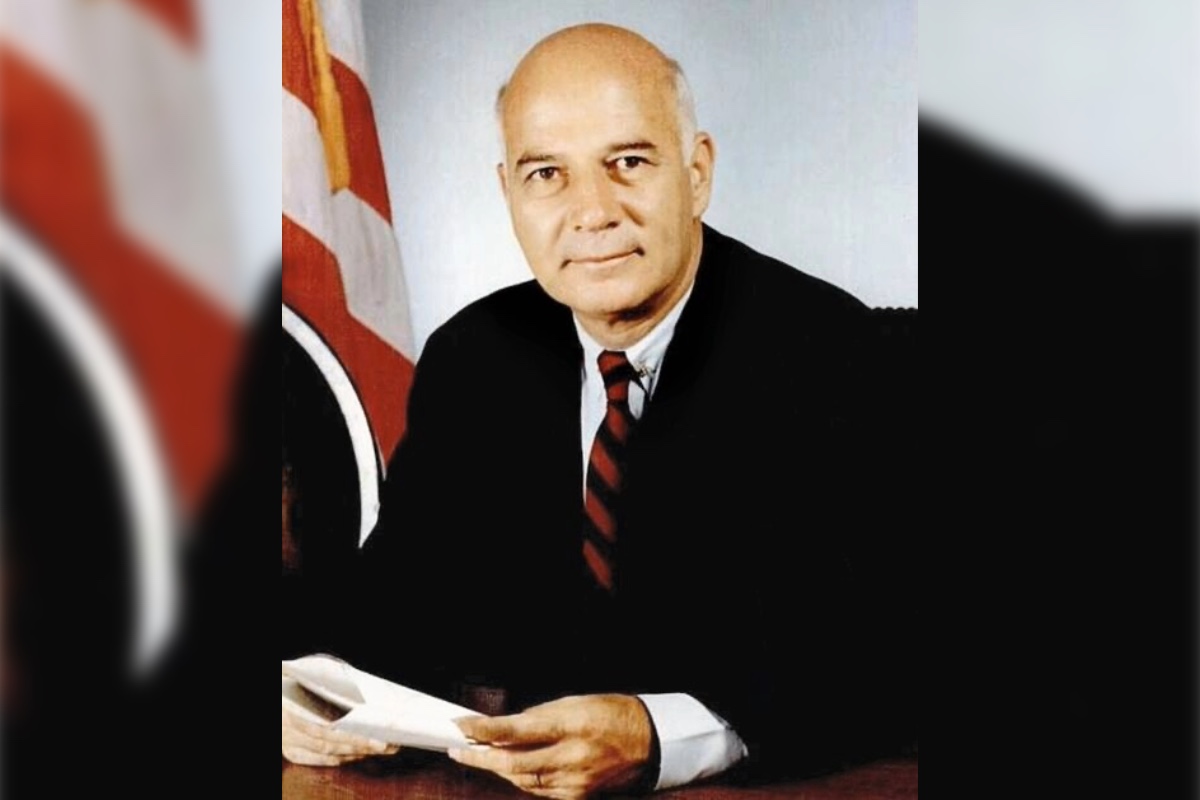

In an interesting twist, Ceaușescu’s downfall was triggered by the persistent criticism of Archbishop László Tökés, who bravely opposed the totalitarian regime. In 1989, Ceaușescu ordered his arrest. When authorities attempted to detain him, members of the local community rallied around his home, forming a human barrier. What began as a small act of resistance quickly escalated into a nationwide movement. Inspired by this defiance, protests spread across Romania, culminating in the regime’s collapse and the end of decades of dictatorship.
Simultaneously, Pashinyan’s administration has pursued the mass arrest of dissenters—including clergy, opposition lawmakers and civic leaders—under broad and vague accusations of “coup attempts” and “terrorism.” These actions suggest not only political desperation but a deepening authoritarian mindset—driven in part by perceived betrayal and fear of accountability, and echoing Ilham Aliyev of Azerbaijan and Recep Tayyip Erdogan of Turkey. The systematic silencing of critics is a hallmark of regimes in psychological freefall.
Equally troubling is Pashinyan’s persistent delusion of infallibility. Despite catastrophic failures—the loss of Artsakh, Armenia’s marginalization in regional diplomacy and the alienation of the diaspora—he continues to speak with moral certitude, insisting that he alone represents the will of the people. This is a classic case of cognitive dissonance, where reality is reimagined to protect the ego from collapse. The leader becomes not a servant of the nation but its sole interpreter.
Even his tone has shifted dramatically—from fiery populism to something colder and more disdainful. His language toward protesters and prisoners is bereft of empathy; he trivializes their pain. Such emotional blunting, especially in the face of national trauma, may suggest a dangerous detachment from the human consequences of his decisions.
For a country whose survival depends on moral clarity, strategic discipline and national unity, the current trajectory of leadership is profoundly destabilizing. Armenia cannot afford to be governed by a man at war not only with his people but seemingly with his own sense of reality.
It is time for the Armenian public, civil institutions and diaspora to consider whether continued rule by Nikol Pashinyan represents not merely a political mistake, but a psychological and moral liability to the Armenian state.

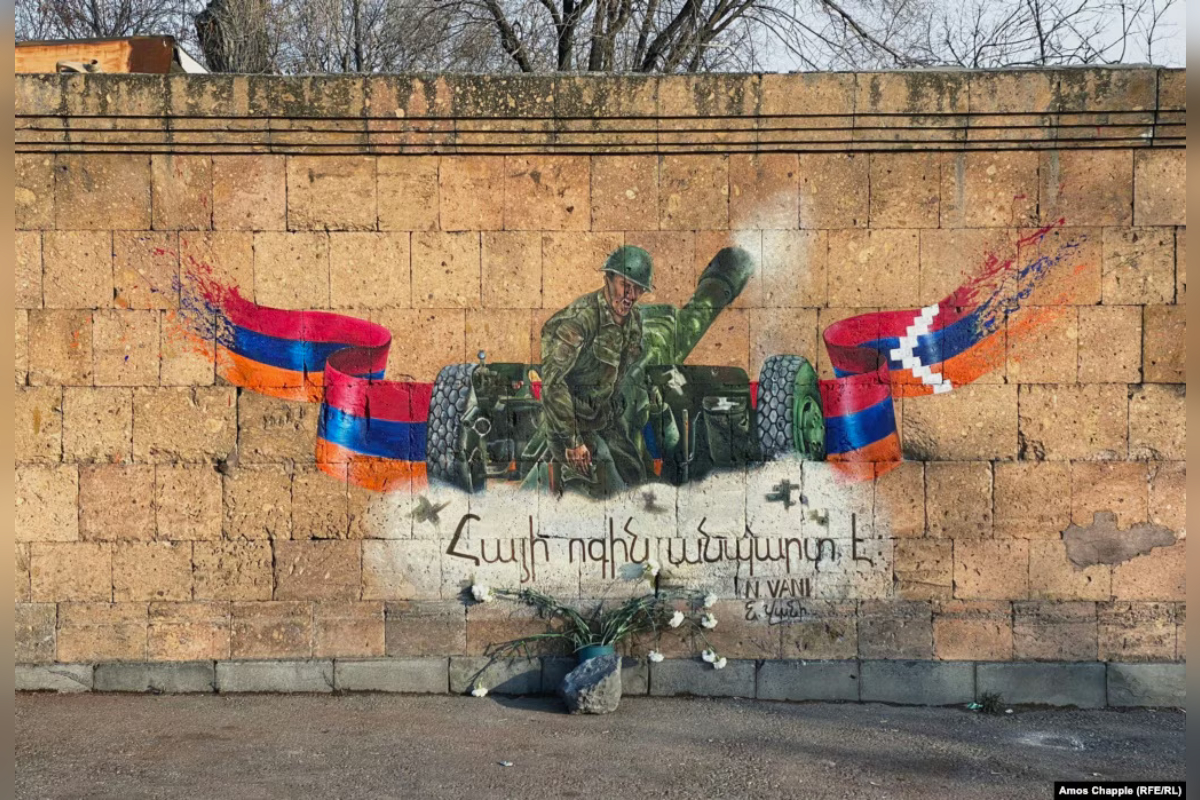



To all the die-hard Pashinyan supporters out there: Under no circumstances is the author calling for Pashinyan’s “execution” or “assassination”, just like they outrageously and shamelessly libelled Harut Sassounian with. The Ceaușescu dictator couples’ fate should be a warning sign to all dictators and wannabe dictators out there – including Pashinyan. And no, I am not calling for Pashinyan’s “execution” or “assassination”. I personally prefer that he is stripped of his Armenian citizenship, is expelled from Armenia and is send to permanent exile along with his wife Anna Hakobyan, to a country which is far from Armenia and where there is no Armenian Diaspora – and that they live on the average wage of an Armenian pensioner.
The article in question is not a sober analysis of Armenian politics—it is a manipulative, sensationalist hit piece, replete with psychological conjecture, historical false equivalencies, and a disturbing undercurrent of disdain for the democratic will of the Armenian people. Its central thesis—that Prime Minister Nikol Pashinyan is psychologically unfit for leadership—is not only irresponsible, it is deeply undemocratic.
1. “Psychological Decline” or Rational Leadership in an Existential Crisis?
The article opens with an armchair diagnosis, hinting at “paranoia” and “emotional detachment” without any credible evidence or firsthand accounts. But Pashinyan is not lashing out randomly—he is making difficult decisions in a period of unprecedented pressure.
Armenia is emerging from war, regional isolation, and generational trauma. It faces existential threats from Turkey and Azerbaijan, whose alliance has resulted in a violent ethnic cleansing in Nagorno-Karabakh (Artsakh)—a tragedy that international actors, including the article’s likely intended audience, have largely ignored.
Pashinyan’s efforts to normalize relations, secure peace, and refocus on Armenia’s long-term viability are not signs of collapse; they are acts of political realism. Is compromise difficult to stomach? Yes. But to equate compromise with psychological breakdown is both dishonest and dangerous.
2. The Church: Accountability Is Not Desecration.
The article falsely paints Pashinyan’s critique of the Armenian Apostolic Church as “calculated desecration.” But what the article calls “attacks” are, in truth, calls for reform and accountability within an institution that has long operated with unchecked privilege and political influence.
The Church is not above scrutiny in a democracy. Pashinyan’s criticisms are consistent with a government seeking to modernize Armenia’s civic institutions, reduce clerical overreach, and ensure the separation of church and state—a cornerstone of democratic governance.
Furthermore, Pashinyan is not alone in his views. Many Armenians, especially among the youth and diaspora, have expressed disillusionment with a Church hierarchy that has at times aligned itself with authoritarian and corrupt political figures from the past.
3. The Aliyev Meeting: Leadership, Not Capitulation.
The article ridicules Pashinyan’s demeanor following a meeting with Azerbaijani President Ilham Aliyev, as though leadership is measured in photo ops and facial expressions. This is a grotesque trivialization of diplomatic statecraft.
What the author neglects to mention is that Pashinyan is negotiating under conditions of military blackmail. Azerbaijan, emboldened by Turkish and Israeli arms and Russian indifference, has used force and coercion to impose its will.
And yet, despite these pressures, Pashinyan has not surrendered Armenia’s sovereignty. He has maintained Armenia’s international recognition of borders, pushed back against Azerbaijan’s more extreme demands (including the complete erasure of Armenian border presence in Syunik), and sought guarantees through EU and US mediation. These are signs of strategic pragmatism—not weakness.
4. Ceaușescu Comparisons: An Insult to Intelligence.
To liken Pashinyan to Nicolae Ceaușescu is a farcical and offensive comparison. Ceaușescu ruled as a totalitarian dictator, controlled all aspects of Romanian life, and murdered dissenters.
Pashinyan, by contrast, was democratically elected—twice—by overwhelming margins. The most recent election in 2021, held after the painful loss in Artsakh, gave him a renewed mandate. That is not the behavior of a delusional dictator; it is democracy in action.
He has not outlawed opposition parties. Armenia has free media, vigorous protests, and a parliamentary system that holds government to account. Arrests related to alleged coup plots or terrorism are being handled through due process, and in a region where genuine subversion and foreign-sponsored destabilization are real threats, such vigilance is not unusual.
5. Delusions of Infallibility? Or a Mandate to Reform.
The article accuses Pashinyan of “cognitive dissonance” and “delusions of infallibility.” In reality, he has publicly acknowledged failures, taken personal responsibility for the loss of Artsakh, and invited public scrutiny—even at enormous personal cost.
What he refuses to do, however, is surrender the reform mandate granted to him by the people. Under his leadership, Armenia has made major strides:
• Anti-corruption reforms have led to criminal investigations into oligarchs and former officials once thought untouchable.
• Civil society is freer and more active than ever.
• Education, tax policy, and infrastructure have seen renewed investment.
• Armenia has diversified its foreign policy beyond Moscow, engaging the EU, US, and India.
These are not the hallmarks of authoritarian collapse. They are the signs of a country struggling—bravely—to emerge from the shadows of history.
6. Emotional Blunting or Responsible Governance?
The accusation that Pashinyan has become “emotionally detached” is another classic smear. But effective leadership is not about emoting for cameras. It’s about taking responsibility in the face of tragedy and protecting a nation’s future, even when the path forward is unpopular.
Pashinyan understands the trauma of war—he lost political allies, credibility, and public support after 2020. And yet he stayed, faced the music, and rebuilt. That requires not delusion, but moral courage.
A Democratic Mandate Cannot Be Pathologized.
The article’s final suggestion—that the Armenian people should question Pashinyan’s “psychological and moral fitness”—is not an appeal to civic responsibility. It is a thinly veiled call for regime change, cloaked in academic pretension and emotional manipulation.
But Armenians do not need foreign analysts, disillusioned ex-politicians, or anonymous think-tankers to tell them who should lead. They have a voice. They have a vote. And they will decide.
Pashinyan may not be perfect. No leader is. But to brand him a liability to the state while ignoring the enormous pressures, geopolitical betrayals, and legacy of corruption he inherited is a gross injustice—not just to him, but to the Armenian people themselves.
Armenia does not need a saviour. It needs peace, justice, and continued reform—and that, whether critics like it or not, is exactly what Nikol Pashinyan has been trying to deliver.
Sadly some especially far from the scene in the USA, prefer to think and act like it’s 1994 still and ignorant of the reality. Indeed for many years all seemed well the frontline was tense but generally quiet ordinary lives were more concerned about banal everyday matters, but all the while Armenia position was becoming more precarious as Azerbaijan gained strength however as the front line was generally quiet and Armenia had no meaningful international pressure it was within its own bubble. The clashes of 2016 caused minor losses but not enough to be taken seriously although it led to some disquiet about the governing elite and the fact that many of Azerbaijan weapons were recent purchases from Russia did lead to Pashinyan taking office which prompted Russia to sanctimoniously call for Armenia to withdraw, not withstanding it’s own occupation of parts of Georgia and annexation of Crimea and support for separatists in the Donbass. The 2020 defeat could be claimed as a result of Russia standing back out of disaffection although it’s subsequent invasion of Ukraine and it’s stalling conflict there has challenged this initially popular conjecture.
Ara Nazarian’s PhD article, amply countered by Hagop, did not come as a surprise to me. Democratic majority can be viewed tyrannical. Such cries are heard even at home, in the U.S., the oldest democratic form of government in the world. It is expected to be heard coming from the U.S. about relatively nascent free, independent, democratic Republic of Armenia.
Yes, it was uncalled for Harut Sassounian to liken the PM of Armenia to the interior Turkish minister Talaat, whom Armenians assassinated. It was also uncalled for anti-Pashinyan faction to stage a mock execution of Ceausescu and his wife on Paghramyan Avenue in Yerevan.
Why would an Armenian want wish to send to permanent exile the PM with his wife Anna Hakobyan “to a country which is far from Armenia and where there is no Armenian Diaspora”? Steve M’s wish simply puzzles me.
All the citizens of Armenia have to do is to consent by electing those who they want to run their country. They have a 10-month window to get organized for June 2026 election.
Incidentally, such bombastic articles serve to stir the emotions of the Diaspora non-voting public or readers to the detriment of Diaspora. I do not think there is any significant readership in Armenia of Diaspora press, let alone in English. In Armenia the voters have to contend with the anti-Pashinyan directives of the Russian government officials when for all practical purposes Russian is the second language in Armenia where too, politics is very much local.
Dr Nazarian you are really out of your lane peppering your whole article with psychological conjecture and pathologizing.
Evidently you don’t have any credentials to do so, and even if you did, you should think twice before diagnosing psychological issues in politicians or public figures.
For those interested here’s a sum up of the Goldwater rule.
The **Goldwater Rule** is a principle in psychiatry that prohibits mental health professionals from diagnosing public figures (such as politicians or celebrities) without personally examining them and obtaining their consent. It is named after former U.S. Senator and 1964 presidential candidate **Barry Goldwater**.
### **Origins:**
– In 1964, **Fact** magazine published a survey of psychiatrists asking whether Goldwater was psychologically fit to be president. Many psychiatrists gave negative assessments without ever examining him.
– Goldwater sued for libel and won, leading to ethical reforms in the psychiatric profession.
– In 1973, the **American Psychiatric Association (APA)** formally adopted the Goldwater Rule as part of its **Ethics Guidelines**.
### **Key Principles:**
1. **No Diagnosis Without Examination:** Psychiatrists should not offer professional opinions on individuals they have not personally evaluated.
2. **Avoids Harmful Speculation:** Public speculation about a person’s mental health can be misleading and damaging.
3. **Protects Professional Integrity:** Prevents misuse of psychiatric authority for political or media purposes.
### **Modern Relevance:**
– The rule has been debated, especially during high-profile political events (e.g., discussions about Donald Trump’s or Joe Biden’s mental fitness).
– Some argue it stifles important public discourse, while others believe it maintains ethical standards.
### **APA’s Stance (Ethics Code, Section 7.3):**
> “On occasion, psychiatrists are asked for an opinion about an individual who is in the light of public attention… In such circumstances, a psychiatrist may share with the public his or her expertise about psychiatric issues in general. However, it is unethical for a psychiatrist to offer a professional opinion unless he or she has conducted an examination and has been granted proper authorization for such a statement.”
Would you like more details on any specific aspect?