


Youth Opinion

The stepping stones my Nana laid

Having spent my childhood summers in Michigan, I was surrounded by the music, scents and cultural values uplifted by my Armenian grandparents. Each summer, without fail, my five-year-old self eagerly awaited the lahmajun I had crowned as my favorite meal. As I bit into the crunchy edges, my vantage point at the dinner table offered a view of an oil painting of my Armenian great-grandparents. Frankly, at the time, I was unconcerned by the painting looming above me and my prized lahmajun. Little did I know that this scene was unequivocally symbolic—that my ancestors would always watch over me, guiding me as I reclaimed my identity. 

My Armenian grandmother, whom I affectionately called Nana, spoke Armenian, yet never taught me the language. She exposed me to it only a handful of times—once, when she counted to 10 with my cousin who attended Armenian school. Hearing the language elicited great pride and opened a door to understanding the many facets of Nana’s identity. 

While I lacked knowledge of the Armenian language, the many stepping stones of growing up with Nana continually pieced together my Armenian identity. Many of these were not distinctly Armenian, yet their meaning was still immense. Nana always drank chai with her breakfast, embodying the Armenian value of savoring each moment and meal. She sang and danced to Armenian songs, showing how art serves as a vessel for Armenian culture. Nana also aided me tremendously in picking items for summertime garage sales, selecting old clothing, scarves and knick-knacks she stashed in her basement. Her unwavering chic style epitomized Armenian fashion—something my mom inherited directly from her.

As my life progressed, these values derived from my beloved Nana were built upon. I learned more about specific elements of her Armenian identity that have, in turn, bolstered my own. Not long ago, I watched a clip of my parents’ wedding reception on my laptop screen, transported to a cultural world I had never visited. I smiled as Nana stepped onto the dance floor with her cousin and my mom, dancing energetically to Lusnyak Lusnyak by Artash Asatryan. Nana’s vivacity was palpable, prompting my mom to match her energy by dancing along. The clip went on, packed with more Armenian laughter, dancing and, of course, Karoun Karoun.

Music became my gateway to Armenian culture. From there, I delved into the complexities of Armenian history, particularly the 1915 Armenian, Assyrian and Greek Genocide. I scoured first-person accounts and research that detailed this somber chapter in Armenian history. This sobering reality starkly contrasted with the upbeat Armenian music Nana loved. Learning about the genocide yet again transformed my perception of Nana; though she danced mightily, she still bore the burden of her ancestors’ suffering. No understanding of identity is complete without acknowledging its complexity, and for Armenians, this complexity has molded our reality. 

It was only through leaping from stepping stone to stepping stone with renewed curiosity that I deepened my understanding of Armenian identity.

Peeling back the layers Nana proudly possessed—beyond cuisine and dancing—grounded me in my own inherently complex identity. I knew that my parents were born in Iraq, yet my younger self struggled to reconcile that with being half Armenian. Only through learning about the genocide did I learn about the widespread migration that followed. 

While my maternal ancestors’ migration patterns are murky, Nana’s parents ended up in Mosul, Iraq, which was Nana’s birthplace. Although Iraqi by birth, Nana was ethnically Armenian, connecting me to the diaspora I belong to. I realized that Nana was more than I first imagined: a perpetual chai lover, a devoted dancer to Armenian music, a descendant of genocide survivors, and both Iraqi and Armenian. 

Nana truly was more than I ever could have pieced together at first glance. She is how and why I know what being Armenian means at all—even if I am only half. Through her, this culture pulses through my veins.

To this day, I still leap from stepping stone to stepping stone in my journey of Armenian identity. The path ahead is undefined, with infinite layers to uncover in the years, decades and centuries to come.

Sarah Behjet

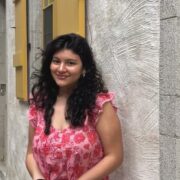
Sarah Behjet is a high school student from Connecticut. Her work has been featured in The Connecticut Mirror, CT Insider, Yale Daily News, Journal of Student Research and others.

Leave a Reply

Your email address will not be published. Required fields are marked *


Back to top button