



From Gesaria to Javakhk: A family connection rediscovered
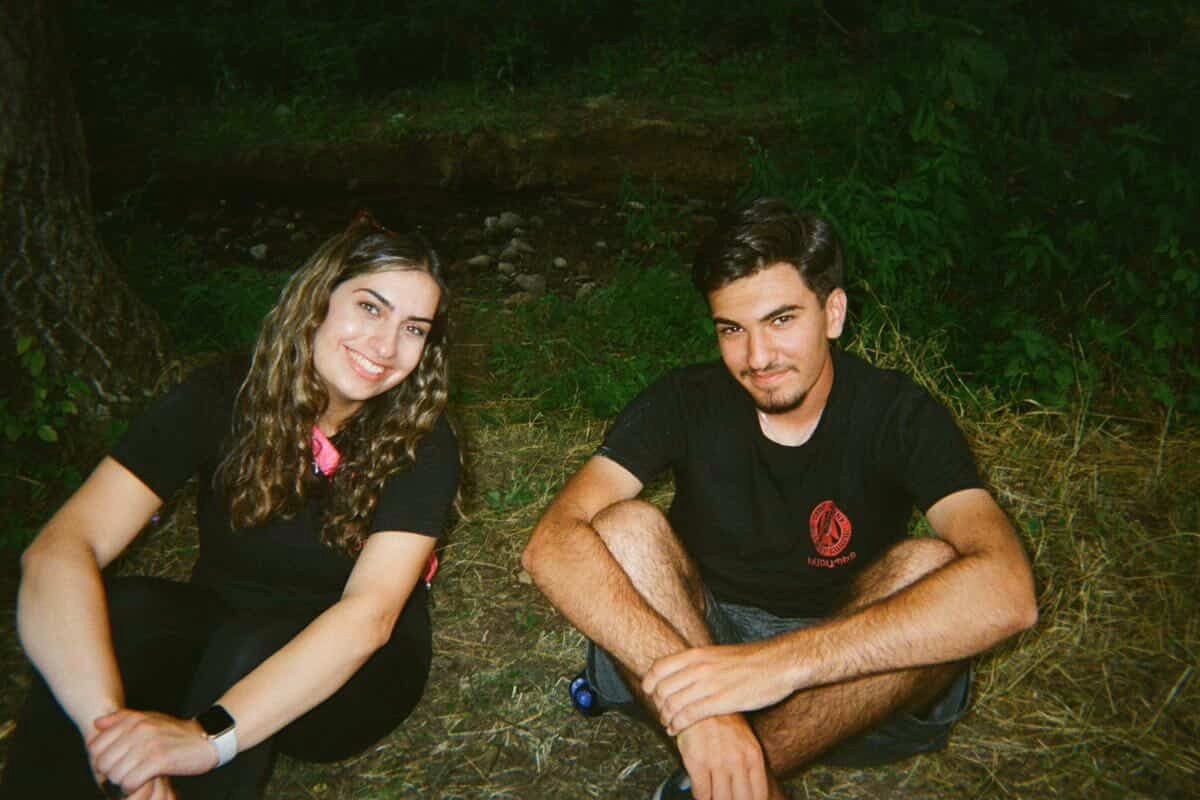
What began as a summer of service became an unexpected discovery that reconnected two branches of the same family, scattered since the Armenian Genocide. I never imagined that volunteering in Javakhk would lead me to uncover a hidden family connection spanning continents and generations.
This summer, I had the incredible opportunity to participate in the Armenian Relief Society’s Camp Javakhk program, a day camp for Armenian youth of the southern region of Georgia, Samtskhe-Javakheti, which borders northern Armenia. The region of Javakhk lies within Armenia’s historic borders and is home to a predominantly Armenian population. I had been a summer camp counselor for multiple years at home and was so excited to bring that experience to Javakhk and volunteer with Armenian children. What already felt like a meaningful summer experience became far more meaningful than I could have ever imagined.
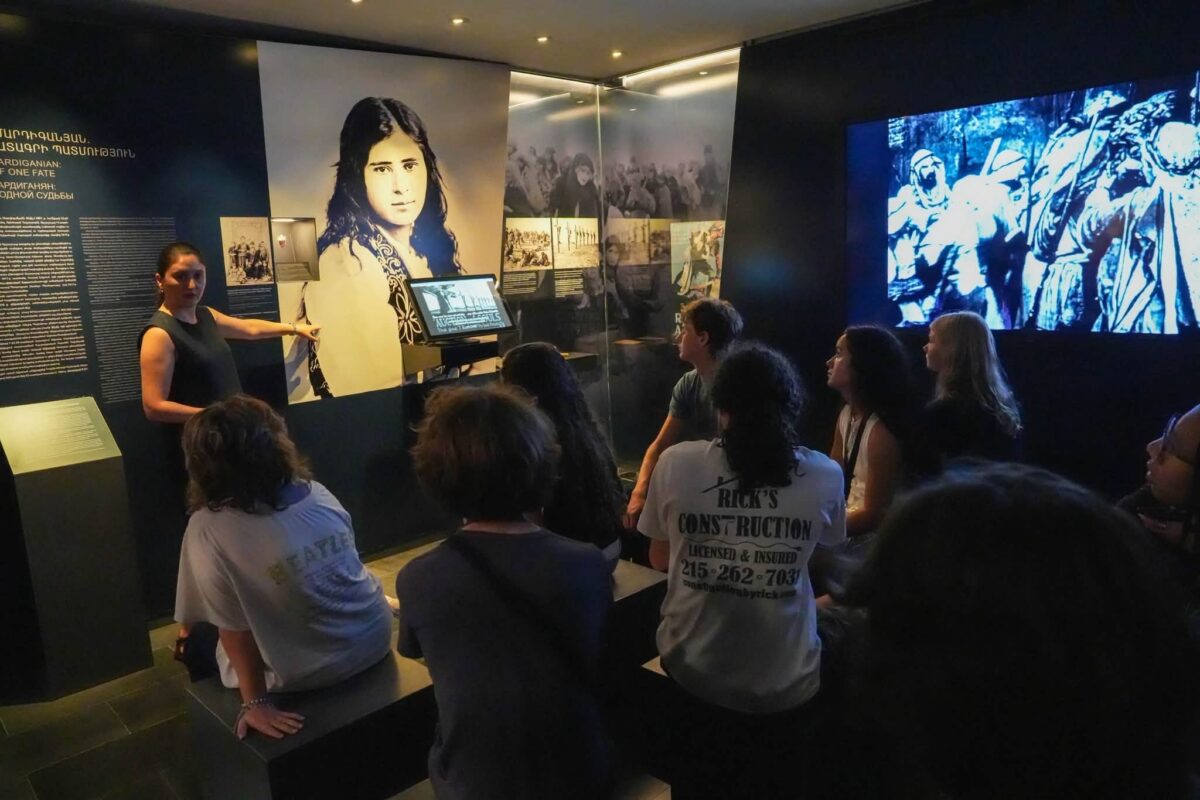
While volunteering in the village of Akhaltskhe, I worked alongside diaspora Armenian counselors from across the United States, France and Brazil. Despite our different nationalities, we shared the same love and passion for our Armenian identity, culture and the children of Akhaltskhe.
Among my fellow counselors was Tro Armen Kalaydjian, an Armenian from Brazil whose patriotism and energy were infectious. Whether dancing yarkhushta or singing heghapoghagan songs, Tro’s pride in his heritage radiated from him. I had never met an Armenian from Brazil before, and his passion for his Armenian identity was truly inspiring. We quickly became friends, and he became a central part of my Camp Javakhk experience.
Little did I know that our connection would uncover unexpected family ties.
Months later, back in Massachusetts, I happened to open Facebook and noticed a suggested friend: Vartine Bohjalian Kalaydjian. The name caught my eye immediately. My last name has countless transliterations — Bokchalian, Bohdjelian, Bohjalian, Bogdjalian — shaped by the different countries and immigration officers my relatives passed through, areminder of their story of displacement and migration following the Armenian Genocide. But despite these variations, it’s not a very common Armenian last name. All the Bohjalians I have met are my family or extended family. My family had never mentioned any connection to other Bohjalians in Brazil. Still, when I saw that Vartine and I shared two mutual friends — Tro and one of my dad’s cousins — I was curious and had to find out who she was.
I sent Tro a message asking if Vartine was his mother. He confirmed she was and mentioned that her father had immigrated to Brazil from Egypt. He asked if my family had any roots there. I told him my father’s side was from Lebanon, so at first, I dismissed the idea of a connection. Then, Tro and his mother responded with another message, casually adding that their family originally came from Gesaria, present-day Kayseri, Turkey.
That one word, Gesaria, had me excited!
My father’s family also hails from Gesaria. So I immediately called my dad, who called my aunt, who called their relatives, and within hours, a web of family connections began to unfold between our households, spanning continents and generations. I learned that some of my dad’s extended family also lived in Egypt, and they knew Tro’s family.
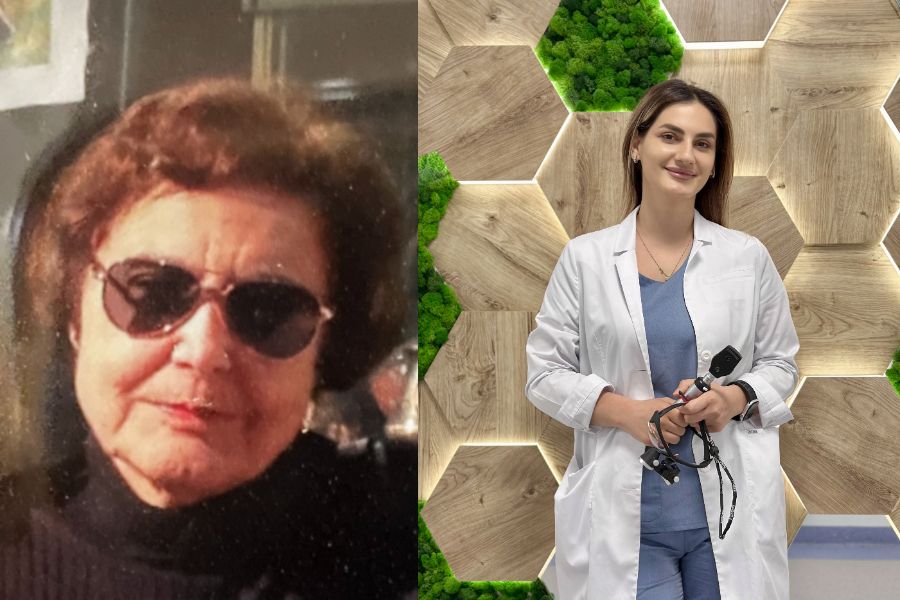
What followed was a flurry of messages, photos and memories exchanged between Tro’s family and mine. We compared old photographs and began to see unmistakable similarities: shared names like Hagop and Vartoui, familiar faces with the same smiles, and the same eyes.
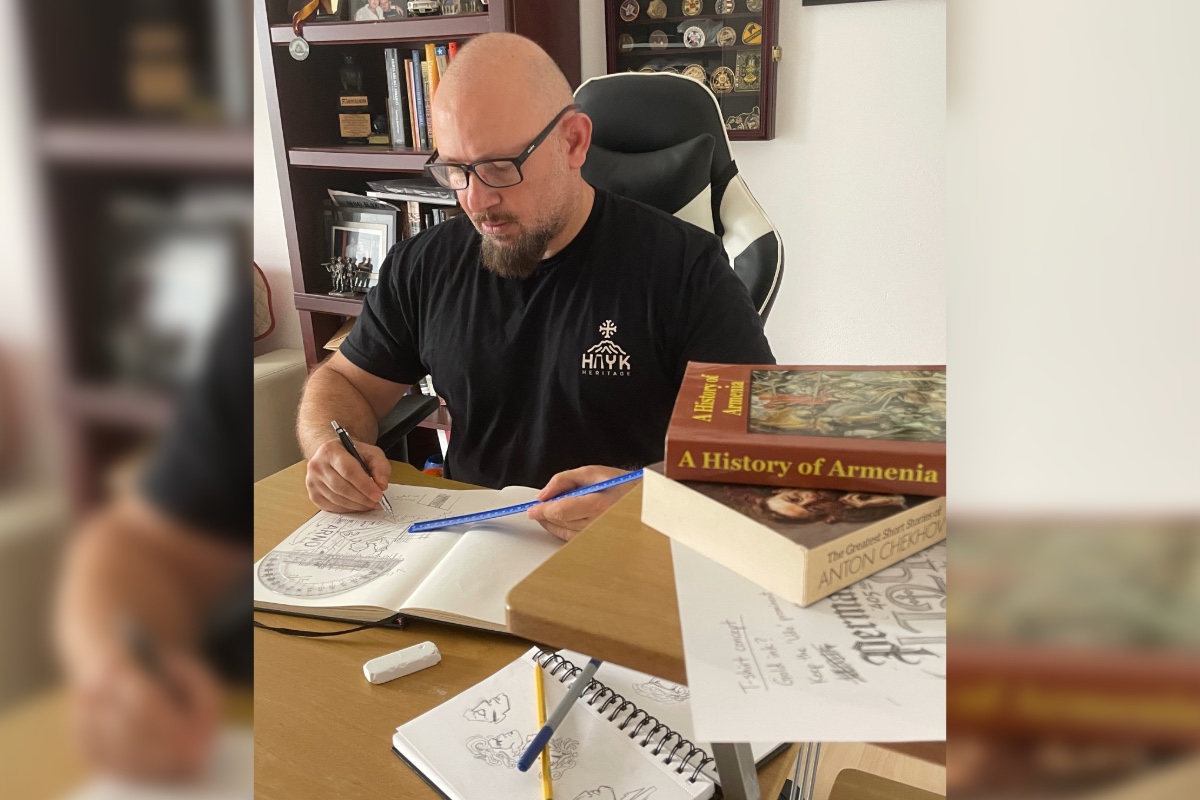
Even our family traditions mirrored one another. My grandfather Hagop was known for making basturma, the air-dried cured meat whose origins are in Gesaria. It was a tradition he and his brother Bedros learned from their Gesaratsi father, Hovsep, and carried with them from Lebanon to the United States. As it turned out, Tro’s grandfather, Dikran, also practiced the same craft. The realization that our grandfathers, thousands of miles apart, both carried on this ancestral art felt almost poetic, an inheritance passed down from the same city, the same streets and perhaps even the same basturma workshop generations ago.
Both of our great-grandfathers had been orphans of the Armenian Genocide, never seeing Gesaria again. Children torn from the same homeland, their families scattered by tragedy, yet generations later, their great-grandchildren from two different continents had somehow met each other in Akhaltskhe, both involved in their diasporan Armenian communities and united by the same sense of pride in their Armenian identity.
What are the odds? How could two descendants of the same family, separated by the darkest chapter of our history, find one another more than a century later while volunteering in Javakhk?
It was as if, through Camp Javakhk, our ancestors had guided us back to each other.
That discovery changed the way I saw everything about my family, my community and my Armenian identity. It gave me a renewed appreciation for that identity.
It reminded me that the Armenian experience is not only about survival, but about preserving our culture and the stories of our ancestors. It is about realizing that our identity is stronger than anything that has tried to erase us.
From dancing pampouri at Armenian events in the United States to dancing it with our campers in Javakhk, I felt how powerfully our culture and traditions bind us across borders. It is so important to learn to speak Armenian, sing Armenian songs, dance Armenian dances and pass them down to younger generations because, ultimately, the future of our people rests in the hands of our youth.
This is why programs like Camp Javakhk are critical for both the children of Javakhk and the diaspora volunteers who spend their summers there. They show us how connection to our Armenian identity binds us together, no matter where we are from. For the campers, it’s exciting to meet counselors from a completely different part of the world who practice Armenian traditions and take pride in them. For counselors like me, it is an experience to learn from the children of Javakhk who, amid Georgian society, still maintain Armenian traditions and identity.
Holding on to and being passionate about the Armenian identity is important wherever Armenians may be. Whether in Georgia, the United States or Brazil, remaining proud of our Armenian roots is pivotal.
From Gesaria to Javakhk, our families’ journey stands as a testament to the endurance of the Armenian spirit and the unseen ties that bind us all.
What a great story! Congratulations on finding “long lost” family members!