


Survival after displacement at Hadrut Children’s Art Center
In 2021, I went to interview Dr. Hayk Hovhannisyan, who traveled from Yerevan to help his colleagues in Nagorno-Karabakh during the 2020 war between Armenia and Azerbaijan. When I arrived at his house, I noticed a small clay donkey on the TV table and asked where it came from. He said that when they had to leave Hadrut, he entered the children’s art center, found the donkey and brought it to Yerevan as a memory, a symbol of freedom. Afterward, I started calling my friends from Artsakh to find the child who had made the donkey. That is how I met Ira Tamrazyan, director of the Hadrut Children’s Art Center, whose student had made it. When she told me she had reopened the center in Yerevan, I decided to visit. I entered with no expectations, like an ordinary girl from Yerevan who did not have much hope of seeing a real art center from a small city like Hadrut. The first time I entered the center was a wake-up call.
The Hadrut Children’s Art Center was established in 2004 in Hadrut, Nagorno-Karabakh, but Ira Tamrazyan became its director in 2011 after years of working in government. Tamrazyan is an artist, but she has also done extensive administrative work. She has been displaced from her homeland, Artsakh, twice — first in 2020, when Hadrut was occupied by Azerbaijani forces and she had to leave the city and live in Stepanakert, the capital, and again in 2023, when Artsakh, after nearly a year of blockade, was occupied by Azerbaijan and more than 120,000 people, including Tamrazyan, had to leave their ancestral land.
In 2020, more than 400 children were studying across 25 fields in all the children’s art centers of Hadrut, including those in surrounding villages. “Many people compared us to Hadrut’s secondary school, where 500 children were studying. It was that huge, a center with so many things to offer,” Tamrazyan said.
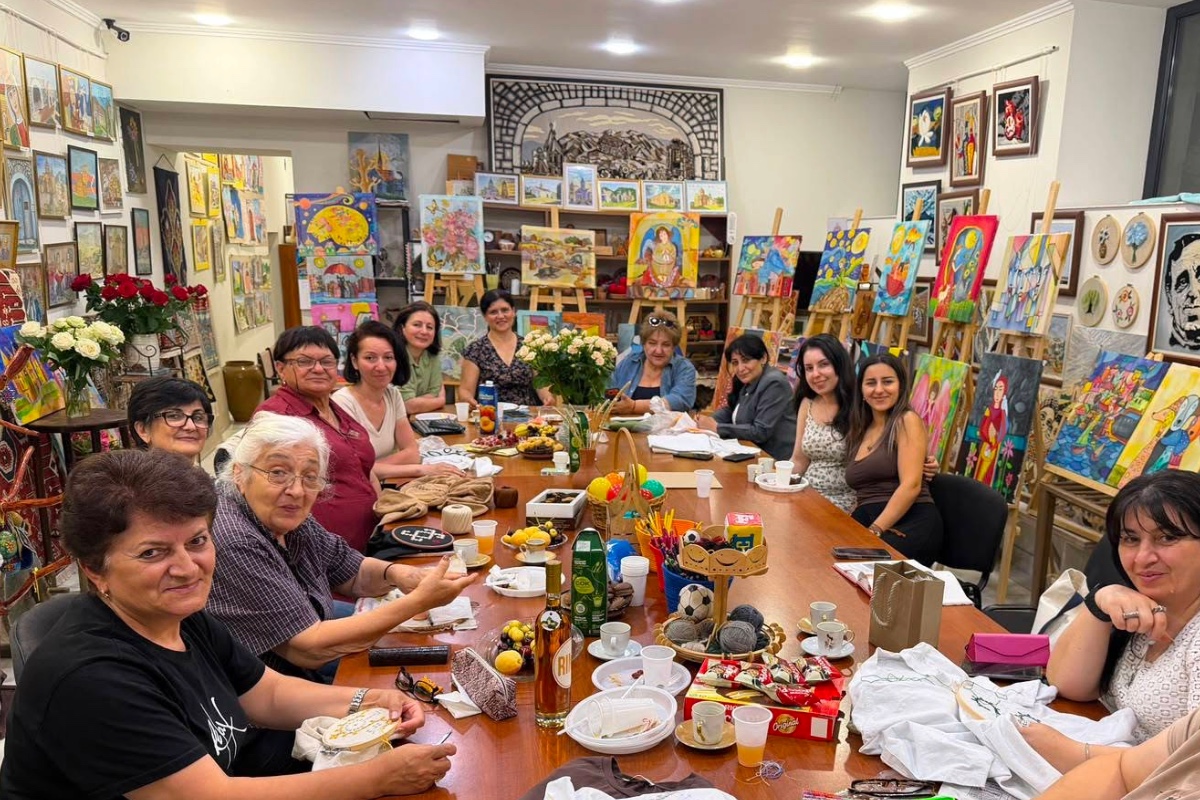
What I found most shocking was that after the displacement, all the members of the Hadrut Children’s Art Center work in Yerevan for free. They do not receive a salary or any commission for educating children, whose numbers have now grown. Children displaced from Artsakh, alongside local children, study here for free, and it is hard to imagine how difficult it must be for the center to survive. Sometimes donors or kind people help, but all the money goes toward the center’s monthly rent and the equipment the children and mothers need.
“Our staff members, who are a real family, work other jobs to support their families. What amazes me is that no one receives even one dram for this work, but when they get a salary from their other job, they buy tools or materials for the children to work with. It is a generous gesture. Each of us does it because this is not a regular job for us. We know these talented children will be left with nothing otherwise,” Tamrazyan told the Armenian Weekly.
Tamrazyan lives at the center but dreams of one day having a large art complex in one of the villages near Yerevan. In Hadrut, she used to keep hens, and when asked what she misses most, she said: “The process of keeping hens. I had 50 hens in Hadrut, and when the bombardment started in 2020, the first thing I did was run to my house to feed them. I enjoy that process. It gives me energy.”
Tamrazyan remembers that when the attacks started, she went back to Hadrut from Yerevan after staying in Armenia for a few days. Everything happened so fast that she did not manage to take anything from her house except the same bag she had brought to Yerevan — even her passport and other important documents were left behind. Tamrazyan is a strong woman with a passion for art and children. She was reluctant to accept that everything was over and instead asked for a place in Stepanakert where she could keep working with the children. But the staff members who were in Yerevan and could not return to Artsakh asked her to open an NGO in Yerevan instead. By 2023, when she was displaced a second time, the Hadrut Children’s Art Center was already established there.
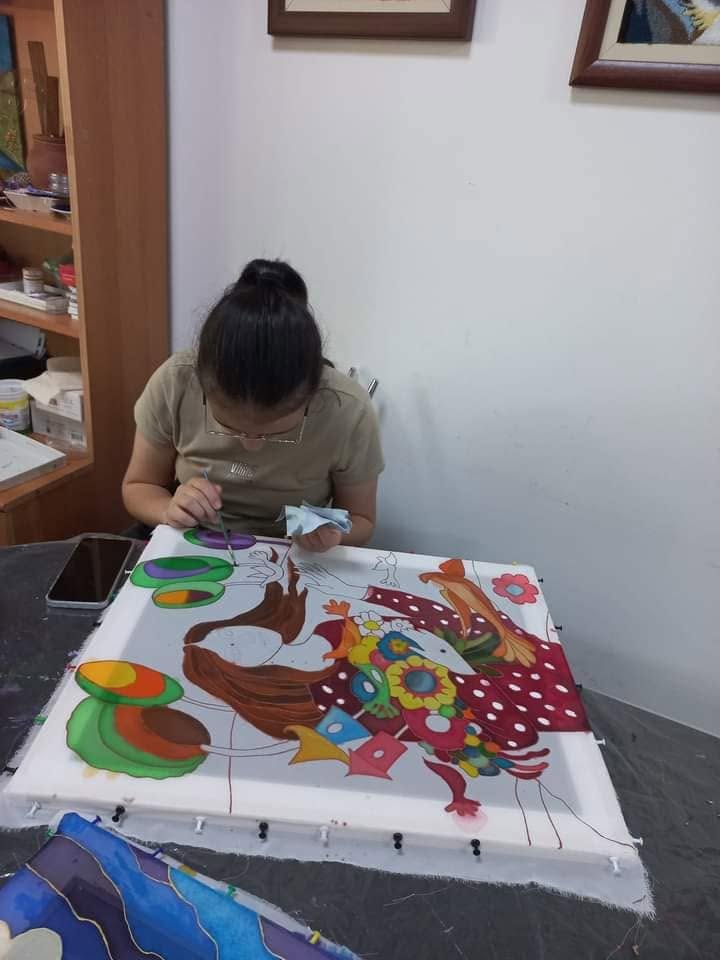
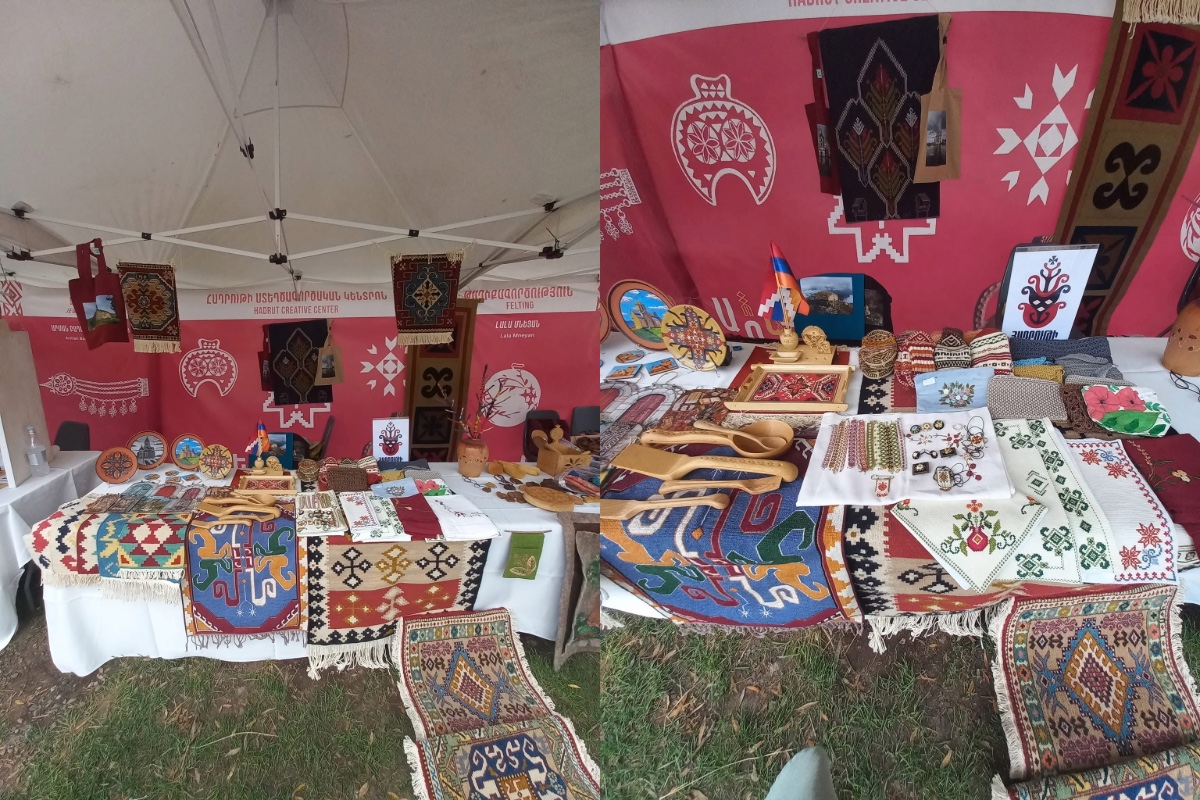
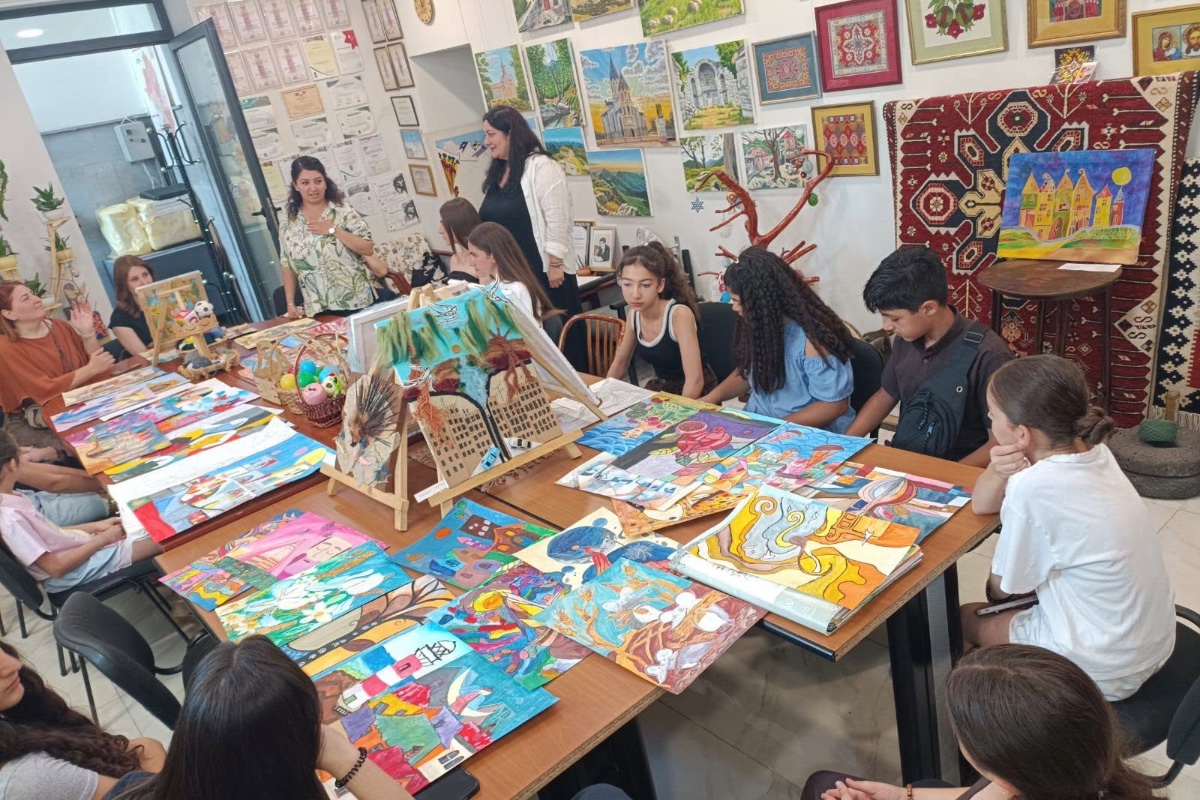
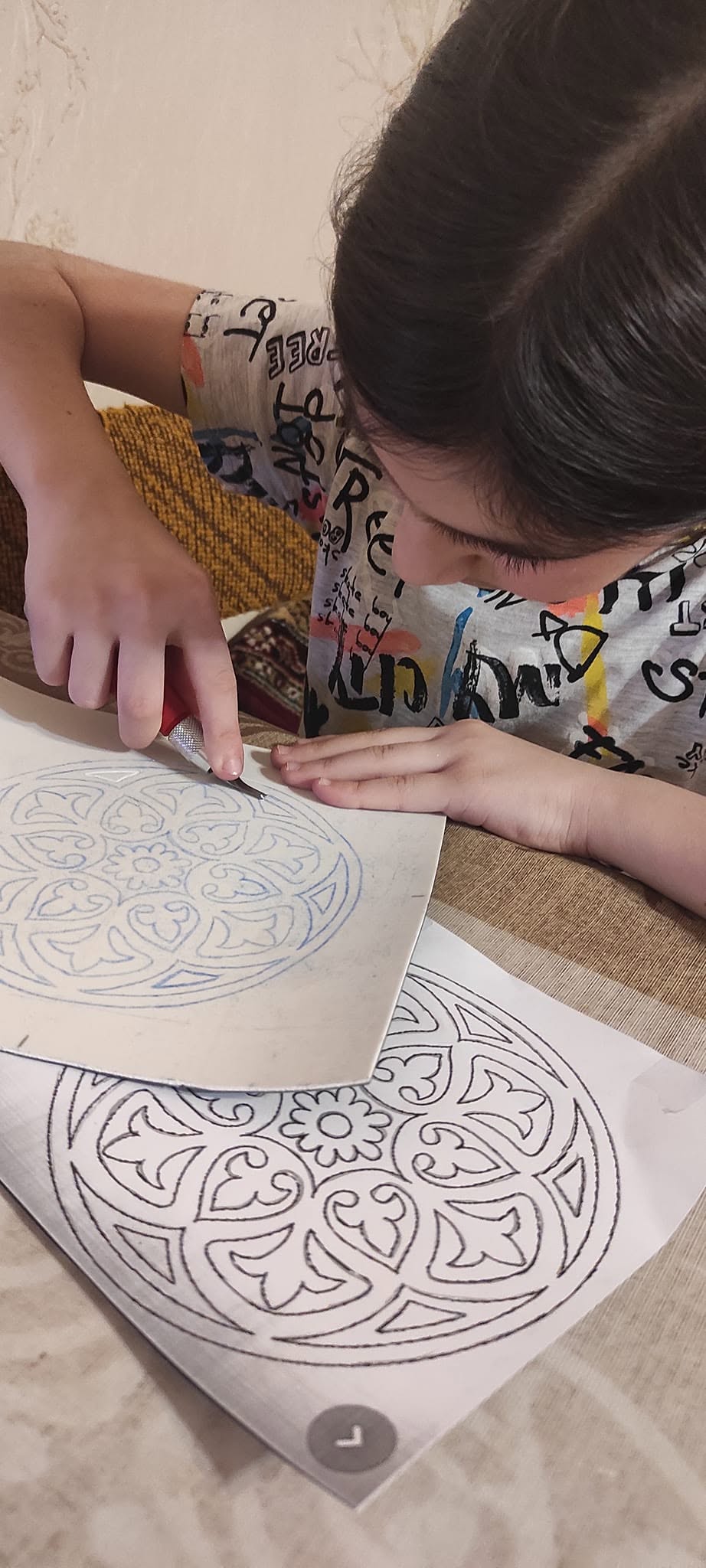
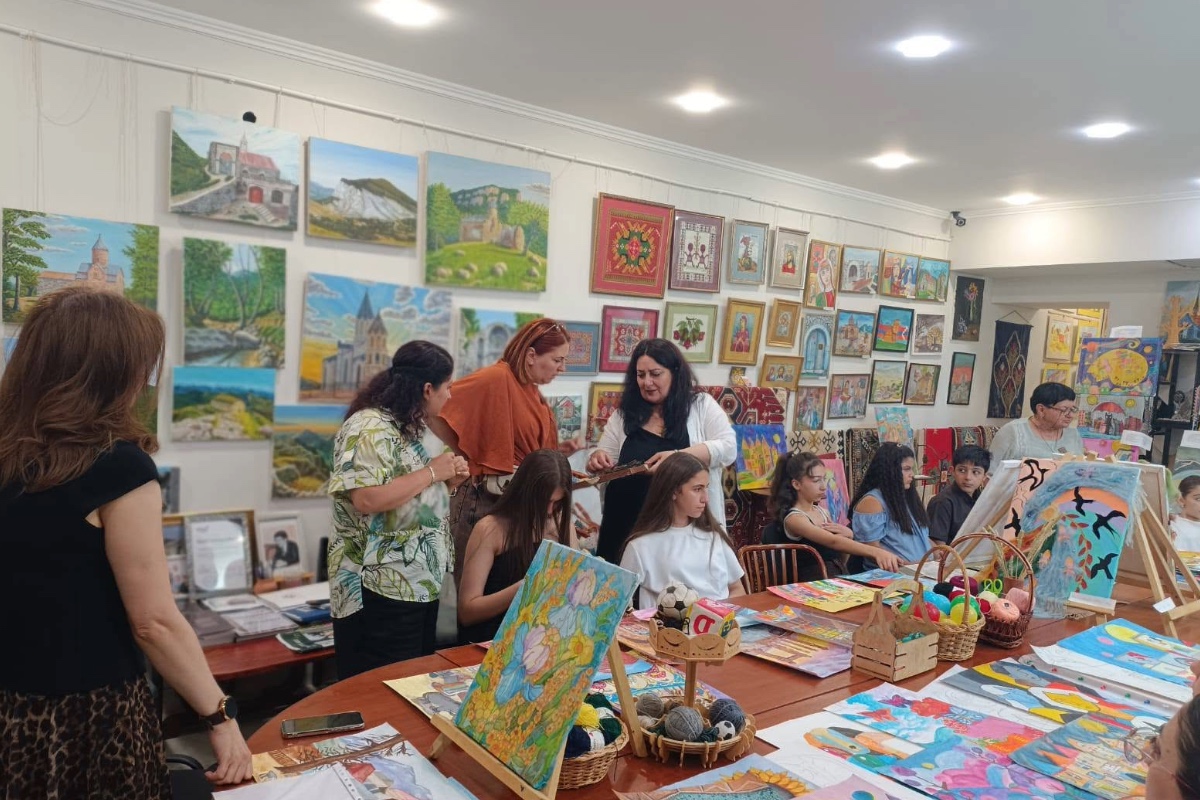
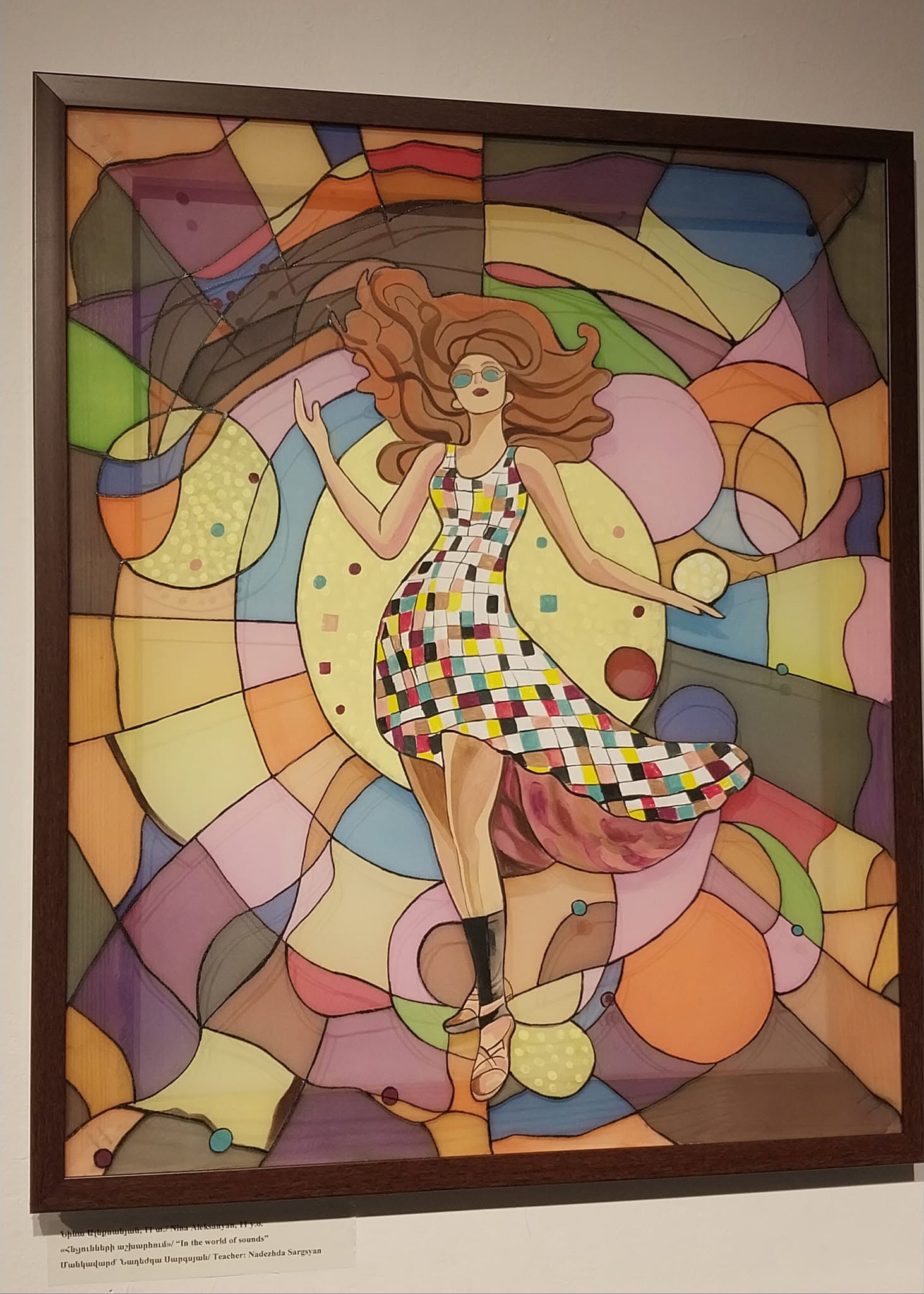
Drawing, sewing, clay making, handmade batik, traditional Armenian sock knitting, carpet making, gobelin weaving and programming — this is not even the full list of the center’s educational activities. Programming classes are limited to 15 children because the center has only 15 laptops. At first, younger children, ages 7 to 10, used to attend. Now, mostly teenagers over 16 come every Saturday to create. The initiative is run in collaboration with the American University of Armenia, which supports the program. The handmade batik works hanging on the wall had just come to the center from an exhibition in Armenia.
“Just look at all these paintings,” Tamrazyan said, pointing to the colorful, meticulous work on the wall. “Around 15 people attend the batik class.” “On certain days, if all the classes are running, there can be around 35 children in this small space at the same time.” Tamrazyan meets families from Artsakh every day, and her own experience of displacement helps her understand what they are going through. The team at the art center has been thinking about how to help women, in particular, find work. They knew that any single commission would solve only a temporary problem. “We were looking for something that would bring them income, so we organized two two-month sewing courses. Twenty women completed them,” Tamrazyan recalled. “Whenever sponsors ask me what they can do, I tell them: Give us sewing machines, and we will teach the women to sew.”
Tamrazyan hopes to rent a space in Masis, about 25 minutes from Yerevan. She dreams of establishing a proper carpet studio. Right now, she is trying to figure out where the staff members will eventually settle. The Armenian government runs a program to support families forcibly displaced from Nagorno-Karabakh in buying homes. Once Tamrazyan knows where everyone will end up living, it will be easier to decide where to open the carpet studio. “People’s circumstances keep changing, so one person ends up here, another there,” Tamrazyan said.
The center’s staff members even work from home. Those who live far from Yerevan carry out the center’s educational programs in their own houses, providing art education to more than 300 children in total. Tamrazyan said they have exceptionally talented children who are invited to exhibitions. They accept the invitations that do not require a fee, though the children’s potential is so strong that they simply need someone to give them a hand. Every Sept. 1, the center welcomes new children. Tamrazyan does not know how they will manage because so many children want to attend the classes. But her positivity is something that amazes me.
“God will help,” she said.
I left the colorful, vibrant and hospitable center with warm and, at the same time, unsettled feelings. Armenia is a country of contrasts: In one corner, you meet people who demand a lot of money for doing something small; in another, you meet people who do enormous things with nothing at all.