

An acquired American: The contributions and patriotism of Moses Hadji Gulesian
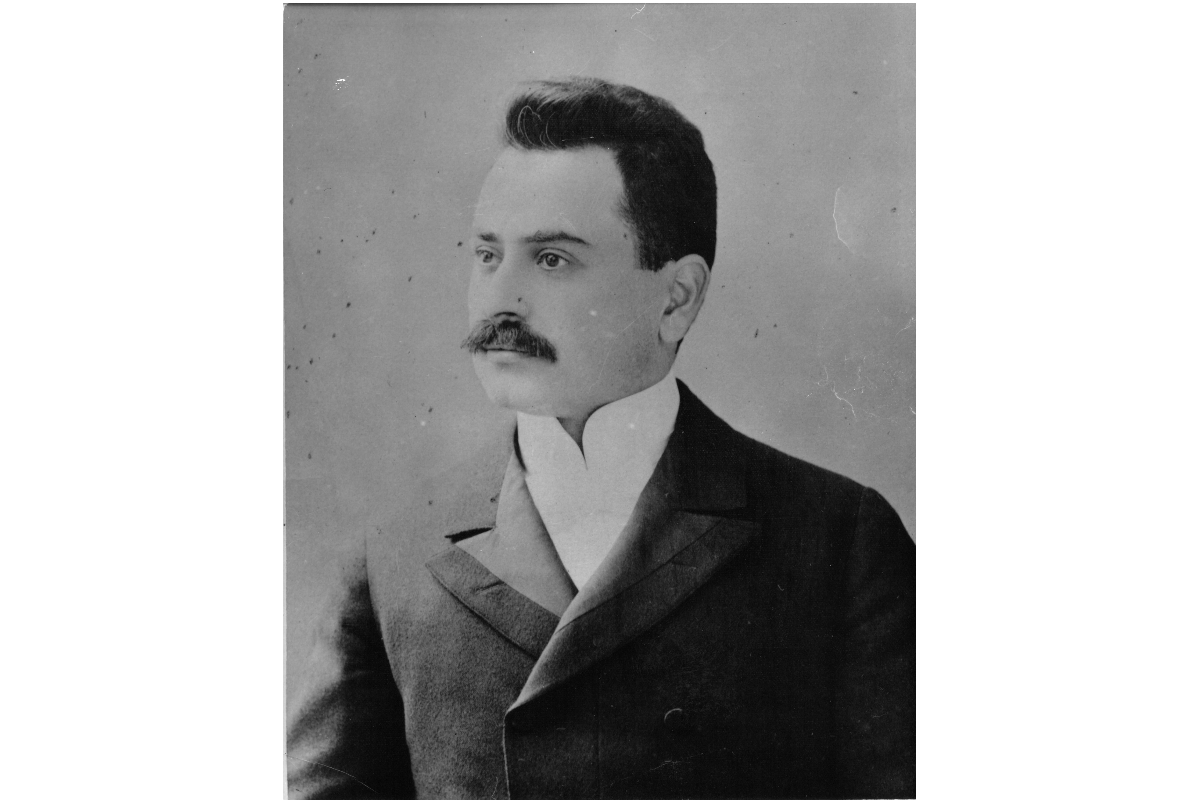
How can an Armenian immigrant from Marash, arriving in the United States virtually penniless and without connections, become a Son of the American Revolution? Moses Hadji Gulesian (1863-1951) did just that, not only achieving that so-called American Dream, but surpassing it to become a successful businessman, patriot and developer who helped shape the face of Boston. A man who “ooze[d] confidence and prosperity,” his compelling story is one of immense hardship, devoted philanthropy and patriotism, and human compassion.
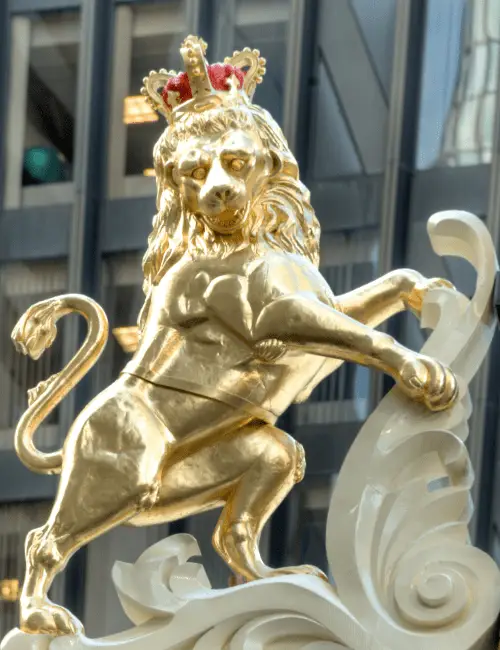
When I was tasked with finding an Armenian American story to commemorate America250, my first thought was of Moses Gulesian, the Armenian who created the copper lion and unicorn statues on Boston’s Old State House. At the time, this was all I knew about him. As a relatively new resident of Massachusetts myself, and a non-Armenian at that, I did not yet realize that Moses Gulesian’s story reflected a deeper commitment to the preservation of history and a profound sense of humanity that encapsulates the American immigrant narrative.
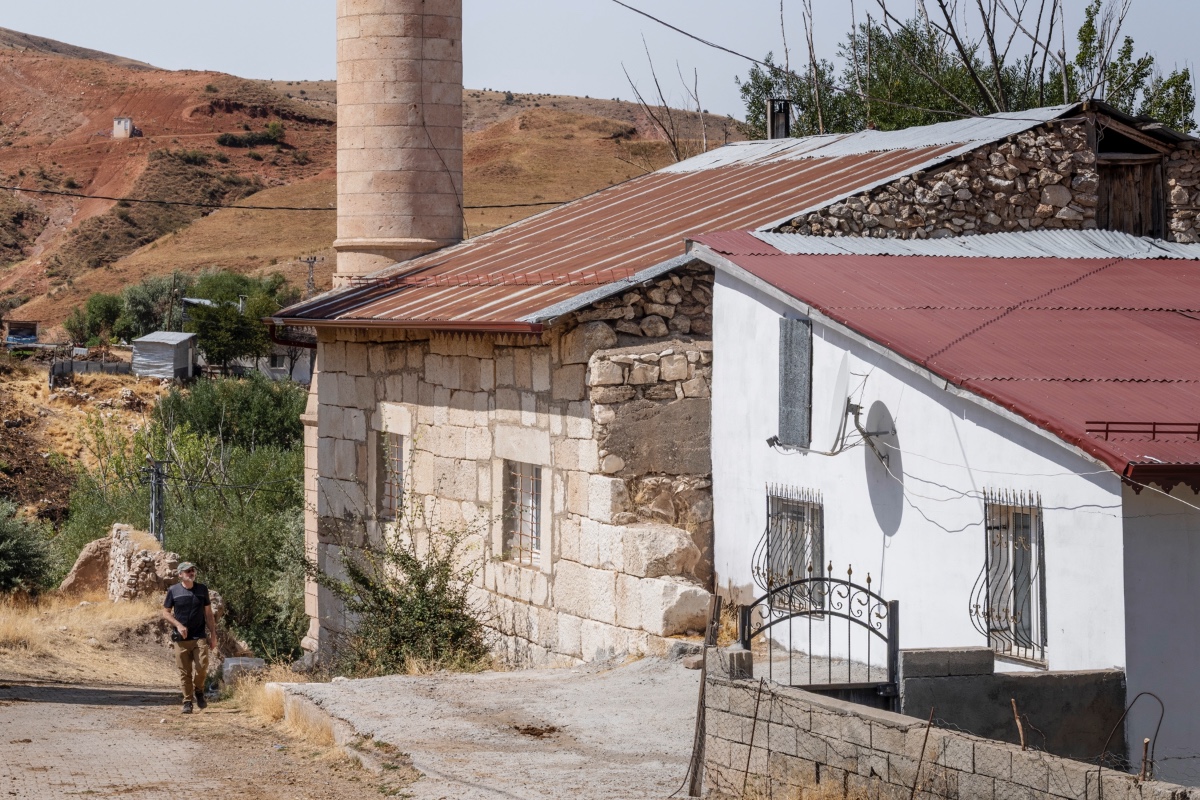
His story is compelling from start to finish. Coming from a family of coppersmiths in Ottoman-ruled Marash and having made the pilgrimage to the Holy Land as a teenager — earning him the title “Hadji” — Moses had both the means and the desire to seek a more meaningful life that led him west. While on a business-related trip, he impulsively left his travel companions behind in Alexandretta with the sole idea of reaching America. Finding sporadic work, food and shelter in Smyrna while he awaited passage on any ship heading westward, Moses took enormous personal risks to fulfill his dream. His family strongly disagreed with his plans, going so far as to contact the only person they knew in Smyrna to take Moses’ money to prevent his departure. Still, Moses did not give up. He ultimately secured passage on a Sicilian ship out of the port of Smyrna, never to return.
Moses arrived in the United States in 1883, notably earlier than the waves of other Armenians to come, which proved to be very advantageous. In the ensuing decade, the Hamidian massacres of the 1890s would devastate the Armenians in his homeland, causing the first large exodus of Armenian refugees to relocate to the United States. Moses was not only able to reach the shores of America — a feat in itself, particularly as an oppressed person in his own country — but also learned English fluently and worked his way up from weaver to thriving businessman and philanthropist. He amassed a considerable fortune through his copper business and subsequent entrepreneurial ventures, substantial property and social standing in Boston society, enabling him to not only shelter and support hundreds of Armenian refugees in the face of devastation (including his family), but also to contribute to the artistic and historical life of the United States.
Moses Gulesian knew the value of acknowledging his adopted nation’s rich history, all the more since he was denied that right in his own homeland. His many ventures, from serving as the contractor commissioned to replicate the prominent historical statues on Boston’s Old State House, to writing his own plays, building his own theatre, and leading a campaign to save and preserve the Revolution-era warship “Old Ironsides” (the USS Constitution), Moses left a lasting imprint on American history. Harvard professor Albert Bushnell Hart described him as follows:
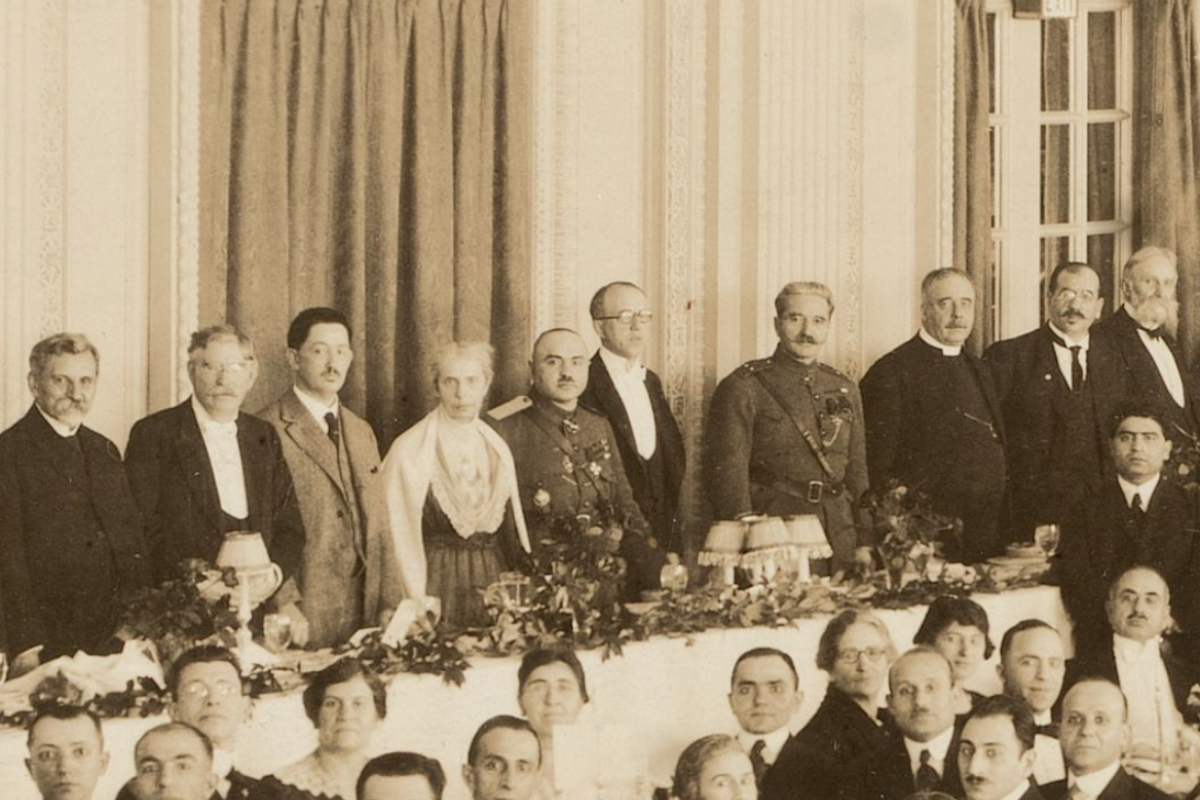
“Gulesian’s career was not all bank deposits, and hauling up the flag of Old Ironsides. It has been the good fortune, and the deserved reward of this “acquired American” to participate in patriotic groups, causes and triumphs, thus showing that not all Americans in spirit were born on American soil.”
Although now regarded as a more complex historical figure, Bushnell Hart’s opinion of Gulesian in 1938 offers a glimpse into the America they both inhabited. An Armenian immigrant who was described, also by Bushnell Hart, as “an Oriental who was, by nature, an Occidental” reflects the Eurocentric framework that shaped public life in the early 20th century, suggesting that despite his perceived “foreignness,” his ability to navigate the cultural norms that informed American policy and opinion was a skill that enabled his success both socially and financially. This allowed him to marry two white American women in his lifetime, inhabit predominantly white American spaces, and influence public opinion on politics and history in a country dominated by these social dynamics.
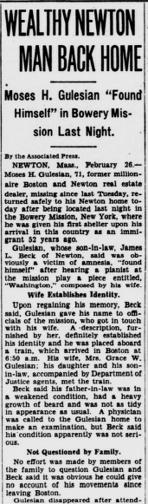
Despite his steady rise, he was brought to near ruin by the Great Depression. Dismayed by his situation, he suffered a breakdown and disappeared, frightening his family and prompting a nationwide search. He had ended up in New York City, unkempt and amnesic, unable to remember who he was or how he got there. He was brought back to his senses upon hearing a piece of music that his wife had composed and was sent back home to safety and comfort. He regained his health and began working toward rebuilding his former life. He died in 1951 at the age of 87 and is buried in Evergreen Cemetery in Boston.
Irene H. Burnham, author of “Not By Accident: The Story of Moses H. Gulesian’s Career” (1938), wrote: “When Moses Gulesian is questioned about his experiences and achievements he unhesitatingly says that to the women who have been near and dear to him should be given all the credit for anything he has accomplished which is praiseworthy.”
Moses Gulesian bridged two worlds: immigrant and American. He lived within both through his love and compassion for his homeland and his people — his friends and family whom he left behind in Marash and those whose lives he saved in America — and through his forward-thinking determination to build a meaningful life for himself in his adopted country. In many ways, these qualities made him “more American” than many Americans themselves.

“Throughout his entire career,” wrote Burnham, “these Armenian traits of hope and bravery, the habits of working hard and waiting cheerfully” coalesced with his own sense of determination and self-confidence into a passionate and successful Armenian and a noble and devoted American patriot.