




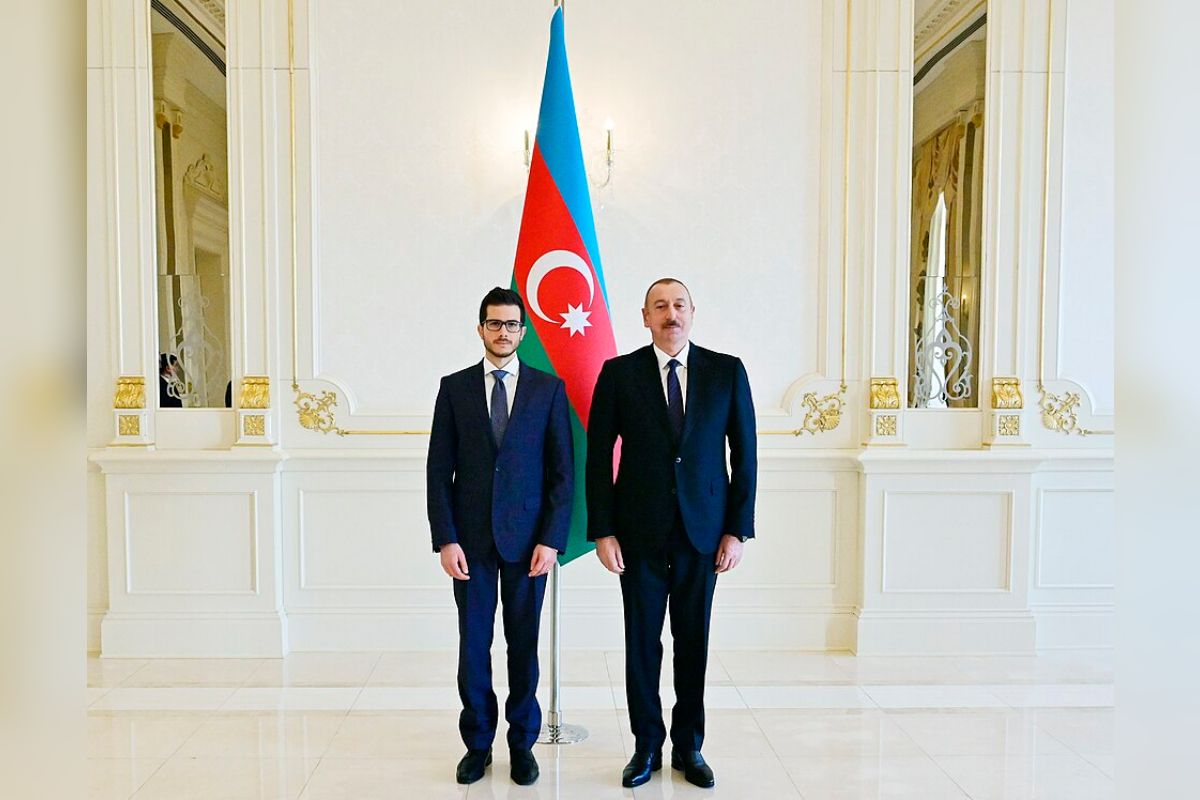
States and political powers have long instrumentalized individuals whose identities can be selectively deployed to legitimize political narratives. Such representatives are appointed because their personal backgrounds can be made to serve the state’s interests. The case at hand is particularly revealing: an Israeli diplomat, presenting as an Arab Christian with some Armenian lineage, appointed as ambassador to Azerbaijan, and later as Special Envoy to the Christian World.
This individual’s identity is thus transformed from a complex historical and communal inheritance into a political instrument. More troubling still is their role in publicly reproducing a sanitized account of the treatment of Christians in Israel, even as mounting evidence of hostility toward Christian communities complicates — or directly contradicts — that narrative.
The recent targeting of Armenian clergy in Jerusalem, including incidents in which Jewish mobs reportedly spat on, struck and urinated near clergy — detailed in a recent Wall Street Journal (WSJ) investigation — makes such official representations difficult to reconcile with the reality experienced by Christians on the ground. The issue, therefore, is not simply whether this individual is an appropriate spokesperson for Palestinian Christians; it is the broader political practice of selecting and deploying individuals whose identities can be used to manufacture legitimacy, obscure contradiction and project an image of religious tolerance precisely when that image is under increasing strain.
On July 26, The Jerusalem Post published an article titled “Many Christian Arabs proud to be part of Israeli society, ambassador to Christian world says,” in which Israel’s Special Envoy to the Christian World, George Deek, said: “Israeli society is one in which Arab Christians have a combination of freedom, opportunity and belonging, which is why many of them are proud to be Israeli.”
He added: “Christians in Israel worship, speak and live freely.”
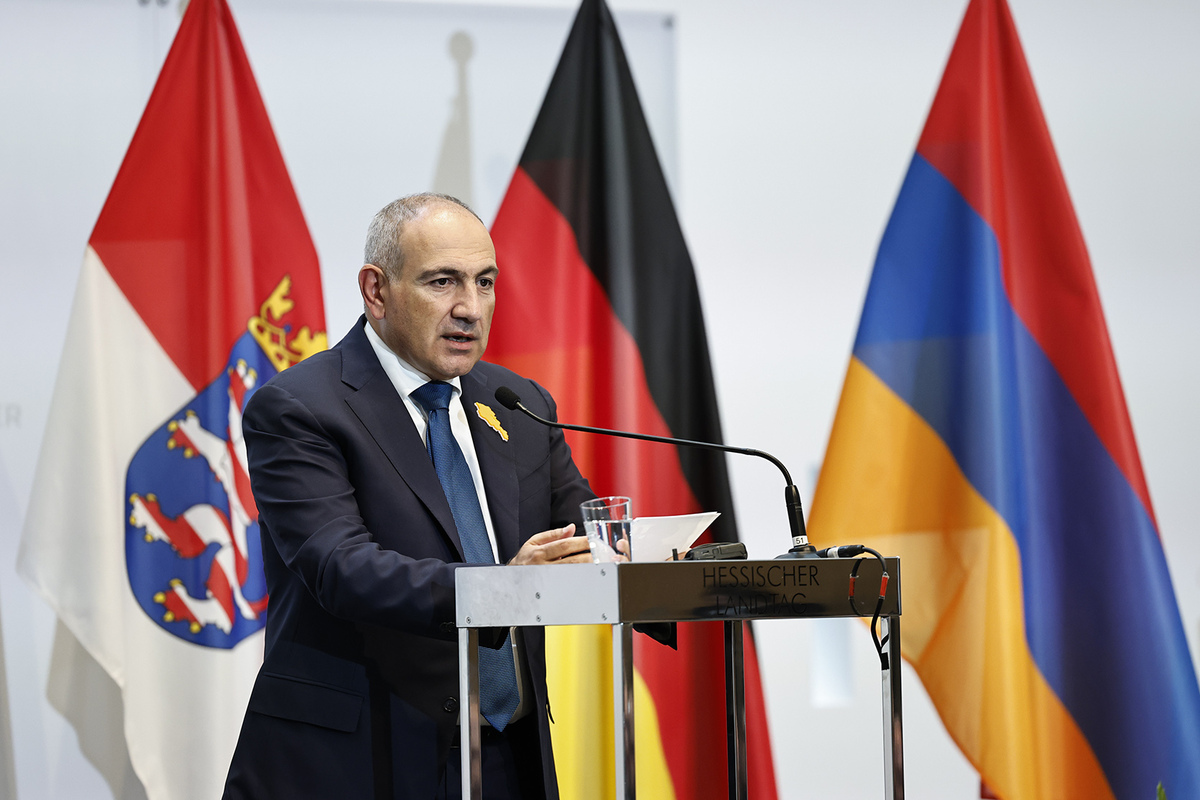

Six days after Deek’s remarks, the Armenian Cathedral of St. James in the Old City of Jerusalem was attacked by Jewish extremists who spat on it and threw stones at it, as detailed in the WSJ piece.
The issue, therefore, is not simply whether this individual is an appropriate spokesperson for Palestinian Christians; it is the broader political practice of selecting and deploying individuals whose identities can be used to manufacture legitimacy.
Deek, born in 1984, is an Israeli diplomat of Arab Christian and partial Armenian origin. He previously revealed that he is of Armenian descent on his father’s side and that his paternal great-grandmother was a survivor of the Armenian Genocide. In April 2015, Deek posted a link to a USA Today article titled “Turkey angry at pope after ‘genocide’ remarks,” along with the following message on Twitter (now X): “My father’s grandmother’s name was Antaraan Hambarian, an Armenian. She is a survivor of the Armenian tragedy of…”
Deek was therefore aware that the Armenian Genocide had occurred. His own paternal great-grandmother was a survivor. He should have known it was shameful to describe the Armenian Genocide as merely a “tragedy.”
Ambassador to Azerbaijan
In a move that was both provocative and offensive to Armenians in 2018, Israel appointed Deek as its ambassador to Azerbaijan, making him Israel’s chief representative in the predominantly Muslim country bordering Iran and engaged in a long-running war with its Christian neighbor, Armenia.
Armenia’s Christianity went back to 301 AD when, under the leadership of King Tiridates III and St. Gregory the Illuminator, Armenia became the first state in the world to adopt Christianity as its official religion.
Meanwhile, Deek is considered the first Arab Christian to hold the position of ambassador in Israel.1 Deek notes this on his X account.
Azerbaijan has been at war with Armenia over the Republic of Artsakh (Nagorno-Karabakh) since both countries gained independence.
In April 2018, months before his appointment, a propaganda music video revealed that the Azerbaijani military had acquired Israeli-made suicide drones.2 “Advanced Israeli military drones sold to Azerbaijan exposed in Army-produced pop music video” by Horizon (April 30, 2018). This was not even the most surprising Israeli-Azerbaijani drone scandal: in 2017, a visiting team from the Israeli arms manufacturer Aeronautics Defense Systems allegedly conducted a live demonstration of its Orbiter 1K drone, targeting an Armenian position in Artsakh.3“Report: Israeli drone maker deployed bombs on Armenian Army positions for Azerbaijan” by The Armenian Weekly (Aug. 14, 2017); and “Israeli dronemaker said to have bombed Armenians for Azerbaijan faces charges” in the Times of Israel (Aug. 29, 2018).
Artsakh territory became a military testing ground for Israeli weapons. The Azerbaijani government — with guidance and training from Israeli military experts — used Israeli made military drones against Armenian targets during the April 2016 war, when a Harop drone, manufactured by Israel Aerospace Industries, struck an Armenian bus, killing seven Armenian civilians on board.
In 2019, Israeli arms company Elbit Systems sold Azerbaijan its unmanned aerial Drone, capable of long-range precise tactical strikes. The SkyStriker drone is known as a “suicide drone” or “kamikaze drone” due to its ability to destroy a target on impact. Azerbaijan became the first recipient of the SkyStriker drone.4 “Israeli arms company sells Azerbaijan SkyStriker suicide drones” by Horizon Weekly (Jan. 11, 2019). Over the years, Israel continuously supplied Azerbaijan with advanced military equipment and helped train its army.
On November 19, 2020, the Jewish Journal published an article titled “Israel’s Ambassador to Azerbaijan shares how he could not keep his promise.” The author quoted Deek’s Nov. 16, 2020, tweet: “I am Israel’s ambassador to Azerbaijan. I’ve been a diplomat for 12 years. I usually keep my promises, but this promise I couldn’t keep.”
The author noted: “Ambassador Deek went on to say that a couple of weeks ago he had visited the City of Ganja, Azerbaijan’s second largest city, situated 60 miles from the Armenia-Azerbaijan conflict zone…. Deek met with Azerbaijani survivors of Armenian torture camps, expressed his deep sympathy for them, and condemned Armenian aggression.”
Deek was then quoted talking about how following a missile strike on Ganja, an Azerbaijani boy named Artur was injured, dying before Deek could fulfill a promise to get him treated by Israeli doctors.
“I was heart-broken. I went to the Russian Orthodox Church in Baku. I prayed and lit a candle for Artur. I asked forgiveness for not keeping my promise. May your soul rest in peace, Artur. May the children of this region enjoy a more peaceful future,” Deek was quoted as saying.
Special Envoy to the Christian World
On April 23, Deek was appointed Israel’s special envoy to the Christian world, a newly created position reflecting deteriorating relations with the Christian community in the Holy Land and globally. This deterioration stemmed from escalating attacks by religiously intolerant and extremist Jewish Israelis — enabled by the Israeli national security apparatus — on Christian religious symbols, and from growing domestic and international outrage toward Israel due to its racist practices.5“As Christians are attacked in Israel, the government shows little concern” in The Washington Post (July 5, 2026).
This resentment was particularly pronounced after the Israeli Knesset (parliament) passed the Basic Law on July 19, 2018, which declares Israel the nation-state of the Jewish people.6 “EU leads criticism after Israel passes Jewish ‘nation state’ law” in The Guardian (July 19, 2018).
Furthermore, Deek’s appointment as the first special envoy to the Christian world comes amid the numerous scandalous actions of Israeli soldiers in southern Lebanon against Christian symbols, such as the destruction of churches and statues and the killing of clergy.7See “Lebanon’s churches, mosques and archaeological sites damaged in Israeli strikes” in Al-Monitor (May 4, 2026). These acts provoked negative religious and political reactions worldwide.
One such incident occurred on March 9, when Israeli forces killed Father Pierre al-Rahi in the Maronite Christian village of Al-Qlayaa, in Marjayoun of southern Lebanon. Al-Rahi was killed and four others were injured when an Israeli tank fired twice at a house in the village.8“Lebanese Maronite Catholic priest killed by Israeli tank fire in southern Lebanon” by National Catholic Reporter (March 9, 2026).
On Palm Sunday, March 29, Israeli police clashed with the Latin Patriarch of Jerusalem, Cardinal Pierbattista Pizzaballa. Pizzaballa, accompanied by the Custos of the Church of the Holy Sepulchre, Father Francesco Ielpo, was on his way to the church to celebrate Palm Sunday Mass when police stopped them and forced them to turn back, preventing them from entering, reported Vatican News, an official outlet of the Holy See. This was the first time in centuries that church leaders had been barred from celebrating Palm Sunday Mass at the Church of the Holy Sepulchre.9“Israeli police stop Latin Patriarch from entering Church of Holy Sepulchre” by Vatican News (March 29, 2026).
There are numerous examples of attacks on Christians in Israel, Jerusalem and the West Bank, both before and after the appointment of George Deek as Israel’s special envoy to the Christian world.
The most recent of these incidents was an attack by racist Israeli Jews on the Armenian Cathedral of St. James in Jerusalem’s Old City, where they spat on it and the monastery, and threw stones at the windows of nearby homes late on the night of Saturday, August 1.10“Six arrested after allegedly spitting, throwing rocks at Armenian church in Jerusalem’s Old City” in the Jerusalem Post (Aug. 2, 2026).
It is worth noting that there has not been a public statement or any condemnation from the Israeli Special Envoy to the Christian World up to the time of the writing of this report.
In late May, Deek claimed that Israel had never intervened or taken a position in the conflict between Armenia and Azerbaijan, despite years of Israeli military support and strategic cooperation with Azerbaijan during the 2020 war and blockade that led to the ethnic cleansing of Armenians in Artsakh.
In a July interview with CNN, though expressing disapproval, Deek nonetheless normalized the attacks by fanatical Jews on Christians in the Holy Land, saying that Israel has recently seen an escalation in anti-Christian activities, just as the United States has seen an escalation in anti-Semitism.
The role assigned to Deek was to downplay these events. For a Christian who has acknowledged his Armenian ancestry but has abandoned that part of his identity, defending Azerbaijan and normalizing Israeli Jewish aggression against Christians in the Holy Land only serves anti-Christian movements.
In general, no Christian, Muslim or Jew will be proud to live in a country where their religion is publicly insulted — a phenomenon that has become increasingly accepted in Israel — while the police and the government are unable to address the problem.



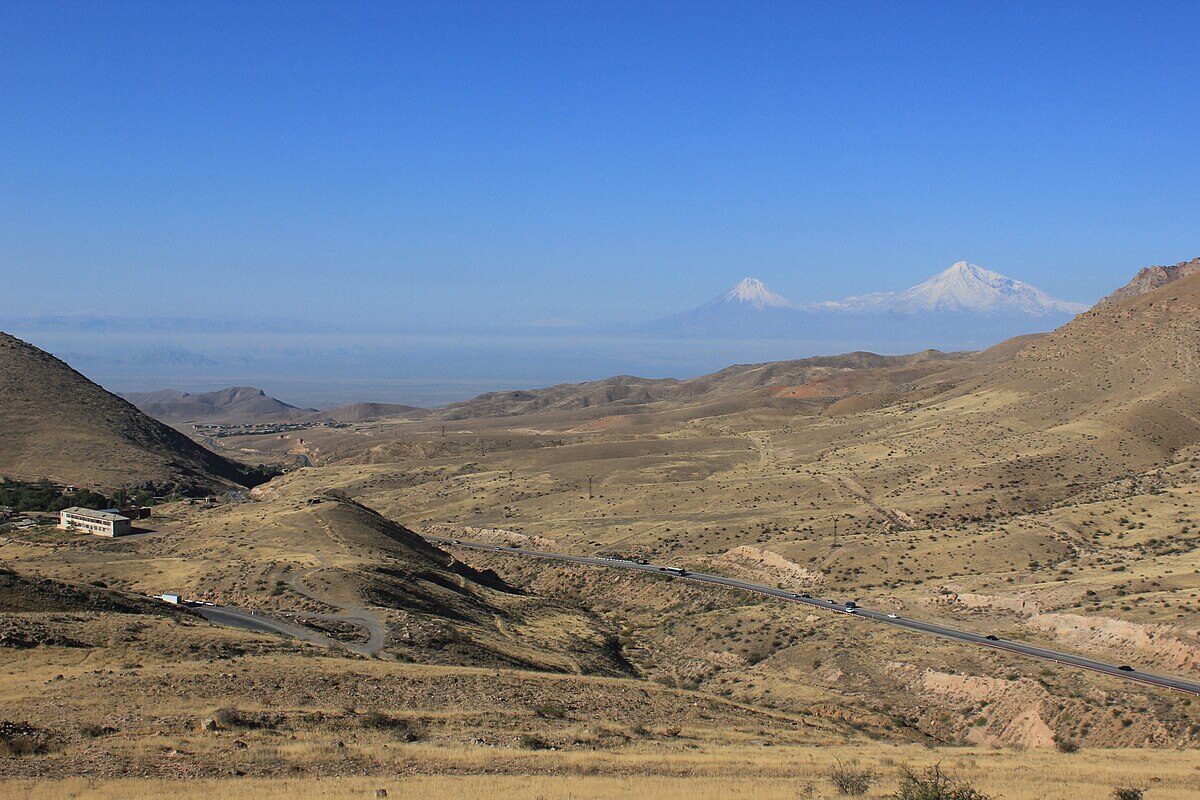
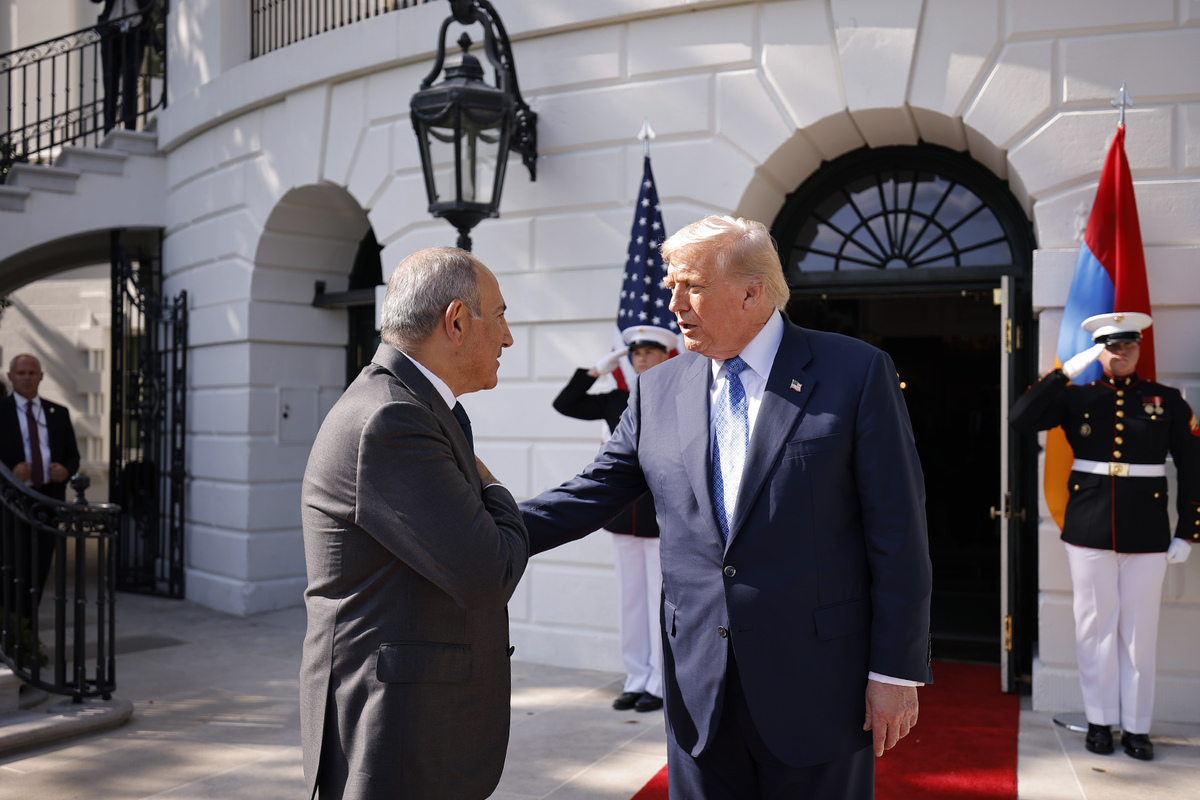
When are we going to finally recognize that our Armenia is in a dire situation.
It is even a “Do or Die” situation. We need a ‘firm’ hands on approach to the enemies surrounding us.