The Region in Brief
Armenia
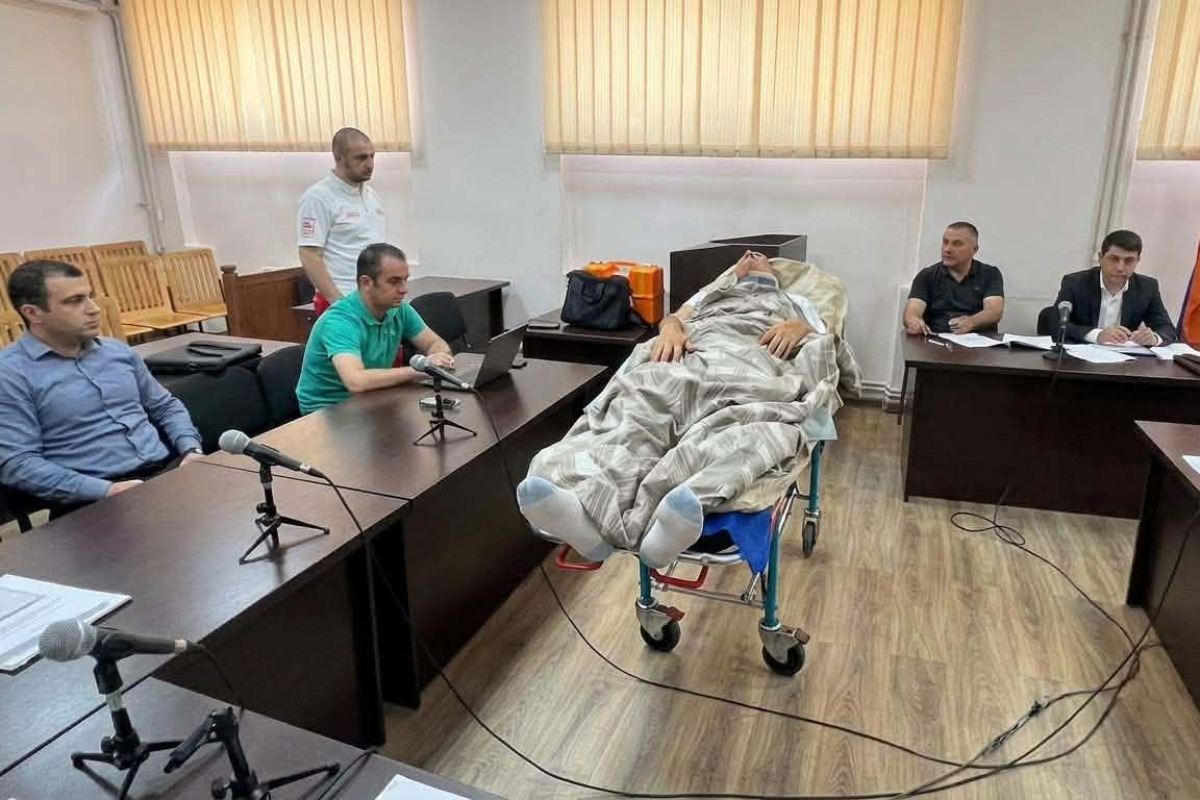
A parliamentary hearing on the rights and socioeconomic problems of displaced Artsakh Armenians ended in controversy Sept. 23 after lawmakers from Armenia’s ruling Civil Contract party and several government representatives walked out of the discussion.
The hearing, titled “Socio-Economic and Legal Problems of the People of Artsakh and Their Solutions,” was organized by ARF Bureau member and National Assembly’s Human Rights Committee Chair Lilit Galstyan. Participants included displaced Artsakh officials, human rights advocates, legal experts and representatives of Armenian state institutions.
Artsakh Human Rights Defender Gegham Stepanyan criticized the effectiveness of government assistance programs, particularly housing support. He said about 8,000 displaced Artsakh residents had received housing certificates, but only about half had been able to use them, citing rising property prices and restrictions built into the program. He also raised concerns about student assistance, employment programs and support for vulnerable families.
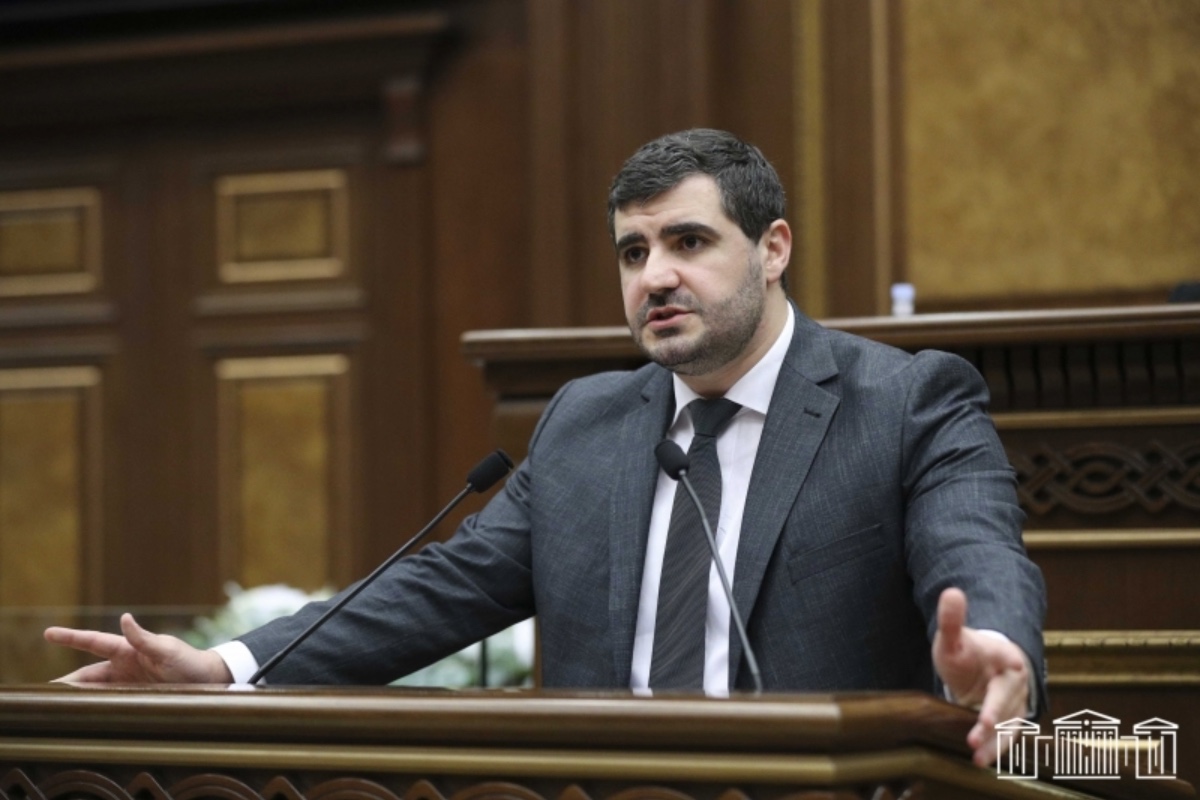
Civil Contract lawmaker Mariam Poghosyan later said ruling-party representatives had expected a discussion focused on refugees’ social problems but objected after participants were introduced as representatives of the Artsakh National Assembly. Citing the government’s position that a separate state structure cannot operate inside Armenia, the Civil Contract lawmakers and government officials left the hearing. Galstyan responded that the discussion concerned the protection of Artsakh Armenians’ rights and argued that responsibility for those issues belonged equally to the government and opposition.
The hearing also highlighted unresolved legal claims stemming from the 2023 displacement. International law specialist Ara Ghazaryan said 657 applications concerning the property rights of Artsakh Armenians were filed with the European Court of Human Rights in 2025, with lawyers continuing to document homes and property left behind. Former Artsakh Culture Minister Sergey Shahverdyan argued that protecting the region’s Armenian cultural heritage should likewise be understood as an ongoing human rights issue rather than solely as a question of historical preservation.

Iran
Iran has signaled a possible diplomatic opening in its confrontation with the United States, with a senior Iranian official saying Tehran could reopen the Strait of Hormuz within seven days if Washington begins easing military pressure and lifts its blockade of Iranian ports. The proposal has been conveyed to the United States through intermediaries and comes as Iranian officials use the U.N. General Assembly in New York to pursue consultations through mediating countries. President Masoud Pezeshkian is attending the gathering, although Iranian officials have ruled out a meeting with U.S. President Donald Trump.
Mohsen Rezaei, secretary of Iran’s Supreme National Security Council, previously said Tehran had transmitted its conditions for ending the conflict through Qatar. Among the publicly disclosed demands are an end to hostilities on all fronts, the release of frozen Iranian assets and an end to the naval blockade. Tehran says it is awaiting Washington’s response, leaving the U.N. meetings as a potential channel for further indirect diplomacy.
Tehran’s regional diplomacy is also increasingly focused on Armenia’s southern Syunik province. Newly appointed Iranian Consul General Davoud Yayeji arrived in Kapan and formally assumed his duties Sept. 23. Yayeji has served in Uzbekistan, Azerbaijan, Tajikistan, Russia and China, while his professional interests include South Caucasus geopolitics, Iran’s relations with Armenia and Azerbaijan, developments surrounding Karabakh and their implications for Iranian security. Iran’s consulate said his mission in “the heart of Syunik” could deepen economic, commercial, cultural and local ties between the two countries.
The diplomatic reinforcement comes as Yerevan and Tehran also discuss a potentially significant expansion of regional transport cooperation. Armenia’s ambassador to Iran, Grigor Hakobyan, has called for broader railway and trade ties, arguing that connecting the Armenian and Iranian rail networks could provide Armenia with access to southern maritime routes while giving Iran an additional land connection toward Europe.
Hakobyan discussed the proposal with Jabar Ali Zakeri, Iran’s deputy minister of roads and urban development and head of Iranian Railways. Zakeri emphasized greater Armenian participation in regional transit networks, particularly the International North-South Transport Corridor. A railway connection linking Armenia and Iran through Syunik is among the infrastructure projects under discussion as both governments seek to expand trade and regional transit.
For Armenia, such a route could reduce transport isolation by creating additional access to Iranian ports and international markets. For Iran, Armenia offers another potential northward connection toward Europe. Taken together with the appointment of a new consul general in Kapan, the railway discussions underline Tehran’s continued view of Syunik as both an economic gateway and a strategically important part of the South Caucasus transport architecture.
Russia
Russia intensified its criticism of Armenia’s foreign policy direction this week, openly linking Yerevan’s European integration ambitions to the future of its economic relationship with Moscow and the Eurasian Economic Union.
Russian Security Council Secretary Sergei Shoigu accused the Armenian government Sept. 17 of pursuing a course aimed at weakening ties with Russia while expanding cooperation with the West and NATO. He characterized Yerevan’s approach toward Russian businesses and Russia-led regional organizations as increasingly hostile, claiming that Russian-funded enterprises and entire sectors were facing what he described as “raider seizures.”
Shoigu’s remarks came amid an escalating dispute over Russian investments in Armenia, particularly the country’s railway system. Armenia’s rail network has been operated since 2008 by South Caucasus Railway, a wholly owned subsidiary of Russian Railways. Prime Minister Nikol Pashinyan has argued that the existing arrangement risks preventing Armenia from taking advantage of emerging international transport routes and has proposed that Russia sell its concession rights to a mutually acceptable third party. Moscow rejects the suggestion that Russian management prevents Armenia’s participation in regional connectivity projects and has warned that Russian economic interests must be protected.
Russian Foreign Minister Sergei Lavrov said Sept. 16 that adopting EU rules while retaining preferential access to the Eurasian market would create an increasingly incompatible economic arrangement.
President Vladimir Putin has taken a somewhat more measured public position, calling Armenia’s desire for closer relations with the European Union a sovereign and legitimate choice while warning that EU membership would create fundamental difficulties for continued participation in the EAEU. Pashinyan has similarly acknowledged that Armenia could not ultimately belong to both blocs and that the country would eventually have to make a choice.
Turkey
Armenian Prime Minister Nikol Pashinyan and Turkish President Recep Tayyip Erdoğan met in New York on Sept. 23 on the sidelines of the 81st session of the U.N. General Assembly, with talks focused on normalizing Armenia-Turkey relations and implementing previous agreements. Both sides said they were ready to give new momentum to the process.
The two leaders highlighted the need to expand trade and economic ties, strengthen contacts between Armenian and Turkish business communities and continue joint work to restore the historic Ani Bridge. They also exchanged views on regional developments.
Pashinyan and Erdoğan also described peace between Armenia and Azerbaijan as an important basis for broader regional cooperation and stressed the implementation of the TRIPP project and the reopening of regional transport links.
The meeting offered another indication that Yerevan and Ankara are seeking to keep the normalization track active, although the process has yet to produce full diplomatic relations or a comprehensive opening of the Armenia-Turkey border.