


Armenuhi Sargsyan’s path from law to psychology and support for seniors in Gyumri
The turning points in our lives often come when carefully made plans fall apart. As a schoolgirl, Armenuhi Sargsyan imagined herself becoming a lawyer. She spent months studying humanities, preparing for entrance exams and planning to move to Yerevan to study at one of the capital’s universities.
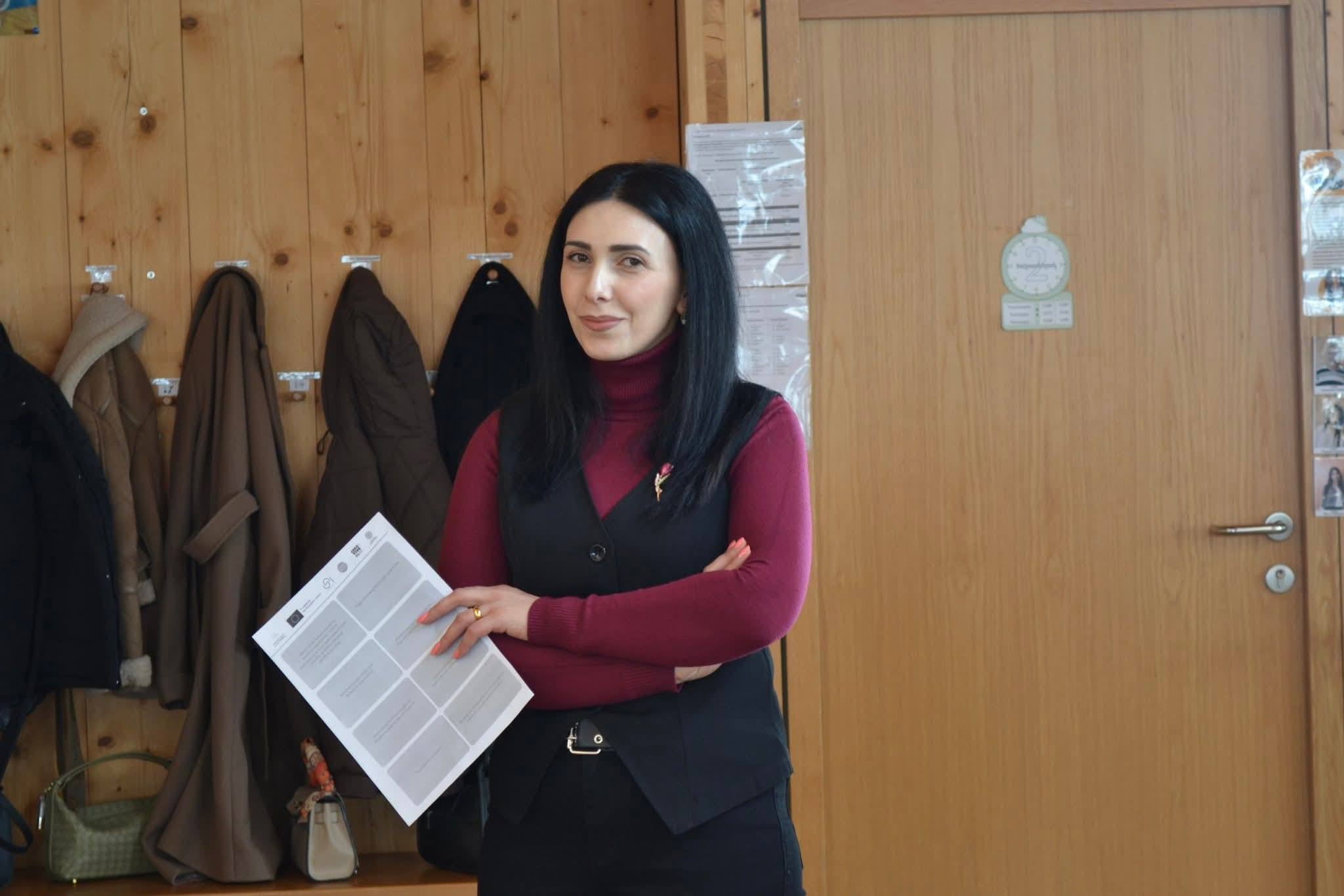
Financial difficulties, family circumstances and her parents’ concerns changed those plans. Armenuhi stayed in her hometown of Gyumri and enrolled in the psychology department at a local university. At first, it seemed like a forced alternative, but within weeks, she fell in love with psychology.
After graduating with honors, Armenuhi began her professional career. Her early work experiences were diverse. At the New Light organization, she worked with adolescent girls, helping them develop life skills and self-confidence. She later joined community and educational programs with World Vision Armenia and Teach For Armenia, where she provided psychological support to vulnerable groups.
More recently, she began working at the Shirak Territorial Pedagogical-Psychological Support Center (TPPC), where she works with children with special educational needs. The experience opened new perspectives in her professional practice.
But the most important and personally meaningful part of her career has been establishing and coordinating the Memory Café in Gyumri, run by Alzheimer’s Care Armenia.

Creating the Gyumri Memory Café and building the team
Between 2020 and 2023, when the Memory Café concept was still new to Armenia, the team decided to expand the program beyond the capital. Gyumri became the first regional city where the model was introduced.
The team needed a local specialist to coordinate the work. Armenuhi saw the job announcement, sent her resume and, after a successful interview, joined the project as a coordinator about a month or two after the café opened.
“The Yerevan team came a few times, saw our work and said, ‘We don’t even need to come to Gyumri; you’ll definitely manage everything,’” Armenuhi recalled.
For about two years, Armenuhi led the sessions on her own. As the number of participants grew, psychologist Laura joined the team. Laura’s mother was also one of the café’s active participants.
The goal and approach to supporting cognitive health
Various programs for older adults operate in Armenia, including in Gyumri, but the Memory Café has a different focus. While many centers emphasize socializing and recreation through activities such as chess, backgammon or physical exercise, the Memory Café focuses on supporting cognitive health, strengthening memory and helping older adults maintain their cognitive abilities.
“Studies show that as people age, they can experience memory loss, have difficulty organizing their daily lives and sometimes even forget where they have placed things or struggle to recognize familiar people. Over time, some brain functions can become less active. Our goal is to work with participants in a way that helps maintain or improve their cognitive abilities and slow cognitive decline,” Armenuhi said.
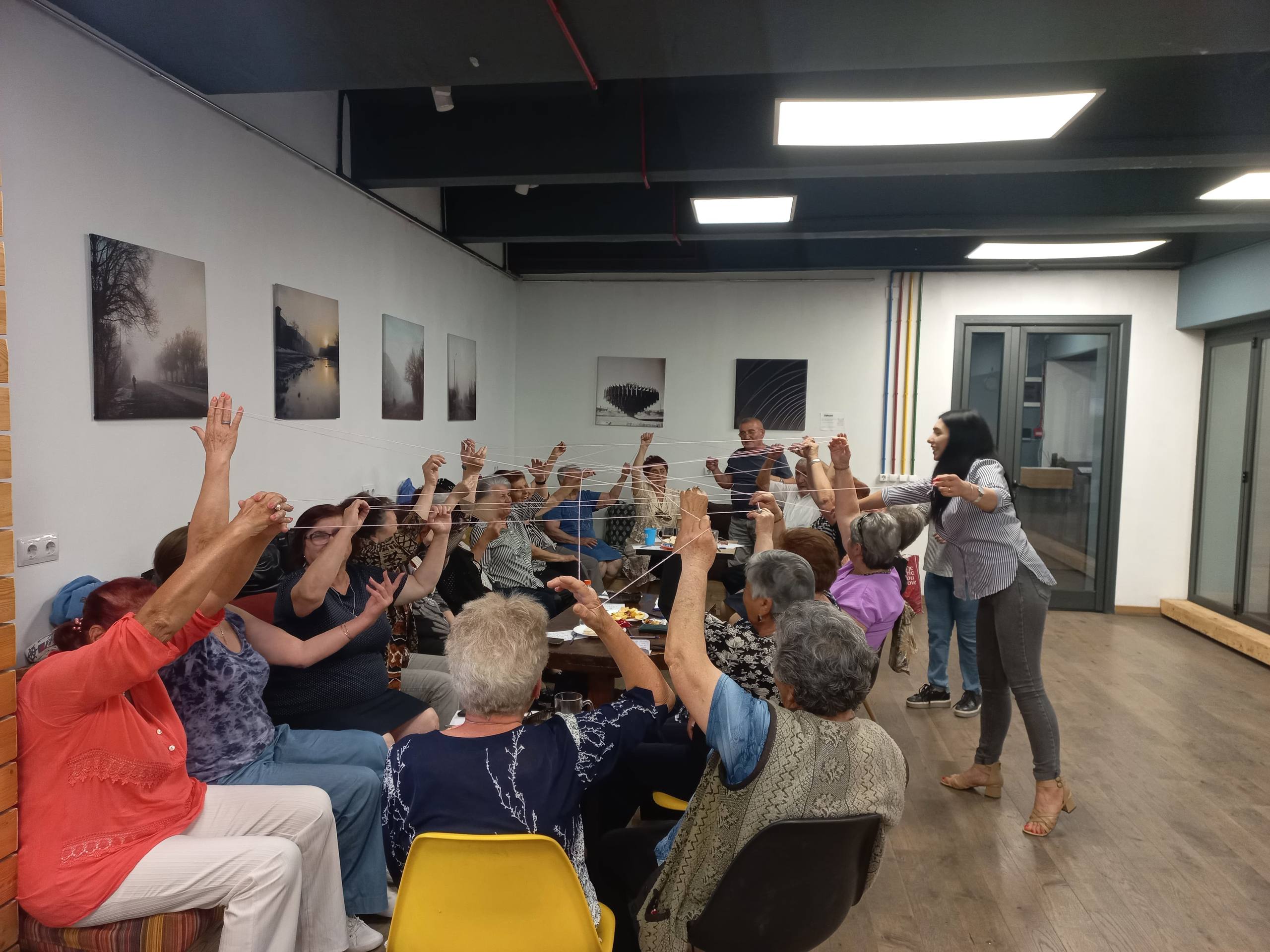
The weekly two-hour meetings at Gyumri Loft follow a structured neuropsychological program. Once every three months, participants take the Montreal Cognitive Assessment (MoCA), a screening tool that evaluates areas such as short-term memory, attention, reasoning and spatial skills. The results help the team monitor changes in participants’ cognitive performance over time. They are followed by art therapy activities such as painting, clay work and sand therapy, as well as intellectual games.
Participants receive homework, look for new exercises to try at home and share their results in a group WhatsApp chat.
Who comes to the Memory Café?
The Gyumri Memory Café currently has 30 active participants, while about 40 older adults have taken part in the program since it began. Because each session is limited to 20 people to allow for individual attention, participants attend in rotating groups.
There are no social or financial requirements for joining. Retired lecturers, teachers, artists and homemakers all take part side by side.
The group often chooses the topics for its meetings. One day, participants may discuss the philosophy of Omar Khayyam; another day, French culture and the legacy of Charles Aznavour. Beyond the regular sessions, they celebrate birthdays, make pizza, film videos and go on outings, including a recent trip to Ashotsk.
During one meeting, Armenuhi organized a paper airplane game. Participants wrote questions on the wings, threw the planes to each other and answered the questions they received.“Most of them had written questions like, ‘When did you fall in love for the first time?’ and ‘Are you in love now?’ It was all about love. I was surprised. I thought you would write serious questions, but instead, it was like first-grade topics,” Armenuhi said with a smile.
After the 2023 forced displacement from Artsakh, thousands of displaced people settled in the Shirak region. The organization responded by opening a special support café in Gyumri for older Artsakh residents.
For 12 weeks, Armenuhi and Laura worked with about 25 participants. The group eventually stopped meeting in Gyumri, because most of the participants later moved to other regions.
Professional challenges and the exchange of wisdom
At the center of this work are Armenuhi’s personal approach and professional experience. Asked about the challenges, she points to the age and generational gap between herself and the participants. “I’m 35, and my participants are over 65. It’s challenging to organize a meeting that is interesting for them,” she said.
For Armenuhi, this work has long gone beyond her professional duties. It has become an exchange of experience: She shares her knowledge as a psychologist while learning from the life experience of the older generation.“When people ask me if it is difficult to work with older adults, I tell them this is one of my favorite places. I don’t just pass on knowledge to them; I also learn from them about life and human relationships,” she said.
For some participants whose children live abroad, Armenuhi has also become a familiar and trusted presence who helps fill the absence of family. “I have a participant whose daughter lives in Russia. Every time she sees me, she hugs me and says, ‘I’ll hug my daughter and then I’ll sit down.’ For many of them, we also become a familiar presence that helps fill the absence of family,” Armenuhi said.
The Memory Café in Gyumri continues to be a place where psychological support meets everyday human connection. For the older adults who come there, it offers activities and exercises, companionship, new experiences and a sense of belonging.
Photos courtesy of Armenuhi Sargsyan.