


The meaning behind Gostan Zarian’s “Three Songs”
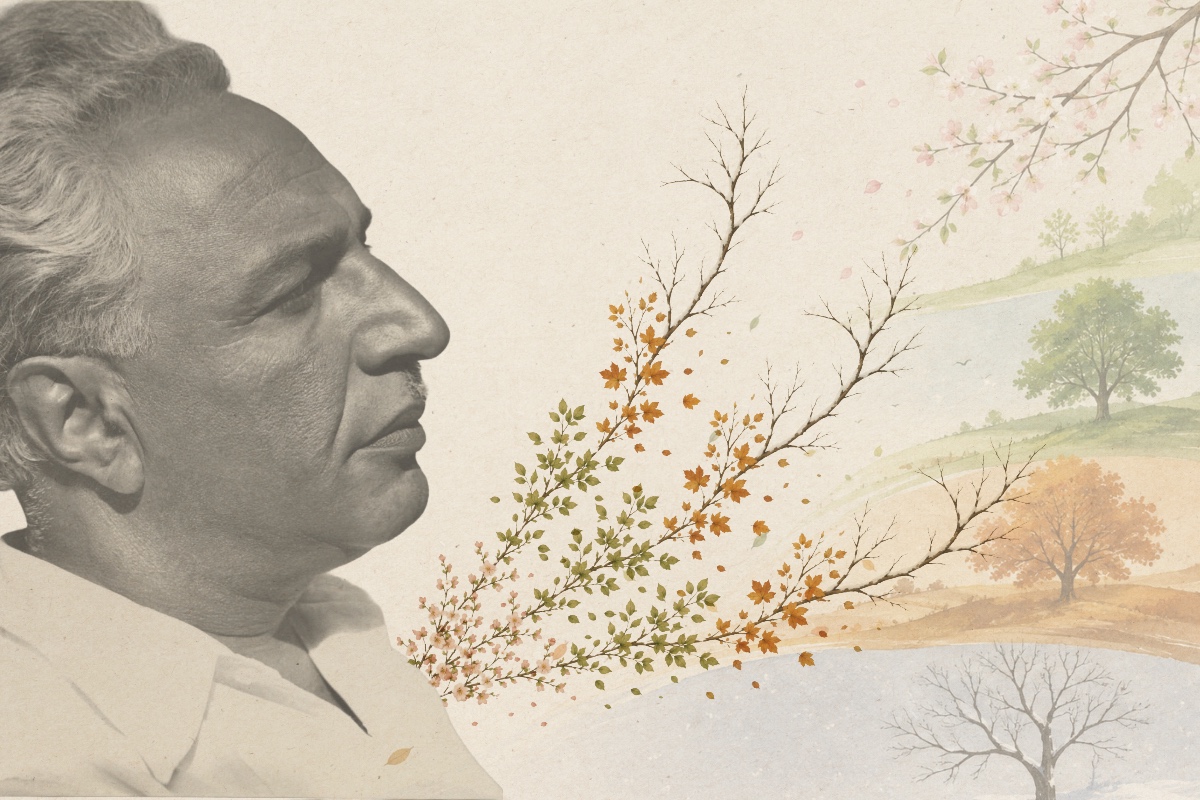
Gostan Zarian was one of the most remarkable writers in Armenian and world literature of the 20th century. He followed a complex creative path, writing in several languages, including Italian, French, Russian and Armenian.
Zarian spent part of his life in Constantinople, now Istanbul. In 1914, he left the city, passed through Bulgaria and eventually settled in Italy, first in Naples and later in Rome. There, he decided to continue his literary and public work, using his writing to support nations fighting for freedom, including the Armenian people.
Deeply affected by the tragedies of World War I, Zarian wrote “The Sorrow of the Earth and the Sorrow of Heaven for Singing Three Songs.” Originally written in French, the first part was published in Italian in the Milan literary journal L’Eroica, in a translation by G.A. Rosso. The poem quickly gained recognition and was warmly received by readers. Newspapers and literary critics praised it, while renowned figures such as Rabindranath Tagore and Miguel de Unamuno expressed admiration for the work. The Italian poet Ada Negri wrote:
“…There are passages that attain divine beauty, and one must be grateful to the author for the gift he has bestowed upon humanity.”
Following this success, the prestigious Italian publisher G. Carabba published the poem as a stand-alone book in its Writers of Italy and the World series. The work was later republished many times and translated into several languages. It also inspired the renowned Italian composer Ottorino Respighi to compose an oratorio based on the poem, an achievement Zarian himself described with great admiration.


While living in Rome, Zarian became a vocal advocate for oppressed peoples. Speaking from platforms across Europe, he drew attention to the suffering of small nations, particularly the Armenian people during the Armenian Genocide. He personally appealed to Pope Benedict XV, informing him of the persecutions and massacres carried out by the Ottoman government and asking the Catholic Church to intervene. After their meeting, the pope publicly referred to the massacres and specifically mentioned the Armenians facing extermination.
Zarian described the poem as a collection of “counsels” divided into four parts, symbolizing the four seasons of the year. The first part begins with the epigraph: “God is a child because those who love are simple like children and trusting like children.”
This section represents spring and is filled with hope, beauty, and vitality. Nature awakens, and everything feels alive: the wind, water, flowers, and birds all seem to sing. Zarian presents the world as a creation of God’s love. Through these joyful images, he suggests that spiritual freedom helps people overcome life’s hardships and accept both life and death as natural parts of existence.
One of the most memorable scenes is a conversation between an old man and a young boy. The boy represents the future, while the old man symbolizes wisdom gained through experience. Before dying, the old man asks the boy to guide him so that he can enjoy one final taste of spring. Reflecting on human existence, he says: “What is man? He sprouts together with the flame of the earth’s gift, and with it he withers and passes away…”
His words remind us that life is temporary and that death is an unavoidable part of existence.
Although the poem consists of four parts, this discussion focuses primarily on the first, third and fourth sections.
The third part enters autumn, and the mood changes completely. The joyful atmosphere disappears, replaced by scenes of violence, massacre, fear and endless marches across the desert. Falling autumn leaves reflect the suffering of a nation facing destruction. The poet describes the grief of the Armenian people while questioning God:
“God of the Universe, what is Your will?”
“Where is the purpose?”
These questions express the confusion and despair of a people trying to make sense of such immense human suffering.
The fourth and final part represents winter. It opens with the words: “God is snow, pure and immaculate…”
Winter becomes a symbol of death and silence. The winds mourn, people continue to perish, and the desert is filled with unburied bones. The protagonist is physically and emotionally exhausted after witnessing so much horror. At his lowest moment, God’s voice reaches him:
“Believe, and you shall see. Know this: you are the universe.”
Encouraged by these words, he continues his journey. The poem then presents powerful images of a funeral procession, grieving mothers, and a father struggling to hide his sorrow. It feels as though an entire nation is being buried. Looking toward heaven, the protagonist asks:
“Where are You, Lord?”
In the section “Voices in the Church,” Zarian describes an abandoned church where the candles of the final worshippers slowly burn out. Silence fills the sanctuary while angels pray and cherubim sing hymns. The voices begging for help gradually fade, and the soul of a dead child cries:
“My God, my God…”
The voice of the Virgin Mary is then heard mourning her crucified Son:
“I am the mother…
Forever, forever departed.
my son who was crucified.”
The prayers continue as believers ask the Mother of God to bring light into human hearts. By drawing a parallel between extinguished candles and human lives, Zarian unites the themes of life, death and resurrection, leaving readers with one of the poem’s central messages:
“Sorrow is temporary.”
“The Sorrow of the Earth and the Sorrow of the Heaven for Singing Three Songs” is a powerful protest against war. It is the poet’s emotional cry for peace and a plea for nations to live together instead of destroying one another.
Although the poem was written during World War I and inspired by the Armenian Genocide, its message remains strikingly relevant today. Wars continue to destroy countries, force people from their homes, damage nature and claim countless innocent lives. More than a century later, Zarian’s call for peace still resonates, reminding readers of the importance of defending human dignity and preventing the tragedies of war from repeating themselves.