The HomelandTravel

Surprise on Sevan Highway: The sanctuary of St. Vartan in Vartenis
Lake Sevan, the largest freshwater lake of the Caucasus region, is a precious vacation spot in land-locked Armenia. For some, a journey to Lake Sevan includes visiting the Sevan Peninsula to swim and sail along its beachfronts and explore Armenian food stands and souvenir vendors. 

The foremost cultural attraction of Lake Sevan is the medieval Sevanavank Monastery, which for centuries housed wayward Armenian monks doing penance. Until the 1960s, Sevanavank was situated on an island in Lake Sevan, until the artificial draining of the Lake during the Stalin era created the peninsula we see today. The Sevan monastic complex houses two churches, Sourp Arakelots and Sourp Asdvadzadzin.

Of course, a Lake Sevan journey would not be complete without tasting the indigenous Ishkhan trout fish. Prices are high for the natural variety, which has become endangered because of overfishing. Farm-raised varieties are more affordable but not as delicious. There is even a Sevan Trout Festival every July, featuring fishing and cooking competitions and live music.

Other notable tourist spots in the area include the Noratus Cemetery, which hosts the largest remaining cluster of medieval Armenian khachkars in the world; the Sevan Writer’s House, a noteworthy example of Soviet modernist architecture built in the 1930s as a retreat for writers and artists; and the flower-shaped Spendiarian Water Spill, a reservoir that diverts water to Lake Sevan through the Vorodan-Arpa tunnel to help restore the lake’s dropping water levels. 

The lake also hosts hundreds of beach resorts and hotels, large and small, along the Sevan coast. Some of the more remote beach outposts can be found in Shorzha, along the eastern shore of Lake Sevan. Aside from some restricted glamping resorts, visitors can expect to find free entry or pay a nominal fee to lie on the beach in a peaceful, undisturbed and often pleasingly underdeveloped environment. This area is also where Armenian government officials have exclusive summer residences.

Related Articles
Advertisement Donate Today!

When asked what I would like to do at Lake Sevan, I replied “To drive the full boundary of the lake.” And so began a seven- to eight-hour road trip that covered the 200-kilometer perimeter of the “Blue Pearl of Armenia.”

The most pleasurable excursions were to Shorzha 1 Beach, which is open to the public, where the famously chilly Sevan waters are warmest between 4 and 6 p.m. for swimming, and Wishup, Vishap, Shore, a laid-back beachfront and campground.

This scenic perimeter road passed several villages, including Kavar, Martouni and Vartenis, one of the last stops, situated at the far southeastern corner of the lake and close to the border with Azerbaijan, has become better known in recent years as a village under Azerbaijani fire. 

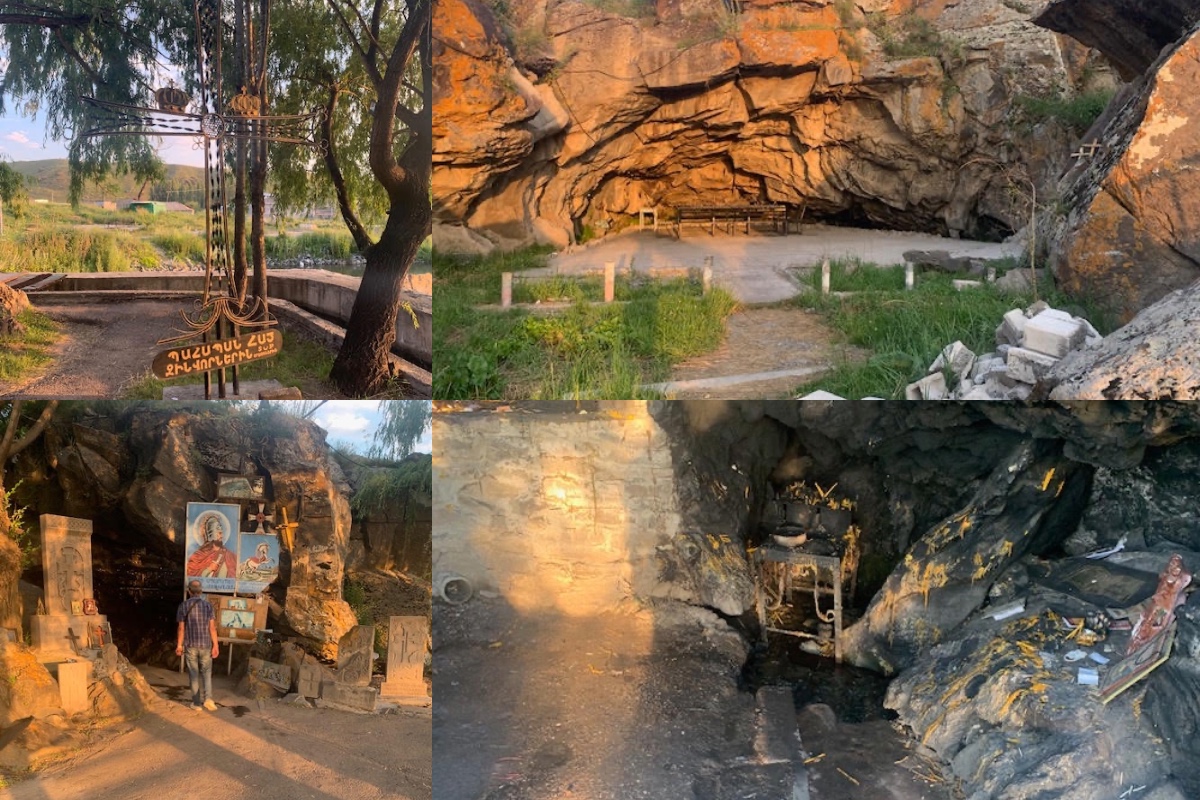
Driving through Vartenis, I was struck by how kind and gentle the residents were, with a kind of virtue that is scarcely found today. When asked about local cultural centers we could visit, we were told there were, unfortunately, none. However, we were directed to a pilgrimage site few seem to know about: the Holy Spring of St. Vartan (Mamigonian).

The Sanctuary of St. Vartan in Vartenis is one of the shrines on the territory of historic Armenia traditionally associated with episodes of the Armenian liberation wars of the fifth century.

The sanctuary is located on the western side of the Vartenis-Ayrk road, where a spring flows from under a rock and continues through a stream. 

According to a legend preserved among the inhabitants of Vartenis, Gen. Vartan spent the night at this spot while hurrying from Aghvank, near the Kura and Arax Rivers, to the battlefield of Avarayr. 

Driving through Vartenis, I was struck by how kind and gentle the residents were, with a kind of virtue that is scarcely found today.

Signage at the site explains that, based on current research, it is difficult to make definitive historical conclusions. However, it says that preliminary observations and existing data suggest that the site could be related to the movement of the Armenian military detachment retreating from Avarayr to Artsakh. Today, the fields of Avarayr are in northwestern Iran, near the village of Chors, close to the border with historic Armenian Nakhichevan. Avarayr was historically part of the Armenian region of Vasbouragan.

Today, this holy spring is a travel destination for Christian pilgrims. Many seek the healing properties of its spring water, which inexplicably emerges from under a rock, to cure illness and bring good fortune to loved ones. The spring is also a gathering place for locals seeking a beautiful, serene spot for contemplation and congregation.

The Avarayr Plain is known for the historic Battle of Avarayr, which took place there in A.D. 451, when Armenians fought the Persians to retain their Christian identity during the Persian effort to convert Armenians to Zoroastrianism.

Since 2020, Vartenis as well as several other Armenian towns, including Jermuk in Vayots Dzor province, Goris in Syunik province and Sotk in Gergharkunik province, have come under attack by Azerbaijani armed forces. The outbreaks became so frequent that European Union personnel have been stationed there to monitor and report on border attacks, which were and remain daily occurrences from the Azerbaijani side. Residential houses, farmers and shepherds remain under siege, and resident displacement has been common.  

There is a church in the center of Vartenis. In the hills, there are a couple of chapels and khachkars near Ayrk. There are two nearby monasteries, too: the gorgeous Makenyats Monastery (851) by the river in Makenis village, west of Vartenis, and the beautiful Vanevan Monastery (903) restored and is located by the river in the village of Vanevan, west of Vardenis. There are some small caves above it.  

The Janabar hiking trail, now inaccessible to Armenians, culminated in Vartenis. When in operation, this 285-kilometer trail in now-Azerbaijani-occupied Artsakh involved eight to 16 days of hiking, starting from the southern end of the trail in Hadrut, Artsakh, and ending in Vartenis, Armenia.

I hope more residents of and visitors to Armenia will make a point of traveling to Vartenis to explore our historical heritage, engage with the youth, and offer encouragement and opportunities to the residents who are staying on the land to preserve it for the global Armenian nation.

Photos by Lucine Kasbarian.

Lucine Kasbarian

Journalist, political cartoonist and book publicist Lucine Kasbarian is the author of several books about Armenia and Armenians. Visit her at: www.lucinekasbarian.com

Leave a Reply

Your email address will not be published. Required fields are marked *


Back to top button