The Region in Brief
Armenia
Armenia’s National Assembly has adopted amendments to the Electoral Code and the Law on Referendums, introducing a physical-presence requirement for participation in parliamentary elections and national referendums.
Under the new rules, citizens must have been physically present in Armenia for at least 366 days during the preceding 730-day period. The calculation will be based primarily on state border-crossing records.
Exceptions apply to diplomats and other public officials serving abroad, family members accompanying diplomatic or consular personnel, and students enrolled in foreign higher education institutions.
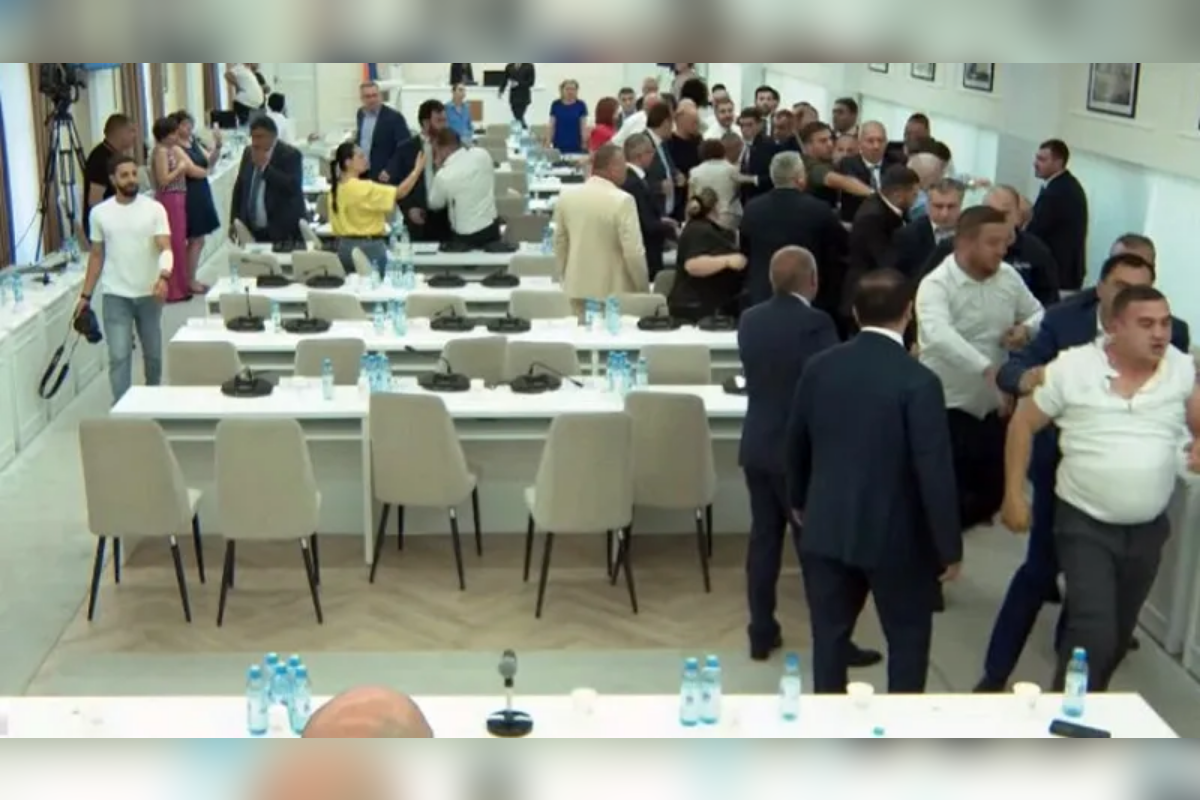
The opposition has described the amendments as unconstitutional and announced plans to challenge them before the Constitutional Court. Opposition representatives argue that the measure could significantly reduce the number of eligible voters, particularly among labor migrants and citizens working in Russia, while also lowering the practical participation threshold for future referendums.
The amendments are likely to remain politically contentious because they affect a substantial segment of Armenia’s electorate and were adopted shortly after the June parliamentary elections.

Artsakh
Appeal hearings are continuing in the cases of former Artsakh officials and other Armenian POWs convicted by an Azerbaijani military court.
During the latest proceedings, the lawyer representing former Artsakh President Arkady Ghukasyan requested his acquittal. Former Artsakh Foreign Minister David Babayan also addressed the court and reiterated that he does not consider himself guilty.
Ghukasyan was sentenced to 20 years in prison in February 2026, while Babayan received a life sentence. The next appeal hearing is expected to take place July 10. Azerbaijani authorities describe the proceedings as criminal prosecutions, while Armenian officials, human rights advocates and international organizations have raised concerns regarding due process, access to independent legal representation and the political character of the cases.
ARF Bureau member and lawmaker Lilit Galstyan used the 33rd session of the OSCE Parliamentary Assembly in The Hague to call for increased international pressure on Azerbaijan over the continued detention of Armenians.
Galstyan said at least 19 Armenians remain in Azerbaijani custody and that detainees have been subjected to torture and inhumane treatment. She called on the OSCE Parliamentary Assembly to demand their immediate release, support the protection of Armenian cultural heritage in Nagorno-Karabakh and reaffirm the displaced Armenian population’s right of return.
She also criticized the failure to establish an international mission to monitor the proceedings in Baku and assess reported damage to Armenian cultural and religious sites. According to Galstyan, international inaction has weakened the principles and human rights standards on which the OSCE is based.
Galstyan further warned that Azerbaijan’s increasingly prominent “Western Azerbaijan” narrative should be understood as a potential vehicle for territorial claims against Armenia.
Human rights lawyer Siranush Sahakyan, who represents Armenian detainees before the European Court of Human Rights, said updated information concerning their detention conditions and sentences is expected by Aug. 31.
Sahakyan argued that the available Council of Europe mechanisms have not been exhausted. She nevertheless acknowledged the institutional dilemma confronting European bodies: Suspending or excluding Azerbaijan could constitute a strong political response, but it could also reduce the remaining mechanisms through which pressure can be exerted.
Azerbaijan
Azerbaijan’s Ministry of Foreign Affairs summoned Russian Ambassador Mikhail Yevdokimov and issued a formal protest over a July 5 drone strike on a SOCAR fuel station in Ukraine’s Mykolaiv region.
Azerbaijan attributed the attack to Russia and described it as part of a pattern of strikes affecting Azerbaijani energy assets in Ukraine.
The incident introduces a further source of tension into relations between Baku and Moscow. Azerbaijan has maintained working relations with Russia while also supporting Ukraine through humanitarian assistance and protecting its commercial interests there.
Repeated damage to SOCAR facilities could make that balance more difficult and encourage Baku to take a more openly critical position toward Russian military actions affecting Azerbaijani state-owned assets.
Iran
At a press conference this week, Iranian Ambassador to Armenia Khalil Shirgholami outlined Tehran’s priorities for expanding bilateral cooperation, with a particular focus on infrastructure, energy connectivity, trade and the planned comprehensive strategic partnership agreement. Shirgholami said Iranian companies are prepared to participate in the construction of additional sections of Armenia’s North-South Road Corridor.
Iranian companies are already participating in relevant tenders. Greater Iranian participation would support Armenia’s effort to improve north-south connectivity while giving Tehran a more substantial role in the development of Armenian strategic infrastructure.
Armenia and Iran are continuing work on the text of a comprehensive strategic partnership document. Shirgholami said the agreement would institutionalize bilateral cooperation and create additional opportunities in politics, trade, investment and security.
The proposed agreement reflects Tehran’s interest in preserving Armenia as an important regional partner at a time when transport routes, border arrangements and external influence in the South Caucasus are undergoing significant change.
Shirgholami also argued that Armenia could develop into a distinctive regional energy transit link connecting Iran and Russia.
The proposal remains conceptual and would require substantial infrastructure, investment and political coordination.
The Iranian ambassador expressed regret that an initiative to establish an Armenian-Iranian trade center, involving Iranian participants and Armenian businessman and political figure Gagik Tsarukyan, had not been successfully completed.
Addressing the broader political context, Shirgholami said Iran does not interfere in Armenia’s domestic affairs. He nevertheless encouraged Armenia’s governing and opposition forces to remain united around national interests, warning that severe internal polarization can hinder long-term development.
Russia
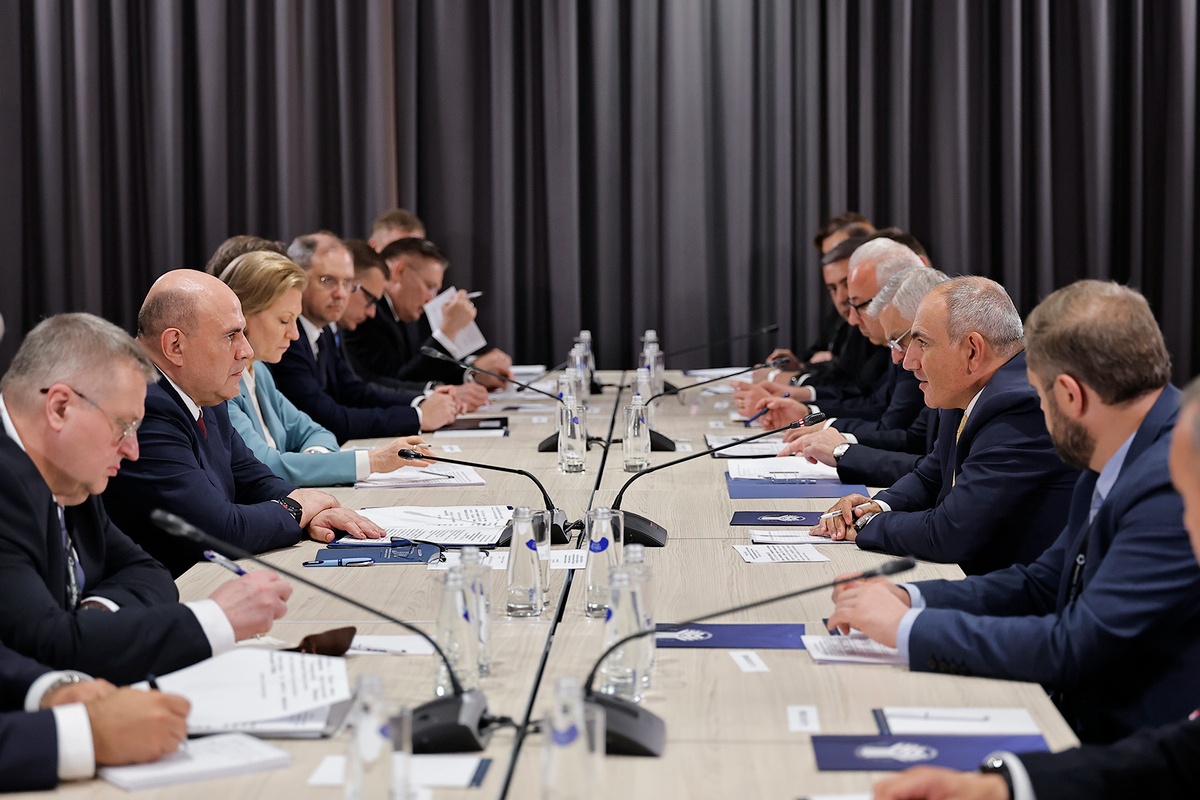
Prime Minister Nikol Pashinyan traveled to Yekaterinburg on July 6 to participate in the Innoprom international industrial exhibition and hold talks with Russian Prime Minister Mikhail Mishustin.
During the meeting, Pashinyan reaffirmed Armenia’s interest in developing relations with Russia and continuing its participation in the Eurasian Economic Union. He also acknowledged that several “problematic issues” had emerged in bilateral relations and expressed hope that they could be resolved through dialogue.
No concrete agreements were publicly announced concerning restrictions affecting Armenian exports to Russia. These restrictions have included agricultural products, flowers, fish and alcoholic beverages, and have created significant difficulties for Armenian producers and exporters.
The Armenian newspaper Zhoghovurd, citing government sources, subsequently reported that Pashinyan returned from Yekaterinburg dissatisfied and that the discussions failed to produce practical agreements on either market access restrictions or natural gas arrangements. These claims have not been officially confirmed.
Meanwhile, Rosatom Director General Alexey Likhachev said the Russian state nuclear corporation is proposing the construction of a large- or medium-capacity nuclear power plant in Armenia. According to Likhachev, one or two new units could cover Armenia’s anticipated electricity requirements for several decades.
The proposal places nuclear energy within the broader strategic competition surrounding Armenia’s future energy infrastructure. Armenia has been examining several possible replacement models for the aging Metsamor Nuclear Power Plant.
A new Rosatom-built facility would preserve Russian involvement in one of Armenia’s most strategically important sectors and reinforce the long-term energy relationship between the two countries.
Turkey
Russian state television and the Russian pranksters known as Vovan and Lexus have circulated a recording they claim documents a conversation with OSCE Secretary-General Feridun Sinirlioğlu, a former Turkish diplomat.
According to the pranksters, Sinirlioğlu believed he was speaking with Armenian Prime Minister Nikol Pashinyan and appeared willing to discuss assistance related to the government’s confrontation with the Armenian Apostolic Church and efforts directed against Catholicos Karekin II.
The recording has not yet been independently authenticated, and no official OSCE confirmation establishing its accuracy or full context has been identified.