



Pluralism, governance and post-election challenges
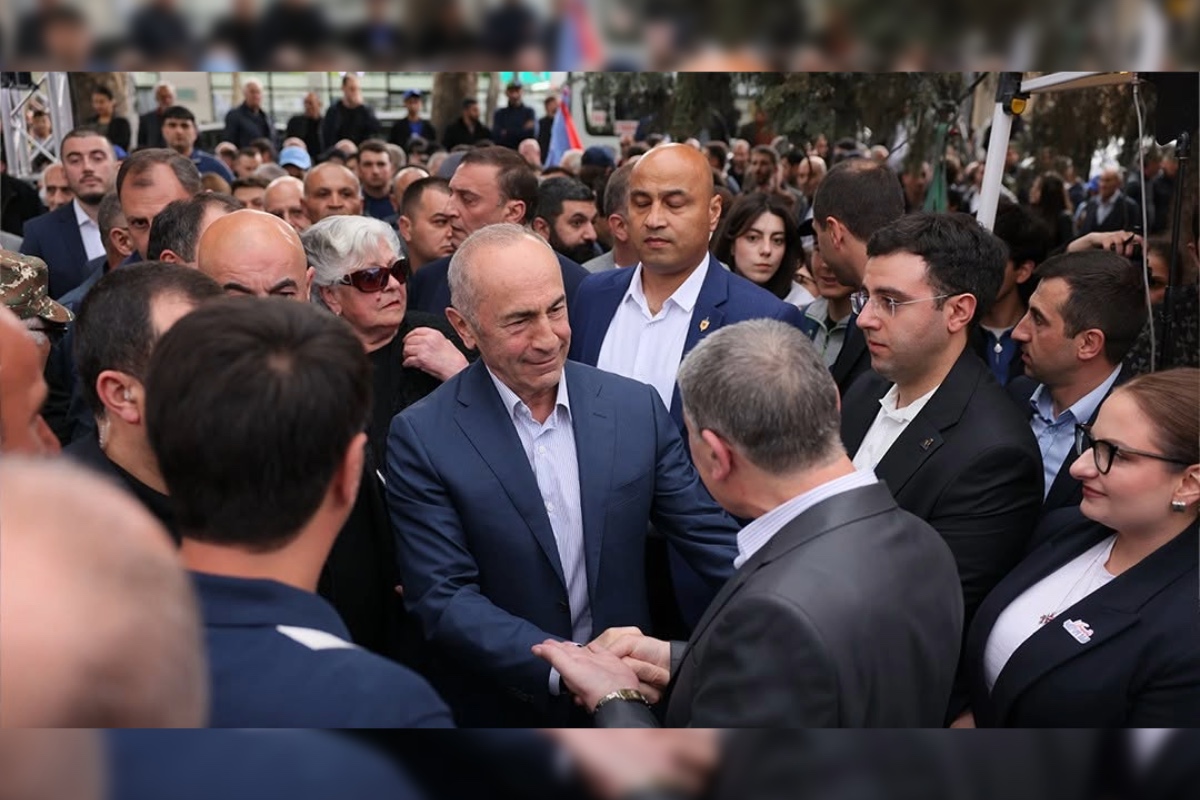
A new briefing note released by the ARF-Dashnaktsutyun International Secretariat examines political developments in Armenia following the country’s June 7, 2026, parliamentary elections.
The report argues that the post-election environment has been marked by increasing political polarization, escalating rhetoric directed at opposition figures, legal disputes surrounding the election results, and growing concerns regarding democratic governance, political pluralism and the equal application of the law.
According to the briefing, a series of criminal investigations, administrative measures, travel restrictions and public statements by senior officials have raised questions among critics regarding the treatment of opposition parties and the role of state institutions in the political process. The report also examines broader debates surrounding Armenia’s ongoing negotiations with Azerbaijan, constitutional reform, the future of Artsakh-related advocacy and the relationship between domestic political developments and regional security concerns.
The briefing further analyzes the legal challenges currently before Armenia’s Constitutional Court, the conduct of election-related investigations, allegations of selective law enforcement and the increasingly polarized political climate identified by both domestic observers and international monitoring organizations.
Executive summary
The period surrounding Armenia’s June 7, 2026, parliamentary elections has been marked by an unprecedented escalation in official rhetoric targeting opposition leaders, opposition voters, civil society critics and political opponents. At the same time, a series of law enforcement actions, criminal proceedings, travel restrictions and controversial administrative decisions have raised serious concerns regarding equality before the law, the presumption of innocence, political pluralism and the independence of state institutions.


While Armenian authorities have justified many of these measures as part of efforts to combat electoral corruption and protect national security, critics argue that the cumulative pattern demonstrates the selective application of legal mechanisms against opposition actors while allegations involving ruling-party representatives receive limited scrutiny or enforcement. Concern has arisen from the increasing securitization of political discourse following the elections. Prime Minister Nikol Pashinyan publicly argued that the more than 500,000 votes cast for the leading three opposition parties did not reflect genuine support for their political positions and warned that creating such an impression could endanger the peace process. Critics argue that this approach increasingly portrays certain forms of political dissent — including opposition parties, Artsakh- or Nagorno-Karabakh-related activism, criticism of the government’s Azerbaijan policy and other influential public voices — as potential threats to national security and regional stability.
International election observers assessed election day positively overall and stated that voters were presented with a genuine choice among political alternatives. At the same time, ODIHR and OSCE observers reported a highly polarized political environment, allegations of pressure on public employees, concerns regarding the use of administrative advantages by incumbent authorities, arrests of opposition supporters during the campaign and rhetoric portraying political opponents as threats to peace and security. These observations provide important context for understanding the legal disputes, political tensions and allegations of selective enforcement that continued after the elections.
The authorities’ extensive election crime enforcement campaign became one of the most controversial features of the 2026 parliamentary elections. Official figures indicate that at least 125 criminal proceedings were initiated and 248 individuals prosecuted in election-related cases, with more than 220 detentions and over 100 custodial or house arrest measures imposed. While presented as an anti-corruption effort, the overwhelming concentration of investigations against opposition actors, combined with repeated public assertions by senior government officials that opposition support was largely the product of vote-buying, led critics to argue that criminal law was being used not only as a law enforcement tool but also as a means of shaping the political environment and delegitimizing opposition participation. Critics have also pointed to tax audits, regulatory actions, proposed state interventions affecting opposition-linked enterprises, employment-related pressure and other administrative measures as evidence that economic and administrative instruments are increasingly being employed alongside criminal proceedings. These developments have unfolded against the backdrop of ongoing negotiations with Azerbaijan, including disputes over constitutional reform, the status of forcefully displaced Armenians from Nagorno-Karabakh (Artsakh), regional connectivity arrangements and other unresolved issues related to the Armenia-Azerbaijan peace process. Particular controversy arose after Prime Minister Nikol Pashinyan linked the electoral performance of opposition forces to heightened security risks and publicly stated that a June 2026 meeting between senior Armenian and Azerbaijani officials was necessary to “manage” threats allegedly created by the election results. Critics interpreted these statements as evidence that domestic political developments are increasingly being viewed through the prism of Azerbaijani expectations and demands and that pressure on opposition figures, veterans and advocates of the Artsakh (Nagorno-Karabakh) cause is being justified on national security grounds. Similar concerns have been raised regarding the increasingly confrontational relationship between the government and the Armenian Apostolic Church, which critics view as part of a broader effort to marginalize influential institutions and public voices opposing aspects of the government’s policy toward Azerbaijan and the future of Artsakh.
The post-election crisis has also acquired significant legal and geopolitical dimensions. Seven political forces have challenged the official election results before the Constitutional Court, alleging irregularities that may have affected the composition of the National Assembly and contesting decisions of the Central Electoral Commission, including the invalidation of results in three polling stations and the refusal to conduct repeat voting. The Constitutional Court has accepted all seven applications, consolidated them into a single proceeding and scheduled oral hearings for June 26, 2026. At the same time, Armenia has become the focus of increasing geopolitical competition, with the European Union and the United States reinforcing support for Armenia’s current political trajectory while relations with Russia continue to deteriorate amid expanding trade restrictions and growing political tensions. Critics argue that these external dynamics have become increasingly intertwined with domestic political developments, debates regarding Armenia’s future security orientation and the government’s approach to negotiations with Azerbaijan.
The developments described below do not concern isolated incidents. Rather, they reveal an increasingly consistent pattern in which political disagreement is framed as criminality, opposition support is portrayed as illegitimate and domestic dissent is increasingly treated as a potential threat to Armenia’s security and peace agenda. Critics argue that state institutions are being used not only to advance partisan political objectives but also to marginalize political, religious, social and intellectual actors whose views are perceived as complicating the government’s approach to relations with Azerbaijan, the peace process and the future of the Artsakh issue.
Read the full briefing note here: Armenia: Political pluralism, democratic governance and the challenges of the post-election period

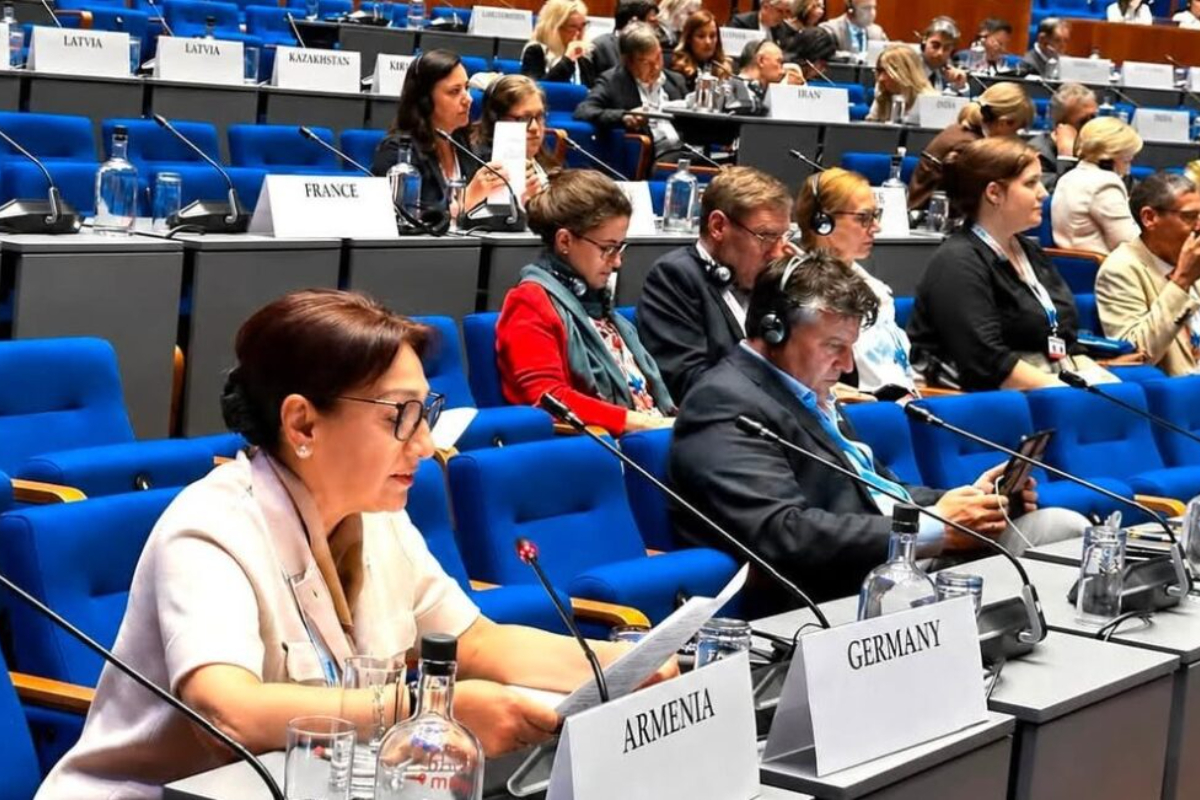
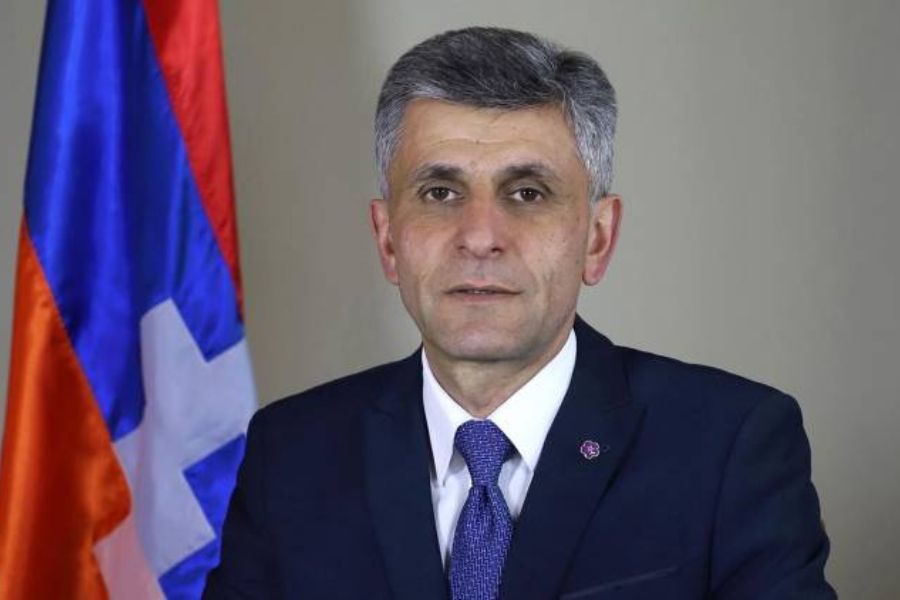
The ARF’s latest briefing tries to paint Armenia as sliding into authoritarianism, drowning in polarization, and persecuting dissent. But before anyone accepts this dramatic storyline, it’s worth pausing and remembering something the ARF never mentions: their own history. Because the irony is impossible to ignore.
For decades, especially throughout the Cold War, the ARF positioned itself as the sworn enemy of Moscow’s influence and the fiercest critic of the Mother See of Holy Etchmiadzin. Today, the same ARF suddenly speaks as though it is the guardian of both. It is a remarkable transformation, and not a particularly convincing one.
1. The ARF’s sudden concern for Russia is historically absurd
During the Cold War, the ARF’s entire identity was built on opposing Soviet power. They were the diaspora’s anti‑Moscow vanguard, the party that accused Soviet Armenia of being a puppet state, the movement that insisted Russia was the greatest threat to Armenian sovereignty.
Yet now, in 2026, the ARF’s briefing reads like a lament for deteriorating relations with Russia as though Moscow’s goodwill were the cornerstone of Armenian democracy. The same party that once denounced Soviet Armenia as illegitimate now scolds today’s government for not appeasing the Kremlin enough.
It’s hard to take seriously a narrative that flips its worldview so completely.
2. Their newfound love for Etchmiadzin is equally ironic
The ARF’s briefing also expresses alarm about tensions between the government and the Armenian Apostolic Church, portraying Etchmiadzin as a besieged institution.
But again, memory matters.
For decades, the ARF fought bitterly against the Mother See of Holy Etchmiadzin. They championed the Catholicosate of Cilicia as the “true” spiritual authority and accused Etchmiadzin of being compromised by Soviet control. Their publications, speeches, and political campaigns were built on undermining Etchmiadzin’s legitimacy.
Now, suddenly, Etchmiadzin is sacred ground, acknowledged as the Mother Church and a symbol of national stability that must be defended at all costs.
The ARF is free to evolve, and it is encouraging that is seems to be evolving but it cannot pretend this reversal never happened.
3. The ARF exaggerates today’s challenges by ignoring historical perspective
The briefing paints Armenia’s post‑election environment as uniquely dangerous, unprecedented polarization, existential threats to pluralism, and a government supposedly criminalizing dissent.
But Armenia has lived through far worse:
• The 1990s were marked by political assassinations, armed takeovers, and open coercion.
• The 2000s saw systemic electoral fraud, violent crackdowns, and entrenched oligarchic control.
• Even in the 2010s, opposition figures faced intimidation, selective prosecutions, and media capture.
By comparison, today’s disputes, legal challenges, rhetorical clashes, and investigations are not signs of democratic collapse. They are signs of a political system that is still maturing, still messy, still contested, but fundamentally pluralistic.
4. Every nation has historical claims Armenia is no exception
The ARF’s narrative also leans heavily on the idea that Armenia is uniquely threatened, uniquely vulnerable, uniquely pressured by its neighbors. But this ignores a basic truth of regional history: every nation in the South Caucasus has historical claims on every other.
Armenia, Azerbaijan, Turkey, Georgia, all have overlapping memories, borders, grievances, and narratives. Armenia’s historical claims are no more extraordinary than anyone else’s. They are part of the region’s fabric.
The ARF’s attempt to portray Armenian claims as uniquely stabilising while presenting Azerbaijani or Turkish claims as uniquely dangerous, is selective and unhelpful. It distorts the broader context in which negotiations and reforms are taking place.
5. The ARF’s briefing is less about democracy and more about nostalgia
The ARF is not defending pluralism. It is defending a political worldview that Armenia has outgrown.
Its sudden affection for Russia contradicts its own Cold War identity.
Its sudden reverence for Etchmiadzin contradicts decades of internal church politics.
Its alarmist tone contradicts the actual assessments of international observers.
Its narrative of existential crisis contradicts the lived experience of Armenian citizens.
Armenia is navigating difficult negotiations, constitutional debates, and security pressures, but it is doing so as a sovereign state, not as a Cold War battleground or a diaspora ideological project.
The ARF’s briefing is a reminder of how far the party has drifted from the realities of Armenia today. One hopes an important Diasporan institute such as the ARF starts honestly reflecting modern realities for the benefit of the Armenian nation.