



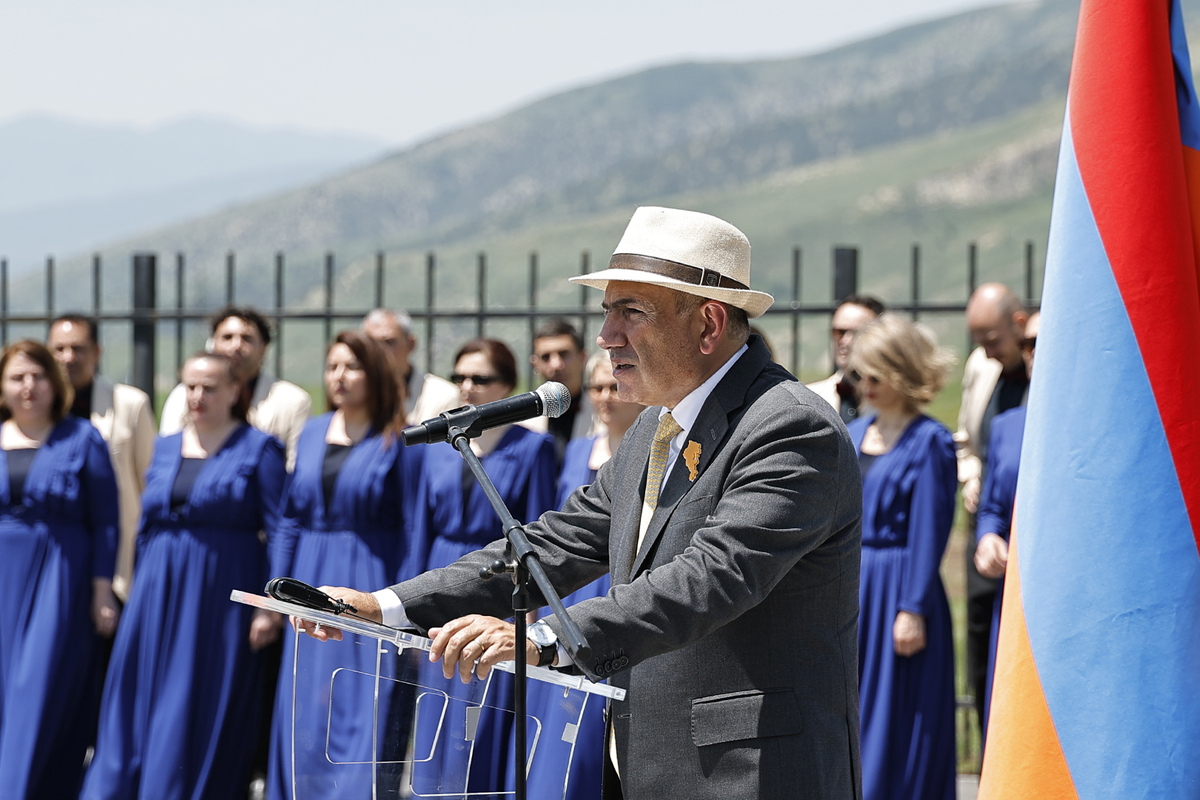
Prime Minister Nikol Pashinyan is becoming increasingly intolerant of all those who disagree with him.
In the midst of the June 7 parliamentary elections, Pashinyan illegally ordered the arrests of hundreds of opposition members and several parliamentary candidates; prevented the leaders of opposition parties from leaving the country; and threatened to imprison them and ban their political parties.
Next, Pashinyan may not allow Armenians who oppose him to vote at all and may strip them of their citizenship. Does anyone still think that the government can be changed through elections?
The latest problem began when Pashinyan heard that a large number of Armenian citizens living in Russia were planning to travel to Armenia to vote in the June 7 parliamentary elections. Initially, he falsely claimed that he was not worried about them, since he was certain that they would be voting for his political party. However, not believing his own claim, he announced that they would be intercepted when entering Armenia and subjected to a 25-day military training. In addition to preventing these Armenians from voting, he denigrated the patriotic act of military service by presenting it as a form of punishment.
When Armenians ask why Diaspora Armenians who are not citizens of Armenia are not allowed to vote in Armenian elections, I tell them they should be much more concerned about the fact that around 1 million Armenian citizens, who have lived abroad since the country’s independence are not allowed to vote in their homeland’s elections unless they are in Armenia on election day. No one has the right to deprive Armenian citizens who live overseas of exercising their fundamental right to vote. This is why over 150 countries allow their overseas citizens to vote.

The problem became much more serious after Pashinyan’s government decided to place residency requirements on Armenian citizens who travel to Armenia to vote. To make sure that never again those who are opposed to the regime can fly to Armenia at the last minute to vote, Pashinyan’s parliamentary allies announced last week that they are planning to amend the law to require that all citizens who come to Armenia from overseas to vote can only do so if they have lived in Armenia for at least six months prior to the elections.
This is wrong and discriminatory. Pashinyan has no right to treat the citizens of Armenia who live overseas as second-class citizens. No one has the right to deprive Armenian citizens of the right to vote.
Instead of recognizing that the Diaspora is a valuable asset, Pashinyan is trying to discourage its members from any involvement in their homeland. The Diaspora is much more than a “milking cow.” They can contribute to Armenia’s prosperity through their investments and expertise. A small nation, having survived centuries of persecution, massacres and even genocide, should not be split into smaller factions. Pashinyan has already divided them into former vs. current leaders, Hayastantsis vs. Artsakhtsis, Hayastantsis versus Diasporans, and now internal vs. external citizens. He should follow the call for unity issued by prominent poet Yeghishe Charents: “Oh, Armenian people, your only salvation is in your collective power.”
When Pashinyan first came to power in 2018, he dismantled the Diaspora Ministry, the only existing link between Armenia and the Diaspora. Instead, he created the High Commissioner’s Office of Diaspora Affairs of Armenia headed by Zareh Sinanyan, who proceeded to destroy all the bridges between Armenia and the Diaspora. Pashinyan himself has made derogatory remarks about Diaspora Armenians while meeting with them during his travels overseas.
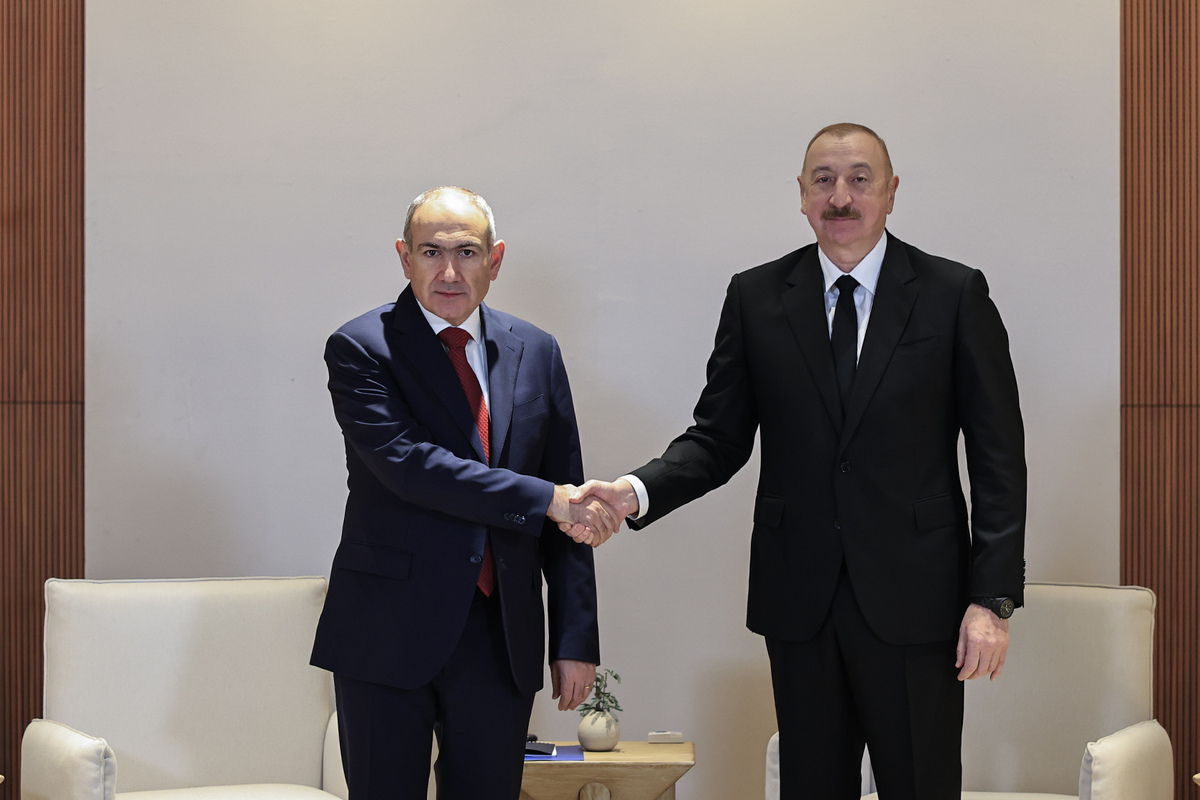
Ironically, Armenia’s enemies, Azerbaijan and Turkey, are the ones that recognize the importance of the Diaspora. Over the years, both President Erdogan of Turkey and President Aliyev of Azerbaijan have repeatedly commented that they have excellent relations with the Armenian government, but they are alarmed that “the powerful” Diaspora is interfering in their plans to exact maximum concessions from Armenia.
The Turkish and Azerbaijani governments have given specific instructions to their embassies and consulates to closely follow the activities and statements of local Armenian communities. They monitor the Armenian media to be aware of the messages they communicate and the activities they are planning. The collected information is transferred to the foreign ministries of Azerbaijan and Turkey.
A recent example is the “Diaspora Mobilization Conference” which was held in Paris on April 11-12, 2026, in the presence of 170 Armenian activists from 26 countries, including three former prime ministers of Armenia and representatives from the Artsakh government.
Ilaha Khantamirova, an analyst at the Center for Eurasian Studies (AVIM) based in Ankara, wrote an extensive two-part analysis of the Paris conference. Here are excerpts from her report: “Pashinyan stands out as the first political leader in the history of independent Armenia to openly antagonize both the Armenian Church and the Diaspora. In particular, his shift in rhetoric regarding the Karabagh issue in recent years — has caused serious rifts within Diaspora circles. Pashinyan’s explicit acknowledgment that Karabagh constitutes Azerbaijani territory … signifies a major departure from traditional Armenian nationalist discourse.”
Khantamirova also mentioned my speech at the Paris conference: “The proposal to establish a ‘Diaspora Parliament’ — put forward by writer Harut Sassounian — is significant insofar as it illustrates the magnitude of the tension that has currently emerged [between Armenia and the Diaspora].”
How can the leaders of Azerbaijan and Turkey be more interested in what the Diaspora is saying or doing than the prime minister of Armenia?




Voting Rights Deserve Serious Debate, Not Fearmongering
To the Editor:
Harut Sassounian’s article, “Pashinyan May Strip the Citizenship of Armenians Who Didn’t Vote for Him,” raises a serious issue but frames it in a misleading and inflammatory manner.
There is a legitimate debate to be had about whether Armenian citizens living abroad should face residency requirements in order to vote in Armenia’s national elections. Any proposal that could restrict citizens’ voting rights deserves public debate, constitutional review, and serious scrutiny.
But that is not the same as stripping anyone of citizenship.
Sassounian provides no evidence that Prime Minister Nikol Pashinyan has proposed taking Armenian citizenship away from those who oppose him or did not vote for him. The article takes a real voting-rights controversy and turns it into a frightening accusation not supported by the facts presented.
There is also important context missing. As someone living in Armenia on a permanent basis, I repeatedly heard during the election period, both from ordinary citizens and on political talk shows, concerns that some Russian-Armenian dual citizens – including individuals who had not lived, worked, paid taxes, served, or otherwise meaningfully contributed to the Republic of Armenia for many years – were arriving in large numbers to vote and then returning to Russia almost immediately. Many were reportedly of compulsory military-service age.
Whether every such case was innocent or organized, these concerns were part of a broader national discussion about voting rights, civic responsibility, military obligations, access to public benefits, and possible Russian influence over Armenia’s election.
No Armenian citizen should be deprived of rights arbitrarily or punished for political views. Many Armenians abroad remain deeply connected to Armenia and have every right to care about the country’s future. But citizenship is not only a passport of convenience. It carries responsibilities as well as rights.
The proper question is not whether Armenians abroad matter. They do. The proper question is how Armenia can protect citizens’ voting rights while also protecting its elections from organized foreign interference.
That is the debate Sassounian should have addressed. Instead, he presents the issue as though Pashinyan is preparing to punish Armenians for political disloyalty, while largely ignoring the Russian dimension and the Moscow-aligned orientation of key opposition forces.
Criticism of Pashinyan is legitimate and necessary. But criticism loses credibility when every policy dispute is turned into a claim of dictatorship, and when Russia’s interference and the record of Armenia’s former pro-Russian elites receive far less attention.
Armenia deserves a serious discussion about voting rights, citizenship, foreign interference, and diaspora participation. It does not benefit from fearmongering headlines suggesting, without evidence, that Armenians may lose their citizenship simply because they did not vote for Pashinyan.
Democracy is defended through facts, due process, and respect for Armenia’s sovereignty – not through partisan accusations presented as patriotism.
You did not need to write such a long confusing comment. It is very simple. One is either a citizen or is not. There is no such thing as half-pregnant citizens. There are no second class citizens. All those who are citizens have the right to vote no matter where they reside. Period. There is nothing to explain. Don’t mix up other issues with this simple fact. Over 150 countries give the right to vote to their overseas citizens. Are you and Pashinyan the only smart ones and 150 governments are stupid? I don’t think so. I suggest that you read my column again, carefully. I listed some of the illegal actions that Pashinyan has taken. Therefore, I projected he MAY next ban citizens who didn’t vote for him. I said MAY, not Will. This is my opinion given Pashinyan’s long list of illegal actions. If you are saying that he is not a dictator, then you have no idea what is happening in the country. What more evidence do you want? You are free to draw your own conclusion, but don’t tell me I have no right to express my opinion. I live in a free country, not Pashinyan’s dictatorship.
Wanting to eliminate the right to vote for citizens abroad is a common trait of many autocratic leaders and their parties, especially if the diaspora opposes them and they cannot easily and secretly manipulate overseas votes in their favor, like they can do at home.
Here are some recent examples from other countries:
Georgia: https://isfed.ge/eng/gantskhadebebi/saparlamento-archevnebshi-sazghvargaret-khmis-mitsemis-shesadzleblobis-gauqmeba-archevnebis-sakoveltaobis-printsips-mnishvnelovnad-daazianebs
Slovakia: https://www.euronews.com/video/2026/04/15/crowds-in-bratislava-reject-fico-plan-to-scrap-overseas-voting
United States: https://www.npr.org/2025/10/01/nx-s1-5542344/overseas-active-duty-military-voting-uocava
No wonder why Pashinyan (and his predecessors) never pushed for the unrestricted right to vote for Armenian citizens living abroad.
However, Pashinyan’s desire to effectively disenfranchise Armenian citizens who have not been in the country for more than six months from voting, even if they come to Armenia for just one day wishing to vote, goes even further.
The disenfranchisement of Armenian citizens, is not only a gross human rights violation, it is a violation of Article 48, part 1 of the Armenian Constitution which clearly states: “Citizens of the Republic of Armenia who have reached the age of eighteen on the day of the National Assembly election or referendum have the right to vote and participate in the referendum.”
Thousands of Armenians ethnically cleansed from Artsakh, who hold Armenian passports with an “070” designation code, have been barred from voting in national elections.
Pashinyan is attempting to create the Armenian version of the Jim Crow laws for Diaspora Armenians and Artsakh Armenians.
That Pashinyan has become a dictator is bad enough (and he undeniably is one), that he is planning to disenfranchise Diaspora Armenians and Artsakh Armenians, is revolting – and a case for a revolt.
Mr. Sassounian,
Of course you have every right to express your opinion. I never suggested otherwise. My point was that serious accusations should be supported by serious evidence.
You are correct that a citizen is a citizen, and no Armenian citizen should be arbitrarily deprived of voting rights or treated as second class. That is why I wrote that any proposed residency requirement deserves public debate, constitutional review, and serious scrutiny.
But that still does not make a voting-residency proposal the same as stripping citizenship. Your article’s headline and central framing suggest that Armenians may lose their citizenship because they did not vote for Pashinyan. Yet the concrete issue discussed in the article is voting eligibility for citizens living abroad. Those are different matters.
Saying “may” does not remove the need for evidence. One can say almost anything “may” happen, but responsible commentary should distinguish between a documented proposal, a legal possibility, and a political accusation.
You also dismiss the context of foreign influence too easily. Armenia has every right to examine whether voting rights, dual citizenship, military-service obligations, and electoral participation are being exercised lawfully and without manipulation by any foreign power. That does not mean citizens abroad should be punished. It means the issue is more complex than your article allows.
Criticism of Pashinyan is legitimate. But calling Armenia a dictatorship and portraying every controversial policy as proof of tyranny does not strengthen democracy. It turns political disagreement into alarmism.
The question is not whether Armenians abroad matter. They do. The question is how Armenia can protect their rights while also protecting the sovereignty and integrity of its elections.
That deserves a serious discussion, not a headline suggesting without evidence that Armenians may lose citizenship because they did not vote for one man.
Respectfully,
Berge Jololian
Yerevan, Armenia / Watertown, Massachusetts
Berge, at the risk of beating a dead horse, you are free to express your opinion, so am I. You can not tell me what to write. You may not like it, but no one obliges you to agree with me. You don’t even have to read what I write. I am very concerned that you are unaware that you are living under the dictatorship of Pashinyan. So you consider his thousands of violations of laws and the constitution normal and proper? Good for you. Enjoy it.
Mr. Sassounian,
I am not telling you what to write. I am responding to what you wrote. That is also part of free expression.
My objection remains simple: serious accusations require serious evidence. A proposed residency requirement for voting, however debatable, is not the same as stripping citizenship. Saying “may” does not eliminate the responsibility to distinguish between fact, speculation, and political accusation.
I do live in Armenia, and I do not need to be told from abroad what country I am living in. I see its problems every day, but I also see its progress.
Yes, Armenia faces serious challenges. But I am also witnessing a country expanding its diplomatic relations, strengthening ties with Europe and the United States, hosting major international gatherings, building strategic partnerships, attracting technology investment, diversifying its security relationships, and trying to reduce dangerous dependence on Russia.
If that is what you call “enjoying it,” then yes, I do prefer seeing Armenia engage the world, strengthen its sovereignty, and build alternatives to the failed old dependency model.
Criticizing Pashinyan is legitimate. No leader should be above scrutiny. But calling Armenia a dictatorship every time one disagrees with a policy does not make the argument stronger. It only cheapens the word dictatorship and ignores the real debate: how Armenia can protect citizens’ rights while also protecting its elections from foreign manipulation.
You are free to write your opinion. I am equally free to challenge it when I believe it is exaggerated, misleading, or unsupported.
Respectfully,
Berge Jololian
Yerevan, Armenia / Watertown, Massachusetts
You just proved that you have no idea that you are living in a dictatorship. Pashinyan is making endless concessions to Azerbaijan and Turkey. Pretty soon, there won’t be anything left to concede. I hope you kept your home back in the U.S., unless you want to live in an Azeri/Turkish vilayet.
I’m not Armenian by lineage but I love Armenians and support you
Don’t worry, Pashinyan will not and can not strip citizenship because of not voting for him. This is ridiculous and unheard of
Two thirds of Armenia’s residents didn’t vote for him. Only half of those who turned out did
God bless you all 🇦🇲