More than toys: Inside Zarman’s educational toy lab in Armenia
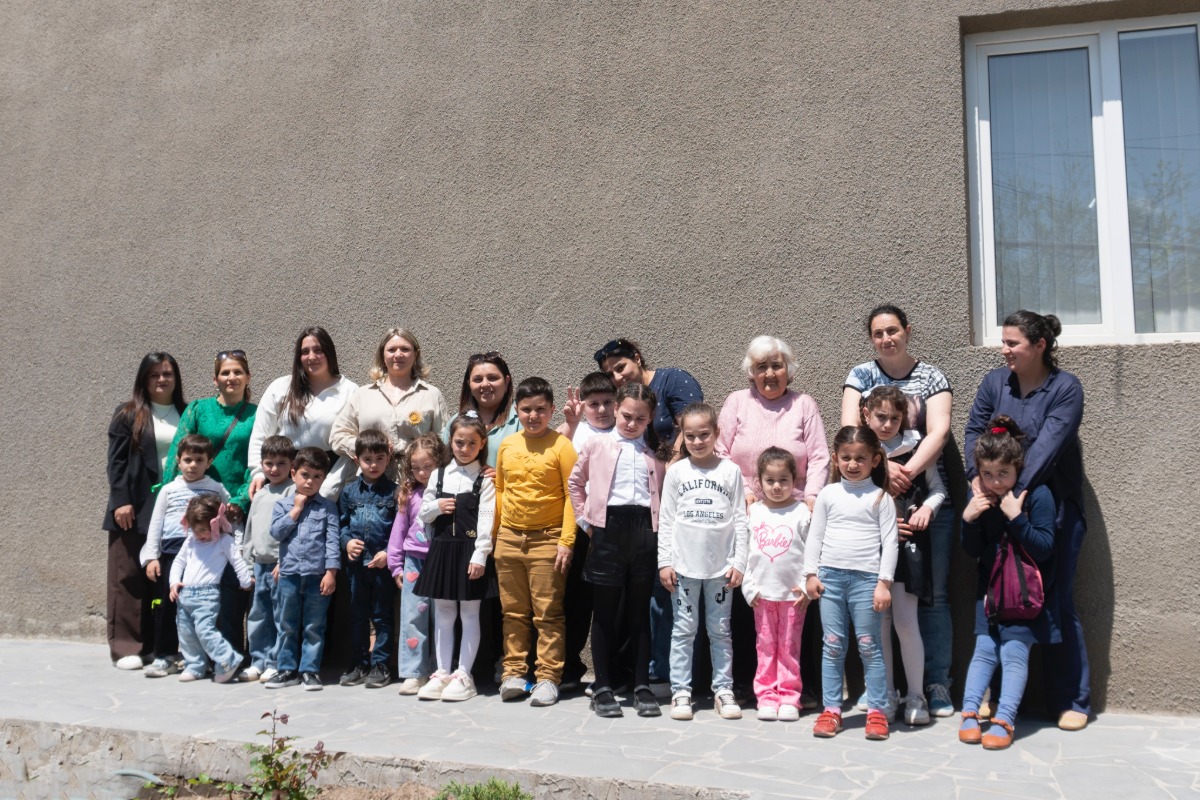
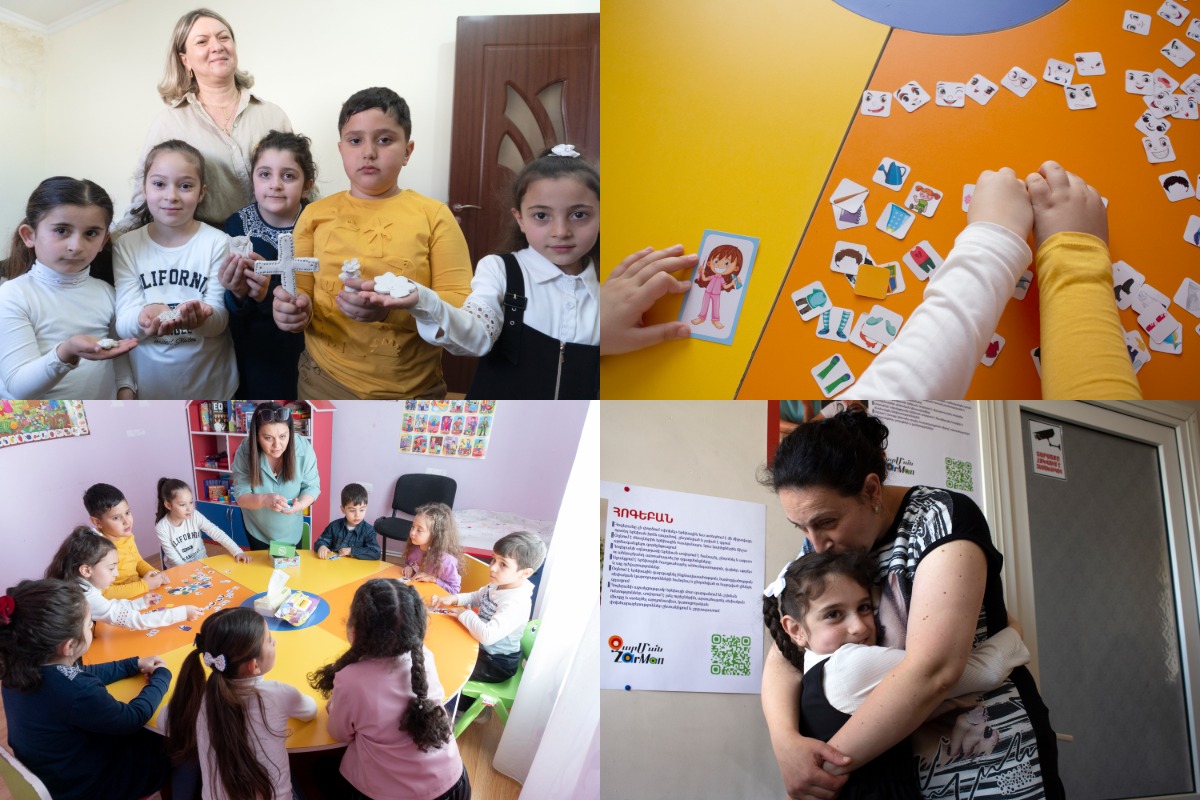
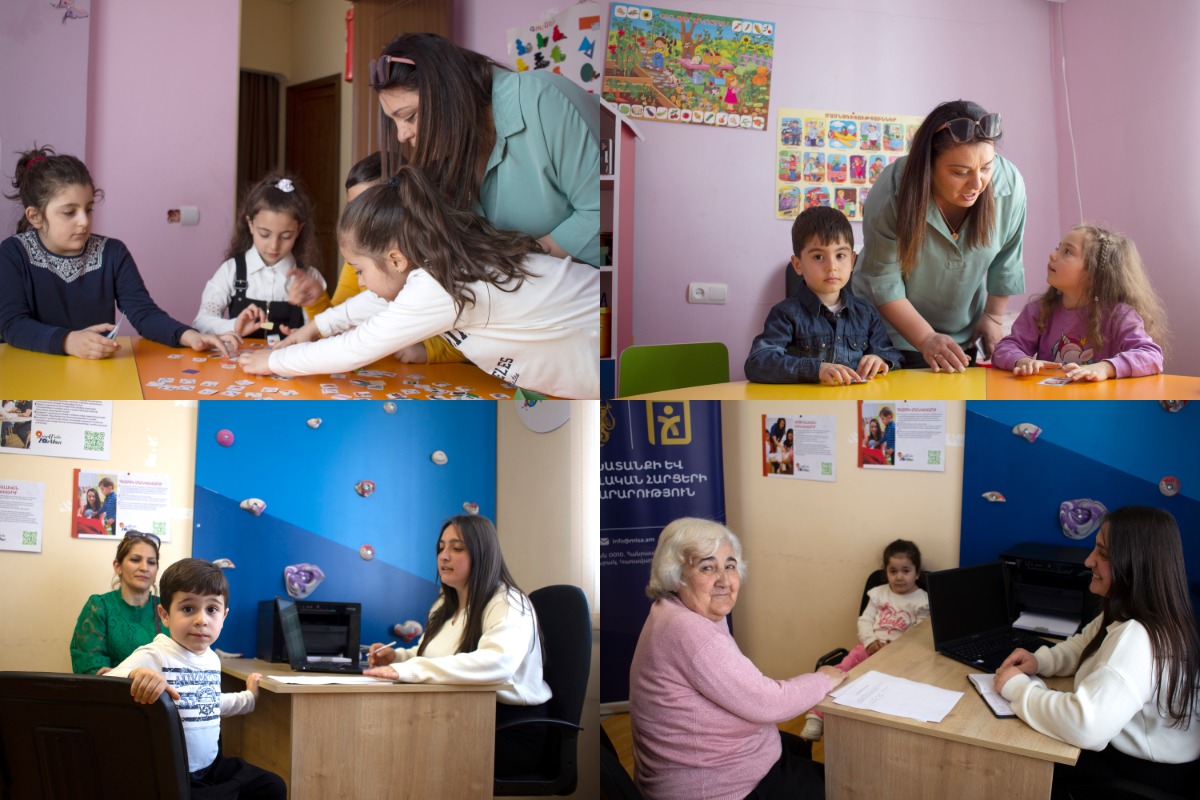
There is a special room at the Child Development Foundation in Armenia where Marine Safrastyan, a longtime employee of the organization, spends her days playing with children. At first glance, it looks like an ordinary playroom, but it is much more than that.
Safrastyan, whom everyone affectionately calls Mash, is responsible not only for supervising play but also for closely observing each child’s emotions, behavior and development. Watching her interact with the children, it is easy to see how much they adore her. During a recent visit, a seven-year-old child approached her and offered a piece of gum, explaining that it was especially for Mash.
“There was a girl who used to take what she loved from the playroom without permission. One day, when I noticed this, I told our psychologist,” Safrastyan said. “She explained how to approach the child without traumatizing her or making her feel bad. That’s why I’m very attentive to every detail. I discuss these things with our specialists to understand how to work with a child.”
The Child Development Foundation, registered as a local foundation in 2009, was one of the first organizations to provide services to children through a multidisciplinary team. At that time, educational and therapeutic materials were not as diverse or widely available in Armenia. Providing therapy services requires various games, toys and developmental materials to support the therapeutic process. Since its establishment, the foundation has operated a design laboratory where specialists develop different types of games, including those specifically designed to support emotional intelligence, logical thinking, motor and mobility challenges, or to enhance general cognitive skills. These games are created and used directly in the services they provide.
In the playroom, among different developmental and sensory toys, there is a special wooden display wall that serves as a prototype for Zarman’s larger line of wooden educational toys. The name Zarman is a shortened version of the Child Development Foundation (Mankakan Zargatsman Himnadram), but it also connects to the Armenian word “zarmanq,” meaning “surprise.” Together, the words reflect the idea that each Zarman toy creates a sense of surprise as children interact with them.

Lusine Simonyan, director of the foundation and Zarman Social Enterprise, notes that even today there are very few organizations manufacturing a wide variety of wooden educational toys. Most developmental games available in Armenia are imported, often at lower prices and in greater variety.
“However, we strive to preserve Zarman’s unique niche and identity as a genuine social enterprise because it was created specifically to generate real social impact,” Simonyan told The Armenian Weekly.
“Every product is tested, evaluated, refined and only then finalized. This is one of our main areas of social impact: developing high-quality educational materials that support children’s growth and development.”
The second area of impact is the involvement of parents whose children attend Zarman’s programs. They learn how to make soft toys themselves by sewing them. Through this work, the organization engages people who can generate income through their participation. The revenue from these toys is reinvested into other social programs, and helps establish and support centers in Armenia’s other regions.
“While the revenue generated is not enormous, it allows us to contribute meaningfully to the Foundation’s mission,” Simonyan said. “It helps us make services more accessible and cover administrative and operational expenses that are often difficult to fund through grants alone. Zarman creates social impact while supporting the foundation’s broader mission.”
“Every product is tested, evaluated, refined and only then finalized. This is one of our main areas of social impact: developing high-quality educational materials that support children’s growth and development.”
If specialists were not involved, the games might look different, perhaps more visually striking. However, in Zarman’s case, psychologists bring their perspective, special educators bring theirs, and art therapists and social workers provide input. This is one of Zarman’s defining characteristics: all 75 of its games were developed by a multidisciplinary team that clearly defined each product’s purpose and function. Zarman games usually support multiple objectives, including motor development, logical thinking, cognitive skills, spatial awareness, emotional recognition and regulation, as well as sensory exploration through different textures and materials.
“In other words, we do not simply look at a picture and say, ‘What a beautiful game.’ Every element is intentional,” Kristine Baghdasaryan, head of the administrative department, told The Armenian Weekly.
Baghdasaryan is a veteran of Zarman, and her eyes lit up as she began sharing details of each game: how everything started, what challenges they faced and how they handled them.
At one point, they could not procure the materials they needed, Baghdasaryan said. Together with their craftsman, Hrach, they took apart old calculators and reused their components to build the toys. They painted, polished and transformed them into educational materials because they simply did not have access to specialized resources.
“Back then, we built games mostly for our own programs. The design laboratory used to occupy this entire space. Later, we moved production elsewhere because the equipment no longer fit here,” Baghdasaryan said.
Eventually, the foundation upgraded the workshop, purchased laser cutting equipment and improved quality. But those prototypes, made from recycled calculator parts and whatever materials the team could find, tell the story of the real journey.
The process of creating a game begins with an idea. Hrach or Hripsik, the production specialist, considers the best materials for the specific toy being built, including different fabrics, textures and components. Wooden games are usually made from specially selected plywood and standardized dimensions. A prototype is then created and tested. Specialists evaluate it, discuss what worked and what did not, suggest improvements, and only then does the product move into production.
The real challenge is balancing professional integrity with market realities. As competition increases, it is impossible to simply compete on volume or price. According to Simonyan, they aim to preserve their professional approach while continuing to adapt.
“We may change the way a game looks, package it differently, or add more playful elements, but we never compromise its core developmental purpose,” she said. “It’s similar to having a vision: the path toward achieving it may change, but the destination remains the same.”
Together with their craftsman, Hrach, they took apart old calculators and reused their components to build the toys. They painted, polished and transformed them into educational materials because they simply did not have access to specialized resources.
The foundation sees itself as a kind of laboratory for human development. It is not only creating games; it is developing professionals. Young specialists come with limited experience, begin as volunteers or interns, and grow professionally over time. That is another part of the laboratory model. Zarman builds professional capacity while creating games, developing service methodologies and implementing community programs through grants. Ultimately, the goal is to help create high-quality human capital — people who can successfully navigate the world and lead fulfilling lives.
At Zarman, it is impossible not to notice how deeply individuals are valued. Every game, every therapy session and every interaction is built on the belief that children develop best when they are understood, supported and given the right tools to grow. What began years ago with improvised game pieces made from dismantled calculators has grown into a social enterprise whose impact reaches far beyond the playroom.
Back in the Zarman playroom, however, none of this feels like a strategy or a business model. It feels simple. Children laugh, experiment, build, remember and discover. Safrastyan watches carefully, noticing the small details others might miss. The organization may be known for its wooden toys, yet its real work is building trust, confidence and opportunity.
Photos courtesy of The Child Development Foundation.