


Armenian Heritage Walk opens at the Philadelphia Museum of Art
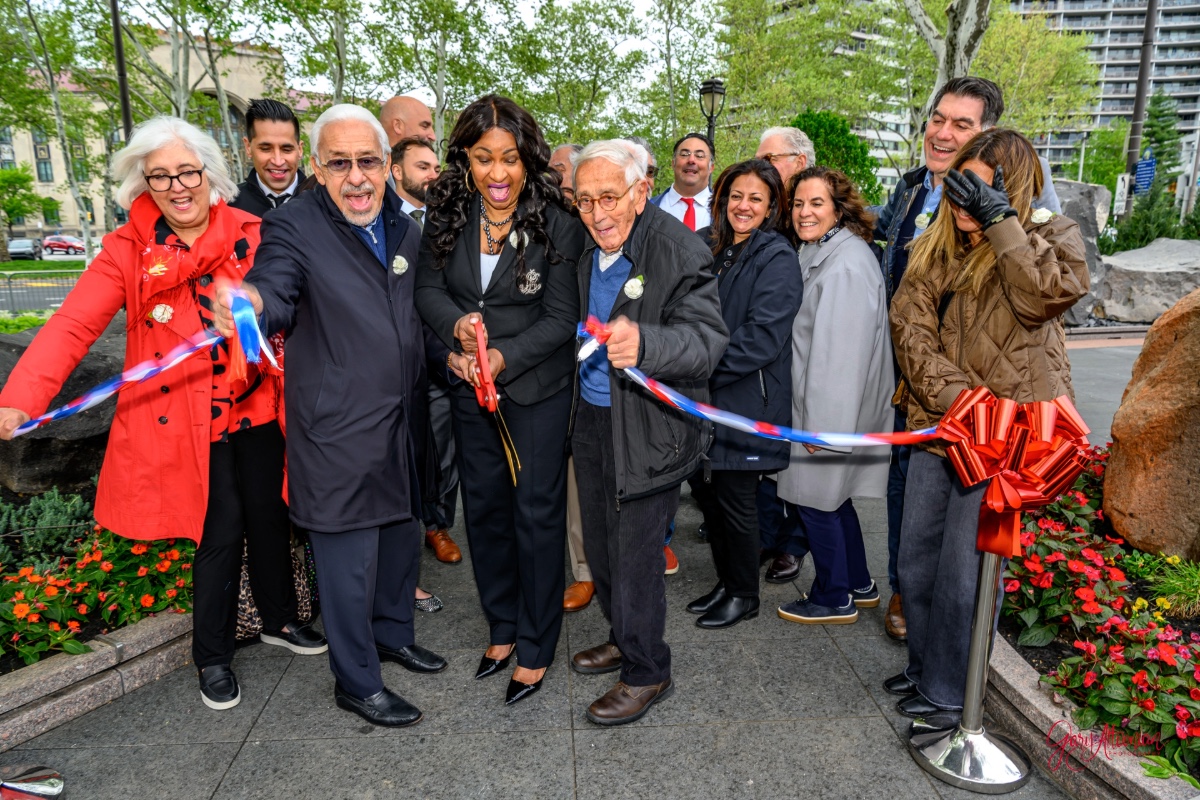
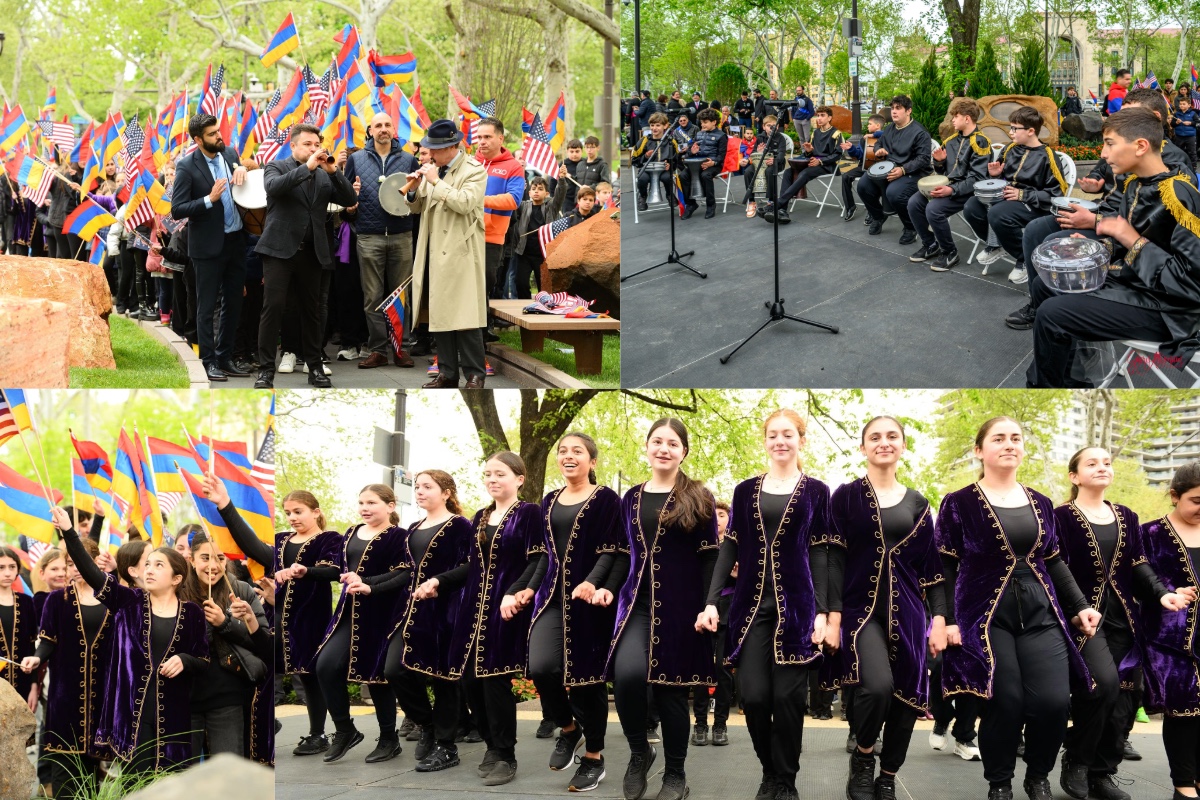
PHILADELPHIA – More than 1,000 people gathered Saturday, April 25, for the dedication of the Armenian Heritage Walk at the Philadelphia Museum of Art, a 15,000-square-foot walkway featuring Armenian culture, art and native gardens. Despite a rain forecast, the skies remained clear during the ceremony marking a significant achievement for the Philadelphia Armenian community. The project serves as a tribute to the contributions of Armenians in the United States.
The Armenian Heritage Foundation of Philadelphia marked the 111th anniversary of the Armenian Genocide and the nation’s 250th anniversary. Community leaders, volunteers, city officials, clergy and guests participated in the dedication, which included a ribbon cutting ceremony, music, dance and prayer.
At the center of the walk is the restored 22-foot-tall bronze statue of Young Meher, a figure from Armenian mythology, depicted in battle uniform clutching a cross. The statue, symbolizing resilience, faith and courage, was first unveiled in 1976 by members of the Knights of Vartan organization in 1976 on the 200th birthday of the nation.
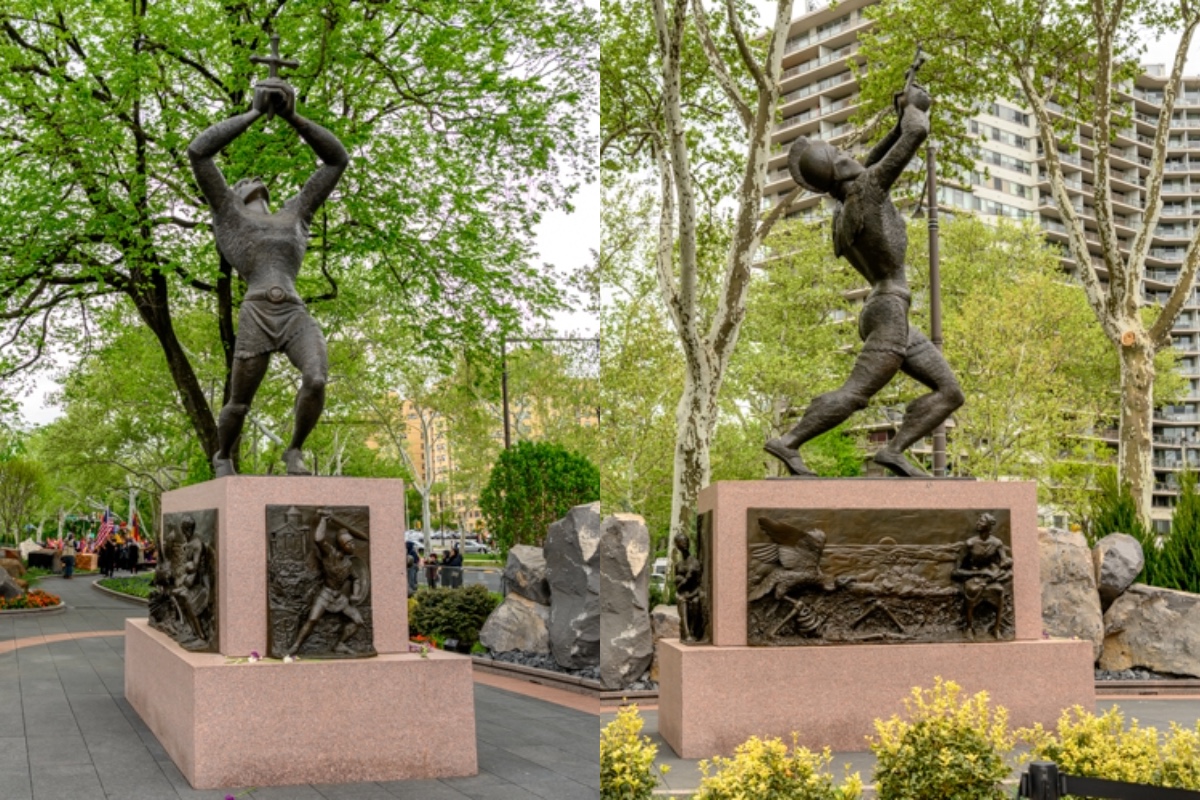

The completion of the walk marks the end of Phase 1 of the project. The site includes more than 60 boulders transported from Armenia and placed along a lighted, paved trail lined with trees, shrubs and other plants. Located across from the museum’s north entrance, the trail also includes areas for reflection and educational elements about Armenian culture.
Phase 2 will feature works by Armenian artists, in keeping with themes of language, faith and tradition.

In honor of the opening, the 19th-century Boathouse Row along Philadelphia’s Schuylkill River was lit in red, blue and orange, the colors of the Armenian flag.
Intercommunal commemoration of the Armenian Genocide
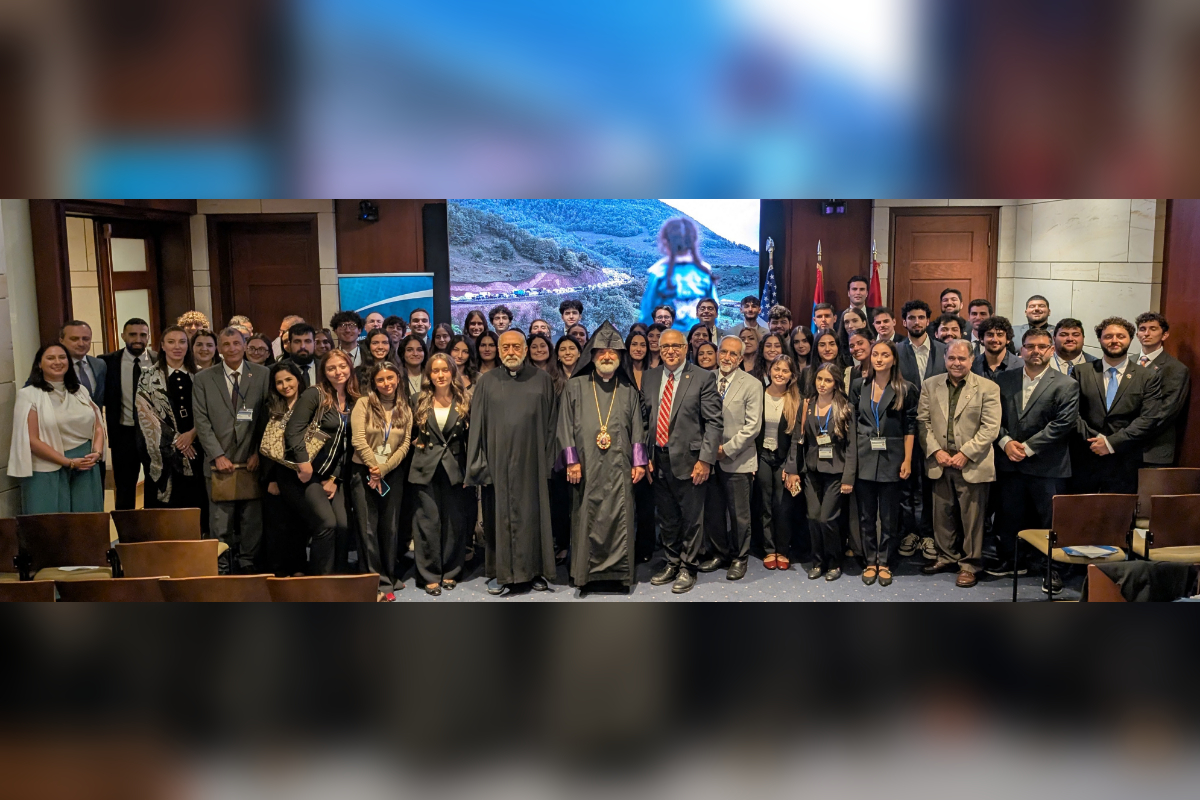
The weekend began with an intercommunal service of peace and remembrance of the Armenian Genocide on April 24 at the Saints Peter and Paul Basilica in Philadelphia. Clergy and altar servers from Armenian Apostolic, Catholic and Protestant churches across the Philadelphia area participated, joined by an intercommunal choir representing the five local Armenian churches as a symbol of unity.
The evening featured musical performances by students of the Armenian Sisters Academy and the blessing and the presentation of an Armenian cross-stone (khachkar) to the basilica. The monument was gifted in recognition of the Vatican’s remembrance of the Armenian Genocide.
Officiating clergy included Bishop Mesrop Parsamyan, Primate of the Eastern Diocese of the Armenian Church of America; Archbishop Anoushavan Tanielian, Prelate of the Eastern Prelacy of the Armenian Church of America; and Bishop Mikael Mouradian of the Armenian Catholic Eparchy of Our Lady of Nareg in the United States and Canada.
Also participating were the Very Rev. Fr. Boghos Tinkjian of St. Gregory the Illuminator Armenian Apostolic Church; the Rev. Fr. Armash Baghdasarian of St. Sahag and St. Mesrob Armenian Apostolic Church; the Rev. Fr. Hakob Gevorgyan of Holy Trinity Armenian Apostolic Church; the Rev. Fr. Asadur Minasian of St. Mark’s Armenian Catholic Church; and Rev. Heather C. Ohaneson of Armenian Martyrs’ Congregational Church, along with intercommunal deacons and altar servers.
Sister Emma Moussayan, principal of the Armenian Sisters Academy, offered remarks. Archpriest Fr. Nerses Manoogian served as honorary chairman of the service. Dr. Garo Garibian and Noubar Megerian served as co-chairs; Maroush Paneyan-Nigon and Karinne Andonian as co-choir directors; and Veronica Kazandjian Babayan and Larry DerHagopian as usher captains, with additional volunteers assisting throughout the event.
Deacon Chiké Egbufoama, representing the basilica, offered words of thanks and accepted the khachkar on behalf of the Archdiocese of Philadelphia.
Dedication draws crowds
More than 1,000 guests gathered Saturday at the Armenian Heritage Walk at the Philadelphia Museum of Art for a daylong program. Speakers traced the historical contributions of the 1976 visionaries and the efforts of the current foundation leaders, committee members, designers, builders, volunteers and donors who contributed to the project over the past eight years. The program also featured an intercommunal choir, Armenian dance groups, singers and theatrical performances that drew cheers and tears from the audience.
Master of ceremonies and Dedication Committee Chair Yeretzgin Arpy Minasian led the program with inspiring remarks.
“I stand here as an American and an Armenian with a full heart… rooted in two identities,” she said, adding that the United States is strongest when it embraces its multicultural character.
She also reflected on the loss of Artsakh, also known as Nagorno-Karabakh, saying, “We mourn the loss of the ancient land of Artsakh… We are not defined by what we lost. We carry faith, culture, resilience.”
Minasian emphasized the symbolism of the walk, describing it as “more than a collection” and “a covenant,” where “every detail whispers ‘We are still here.’” She also praised the foundation for giving “voice to the enduring spirit of the Armenian people.”
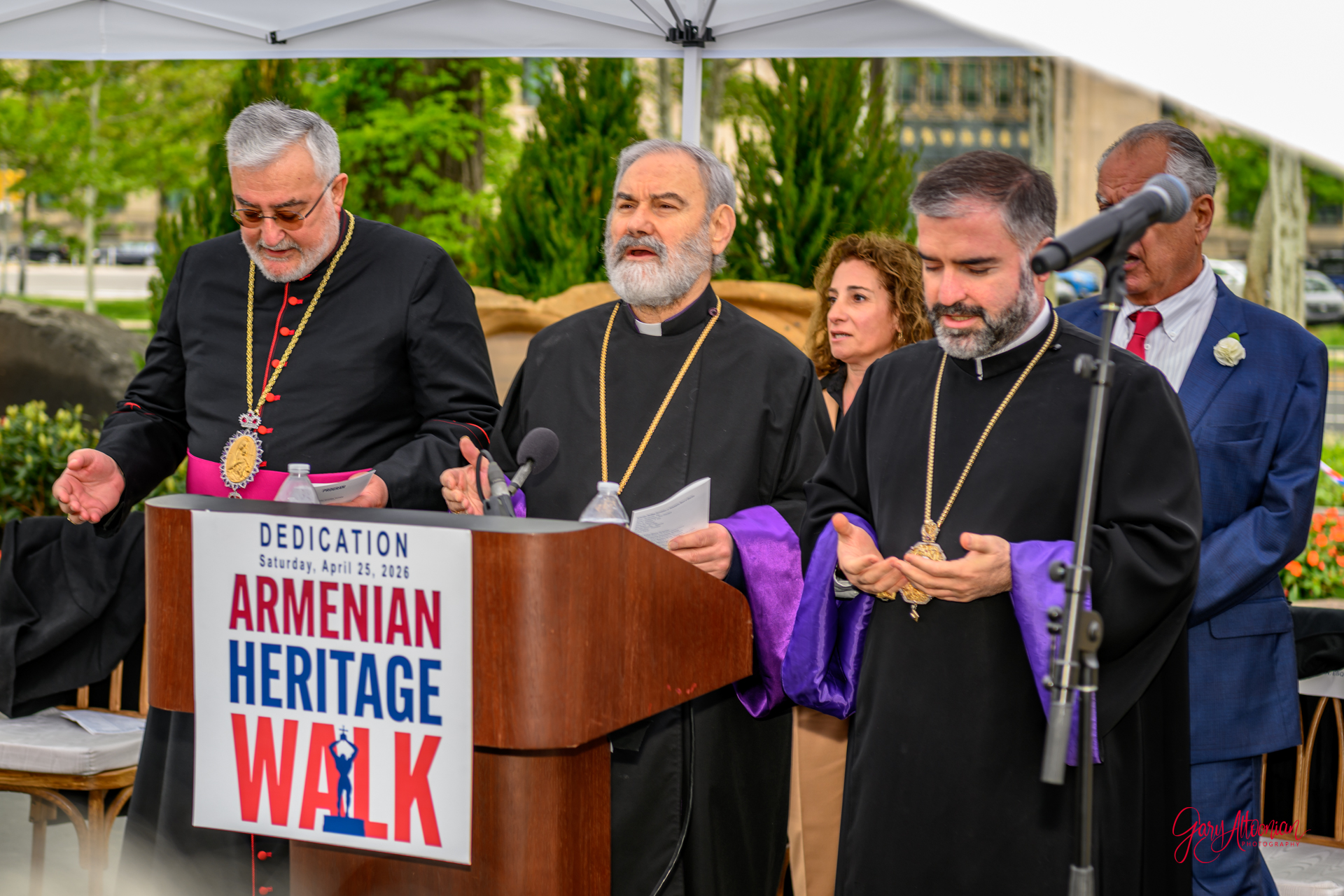
The program included blessings and remarks from Bishop Mesrop Parsamyan, Archbishop Anoushavan Tanielian, and Bishop Mikael Mouradian.
Parsamyan spoke of gratitude “to God, this country, and our ancestors,” describing the boulders as a testament to both the suffering and the strength of the Armenian people. Tanielian reflected on the significance of “witnessing” the opening of the project, calling participants “the children of light,” and referencing the 5,000-year-long Armenian history and the biblical legacy of the lands of Eden and Mount Ararat. Mouradian highlighted the upward-pointing cross held by the Young Meher, calling it a symbol of resurrection.
Historical reflection
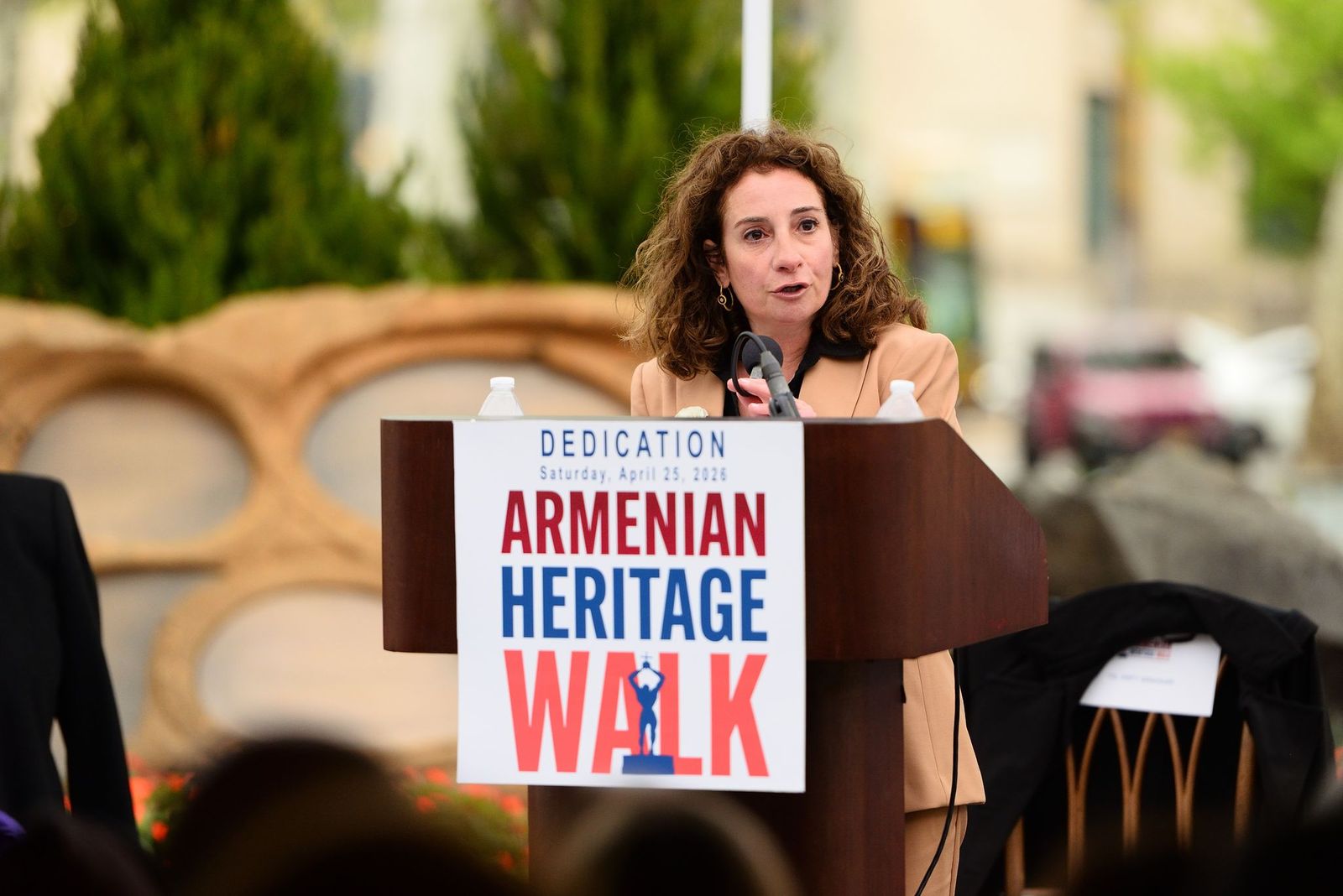
Foundation member Steve Barsamian detailed the history of the Armenian Heritage Walk, noting that the Young Meher Statue was dedicated at the site 50 years and 1 day earlier.
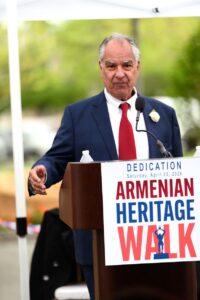
He paid tribute to the Knights of Vartan and the original visionaries for laying the foundation for the bicentennial project. Among them were Armenian Bicentennial Commemoration Committee Executive Chair M. George Mooradian; Vice Chair John Bogosian; Secretary John Sudjian; Treasurer Albert Momjian; Statue Committee Chair John Samelian; committee members Harry Andonian, Harry Dorian; Harry Hoplamazian and John Mirakian; Banquet Committee Chair John Tokmajian; among others.
Barsamian had maintained the statue for decades. In 2017, he began efforts to restore it, initiating discussions with City Hall.
Those efforts led to the involvement of Viken Bazarbashian, David Hoplamazian, Karolyn Chebookjian, Harry S. Cherken, Jr., Kurk Selverian, and Michael Santerian, as well as architect Simon Koumjian III, landscape designer Ned Moore and Nanette Zakian.
As a committee of motivated community members began forming, Kurk Selverian took on the leadership role, with Koumjian III leading the architectural design, Hoplamazian overseeing construction, Cherken handling legal matters, and Chebookjian and Zakian directing fundraising and marketing.
Barsamian noted that many others contributed to the project and said it would be impossible to name them all.
“For as long as I’ve been here, I’ve never seen such unity,” he said. “Capital letters UNITY.”
City commendation and accolades
City and state officials attending the dedication included staff from the offices of U.S. Sens. David McCormick and John Fetterman state Reps. Ben Sanchez, Tarik Kahn and Keith Harris; city officials Aparna Palatino and Doug Robinson; Parkway Council Executive Director Nicholas Anderson; and Philadelphia City Representative and Director of the Office of Special Events Jazelle Jones.
Jones addressed the audience, noting the longstanding presence of Armenians in Philadelphia.
“For well over a century, Armenians have been a part of the city,” she said, describing Philadelphia as “a place to build, to rebuild and to thrive.” As the U.S.approaches its 250th anniversary, she added, “we see that dream realized,” with Philadelphia having become a special place because it is a “tapestry of many cultures living together.”
Clergy and audience members then sang along with the Hamazkayin Meghry Youth Choral Group, which was followed by a presentation by site contractor David Hoplamazian, president of Mayfield Site Contractors Inc.
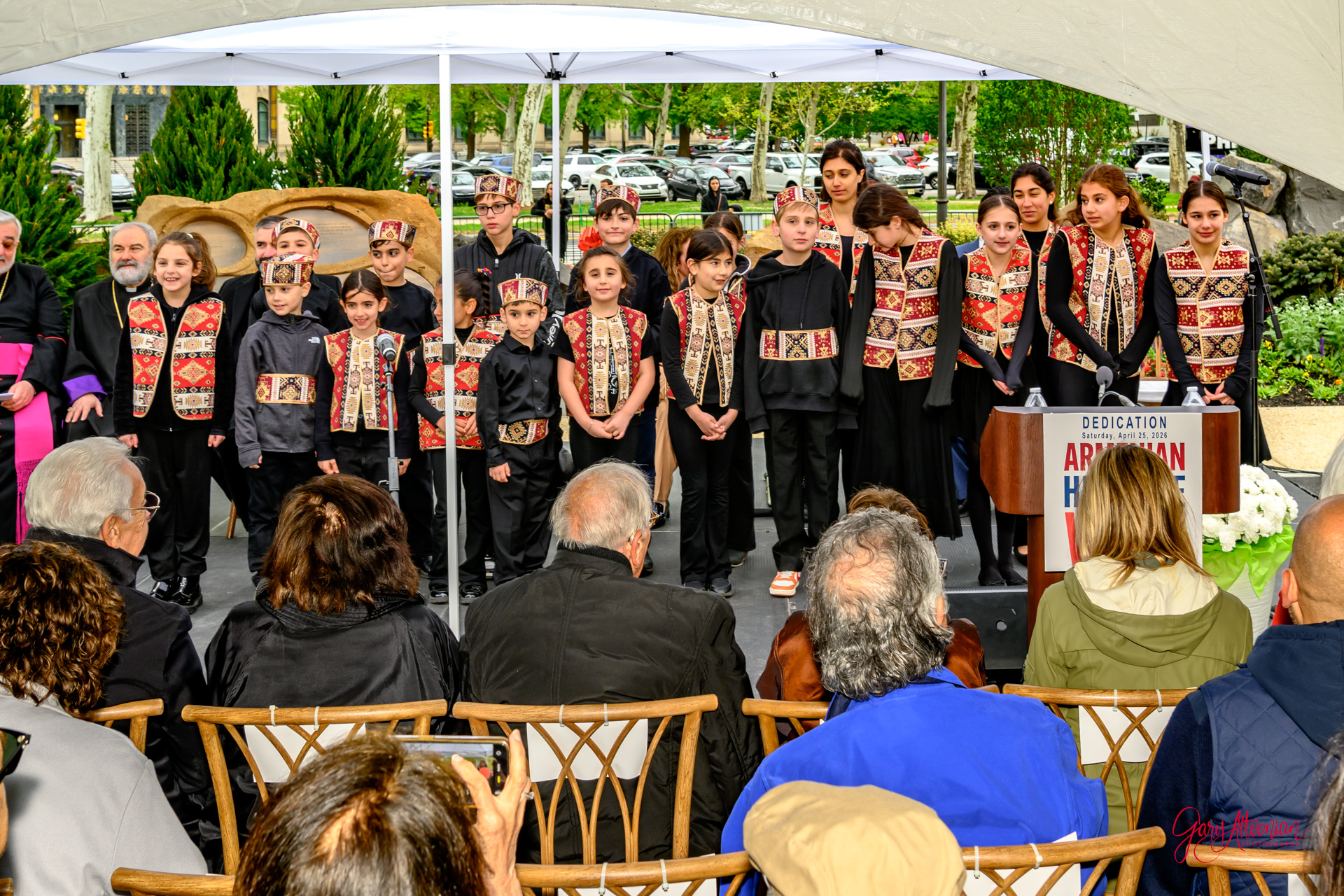
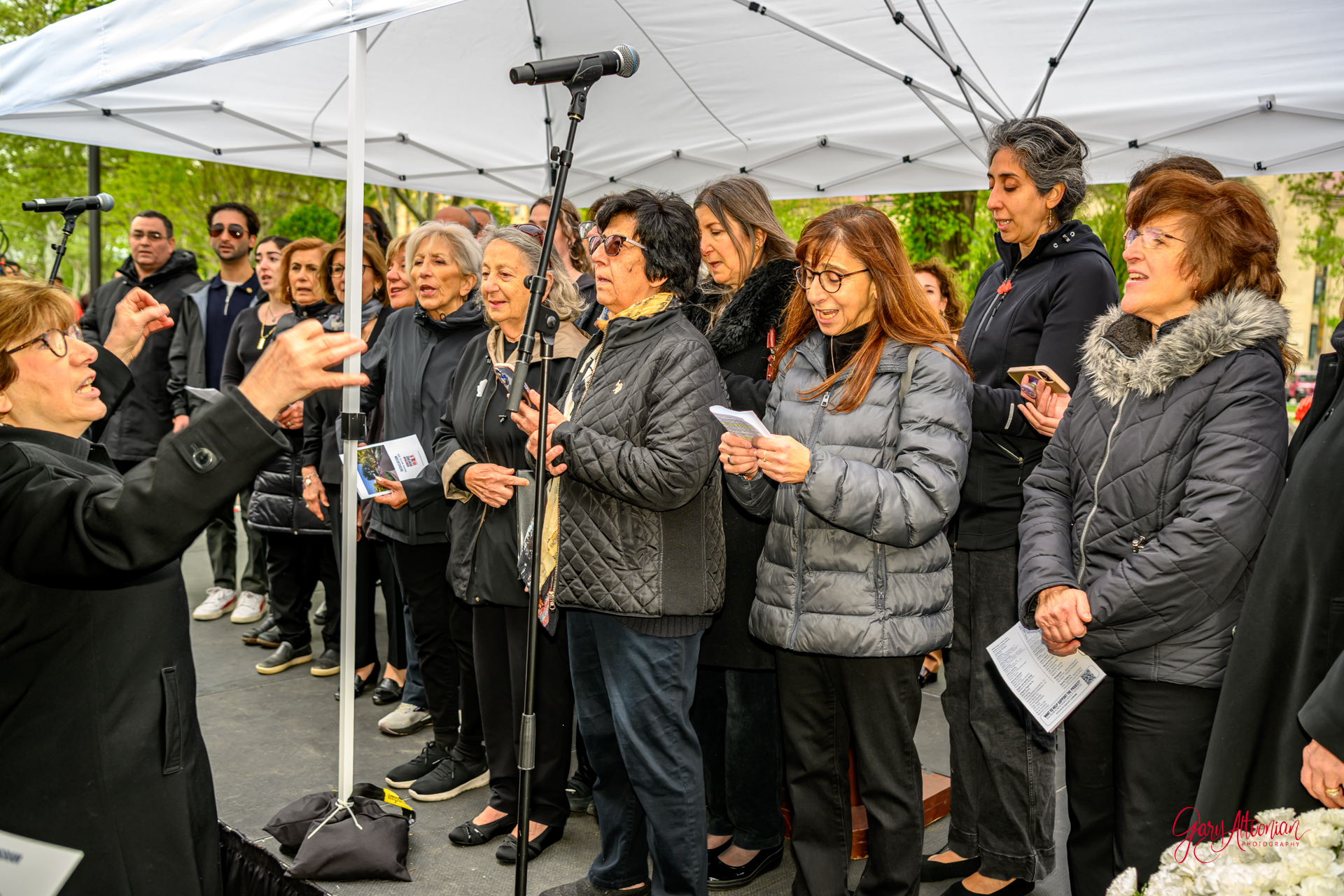
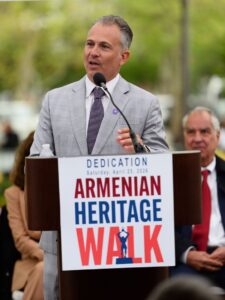
Hoplamazian, who worked closely with site architect Simon Koumjian III, spoke about their collaboration, which turned drawings into reality within one year. He credited the original organizers of the 1976 Young Meher project (among them members of his own family) and current foundation members, volunteers and city partners for their contribution.
“It takes a village,” he said.
Hoplamazian also recognized Andranik Danielyan for coordinating the transport of more than 60 boulders from Armenia to Philadelphia and thanked the Armenian Sisters Academy for storing the materials prior to installation.
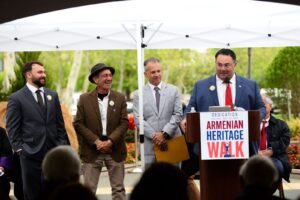
Foundation President Kurk Selverian also addressed the audience, thanking city officials, museum representatives and members of the horticultural society who were instrumental in the success of the project.
Selverian recognized Koumjian for his architectural leadership, landscape designer Ned Moore for his design work, and Hoplamazian for overseeing construction and working closely with Koumjian to complete the project on a tight timeline.
Serving as keynote speaker, Selverian presented a heartwarming theatrical tribute to the Armenian people. He shared a William Saroyan poem that captured the Armenian American story, touching on themes of inclusion, survival, resilience and contribution to the United States.
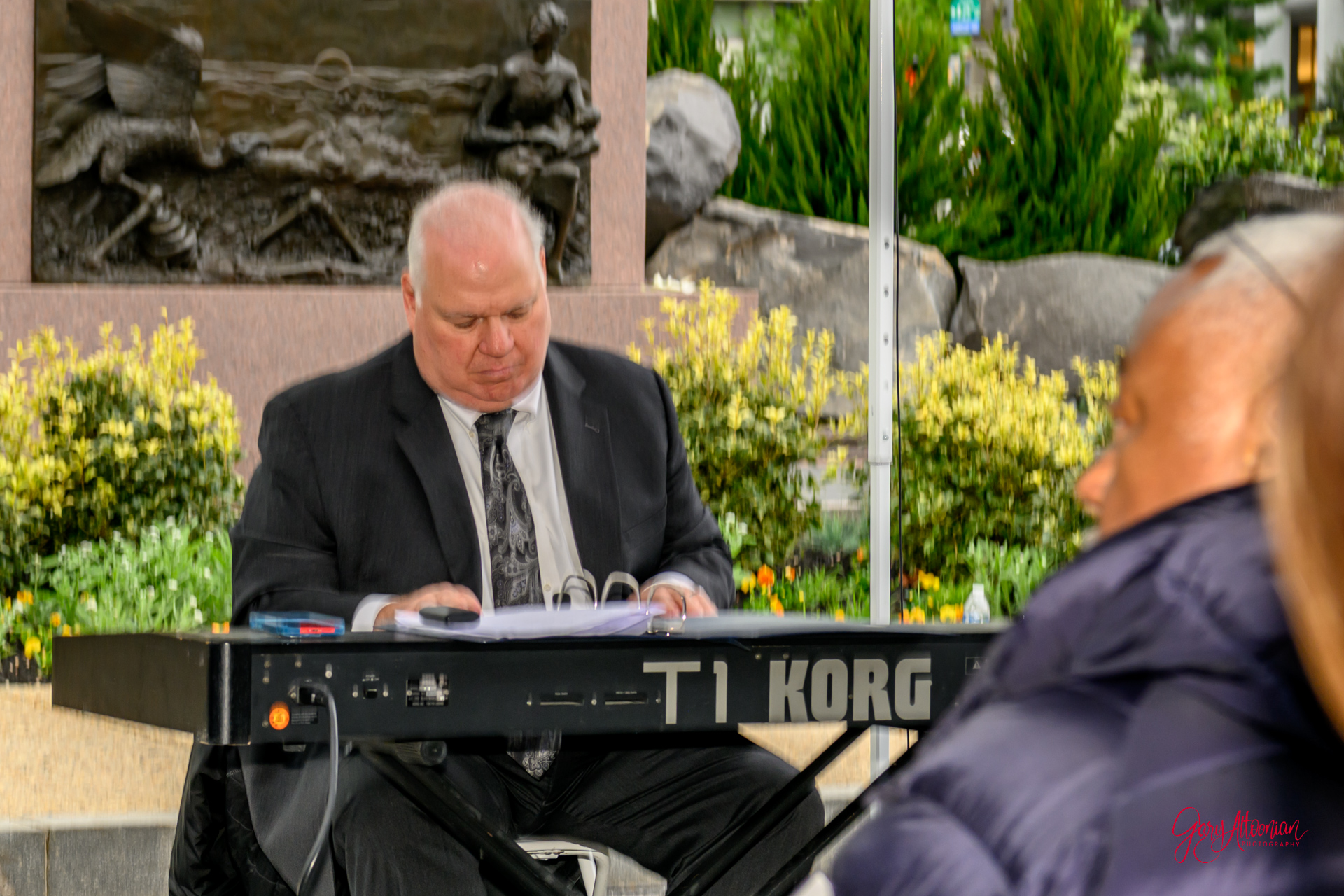
This part of the program featured vocal performances by Hooshere Bezdikian, accompanied by pianist Steve Odabashian.
Selverian, who delivered his message in five parts, was also accompanied by the piano. Each theme concluded with a specially selected song that Bezdikian performed.
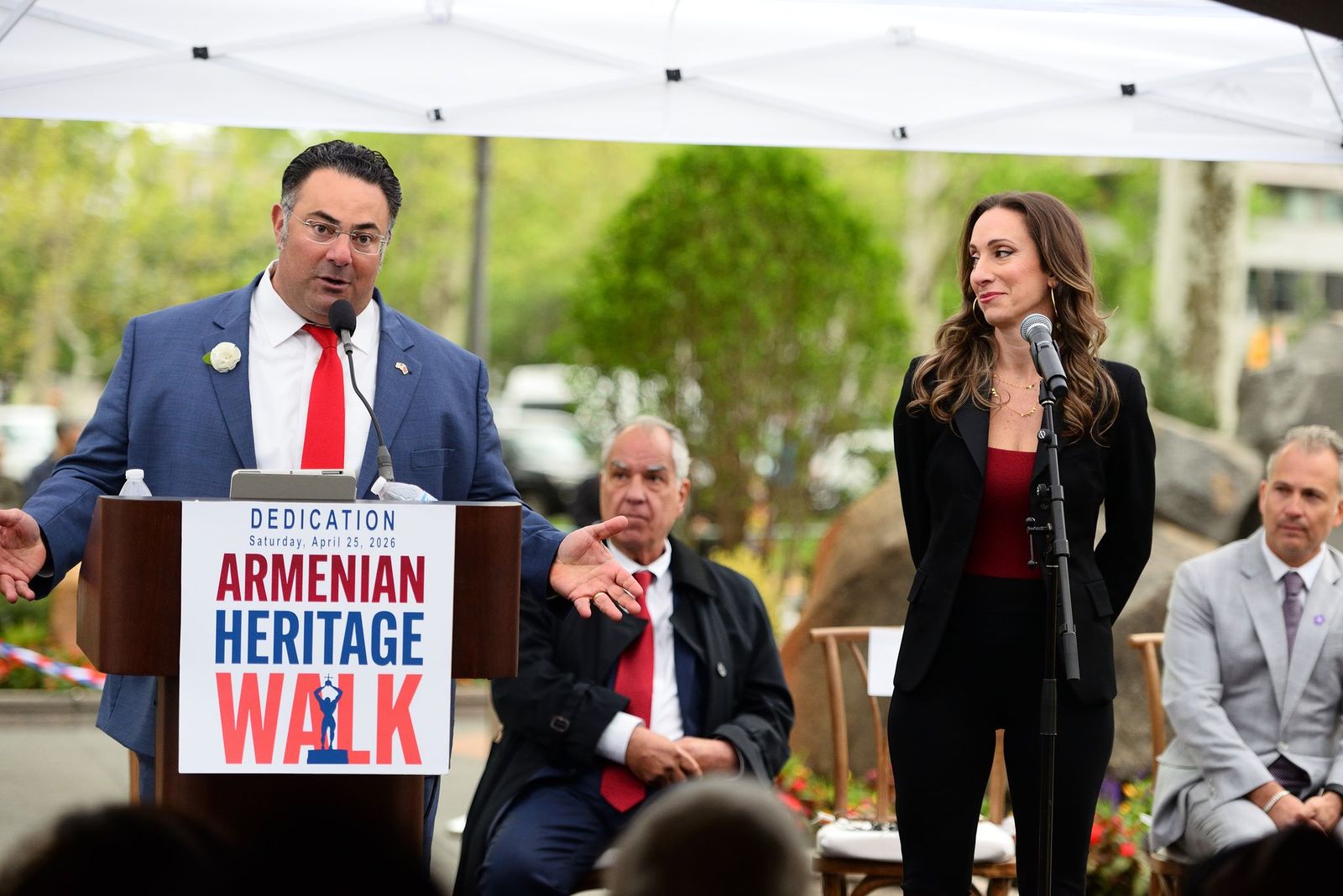
Selverian shared personal images from the past, stressing that the site was a “promise” to those who came before.The event concluded with the singing of “America the Beautiful” by Bezdikian, a ribbon-cutting ceremony, a youth flag procession and performances by students of the Armenian Sisters Academy.
Attendees then gathered along the walkway, placing white carnations around the Young Meher statue as a symbol of the continued life of Armenian Americans 111 years after the Armenian Genocide.
Gala honors Armenian Americans
In a grand finale of the memorable weekend, about 450 guests gathered at the National Constitution Center in Philadelphia for a black-tie gala celebrating the opening of the Armenian Heritage Walk and honoring Armenian Americans for their achievements.
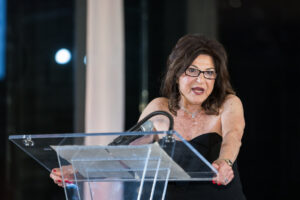
Karolyn Chebookjian, board vice president and fundraising director of the Armenian Heritage Foundation of Philadelphia, opened the evening by reflecting on the historic roots of the Armenian Heritage Walk and theYoung Meher statue, including on the work of her own father, John Tokmajian, who helped lead the committee in 1976, as well as others involved in the original effort.
A recorded video message from Pennsylvania Gov. Josh Shapiro congratulated the community on the project and recognized the contributions of Armenian Americans across the state.
The evening continued with a video in which each board member shared their reflections about the importance of the project and their role in its completion, as well as words of gratitude to the community. A list of major donors appeared at the end.
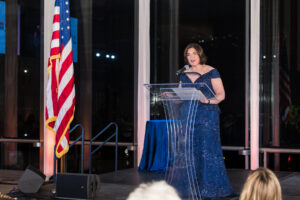
The night kicked off with a video appearance by television host and comedian Conan O’Brien, who introduced master of ceremonies Sona Movsesian.
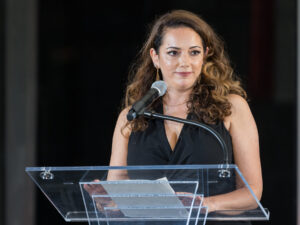
Author, media personality and former executive assistant to O’Brien, Movsesian presented awards of excellence to seven honorees: Michael Aram, founder and designer of Michael Aram Inc.; James Philip Bagian, an engineer, physician and NASA astronaut; Mark Hoplamazian, chairman and CEO of Hyatt Hotels Corp.; Edele Hovnanian, president and CEO of the H. Hovnanian Family Office; Maj. Gen. Stephen J. Maranian, a two-time recipient of the Distinguished Service Medal; Katherine Sarafian, senior vice president of production at Pixar Animation Studios; and Peter Vosbikian, an executive in the household products industry.
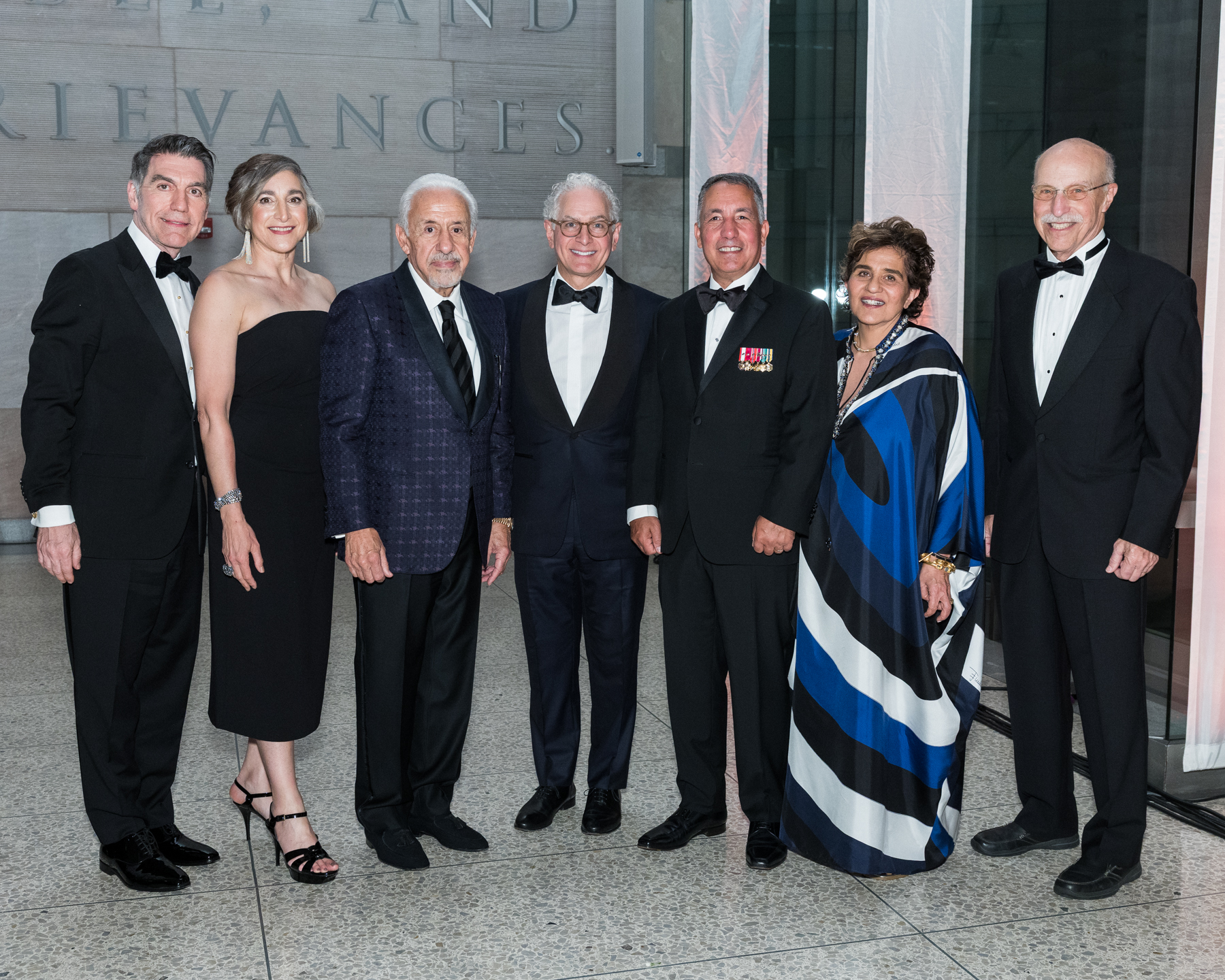
Each honoree spoke — often with humor — about their personal and professional journeys, highlighting connections to the Armenian community.
The program also featured a musical performance by Mher Mnatsakanyan, renowned educator and performer of the Armenian duduk and clarinet..
In closing remarks, foundation member Nanette Zakian thanked all who made the Armenian Heritage Walk a reality. She also recognized Movsesian’s role in the evening’s program and for reminding everyone that joy is essential to meaningful celebration. She then presented Movsesian with a commemorative gift, incorporating a piece of a boulder from Armenia and a basalt stone, also from Armenia.
Zakian reflected on the significance of the project as a symbol of unity, history and cultural pride.