


Maintaining Armenian identity in Javakhk
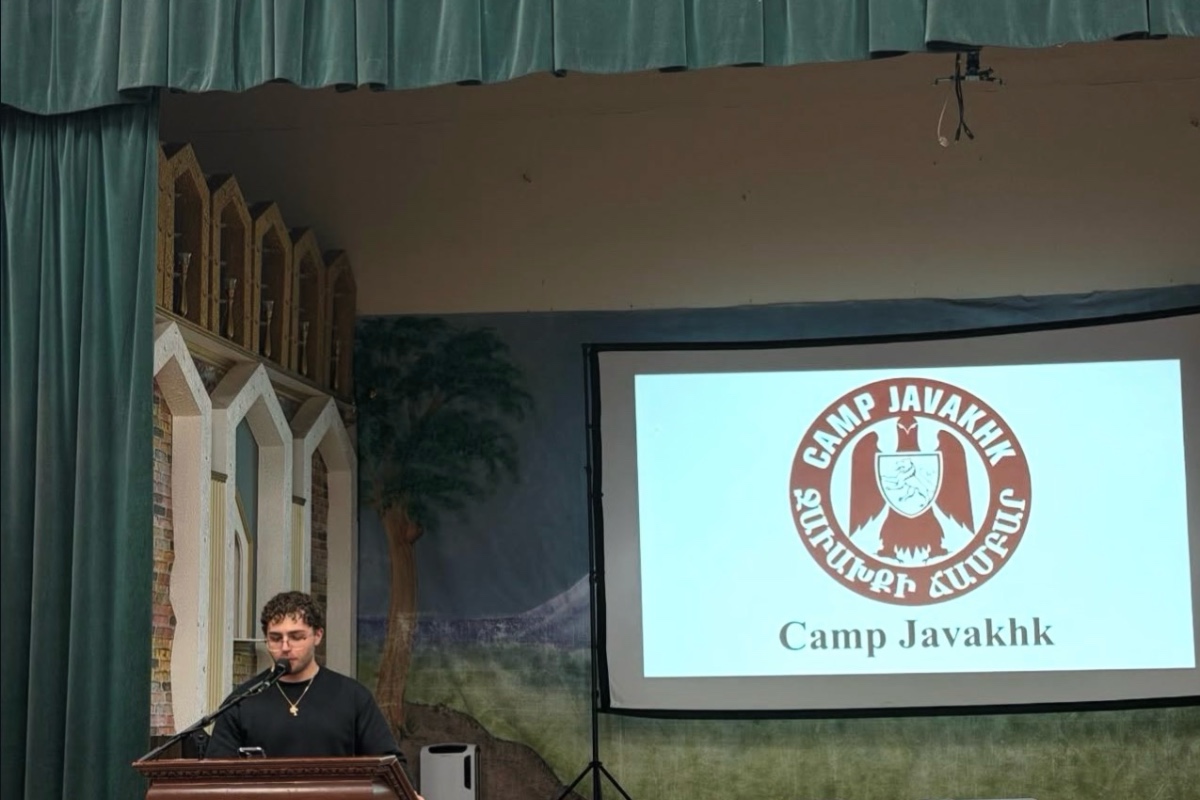
The following remarks were delivered at the AYF D.C. “Ani” Chapter’s annual Lenten Dinner by U. Vartkaes Pamboukian, Chair of the AYF D.C. “Ani” Chapter, reflecting on his participation in Camp Javakhk in 2024 and 2025.
Almost two years ago, when I first participated in the program, I was introduced to an entirely new world when I arrived in Javakhk. I had the opportunity to visit two small towns, Akhaltskha and Ninotsminda, during my first time there; however, I recently returned to Akhaltskha this past summer as well. The town hadn’t changed in the slightest; everything felt instantly familiar the moment I stepped into the same host family’s home from my prior visit. Memories rushed back, and every corner of Akhaltskha reminded me of those cherished moments I had stored from my first visit.
My experience the first time in Javakhk was the reason I was eager to return again this past summer. As I was participating in the AYF Internship in Armenia, I was able to have the opportunity to partake in the ARS’ Javakhk program. For a year, I kept telling myself that I would return soon, and I never really expected it to be so soon, with memories still so vivid; however, I was more than excited.
To briefly summarize, for those unfamiliar with the program, ARS Camp Javakhk (the Javakhk Jampar) brings together volunteer counselors from all over the world to participate.
The program runs for two weeks, and those volunteering, depending on their availability, have the chance to participate in two separate locations within those two weeks.
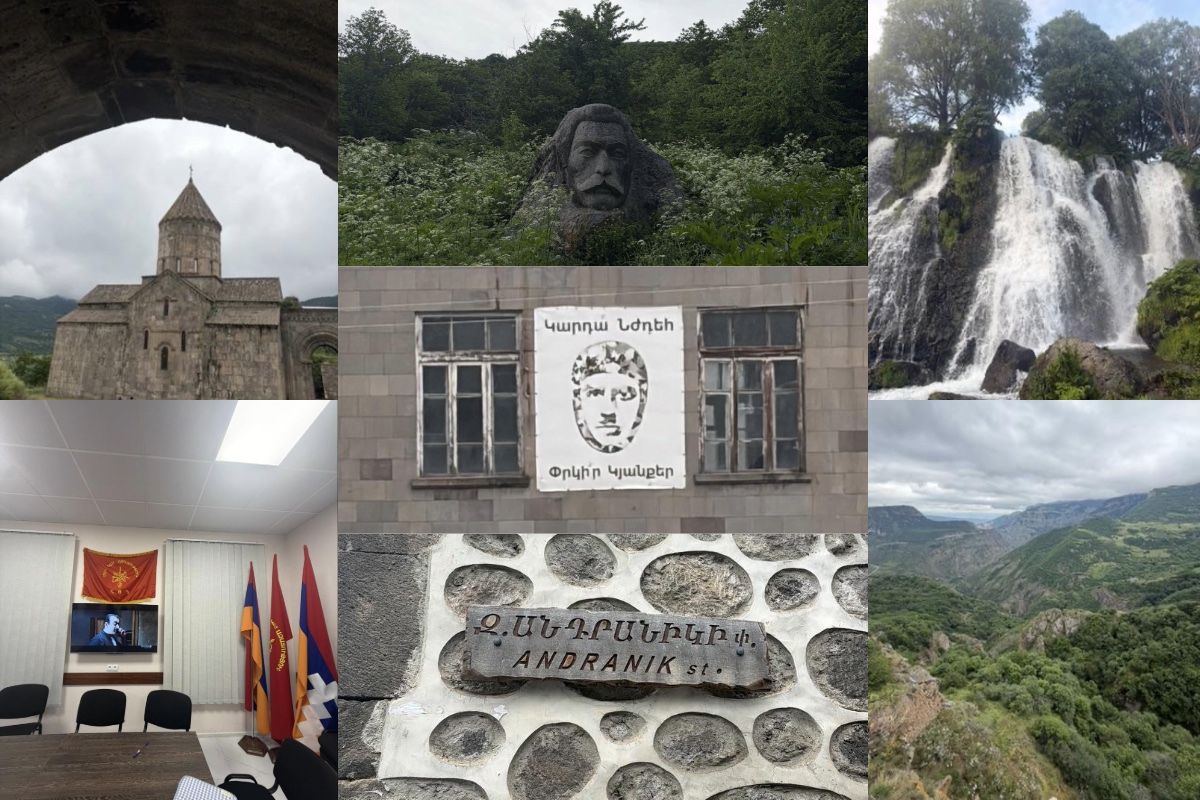
The goal of the program is simple yet deeply meaningful: to help preserve Armenian culture and identity in the region of Javakhk through various educational and cultural activities designed for youth in the local Armenian communities of Javakhk such as Akhaltskha, Ninotsminda, Akhalkalak and Tsalka.
When I returned to Akhaltskha this year, I noticed that many of the local participants had not changed at all. On the first day, I was greeted by familiar faces. The badanes ran up to welcome all of us counselors and still remembered my name, along with many of the lessons I left behind, all excited to see me again and the other counselors. The ARS ladies at the agoump recognized me as well as they prepared food for the day. However, this year was different. Unlike last time, I was responsible for the older group, Narinchakyun (orange) Khoump, which mostly consisted of badanes I had not worked with before.
And so, returning as a counselor meant reconnecting with those participants I already knew, but also getting to know the new ones in my assigned group, as I was being entrusted with guiding older participants who were at a more impressionable and transitional stage in their lives. Their questions were deeper, their curiosity more pronounced, and their awareness of their Armenian identity more complex.
Which made things more interesting, and it was within this challenge that I found the greatest growth. As the days unfolded, bonds formed naturally — through shared laughter, group discussions, cultural workshops and even the small, seemingly insignificant moments between activities. I realized that while the faces may change, the mission remains the same: to create a space where these young individuals feel seen, heard, and proud of who they are as Armenians. Watching them engage in Armenian songs, specifically heghapoghagan (azkayin yerker), history lessons and traditional activities reminded me why this program exists in the first place. In a region where preserving Armenian identity requires resilience and dedication, even one week of reinforcement can leave a lasting impact.
It has truly been a privilege of mine to have had the opportunity to partake in the ARS’s Camp Javakhk program—not once, but twice now.
Two years ago, when I first participated in the program, I stepped into unfamiliar territory — into a part of our ancestral homeland that, until then, I had only heard about through stories from former participants of the program. Immersing myself in Javakhk was both humbling and eye-opening. For the first time, I witnessed firsthand the immense effort invested not only by the program itself but by the ungers and ungerouhis of the region and those who put this program together each year, dedicating themselves to maintaining and preserving our culture within the region.
I saw what it truly means to live one’s Armenian identity with quiet strength. I saw communities that, despite challenges, remain steadfast in their language, traditions and faith — their identity. I came to understand that preserving culture is not simply about celebration — it is about commitment, sacrifice and continuity.
Returning this year allowed me to see the program from a new perspective. The first time, I arrived eager to learn and be more of an observer. The second time, I returned with a mindset to give back more intentionally, to mentor more thoughtfully and to contribute more meaningfully.
Camp Javakhk has given me more than I could ever articulate — whether it be new friends or a new viewpoint of our cultural identity. It has strengthened my understanding of who I am and where I come from, but shown me what inspiration can look like. It has reminded me that our identity is not something passive; it is something we actively protect and nurture. And above all, it has shown me that even a single week — spent teaching, listening, laughing and connecting — can reinforce a lifetime of pride in being Armenian.