


Armenian Needlelace Initiative launched
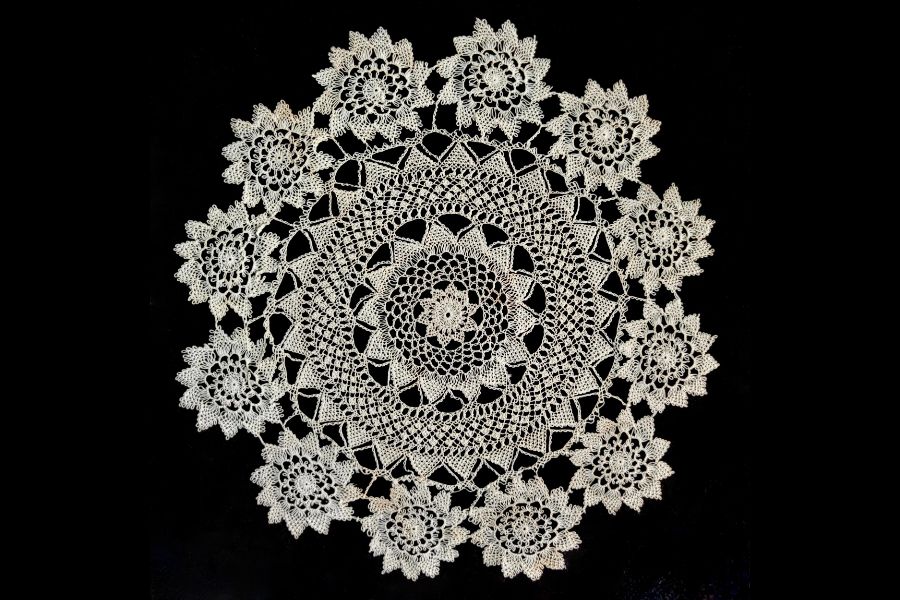
SAN FRANCISCO BAY AREA — At a time when Armenian needlework is experiencing an upsurge in interest among makers, families and communities around the world, artists and scholars Deborah Valoma and Elise Youssoufian have joined forces to help revitalize Armenian needlelace traditions by launching a new project, the Armenian Needlelace Initiative, on March 20, 2026. Through online resources and upcoming calls for participation, their mission is to engage a global network of Armenian needlelace practitioners, researchers, curators, collectors and enthusiasts.
The Armenian Needlelace Initiative is the first comprehensive website supporting Armenian needlelace traditions by encouraging learning and making, fostering connection across scattered populations, providing a forum for cultural exchange and building a repository of resources on technique, care, references, exhibitions and instruction, with more to come. The site features original and historic photographs and includes portfolios of contemporary artists and makers, stories, poems, public and private collections, as well as an essay reflecting on the past, present and evolving futures of Armenian needlelace.
Many Armenian families across the globe carefully preserve collections of needlelace, crochet, embroidery and other textiles made by their mothers, grandmothers and aunts. These are sometimes displayed and at other times wrapped in tissue or cloth and tucked away in boxes. As is often the case worldwide with art practices dismissed as “women’s work” or “ethnic/folk art,” this remains an underresearched topic. To address this, Youssoufian and Valoma honed their own needlelace skills, analyzed existing scholarship and conducted field research and interviews in the United States, Armenia and Turkey, from which the idea for this initiative emerged in 2024.

Historically, children learned Armenian needlelace and other forms of traditional handwork from their female relatives, neighbors and friends in a continuous line of succession. However, this form of transmission has become increasingly disrupted by the economic, social and familial fractures experienced by Armenians since the late 19th century. For many, reviving textile traditions is an act of resistance, and the intimacy of face-to-face communication and hand-to-hand transfer of skill yield relational and embodied experiences. But in dispersed communities, this is not always possible.
With deep gratitude for their foremothers who held this tradition, co-founders Deborah Valoma and Elise Youssoufian offer the Armenian Needlelace Initiative as an alternative. As Armenians living in diaspora, they came together with a shared goal: to reclaim an ancestral art form in jeopardy. Valoma is an artist, weaver, author and professor emerita of textile history and theory at California College of the Arts. Youssoufian is a poet, artist, needlelace teacher and Women’s Spirituality Ph.D. student at the California Institute for Integral Studies. They also acknowledge the assistance they have received from artists, activists, teachers, scholars, curators, culture bearers and cultural organizations around the world, both Armenian and non-Armenian, in developing this project.
“Through the Armenian Needlelace Initiative, Deborah Valoma and Elise Youssoufian do more than preserve — they continue the unbroken thread,” said Gassia Armenian, research curator, Fowler Museum at UCLA
To explore the Armenian Needlelace Initiative, visit the website and follow the project on Instagram. Sign up for the mailing list to receive occasional updates and share the project with anyone who might be interested. For inquiries, contact Armenian Needlelace Initiative co-founders Elise Youssoufian and Deborah Valoma at connect@armenianneedlelace.org.