


NAASR’s Mardigian Library receives Kalfayan collection
The National Association for Armenian Studies and Research (NAASR) has announced the donation of an extraordinary book collection to its Mardigian Library from siblings Zareh and Adrine Kalfayan of Belgium.
“This is not the largest collection NAASR has ever received,” noted Director of Academic Affairs Marc A. Mamigonian, “but it is undoubtedly one of the most significant, and contains an exceptional number of exceedingly rare, early printed Armenian books.”


The donation of this collection was initiated through the efforts of NAASR Board Member Dr. Khatchig Mouradian in 2025. Following the arrival of more than 150 items at NAASR in January 2026, Mardigian Library Director Ani Babaian oversaw the cataloguing of the materials and took initial conservation steps for the items most in need of attention, including more than 50 titles dating from before 1850, some of which appear in no other library catalogue included in WorldCat.
Principally in Armenian, the collection also includes a number of books in Armeno-Turkish and Arabic. Many of the books contain handwritten annotations in the margins, as well as inserted or attached pages.
A remarkable number of early Armenian printed books
Given the historical and scholarly value of the materials, several particularly noteworthy works included in the donation merit highlighting.

The oldest item in the Kalfayan Collection is Girk‘ Patmut‘eants, or the Book of History, by Arakel of Tabriz (Dawrizhets‘i), published in Amsterdam in 1669 by Voskan Yerevants‘i. This important historical work, though fragile, is preserved in its original binding and represents the second copy held by NAASR’s Mardigian Library (The first copy is part of the Ani and George Bournoutian Collection at NAASR).
More than 35 titles date from the 18th century and were published in Venice and Constantinople. They include Girk‘ Molot‘eants‘,published in Venice in 1720 by Pedro of Aragon; Meknut‘iwn Srboy Awetarani Tearn Meroy, published in Venice in 1737 by Mkhit‘ar Sebastatsi; Girk‘ Ōrinakats ew Nmanut‘eants published in Venice in 1750 by Joannes de Sancto-Geminiano; K‘erakanut‘iwn Haykazean Lezui, published in Venice in 1750 by Mikayel Chamchyants; Gortsk‘ Aŕak‘elots‘, published in Constantinople in 1771); K‘erakanut‘iwn T‘ōsk‘anean Lezui, published Venice in 1792 by Gabriel Vardapet Awetikean; and Adamgirk, published in Constantinople in 1799 by Arakel Siwnetsi.
“In addition to the scholarly works it contains, the collection reveals the artistry of its bindings, the evolution of Armenian printing styles over the centuries and the aesthetic sensibilities reflected in the design of the books,” said Ani Babaian. “The physical condition of the volumes bears witness not only to the passage of time but also to the ways in which these books were read and used, reflecting Armenian printing traditions from the17th through the 20th centuries across major centers such as Amsterdam, Venice and Constantinople.”
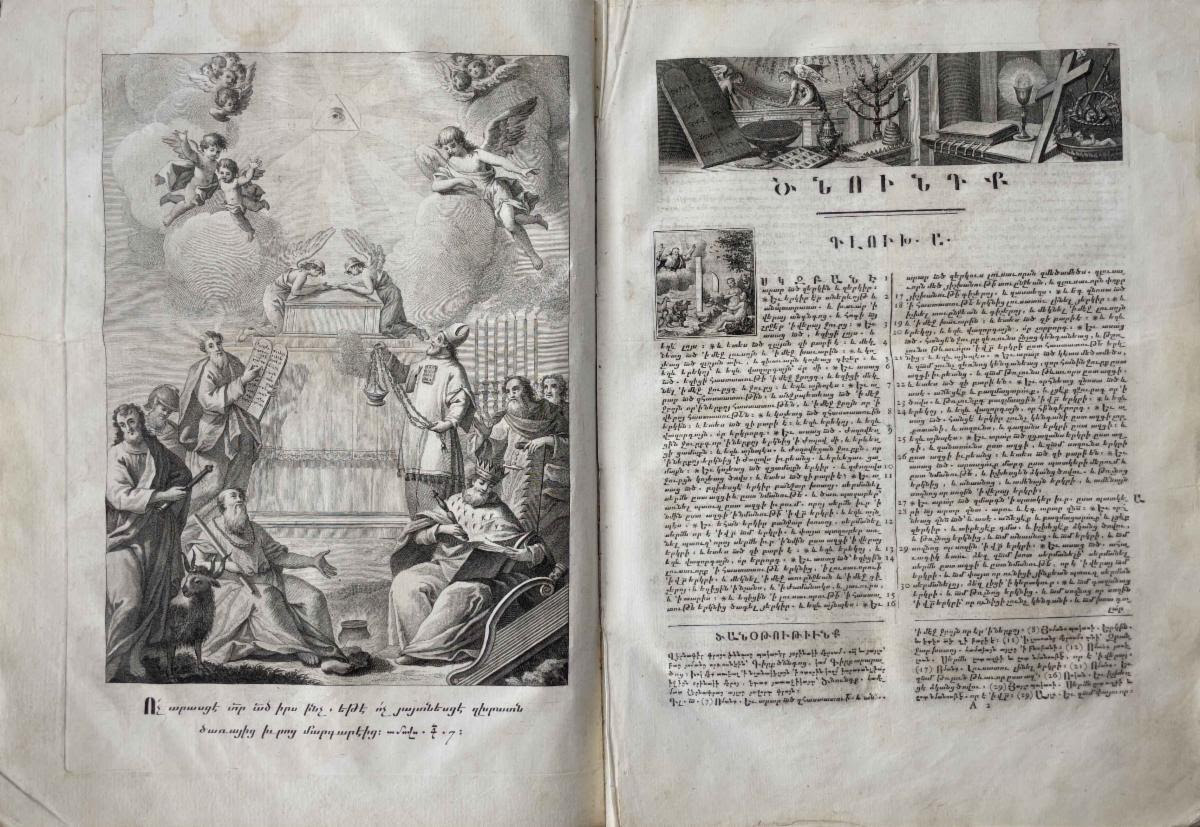
It is difficult to single out the importance of any one book, as each is unique in terms of their appearance, content and history. One of the most notable items in the collection is the Zohrab Bible, Astuatsashunch‘ Matean Hin ew Nor Ktakaranats, prepared in Venice by Very Rev. Fr. Hovhannes Zohrabian and published in 1805. This edition was based on a 1305 Cilician manuscript preserved at the Mekhitarist Library in Venice and includes extensive textual apparatus. This edition represents one of the most significant printed Armenian
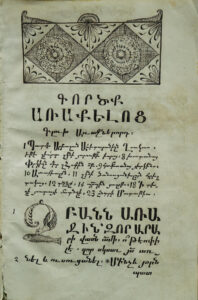
Bibles and the copy is in excellent condition.
The NAASR Mardigian Library expressed gratitude to the Kalfayan family for their dedication to preserving this collection and for making these important materials available to scholars and future generations. This important acquisition further strengthens NAASR’s mission to study and share Armenian history, culture and intellectual heritage.
About the NAASR Mardigian Library
The Edward and Helen Mardigian Library at NAASR consists of more than 39,000 books, pamphlets, periodicals and documents, primarily in Armenian and English, dating as far back as the 1600s.
The collection encompasses a broad range of topics, including history, literature, art, architecture, linguistics, poetry, as well as law, anthropology, cooking and natural sciences. The library is named in honor of the late Edward and Helen Mardigian in recognition of their decades of generous support of NAASR and its initiatives, as well as the continued support of the Mardigian family. The library is open to all researchers by appointment.