


CulturePhotography

“Rupture and Revival”: A story of resistance told through photographs
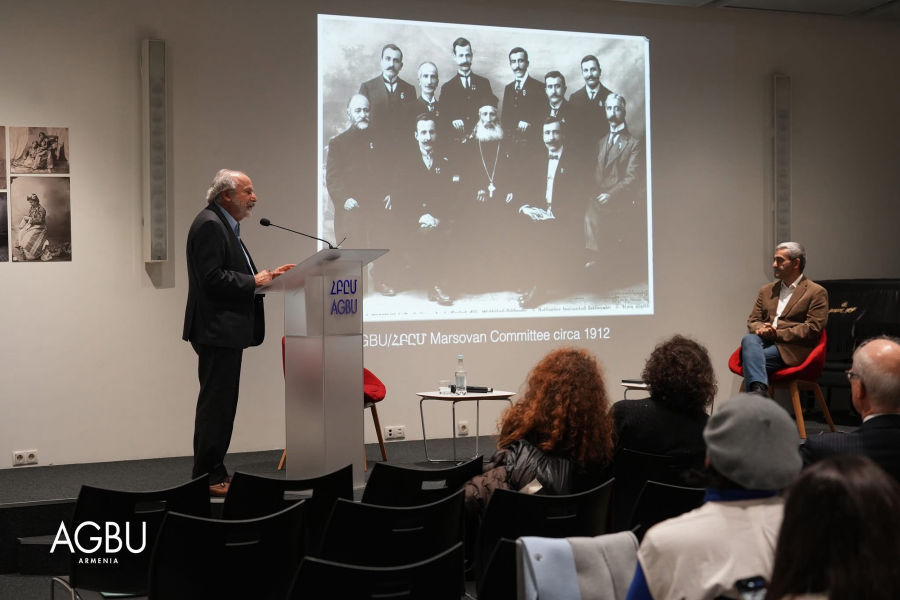
YEREVAN — On Dec. 9, “Rupture and Revival: A Photographic Remembrance of Armenian Resilience in the Aftermath of Genocide,” brought together historians, art scholars and the public around rare photographs and family archives. The exhibition offered a visual exploration of the Armenian post-genocide experience, remembered and reassessed through photography.

Organized by the Armenian General Benevolent Union (AGBU), the exhibition featured photographs from the Nubarian Library in Paris, the Dildilian family archives and Anatolia College in Greece. Many of these materials were shown to the public for the first time, revealing historical layers previously preserved in private memory.

The discussion segment was moderated by Dr. Suren Manukyan, UNESCO Chair on Education and Prevention of Genocide and Other Atrocity Crimes at Yerevan State University and head of the Department of Comparative Genocide Studies at the Armenian Genocide Museum-Institute.

The evening’s special guest, Dr. Armen Marsoobian, chairman of the advisory board of the International Association of Genocide Scholars and a descendant of the Dildilian family, currently a Fulbright Scholar at the American University of Armenia, offered reflections that went beyond the presentation of a family archive. His remarks connected historical memory with present-day responsibility, beginning with a dedication to more than two dozen Armenian civilians and prisoners of war held illegally by Azerbaijan, as well as those missing after the 2020 war and September 2023 military actions.

Dr. Armen Marsoobian

Photography was central to Marsoobian’s presentation — not just as art, but as a conscious act of documentation. As he explained, the Dildilian archive is not simply a family album, but a deliberate historical record of an era, capturing civic life, education, culture, resistance and reconstruction.

Advertisement

“When we speak about genocide, we often focus exclusively on victimhood,” he said. “I want to show how Armenians acted, made choices, resisted and reorganized their lives.”

He traced his family’s trajectory from forced displacement in the Ottoman Empire to resettlement in Greece, France and the United States.

Marsoobian also highlighted Armenians’ role in photography in the Ottoman Empire, noting that from the late 19th century until World War I, Armenians were among the leading photographers in the region. Commercial directories from 1914 list around 140 photographic studios in the provinces, the majority run by Armenians, including the Dildilian family.

The exhibition documented the family’s rescue efforts, showing that Armenians themselves were often “the pioneers of recovery,” as the first to aid survivors. After 1915, the Dildilians helped save Armenian orphans well before Western humanitarian organizations arrived. Photographs included images from orphanages in Merzifon in 1919, later used in films and documentaries.

A separate section focused on Armenian refugees in Greece, capturing their lives in temporary camps and the subsequent establishment of communities, schools and churches. These images conveyed not only loss but also reconstruction, the preservation of identity and the revival of cultural life.

Armenian orphans in Merzifon, 1918 (Photo from the Dildilian family archive)

At the end of the exhibition, Marsoobian spoke about how the archive was preserved across generations and entrusted to him as a historical legacy.

If this archive had not been preserved within the family, this story simply would not have reached us,” he said.

 He emphasized that the photographs, letters and documents testify to Armenian resilience through decades of displacement, war and upheaval.

The date of the exhibition was also symbolic. In 2015, the United Nations General Assembly, at Armenia’s initiative, proclaimed Dec. 9 as the International Day of Commemoration and Dignity of the Victims of the Crime of Genocide and of the Prevention of this Crime. According to the organizers, holding the exhibition on this day reinforced the importance of remembering, documenting and passing on history – not only for the sake of the past, but also for the present.

This slideshow requires JavaScript.

“Rupture and Revival” serves as a reminder that Armenian post-genocide history is not solely a story of loss but also one of conscious resistance, preservation of identity and efforts to build a future.

All photos are courtesy of AGBU unless otherwise noted.

Anna Harutyunyan

Anna Harutyunyan is a freelance journalist from Yerevan. She graduated with honors from the Department of Journalism at the Armenian State Pedagogical University and successfully completed the one-year educational program at Hetq Media Factory. She is currently pursuing her master’s degree in journalism at the Armenian State Pedagogical University. Her main interests include data journalism, culture and social issues.

Leave a Reply

Your email address will not be published. Required fields are marked *


Back to top button