



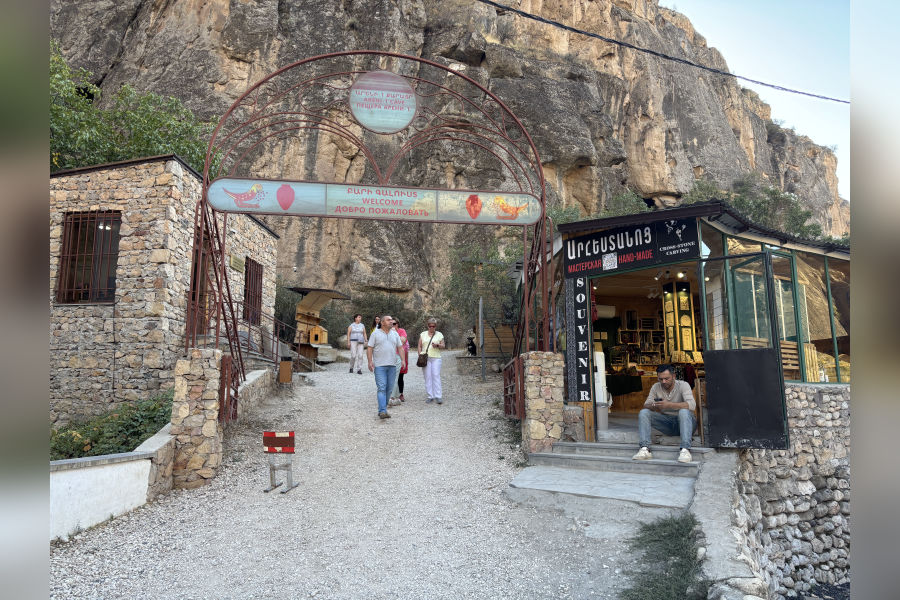
If I’m being honest, all these years, I couldn’t understand why Armenia even had to compete for a title when the evidence was buried beneath our feet, literally. Who was at fault? Were we too complacent to claim what was ours? Were our neighbors too eager to declare the title for themselves? Or was the world simply too indifferent to look our way?
This frustration echoes across many Armenia-centric issues, but this time, I am referring to the title of wine’s birthplace. Even though the world’s oldest winery can be found on our soil, in the Areni cave, we were not recognized as the first nation to make wine. That is, until very recently.
In August 2025, Forbes called Armenia “the new crown holder in the debate over the birthplace of wine,” highlighting the 6,100-year-old legacy unearthed in the Areni-1 cave in Vayots Dzor, the world’s oldest winery. Discovered in 2007, the cave offered archaeologists the earliest complete winemaking setup ever found. “For the first time, we have a complete archaeological picture of wine production dating back 6,100 years,” said archaeologist Gregon Areshian, co-director of the excavation. The site even veiled the world’s oldest leather shoe, underscoring its significance as a time capsule.
After decades under Soviet rule, when brandy became the country’s calling card, Armenia is now reclaiming the story it was always meant to tell: its wine heritage. Indigenous grapes such as Areni, Voskehat and Khatouni are flourishing and exports are rising — proof that old traditions can drive a modern industry. Brand recognition as “brandy country” may have stuck, but this Forbes article reminds us that Armenia’s true crown belongs to wine. With the world’s oldest winery in its past and modern producers carrying the legacy forward, Armenian bottles are now winning acclaim in 30 countries — and counting.
Sure, it’s exciting to see Armenian wines on the global map, but the real story is happening at home. In Yerevan, a new generation of local wines is emerging, each with its own identity, stylish labels and remarkable taste. Every sip feels like a quiet point of pride for us Armenians. What strikes me most is how natural the resurgence has been: this revival didn’t happen to prove anything to the world about Armenia being the birthplace of wine. It emerged organically — from small vineyards, kitchen experiments and modest local producers.


Perhaps that is what makes this revival so authentic: creating something out of passion, culture and pride — not obligation — with the simple joy of sharing wine around a big table.
Look closer, and wine reveals itself as far more than a beverage; it is a catalyst for growth, culture and connection. Vineyards and wineries generate jobs; festivals and tastings bring visitors and revenue. When people embrace their region’s wine, it sparks pride, fosters local engagement and fortifies economic resilience. Enotourism, rooted in history and tradition, strengthens infrastructure, diversifies income and creates new opportunities. In this way, wine becomes both a celebration of culture and a powerful force for economic development.
Wine has long held a central place in human history, shaping cultural identities, crossing borders and connecting generations. Its value as a practice is shaped by memory, ritual and community skill. Far beyond its role as a drink, wine influences social customs, artistic expression and community life across the world.
Anyone who has spent time in Armenia knows that the country loves its wine festivals, hosting several throughout the year, with Yerevan Wine Days taking the crown as the biggest summer event. But what many people don’t realize is that Armenia has another festival that is arguably even more meaningful: the Areni Wine Festival. Held in the birthplace of the world’s oldest known winery, this annual celebration brings together locals and travelers every first weekend of October. For more than a decade, Areni has transformed into a hub of wine culture, showcasing everything from small-batch homemade wines to large-scale producers.
The Areni Wine Festival promises to celebrate the diversity and potential of Armenian wine, yet whether it fully achieves this goal is up for discussion. For years, my attempts to attend were interrupted by events far beyond anyone’s control; October in Armenia has repeatedly coincided with conflict and national grief. Postponements and cancellations made sense in those moments. Still, compared with other wine festivals that enjoy strong promotion and growing visibility, Areni seems to struggle to regain momentum.
This year, I expected a renewed push, especially after receiving such an honorable title. Instead, the event seemed to slip by quietly. Without a reminder in your calendar, you likely missed it; advertisements were scarce, both online and in the city. I found out only by chance the night before, and most people around me were equally unaware, a disappointing outcome for a festival that deserves far more attention.
With its newly acclaimed status, the Areni Wine Festival could have been an opportunity to breathe new life into Armenian heritage. Yet, once again, Armenian heritage seems to receive minimal recognition. This isn’t about pointing fingers, as cultural preservation is a shared responsibility. Every one of us has a role to play in keeping our traditions alive. We need to spark dialogue, to make people understand that history and culture aren’t just relics of the past, they are powerful tools that can elevate our country on a global stage.
Armenian wine heritage is more than a legacy, it’s a story of revival, innovation and growth. Over the past decade, local winemaking has experienced a remarkable resurgence. What began with a single wine bar in Yerevan has blossomed into a nationwide celebration, from boutique wineries to scenic wine routes and lively festivals. Today, wine isn’t just a drink; it’s a lifestyle and a magnet for tourism. Annual events invite locals and visitors to explore Armenia’s unique terroir, turning Armenian wine into a living bridge between history and modernity.
I still remember the thrill when I first saw the Forbes article; it felt like the perfect opportunity to go all out this year and attend the festival. But as the months passed, with no real promotion or buzz around the event, people naturally forgot about it. Sure, there’s always next year, but the lack of attention is a clear reminder: if we care about our nation’s legacy, we need to take action ourselves.
I’m proud that the world now recognizes Armenia as the birthplace of winemaking. Our land is magnificent, our culture is rich and our people are talented and resilient.
Yet, pride alone isn’t enough. We must also put in the work to move forward, keeping our heads high, honoring our past, celebrating our present and shaping a future that reflects our heritage.



This column was another wonderful story, to remind us about knowing the History of wine making in Armenia…