


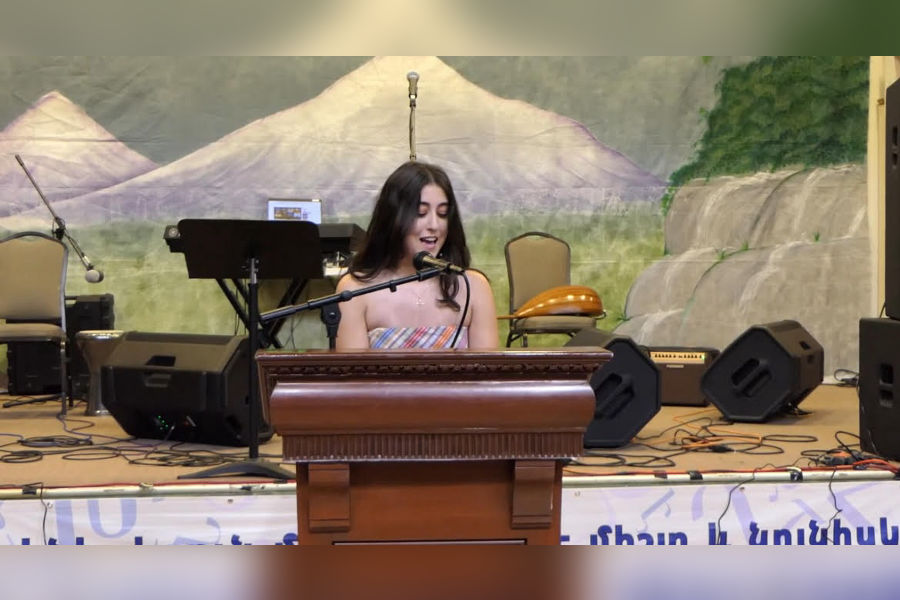
The following remarks were delivered at the 2025 AYF D.C. “Ani” Chapter’s November Dance on November 15, 2025.
When I landed in Yerevan and caught the faint outline of Mount Ararat through the airplane window, a wave of emotion washed over me. At that moment, I knew that I was finally home.
After 13 long years of waiting to return to Armenia, I was given the incredible opportunity to come back through the AYF Summer Internship Program. The application process wasn’t easy. There was a written portion, an interview and, of course, the anxious waiting that comes with it. But when I received my acceptance, everything suddenly felt real.
I was placed at Optimize Consulting, a financial consulting firm where I could apply everything I had been studying. As a mathematics and economics double major, it felt like the perfect fit. It was a place where I could grow, challenge myself and gain meaningful experience in a field directly connected to my academic path.
But what truly made this internship special wasn’t just the work; it was the people. I had the privilege of working alongside two AYF Artsakh members, Lena and Vahagn. From day one, they made me feel like I belonged. We shopped for groceries together, grabbed our lunches and sat around the same circular table in the break room every afternoon. Those simple daily routines became moments of connection — moments that made Yerevan feel not just familiar, but alive with community.

Throughout the summer, every week in Armenia felt like a new chapter: a blend of discovery, connection and pride in my heritage. From the very first walking tour through Cascade and Republic Square, to wandering the aisles of Vernissage and seeing the city come alive through art, history and people, I felt myself becoming more rooted in this place that had always lived in my heart.
We traveled across Armenia, experiencing its beauty in ways I had only seen in pictures growing up. Standing at Garni and Geghard, hearing centuries of history echo through ancient stone, reminded me of the deep resilience of our people.
Our first overnight trip took us to Vanadzor, the third-largest city in Armenia. Our mission there was to support the Fuller House project with the Fuller Center for Housing Armenia — an initiative dedicated to helping families build safe, stable homes. Our group had the opportunity to lend a hand to a family whose story has stayed with me.
We met the family on-site and learned that their original home had been destroyed in the Spitak earthquake. Since then, they had moved from one temporary apartment to another, trying to rebuild their lives. After many years, they had finally saved enough to start constructing a home again. But just as their dream was becoming real, their son fell ill with cancer and every last dram they had put aside went toward medical treatment. Their progress was halted once more.
Working beside them, seeing both their hardship and resilience, made our work feel deeply meaningful. As interns, we helped with the heavy lifting…literally. With everyone pitching in, moving rocks, mixing cement and clearing the site, a job that was expected to take a week was finished in just two days.
It was one of the most gratifying experiences of my life. We didn’t just help build part of a house; we helped restore hope for a family who truly deserved it.
And then, there were the trips that stay with you forever. I will never forget the breathtaking view from Khor Virap with Mount Ararat rising behind it, the colors of Noravank’s cliffs or the peaceful waters of Lake Sevan glittering under the sun. We hiked through Khndzoresk, explored the caves of Areni, camped under the stars in Lastiver and even zip-lined through the valleys. Every moment felt like living inside a story that generations of Armenians had written before us.
Some of the most powerful experiences came during the AYF World Panagoum. Visiting places like Dzidzernagapert and Yerablur brought an emotional weight and pride that is difficult to put into words. It grounded everything we had seen, done and learned, reminding me why organizations like the AYF matter so deeply.
Our visit to Yerablur was both powerful and overwhelming. As I looked into the eyes of the soldiers in the photographs on their gravestones, the simple act of choosing where to place a single rose felt impossibly difficult. These moments will stick with me forever.
However, the trip that stuck with me the most was Syunik.
Our two-day trip to Armenia’s southernmost and most strategically vital region was especially memorable. Along the way, we met an Artsakh woman selling zhingalov hats who insisted we try one for free — a small act of generosity that reminded us of the resilience of the 120,000 displaced people from Artsakh. From Khor Virap to Areni caves, Noravank, Jermuk and finally Goris, every stop revealed another layer of Armenia’s beauty, history and spirit.
The next day, we visited Khndzoresk and the Old Khndzoresk Church, where offerings left by locals and travelers fill the sacred space with quiet meaning. We paid our respects at the grave of Mkhitar Sparapet and later took the cable car to Tatev Monastery, learning about our own Garegin Nzhdeh’s legacy while taking in sweeping views of cliffs and valleys.
Traveling through Syunik made one thing clear: every inch of this land carries a story. Seeing the mountains of Artsakh and Nakhichevan in the distance filled me with both pride in our ancestral lands and grief that we can no longer freely return to them.
We visited Syunik at a tense moment, just days after regional attacks and border clashes, yet the risks we felt as visitors were nothing compared to the daily uncertainty faced by those who live there. In the diaspora, it’s easy to forget that others don’t have the privilege of distance or safety. But the people of Syunik aren’t looking for our pity; they deserve our appreciation, respect and commitment to understanding their resilience. Our time there reminded us that while the future is uncertain, our connection to Syunik and Armenia’s survival must remain unwavering.
Now, I want to talk about my favorite part of the entire summer: ARS Camp Javakhk.
Our journey began with a three-day stay in Tiflis, Georgia. Unfortunately, our walking tour quickly revealed the disdain that still exists toward Armenians, even in a city that Armenians helped build. While the tour itself was informative, it was unsettling to visit historically Armenian churches that the Georgian government now claims as their own, going so far as to sand down Armenian inscriptions on the gravestones hidden behind those very churches.
We also visited the resting places of many prominent Armenians, including the writers Raffi and Hovhannes Toumanyan, and the beloved composer Sayat Nova. And although much of the tour carried a feeling of loss, I couldn’t help but feel a deep sense of pride when we stood at the exact location where Djemal Pasha, one of the masterminds of the Armenian Genocide, was rightfully assassinated during Operation Nemesis.
What became clear throughout our time in Tiflis was this: no matter how hard the Georgian government tries to erase our history, Armenians will always remember the role we played in shaping that city. Our presence is woven into its foundations, and despite every attempt to diminish it, we are — and always will be — part of its story.
Going to Camp Javakhk, I was nervous. I had never considered myself “good” with kids, and I worried that I wouldn’t be able to handle leading a large group in a day-camp setting. I was placed in the town of Akhalkalak, where we stayed in the house of a warm, welcoming couple who not only opened their home to us but constantly checked in to make sure we were comfortable.
The counselors were divided into three groups: the youngest campers ages 6 to 10, the middle group ages 11 to 13 and the oldest from 14 to 18. I was assigned to the youngest campers. And because I was the only counselor in my group who spoke fluent Eastern Armenian, I was unexpectedly pushed into a leadership role. It forced me to confront my fear of working with children head-on.
To my surprise, I ended up enjoying myself far more than I ever expected. My favorite part of each day became listening to the kids read their journal entries aloud. One prompt asked, “What is your biggest fear?” and I’ll never forget the quiet voice of a little girl who said, “Im amenamets vakhke hayreniks gortsneln e.” — “My greatest fear is losing our homeland.”
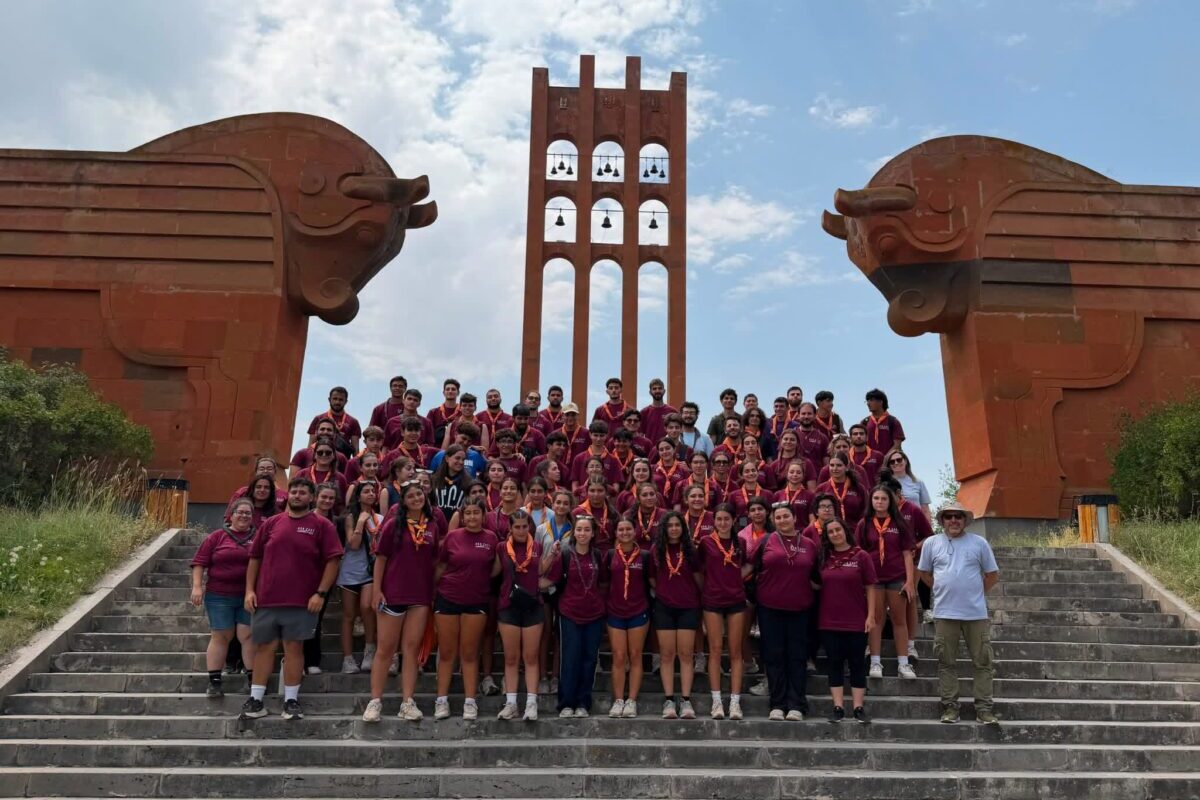
By the end of the week, after building relationships not only with the campers but with the incredibly hospitable locals, I left with dozens of handmade bracelets, drawings, small gifts — and memories I will carry for the rest of my life. Like, memories of making khorovats with the oknagans, exploring ancient fortresses and wandering through Akhalkalak and the surrounding villages. Camp Javakhk changed me in ways I never expected, and it remains the most meaningful part of my summer.
When we finally left Javakhk to return to Yerevan, I was overwhelmed by a wave of emotions. The reality hit me that the summer was coming to an end and, soon, I wouldn’t be surrounded by stray dogs and cats on every street, and the kids I had grown so close to at Camp Javakhk would have to wait an entire year before we could see each other again.
That same wave of emotion returns every time I think back on this unforgettable summer. It reminds me just how challenging it can be to live life as an Armenian. We are always waiting — waiting to see family who live an ocean away, waiting for AYF Olympics to reunite with friends, waiting for the next Camp Javakhk application to open — because you can’t sit still until you know you’ll see those kids again.
This summer was more than an internship, more than a trip and more than a series of unforgettable experiences. It was a reminder of who we are as Armenians, and who we must continue to be. From Yerevan to Syunik, from Vanadzor to Javakhk, every place I visited and every person I met strengthened my sense of purpose. I returned to Armenia hoping to gain experience, but I left with something far more powerful: a renewed commitment to my homeland, to my community and to the generations who came before us and the ones who will come after.
I now understand that being Armenian isn’t just a part of my identity; it’s a responsibility: to remember, to protect, to serve and to stay connected, no matter where life takes us. The relationships we build, the stories we hear and the moments that move us to tears fuel our dedication. They remind us that even when we live far away, even when the world feels uncertain, Armenia depends on all of us to care, to show up and to keep coming back.
As I look ahead, I know this summer was not an ending but a beginning: a beginning of deeper involvement, stronger ties and a lifelong commitment to the homeland that has shaped me in ways I’m still discovering. I may have landed in Yerevan 13 years after leaving, but I know now that Armenia has never stopped being home — and it never will.